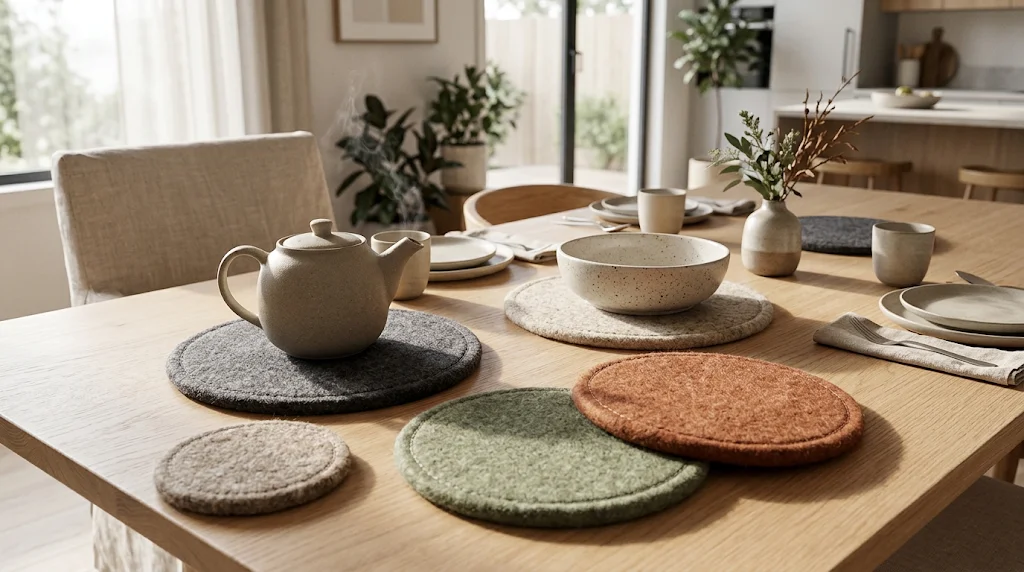
A hot casserole dish can turn a simple family dinner into a worry about the dining table. A trivet creates a useful barrier between cookware and the surface beneath it, while also adding texture and colour to a place setting. For people who like natural materials, wool felt trivets are a particularly appealing option: they are lightweight, often decorative, and convenient to bring from the kitchen to the table.
Still, not every felt mat is suited to every hot pan. Material composition, thickness, construction, moisture, and the temperature of the cookware all matter. This guide explains how wool felt trivets work, which styles to consider, how to use them responsibly, and what to look for when shopping in the United States. It focuses on general product-selection principles rather than claiming that any one retailer’s collection has been independently tested.
What Makes Wool Felt Useful Around the Table?
Felt is made by matting and compressing fibres into a dense, nonwoven material. Wool fibres can interlock through moisture, pressure, and agitation, producing a flexible sheet with a pleasing soft texture. In wool felt trivets, this structure creates a cushioned surface that can help separate serving dishes from furniture and reduce minor contact noise.
The material is also visually versatile. It may appear as a flat circle, a thick square, an arrangement of small felt balls, or a more sculptural design. Unlike a rigid stand, a felt mat can be moved and stored easily. However, felt is not inherently fireproof or suitable for direct contact with every heat source. Always follow the product’s temperature and care guidance.
A Different Look From Wood, Cork, or Metal
Wood and cork are familiar choices for tabletop protection, while metal trivets may use raised feet to separate cookware from the table. Wool felt trivets offer a softer appearance and typically sit flat. They may suit relaxed dining rooms, breakfast nooks, and open-plan kitchens where textile accents complement wood and ceramics.
What the Material Cannot Promise
Although wool has useful insulating characteristics, actual heat protection depends on thickness, density, construction, duration of contact, and the pan’s temperature. A mat intended for warm serving dishes should not be assumed suitable for cookware straight from an oven or grill. A manufacturer’s specific instructions are more reliable than broad claims about wool.
Choosing the Right Shape and Size
Start with the cookware you use most frequently. A small teapot, a broad casserole dish, and a rectangular baking tray require different amounts of surface coverage. When comparing wool felt trivets, look at the actual dimensions rather than judging from styled photographs, which may show a mat beneath a dish without revealing its edges.
Round Designs for Everyday Serving
Circular trivets work well beneath many bowls, kettles, and serving pots. They can make a place setting look balanced, particularly when the tabletop is already busy with plates and utensils. Check that the base of the dish sits securely and that the mat does not curl or slide when the dish is lifted.
Square and Rectangular Options
Square mats may suit cookware with broader bases, while rectangular formats can accommodate long serving platters. Wool felt trivets should support the cookware’s stable contact area without leaving a hot edge in direct contact with a vulnerable surface. If your favourite roasting dish is unusually large, measure it before ordering.
Felt Ball and Sculptural Styles
Some designs use many small felt balls joined together, producing a distinctive textured surface. Others are cut from dense sheets. These constructions may differ in stability and heat performance. When purchasing wool felt trivets with raised textures, consider whether a heavy or narrow-based serving dish will sit level.
Avoid an Unstable Setting
A trivet should remain flat during use and should not create a tipping hazard. Check stitching or joins, especially on multi-piece designs, and do not place heavy cookware on a visibly damaged or uneven mat.
Thickness, Density, and Construction
Two pieces of felt that look similar may behave differently. A thin decorative coaster is not necessarily interchangeable with a purpose-made kitchen trivet. The amount of fibre, compression, backing, and other components influences how the product handles heat and use. For wool felt trivets, read the complete material description and check whether the item contains only wool or also includes synthetic fibres, adhesives, or backing layers.
Why Thickness Matters
Greater thickness may add separation from a warm dish, but thickness alone does not prove a safe temperature rating. Loose felt and dense felt can respond differently, and surface finishes may change the outcome. Never establish a heat limit by placing extremely hot cookware on an untested product.
Consider Edges and Seams
Clean-cut edges can give a minimal design, while stitched edges may create a different visual effect. Inspect whether fibres shed excessively and whether corners remain flat. Wool felt trivets used frequently should feel substantial enough to pick up and relocate without losing their shape under ordinary handling.
Natural Wool Versus Blends
A label may say wool felt without identifying the percentage of wool. Blends can be used for different cost or design objectives, but they should not be assumed to perform identically to pure wool. If fibre composition matters to you, request the exact specification rather than inferring it from a product name.
Heat Safety and Sensible Everyday Use
The most important rule for wool felt trivets is simple: use them only within the conditions specified by the maker. A dish that has been warming gently is not the same as a metal pan taken directly from a high-temperature oven. Hot cookware can transfer heat over time, even when the surface underneath initially feels protected.
Check Your Cookware and Furniture
Fragile finishes, certain laminates, painted surfaces, and antique wooden tables may be sensitive to heat or moisture. A heat-resistant dish itself might still be extremely hot. Choose a properly rated barrier for the hottest items, and ask the furniture manufacturer about surface-care restrictions when necessary.
Keep Them Away From Flames and Burners
Do not place wool felt trivets directly on a stove burner, open flame, grill, or other active heat source. Do not use them as oven mitts unless the product is expressly designed and rated for that purpose. A soft textile mat is not a replacement for heat-rated kitchen safety equipment.
Moisture Can Change the Situation
A wet mat may behave differently under a hot pot and may transfer moisture to wood or other sensitive surfaces. Dry wool felt trivets thoroughly before use, particularly after a spill. If you notice scorching, melting of any non-wool components, a burning smell, or visible damage, stop using the item for heat protection.
Styling Ideas for Different Kitchens
One reason people choose wool felt trivets is their ability to act as functional table accessories. Neutral shades can bring a quiet, textured finish to a dining area, while brighter colours create contrast against white plates and natural timber. A few carefully chosen pieces may look more cohesive than a collection of unrelated tabletop accessories.
Minimalist and Modern Settings
Grey, charcoal, cream, and muted earthy tones can work with stoneware dishes and simple wooden furniture. Wool felt trivets in uncomplicated geometric shapes suit interiors that favour clean lines and restrained colour. Keep the surface uncluttered so the practical accessory remains easy to reach.
Colourful Family Dining
Bright felt designs may help differentiate serving zones on a crowded table. Choose combinations that complement your existing napkins or placemats rather than matching everything exactly. For families with young children, stability, cleanability, and safe placement of hot dishes should matter more than the colour scheme.
Thoughtful Gift Combinations
A set of wool felt trivets can be paired with a serving bowl, tea accessories, or a handwritten recipe for a housewarming gift. Verify the recipient’s preferred colours and consider whether they have an easy way to store the pieces. Include care instructions if the maker supplies them.
Caring for Felt Without Damaging It
Proper maintenance helps preserve the appearance of wool felt trivets, especially lighter colours. For everyday dust or crumbs, a gentle shake or soft brush may be enough. Spills should be addressed promptly according to the manufacturer’s recommendations, rather than treating the product like an ordinary machine-washable kitchen cloth.
Spot Cleaning
If spot cleaning is permitted, begin with a small amount of cool water and a mild cleaner appropriate for wool. Dab instead of aggressively rubbing, which may distort the surface or cause pilling. Test on an inconspicuous section where possible, and avoid saturating the felt. Products with dyes, adhesives, or decorative joins may need different treatment.
Drying and Storage
Allow cleaned wool felt trivets to air-dry fully in a ventilated location, away from intense direct heat. Lay flat when the maker recommends it to help maintain shape. Store pieces clean and dry, with enough room to prevent heavy objects from deforming them. Do not pack damp felt into a sealed drawer.
Dealing With Wear
Some surface fuzz or pilling can occur with use. Follow maker guidance before trimming loose fibres, because pulling at joined felt balls or stitched sections may damage the design. Replace a trivet if its protective structure has thinned, split, or lost stability.
Comparing Products Before You Buy
Product photographs are helpful for colour and style, but they rarely establish heat performance. When evaluating wool felt trivets online, look for the dimensions, fibre composition, thickness, stated heat limitations, cleaning method, and whether the price covers one piece or a set. Check the return policy and the seller’s shipping charges before completing an order.
Look for Clear Specifications
A useful listing explains the actual construction rather than relying only on phrases such as premium, natural, or heatproof. If a specific temperature rating is important, ask how the manufacturer defines it and what limitations apply. Avoid treating an unsupported marketing claim as a guarantee that your table will never be marked.
Compare Value, Not Just Price
Less expensive wool felt trivets may be suitable for occasional serving, while a costlier design may offer a preferred texture or craftsmanship. Neither price point automatically proves durability. Think about how often the item will be used, whether it is simple to clean, and whether its dimensions fit your cookware.
Consider Packaging and Delivery
Check whether each trivet is supplied individually or in a multipack. Confirm delivery estimates for your address and understand what to do if a product arrives misshapen or damaged. When it arrives, inspect its condition and read the use instructions before placing a hot dish on it.
Frequently Asked Questions
Are Wool Felt Mats Safe for Hot Pans?
Wool felt trivets may be suitable for particular warm or hot serving items when the manufacturer specifies that use. They are not automatically safe for every pan temperature. Check the product’s stated limits and use a purpose-rated alternative for cookware hotter than those limits.
Can I Put One Under a Dutch Oven?
It depends on the Dutch oven’s temperature, weight, and the trivet’s rating. A heavy pot taken straight from the oven can remain hot for a long time. Do not assume a decorative felt mat offers sufficient protection for that situation.
Are They Machine Washable?
Not necessarily. Wool felt trivets may shrink, change shape, or suffer damage during machine washing, particularly if they contain glued or stitched elements. Follow the specific care label. Spot cleaning may be the recommended method.
Do Felt Trivets Scratch Wooden Tables?
A clean, soft felt surface can be gentle against furniture, but grit trapped underneath may still cause marks. Keep the mat and tabletop free of crumbs and debris, and consider the furniture finish’s heat and moisture sensitivity.
Are All Felt Products Made From Pure Wool?
No. Some felt products use wool blends or other fibres. Compare fibre-content labels if composition matters, and avoid assuming that all felt accessories share the same properties.
What Size Should I Choose?
Measure the stable base of the dishes you use most. Choose wool felt trivets with enough coverage to support those dishes securely, while also checking that the product is suitable for their heat and weight.
Conclusion
Wool felt trivets combine a soft, inviting appearance with the everyday convenience of a portable tabletop accessory. The best choice is not merely the nicest colour: it is a stable, appropriately sized product with clear material details and heat-use instructions. Compare construction, fit the trivet to your cookware, keep it clean and dry, and never substitute decorative felt for equipment rated for extreme heat. With those precautions, these accessories can bring warmth and texture to meals without sacrificing practical judgment.