Construction, demolition, and excavation projects often require specialized machinery to complete challenging tasks efficiently. Standard excavators are suitable for many earthmoving applications, but certain projects demand greater digging depth, extended horizontal reach, and access to difficult working areas.
Choosing a long reach excavator rental allows contractors to explore extended-reach equipment without committing to the substantial upfront investment associated with purchasing heavy machinery.
From river dredging and drainage maintenance to large-scale construction, these machines provide valuable capabilities across numerous industries in the United States.
This comprehensive guide explains how extended-reach excavators work, their applications, rental benefits, operating costs, safety considerations, and important factors to consider when selecting equipment for your next project.
What Is a Long Reach Excavator?
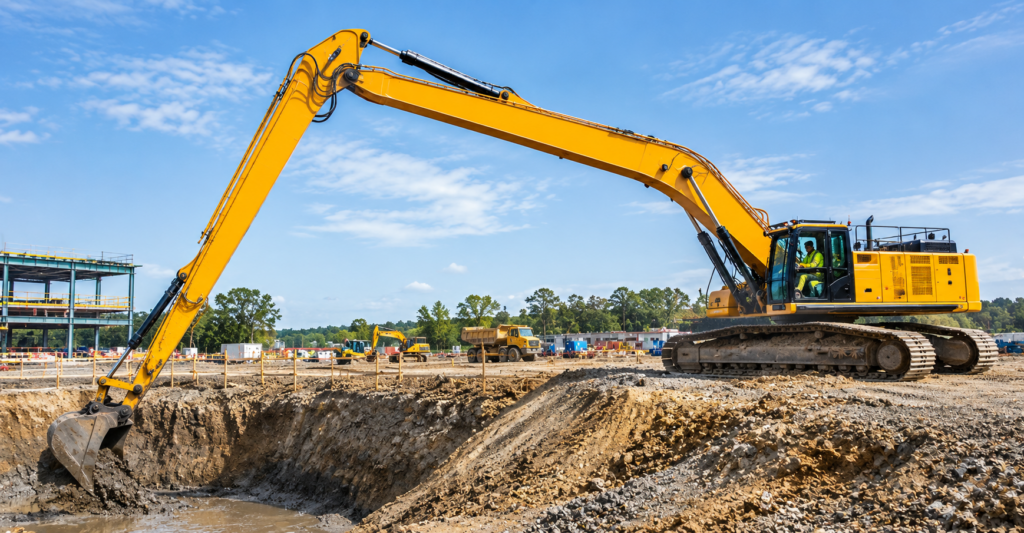
A long reach excavator is a specialized hydraulic excavator equipped with an extended boom and arm. Unlike conventional excavators, these machines are designed to access working areas located farther from the equipment’s operating position.
Contractors often choose a long reach excavator rental when standard excavation equipment cannot provide the necessary working distance or digging depth.
Key equipment features may include:
- Extended hydraulic boom and arm
- Reinforced steel construction
- Specialized counterweight configurations
- Heavy-duty tracked undercarriage
- Compatible hydraulic attachments
- Extended excavation capabilities
- Specialized hydraulic systems
These features make extended-reach excavators suitable for demanding construction and environmental projects. However, actual working capabilities depend on the machine’s configuration, stability, attachment weight, and manufacturer specifications.
Why Choose Long Reach Excavator Rental?
Purchasing specialized construction equipment can require considerable capital, particularly for contractors who only need extended-reach capabilities occasionally.
Renting allows businesses to access suitable machinery for a specific project while maintaining greater financial flexibility.
A long reach excavator rental can help construction companies manage temporary equipment requirements without assuming all the long-term responsibilities associated with ownership.
Rental arrangements may also provide access to maintenance support, equipment delivery, and different machine configurations, depending on the provider.
For businesses managing seasonal projects or specialized contracts, renting can be a practical alternative to expanding an existing equipment fleet.
Key Benefits of Renting a Long Reach Excavator
1. Lower Initial Investment
Heavy construction machinery represents a significant business expense.
Choosing a long reach excavator rental eliminates the need to purchase an entire machine for a temporary project. Contractors can allocate available capital toward labor, materials, transportation, and other operational requirements.
2. Greater Excavation Capabilities
Extended booms allow operators to access areas beyond the working range of standard excavators.
This capability is particularly valuable when working near waterways, embankments, deep excavation areas, and locations with limited equipment access.
3. Improved Project Flexibility
A long reach excavator rental allows contractors to select equipment according to individual project requirements.
Businesses can choose different machine sizes, reach configurations, and compatible attachments instead of relying on a single owned excavator for every application.
4. Reduced Long-Term Maintenance Responsibilities
Equipment ownership involves ongoing servicing, inspections, storage, and repair expenses.
Rental providers may handle certain maintenance responsibilities under their agreements. Contractors should confirm which services are included and understand their obligations regarding daily inspections and equipment care.
5. Access to Specialized Equipment
Some construction projects require machinery that is not commonly available within standard equipment fleets.
Renting allows businesses to access specialized excavators designed for extended digging, slope maintenance, and other challenging applications without permanent ownership commitments.
Common Applications of Long Reach Excavators
Extended-reach excavation equipment supports numerous industries across the United States.
River and Canal Dredging
Dredging involves removing accumulated sediment, debris, and unwanted materials from waterways.
A long reach excavator rental can help contractors perform suitable dredging activities from stable working areas along riverbanks and canals.
Specialized attachments may also support sediment removal and environmental restoration projects.
Construction and Infrastructure Development
Highway construction, bridge development, drainage systems, and commercial construction projects may require excavation beyond the reach of conventional machinery.
Extended-reach equipment can help contractors access difficult working areas while reducing unnecessary machine repositioning.
High Reach Demolition
Certain demolition projects require specialized machinery capable of accessing elevated structural components.
Contractors exploring long reach excavator rental for demolition must distinguish between extended digging configurations and purpose-built high-reach demolition machines.
High-reach demolition equipment requires appropriate structural protection, approved attachments, engineered stability, and specialized operating procedures. HAWK Excavator+1
Pond and Lake Maintenance
Extended-reach excavators are frequently used for pond clearing, sediment removal, shoreline maintenance, and water management projects.
Their extended working range can help operators reach selected areas without positioning conventional equipment directly within unsuitable ground conditions.
Environmental Restoration
Environmental contractors may use a long reach excavator rental for wetland restoration, erosion control, drainage improvements, and land rehabilitation.
Projects involving protected waterways or sensitive habitats may require environmental permits and specialized working practices.
Types of Extended Reach Excavation Equipment
Choosing the appropriate equipment depends on project requirements, site conditions, and intended applications.
Long Boom Excavators
These machines feature extended boom and arm configurations designed primarily for increased horizontal reach and digging depth.
They are commonly used for drainage maintenance, earthmoving, slope finishing, and suitable dredging applications.
High Reach Demolition Excavators
High-reach demolition machines are specifically configured for controlled demolition work at elevated heights.
When evaluating a long reach excavator rental for demolition, confirm that the equipment is approved for the intended working height, attachment, and structural removal method.
Amphibious Excavators
Amphibious excavators feature specialized undercarriage systems designed for certain wetland, marshland, and shallow-water environments.
They may be appropriate for projects where conventional tracked excavators cannot operate safely or effectively.
Standard Excavators With Extended Reach Packages
Some compatible excavators can be configured with specialized long boom and arm packages.
HAWK Excavator provides information about extended-reach configurations, hydraulic booms, sticks, and compatible equipment attachments for construction and demolition applications. HAWK Excavator
How to Choose the Right Long Reach Excavator Rental
Selecting suitable machinery requires careful evaluation of several technical and operational factors.
Determine Required Working Reach
Calculate the horizontal distance, digging depth, and working height required for your project.
Review manufacturer working-range diagrams rather than relying exclusively on advertised maximum reach.
Evaluate Machine Size and Operating Weight
Larger excavators may provide additional operating capabilities, but they also require suitable ground conditions, transportation arrangements, and sufficient working space.
Choose equipment that matches your project’s requirements.
Check Attachment Compatibility
A long reach excavator rental may include standard buckets or specialized attachments for specific applications.
Confirm compatibility between the machine, extended boom configuration, hydraulic system, and intended attachment.
Consider Job Site Conditions
Evaluate ground stability, slope conditions, nearby structures, underground utilities, overhead power lines, and available operating space.
These factors influence equipment selection and safe project planning.
Review Rental Agreement Terms
Understand the rental period, operating-hour allowances, transportation charges, maintenance responsibilities, insurance requirements, and potential additional fees before signing an agreement.
How Much Does Long Reach Excavator Rental Cost in the USA?
Rental costs vary depending on machine size, reach configuration, geographic location, attachment requirements, equipment availability, and rental duration.
Common pricing structures include daily, weekly, and monthly rental agreements.
The total cost of a long reach excavator rental may also include:
- Equipment delivery and collection
- Fuel expenses
- Specialized attachment charges
- Insurance or damage protection
- Additional operating-hour fees
- Qualified operator expenses
Request detailed quotations from multiple equipment providers. Comparing complete project costs rather than advertised base rental rates can help contractors develop more accurate budgets.
Long Reach Excavators vs. Standard Excavators
Understanding equipment differences helps contractors choose suitable machinery for their applications.
| Feature | Long Reach Excavator | Standard Excavator |
|---|---|---|
| Horizontal reach | Extended | Conventional |
| Digging depth | Potentially greater | Model-dependent |
| Bucket capacity | Often smaller | Often larger |
| Digging force | Generally reduced at extended reach | Generally stronger for conventional digging |
| Common applications | Dredging, slopes, drainage | General construction and excavation |
| Transportation | May require specialized arrangements | Typically more straightforward |
A long reach excavator rental is particularly valuable when working distance matters more than conventional digging force or maximum bucket capacity.
Essential Safety Considerations
Extended-reach excavation creates specialized operating challenges that require careful planning and qualified personnel.
Contractors arranging a long reach excavator rental should ensure operators understand equipment-specific working limits, stability requirements, attachment restrictions, and emergency procedures.
The job site should be assessed for unstable ground, electrical hazards, underground utilities, nearby structures, and pedestrian activity.
Maintain appropriate exclusion zones and follow manufacturer instructions, applicable OSHA requirements, and project-specific safety procedures.
Never assume extended reach also means increased lifting capacity. Longer boom configurations can significantly affect allowable loads and machine stability.
Renting vs. Buying Extended Reach Equipment
The decision between renting and purchasing depends on equipment utilization, business finances, project duration, and long-term operational requirements.
A long reach excavator rental may be more economical for occasional projects, seasonal contracts, and temporary equipment demands.
Purchasing may become financially practical for companies with consistent workloads requiring extended-reach capabilities.
Contractors should compare ownership expenses, depreciation, maintenance, transportation, financing, and expected utilization before making a decision.
Frequently Asked Questions
What is a long reach excavator rental used for?
It is commonly used for dredging, drainage maintenance, slope finishing, infrastructure construction, environmental restoration, and other projects requiring extended working distances.
How far can a long reach excavator reach?
Working distance varies by machine model and boom configuration. Some commercial rental excavators feature extended arms rated at approximately 60 feet. Actual digging depth and working reach must be confirmed using equipment specifications. Sunbelt Rentals
Can I arrange a long reach excavator rental with an operator?
Some equipment providers offer operated rental services, while others supply machinery without operators. Confirm availability, qualifications, and associated labor charges directly with the provider.
Are long reach excavators suitable for demolition?
Certain specialized configurations are designed for demolition. However, conventional extended digging arms should not be assumed suitable for high-reach structural demolition.
Can I rent an extended reach excavator monthly?
Many heavy equipment rental providers offer monthly agreements, subject to equipment availability and individual rental conditions.
Conclusion
A long reach excavator rental provides contractors with access to specialized machinery for demanding construction, dredging, drainage, and environmental projects.
By selecting appropriate equipment, reviewing rental agreements, evaluating site conditions, and following professional safety procedures, businesses can improve operational efficiency while managing equipment expenses.
Whether you are completing a temporary excavation project or supporting a major infrastructure development, careful equipment planning is essential for achieving reliable results.
Compare equipment specifications, consult experienced rental providers, and select machinery that meets your project’s technical, financial, and safety requirements.