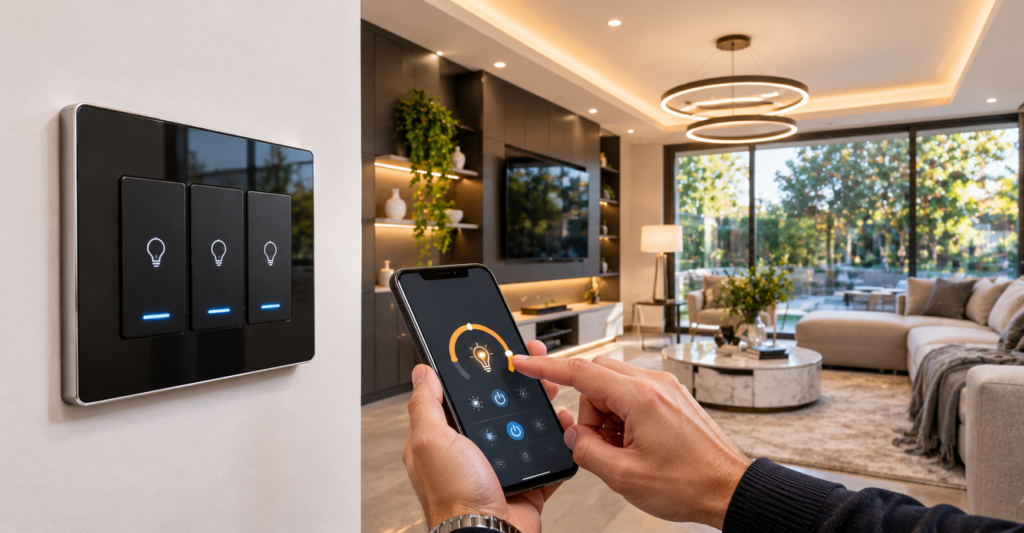
Technology is transforming how homeowners manage lighting, electrical devices, security, and everyday household activities. Traditional electrical switches are gradually being complemented or replaced by connected devices that offer greater convenience, flexibility, and control.
Installing smart switches allows homeowners to manage compatible lighting and electrical devices through smartphones, voice assistants, and automated schedules.
Across the United States, connected home technology is becoming an attractive option for families looking to simplify daily routines and improve energy management.
Whether you are renovating your home, building a new property, or upgrading your existing electrical system, intelligent lighting controls can provide several practical benefits.
This comprehensive guide explains how connected switches work, their advantages, different types, installation considerations, and tips for choosing the right products.
What Are Smart Switches?
Connected electrical switches are advanced devices that allow users to control compatible lighting and electrical equipment remotely or through automated settings.
Unlike traditional switches, these devices can communicate with home automation systems using wireless technologies such as Wi-Fi, Zigbee, Z-Wave, or Thread.
Depending on the model, common features include:
- Remote smartphone control
- Voice assistant compatibility
- Automated lighting schedules
- Touch-sensitive controls
- Adjustable brightness settings
- Custom lighting scenes
- Integration with other connected devices
- Manual wall-mounted controls
Smart switches combine traditional electrical functionality with digital technology, allowing homeowners to manage their living environments more conveniently.
How Do Smart Switches Work?
Connected switches communicate with compatible applications, wireless networks, or dedicated smart home hubs.
When a homeowner sends a command through a smartphone or voice assistant, the system instructs the switch to activate, deactivate, or adjust the connected lighting.
Some models connect directly to a home’s Wi-Fi network, while others communicate through a compatible automation hub.
Smart switches may also support programmable routines, allowing lighting to operate automatically at specific times or in response to compatible sensors.
For example, homeowners can schedule porch lights to turn on after sunset and switch off automatically in the morning.
Key Benefits of Smart Switches for American Homes
Modern connected lighting solutions provide several advantages for homeowners seeking convenience and improved household management.
1. Convenient Remote Control
One of the biggest advantages of connected lighting is the ability to manage devices remotely.
Homeowners can turn compatible lights on or off using a smartphone, even when away from home, provided the system supports remote access.
This feature is particularly useful for busy professionals, frequent travelers, and individuals who occasionally forget to switch off lights before leaving.
2. Improved Energy Efficiency
Smart switches can help homeowners reduce unnecessary electricity consumption through automated schedules, timers, and compatible occupancy sensors.
The U.S. Department of Energy identifies lighting controls such as timers, dimmers, and occupancy sensors as useful tools for improving energy management. Department of Energy+1
Actual savings depend on household habits, lighting equipment, and automation settings.
3. Enhanced Home Security
Automated lighting can help create the appearance of occupancy when homeowners are traveling.
Scheduled lighting routines may provide an additional layer of convenience and support existing home security arrangements.
However, connected lighting should complement rather than replace dedicated security systems.
4. Voice-Controlled Convenience
Many smart switches support popular voice assistant platforms, depending on the product’s compatibility.
Users can manage lighting through simple voice commands without physically accessing wall-mounted controls.
This functionality can be particularly helpful when cooking, carrying groceries, or completing household activities.
5. Personalized Lighting Experiences
Compatible dimmer controls allow homeowners to adjust lighting brightness according to different activities.
Customized lighting scenes can support movie nights, reading, family dinners, relaxation, and everyday household routines.
These features make interior lighting more flexible and adaptable.
Different Types of Smart Switches
Understanding available product categories can help homeowners select devices that match their electrical systems and lifestyle requirements.
Wi-Fi Light Switches
Wi-Fi-enabled models connect to compatible home wireless networks and may operate without a dedicated automation hub.
They are commonly controlled through smartphone applications and supported voice assistants.
Reliable wireless coverage is important for maintaining dependable performance.
Zigbee and Z-Wave Switches
These devices use specialized wireless communication protocols and typically require compatible controllers or hubs.
Zigbee and Z-Wave smart switches may be suitable for larger home automation systems containing multiple connected devices.
Compatibility should be verified before purchasing.
Smart Dimmer Switches
Dimmer models allow users to adjust the brightness of compatible lighting fixtures.
They are particularly useful in bedrooms, dining rooms, living rooms, and entertainment spaces.
Homeowners should confirm compatibility with their LED bulbs and lighting fixtures to avoid flickering or performance issues.
Touch-Control Switches
Touch-sensitive models feature modern control surfaces instead of conventional mechanical buttons.
These products may complement contemporary interior designs while providing convenient lighting controls.
Motion-Activated Switches
Motion-sensitive lighting controls activate or deactivate lights based on detected movement or occupancy.
They can be useful in hallways, laundry rooms, garages, bathrooms, and other frequently accessed areas.
Exploring Schneider Electric Wiser Home Automation
Schneider Electric’s Wiser system demonstrates how connected technology can improve residential lighting and electrical management.
Its Wiser Asia platform includes AvatarOn smart switches that communicate through Zigbee 3.0 technology and support application-based control of compatible lighting and electrical devices.
The platform focuses on connected home management, customizable controls, and everyday convenience. Schneider Electric Hong Kong China
American homeowners exploring international home automation products should verify voltage requirements, electrical certifications, regional availability, and compatibility with US electrical installations before purchasing.
Products designed for Asian electrical markets are not necessarily suitable for American homes.
Smart Switches vs. Traditional Electrical Switches
Traditional and connected electrical controls serve similar basic purposes but offer different functionality.
| Feature | Connected Switches | Traditional Switches |
|---|---|---|
| Remote control | Model-dependent | Not available |
| Voice control | Compatible models | Not available |
| Automated scheduling | Frequently supported | Generally unavailable |
| Manual operation | Usually available | Available |
| Energy management | Advanced control options | Manual control |
| Network connectivity | Usually required for connected features | Not required |
| Initial cost | Generally higher | Generally lower |
Traditional switches remain suitable for simple lighting requirements, while connected alternatives offer additional functionality for homeowners interested in automation.
Best Places to Install Smart Switches
Different areas of a home can benefit from connected lighting controls.
Living Rooms and Bedrooms
Automated lighting scenes and adjustable brightness settings can create comfortable environments for relaxation, entertainment, and reading.
Kitchens and Dining Areas
Voice-controlled lighting can provide hands-free convenience while preparing meals or completing household tasks.
Outdoor Lighting
Compatible outdoor lighting circuits can benefit from scheduled operation, helping homeowners manage porch lights, garden lighting, and exterior illumination.
Use equipment appropriately rated for its installation environment.
Garages and Hallways
Motion-activated controls can automatically manage lighting in areas where occupants frequently enter and exit.
How to Choose the Best Smart Switches for Your Home
Selecting suitable connected electrical devices requires careful consideration of several important factors.
Check Electrical Compatibility
Many connected switches require a neutral wire, although some models are designed for installations without one.
Before purchasing, confirm wiring requirements, operating voltage, electrical load limits, and lighting compatibility.
Evaluate Smart Home Compatibility
Choose smart switches that integrate with your existing home automation platform.
Some products support Matter, an interoperability standard designed to improve compatibility between connected devices across supported ecosystems. Frequently Asked Questions – CSA-IOT
Consider Wireless Connectivity
Evaluate wireless coverage throughout your property and determine whether the selected products require a dedicated hub.
Review Product Safety and Certifications
Select products appropriately certified for the US market and suitable for your electrical installation.
Check manufacturer warranties, technical support availability, and software update policies.
Installation and Electrical Safety Considerations
Installing smart switches involves working with household electrical circuits, which can present serious safety hazards when handled incorrectly.
Homeowners should consult a qualified electrician to confirm wiring compatibility and ensure installation complies with applicable electrical codes.
Professional assistance is particularly important for older homes, multi-location lighting circuits, unfamiliar wiring configurations, and specialized electrical equipment.
Avoid installing products designed for incompatible voltage systems or exceeding manufacturer-specified electrical load limits.
Proper installation supports reliable operation and helps reduce electrical safety risks.
How Connected Lighting Can Reduce Energy Consumption
One practical advantage of smart switches is the ability to automate lighting according to household routines.
Homeowners can schedule lights to operate only when needed, use compatible motion sensors in less frequently occupied rooms, and adjust brightness through supported dimming controls.
Combining automated lighting with energy-efficient LED bulbs may further reduce unnecessary electricity consumption.
Connected devices themselves consume small amounts of standby power, so meaningful savings depend on how effectively automation reduces overall lighting usage.
Frequently Asked Questions
Do smart switches work without Wi-Fi?
Some models retain manual operation without Wi-Fi. However, remote access, voice control, and certain automation features may require network connectivity or a compatible hub.
Can I install connected switches in an older house?
Yes, provided the electrical wiring and selected products are compatible. Older properties may require specialized models or professional electrical upgrades.
Do smart switches work with LED lights?
Many models support LED lighting. However, homeowners should verify bulb compatibility, electrical load requirements, and dimming capabilities before installation.
Are connected electrical switches safe?
Appropriately certified products can operate safely when correctly installed, maintained, and used according to manufacturer instructions and applicable electrical requirements.
Can multiple family members control the same lighting system?
Many home automation applications support shared access, allowing authorized household members to manage connected lighting from compatible devices.
Are connected switches worth the investment?
They can provide convenience, automated lighting control, and potential energy savings. Their overall value depends on household needs, installation costs, and usage patterns.
Conclusion
Smart switches offer a practical way to modernize residential lighting, improve household convenience, and support more efficient energy management.
From remote smartphone control and automated schedules to voice commands and personalized lighting scenes, connected electrical technology provides numerous opportunities to enhance everyday living.
However, selecting compatible products, ensuring professional installation, and protecting connected devices through appropriate cybersecurity practices are essential.
Whether you are upgrading a single room or developing a complete home automation system, thoughtful planning can help you create a more comfortable, functional, and connected living environment.