Maintaining a comfortable indoor environment is essential for homeowners throughout the United States. Whether you are dealing with freezing winter temperatures or intense summer heat, reliable heating and cooling equipment helps keep your home comfortable throughout the year.
An HVAC system regulates indoor temperatures, supports air circulation, and helps manage humidity. Modern heating and cooling technology can also improve energy efficiency and reduce unnecessary household expenses.
Understanding how these systems operate can help homeowners make informed decisions about installation, maintenance, repairs, and equipment replacement.
This comprehensive guide explores different equipment types, essential components, energy-saving strategies, maintenance requirements, and practical tips for choosing the right heating and cooling solution.
What Is an HVAC System?
HVAC stands for heating, ventilation, and air conditioning. It describes the equipment and technologies used to regulate indoor environmental conditions in residential, commercial, and industrial buildings.
A residential HVAC system typically performs three primary functions:
- Heating indoor spaces during colder months
- Providing ventilation and air circulation
- Cooling indoor spaces during warmer months
Depending on its configuration, the equipment may also help control humidity and filter airborne particles.
These combined functions contribute to a comfortable and functional indoor environment throughout changing seasonal conditions.
How Does an HVAC System Work?
Heating and cooling equipment operates through interconnected mechanical and electrical components.
During winter, a furnace, heat pump, or another heating source provides warmth. During summer, air conditioning equipment removes heat from indoor spaces and transfers it outdoors.
Ventilation equipment supports air circulation and, where designed to do so, introduces fresh outdoor air.
A thermostat monitors indoor temperatures and communicates with the equipment to maintain the desired settings.
An efficient HVAC system coordinates these functions while minimizing unnecessary energy consumption and maintaining consistent indoor comfort.
Main Components of an HVAC System
Understanding essential equipment components can help homeowners identify performance issues and communicate more effectively with service technicians.
Thermostat
The thermostat serves as the primary temperature control device. Programmable and smart thermostats allow homeowners to customize heating and cooling schedules according to their daily routines.
Furnace
A furnace generates heat using natural gas, electricity, propane, or another energy source. The heated air is typically distributed through ductwork.
Air Conditioning Unit
The air conditioner removes indoor heat through a refrigeration cycle. It also helps reduce indoor humidity during cooling operations.
Heat Pump
A heat pump transfers heat rather than generating it directly through fuel combustion. Many models provide both heating and cooling, making them suitable for year-round operation.
Ductwork and Air Vents
Ductwork distributes conditioned air throughout the property. Properly designed and sealed ducts support efficient airflow and consistent temperatures.
Air Filters
Filters capture dust, pollen, pet hair, and other airborne particles. Regular filter maintenance helps protect equipment and support indoor air quality.
Different Types of HVAC Systems
American homeowners can choose from several heating and cooling configurations depending on their climate, property design, and budget.
Split Heating and Cooling Systems
Split systems typically include separate indoor and outdoor equipment.
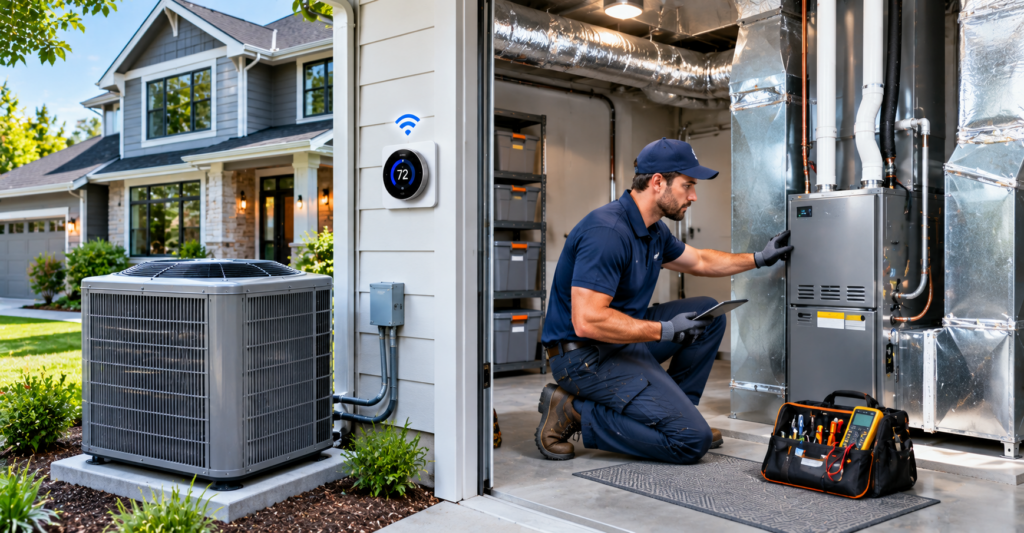
A split HVAC system is commonly used in American residential properties because it provides centralized heating and cooling through existing ductwork.
Hybrid Heat Pump Systems
Hybrid systems combine an electric heat pump with a backup furnace.
Depending on outdoor temperatures and system settings, the equipment can switch between heating sources to maintain comfort and manage energy consumption.
Ductless Mini-Split Systems
Ductless systems provide heating and cooling without requiring traditional air ducts.
A ductless HVAC system can be particularly useful for older homes, room additions, garages, and properties requiring independent temperature control in different areas.
Packaged Heating and Cooling Systems
Packaged units combine major heating and cooling components within a single outdoor cabinet.
They may be suitable for properties with limited indoor equipment space.
Geothermal Heat Pump Systems
Geothermal equipment uses relatively stable underground temperatures to transfer heat.
Although installation can require substantial upfront investment, these systems may provide efficient heating and cooling over the long term.
Key Benefits of an Energy-Efficient HVAC System
Modern heating and cooling equipment offers several advantages when properly selected, installed, and maintained.
1. Improved Energy Efficiency
Energy-efficient equipment can provide comfortable indoor temperatures while consuming less energy than less efficient alternatives.
Homeowners can compare efficiency ratings such as SEER2 for cooling and HSPF2 for heat pump heating performance.
Actual energy savings depend on climate, insulation, equipment condition, and usage patterns.
2. Better Indoor Air Quality
A properly maintained HVAC system can help filter airborne particles and support indoor humidity management.
Suitable filtration and ventilation can contribute to a healthier indoor environment. However, standard equipment cannot eliminate every indoor pollutant.
3. Consistent Year-Round Comfort
Reliable heating and cooling equipment helps maintain comfortable temperatures throughout seasonal changes.
Proper equipment sizing and airflow distribution can also reduce noticeable temperature differences between rooms.
4. Reduced Operating Noise
Modern equipment may feature variable-speed motors, advanced compressors, and improved mechanical designs that support quieter operation.
These features can be particularly beneficial in bedrooms, home offices, and family living spaces.
5. Potential Long-Term Savings
Installing an efficient HVAC system may reduce electricity or heating expenses over time.
Combining efficient equipment with proper insulation, regular servicing, and thoughtful thermostat settings can help improve overall household energy management.
How to Choose the Right HVAC System for Your Home
Selecting suitable heating and cooling equipment requires careful consideration of several important factors.
Consider Your Local Climate
Homeowners in Florida and Texas may prioritize cooling performance, while households in colder northern states may require greater heating capacity.
Choose equipment designed to perform reliably under your region’s seasonal conditions.
Determine the Correct Equipment Size
An oversized or undersized HVAC system may create comfort problems, unnecessary energy consumption, and excessive equipment wear.
ENERGY STAR recommends professional equipment sizing based on factors such as property dimensions, insulation, and window characteristics. ENERGY STAR+1
Compare Energy Efficiency Ratings
Review equipment efficiency ratings, anticipated operating expenses, and available product certifications.
Higher efficiency equipment may cost more initially but could provide long-term energy savings.
Evaluate Installation and Maintenance Costs
Consider the complete cost of purchasing, installing, operating, and maintaining the equipment rather than focusing exclusively on its purchase price.
Essential HVAC Maintenance Tips
Preventive maintenance helps identify potential mechanical problems and supports reliable equipment performance.
Replace Air Filters Regularly
Dirty filters restrict airflow and can increase equipment strain. Inspect filters monthly and replace or clean them according to manufacturer recommendations.
Keep Outdoor Equipment Clear
Remove leaves, grass clippings, and other debris surrounding outdoor units. Maintain appropriate clearance for ventilation.
Check Thermostat Performance
Review thermostat settings, battery condition, and programmed schedules to ensure they match your household requirements.
Schedule Professional Inspections
ENERGY STAR recommends annual professional checkups before peak heating and cooling seasons. ENERGY STAR
Routine servicing can help keep your HVAC system operating efficiently while identifying developing mechanical or electrical concerns.
Warning Signs Your HVAC System Needs Repair
Recognizing early warning signs can help homeowners prevent certain problems from developing into more expensive equipment failures.
Common symptoms include:
- Unusually high energy bills
- Weak airflow from vents
- Inconsistent indoor temperatures
- Unusual grinding or rattling sounds
- Frequent equipment cycling
- Persistent unpleasant odors
- Water leakage around indoor equipment
- Difficulty maintaining thermostat settings
Contact a qualified technician if these problems continue. Electrical faults, refrigerant leaks, and combustion-related issues require appropriate professional attention.
How Much Does an HVAC System Cost in the USA?
Heating and cooling installation costs vary depending on equipment type, property size, energy efficiency ratings, geographic location, and labor requirements.
Additional expenses may include ductwork replacement, electrical upgrades, permits, thermostat installation, and removal of existing equipment.
Before purchasing a new HVAC system, obtain itemized estimates from several qualified contractors.
Ask about manufacturer warranties, installation guarantees, available utility rebates, and ongoing maintenance requirements.
Comparing total ownership costs can help homeowners make better purchasing decisions without overlooking important installation expenses.
How to Improve Heating and Cooling Efficiency
Homeowners can improve household energy management without necessarily replacing their existing equipment.
Practical strategies include improving attic insulation, sealing air leaks around windows and doors, keeping vents unobstructed, and using programmable thermostats.
Regular professional servicing and clean filters also help maintain equipment performance.
A properly maintained HVAC system works more effectively when the building itself minimizes unnecessary heat loss and heat gain.
When Should You Replace Your Heating and Cooling Equipment?
Replacement may become appropriate when equipment experiences repeated breakdowns, declining efficiency, increasing repair costs, or difficulty maintaining indoor comfort.
Equipment age alone does not necessarily determine whether replacement is required. Consider its maintenance history, operating condition, repair availability, and expected future performance.
A qualified contractor can assess whether repairing or replacing your HVAC system offers better long-term value.
Frequently Asked Questions
What does HVAC stand for?
HVAC stands for heating, ventilation, and air conditioning. These technologies help regulate indoor temperatures, airflow, and environmental comfort.
How long does an HVAC system last?
Many residential heating and cooling systems last approximately 15 to 20 years. Actual lifespan depends on equipment type, installation quality, maintenance, climate, and usage.
How often should heating and cooling equipment be serviced?
Professional maintenance is generally recommended annually for each heating and cooling function. Homeowners should also perform basic maintenance between appointments.
Can an HVAC system improve indoor air quality?
Yes. Appropriate filtration, ventilation, and humidity management can help reduce certain indoor air quality concerns when equipment is properly designed and maintained.
Are heat pumps suitable for cold climates?
Yes. Modern cold-climate heat pumps can operate effectively in low outdoor temperatures. Appropriate sizing and backup heating requirements should be evaluated professionally.
Can smart thermostats reduce energy bills?
Compatible smart thermostats may reduce unnecessary heating and cooling through automated scheduling and temperature management. Actual savings depend on household behavior and equipment performance.
Conclusion
A reliable HVAC system plays an essential role in maintaining indoor comfort, supporting air quality, and managing household energy consumption.
From traditional furnaces and central air conditioners to modern heat pumps and ductless technologies, homeowners have numerous options for creating comfortable living environments.
Choosing suitable equipment, scheduling regular maintenance, and improving household energy efficiency can help reduce unnecessary operating expenses and prevent avoidable breakdowns.
Whether you are upgrading existing equipment or installing a new heating and cooling solution, work with qualified professionals who understand your property’s specific requirements.
Thoughtful planning and preventive maintenance can help you enjoy dependable indoor comfort throughout every season.