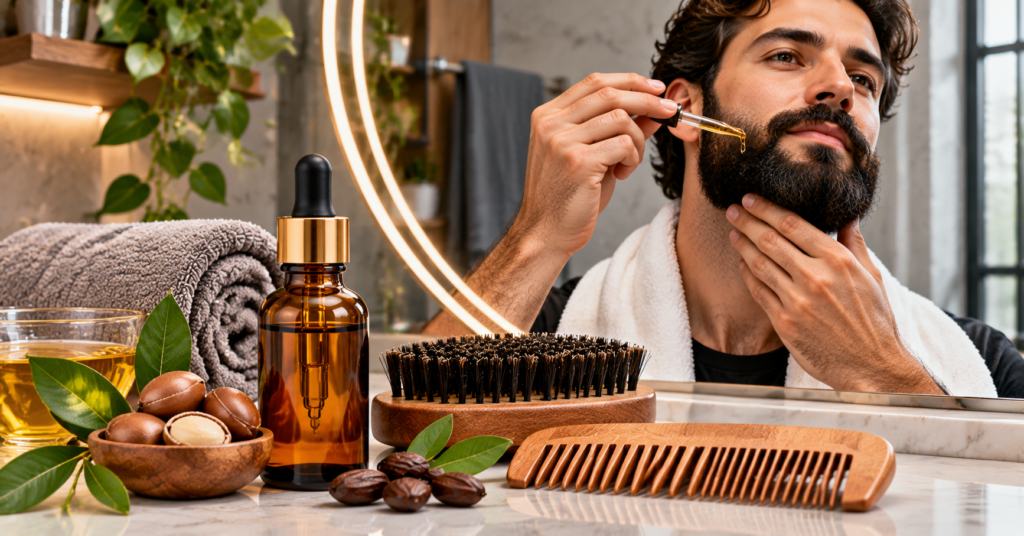
A well-maintained beard can make a strong impression, but achieving a healthy and attractive appearance requires more than simply growing facial hair. Regular grooming, proper cleansing, and suitable moisturizing products help keep facial hair looking neat and feeling comfortable.
One popular product in modern men’s grooming routines is Beard Oil. It is designed to condition facial hair, moisturize the skin underneath, and improve the overall appearance of a beard.
Whether you have short stubble, a medium-length beard, or a thick full beard, choosing the right grooming products can make daily maintenance easier.
This comprehensive guide explores the benefits, ingredients, application techniques, and buying considerations that can help you develop an effective beard care routine.
What Is Beard Oil?
Beard Oil is a grooming product formulated using carrier oils and, in some cases, essential oils or fragrance ingredients.
Its primary purpose is to condition facial hair and moisturize the skin beneath the beard.
Unlike ordinary hair products, beard-specific formulations are designed for the unique needs of facial hair and the skin underneath it.
Common ingredients include:
- Jojoba oil
- Argan oil
- Sweet almond oil
- Grapeseed oil
- Coconut oil
- Vitamin E
- Essential oils for fragrance
These ingredients can help improve softness, manageability, and the overall appearance of facial hair.
Why Is Beard Oil Important for Men’s Grooming?
As facial hair grows, the skin underneath can become dry or uncomfortable.
Environmental conditions, frequent washing, and inadequate moisturizing may contribute to roughness, flaking, and beard-related discomfort.
Adding Beard Oil to your grooming routine can provide several practical benefits.
1. Helps Soften Facial Hair
Coarse facial hair can feel rough and difficult to manage.
Conditioning oils help coat hair strands, improving their softness and making the beard more comfortable to touch.
Regular application can also make facial hair easier to comb and style.
2. Moisturizes the Skin Beneath Your Beard
The skin underneath facial hair can be difficult to reach with conventional moisturizers.
A suitable beard conditioning product can help deliver moisturizing ingredients to this area.
This may reduce dryness and support a more comfortable grooming experience.
3. Improves Beard Appearance
Dry facial hair can appear dull, rough, and uneven.
Beard Oil can provide a subtle natural-looking shine while improving the appearance of individual hair strands.
The result is a beard that looks more conditioned and well-maintained.
4. Helps Reduce Beard-Related Itching
Dry skin underneath facial hair can contribute to itching and discomfort.
Moisturizing products may help address dryness-related irritation.
However, persistent itching, redness, or inflammation may indicate an underlying skin condition that requires appropriate medical attention.
5. Makes Beard Grooming Easier
Conditioned facial hair is generally easier to comb and manage.
Using Beard Oil before styling can help reduce roughness and make it easier to maintain a neat appearance.
Best Ingredients to Look for in Beard Oil
Ingredient quality plays an important role when selecting a grooming product.
Different oils offer different characteristics, so understanding their properties can help you choose a suitable formulation.
1. Jojoba Oil
Jojoba oil is widely used in personal care products because of its lightweight texture.
It helps soften facial hair and moisturize the skin without necessarily leaving a heavy feeling.
2. Argan Oil
Argan oil contains fatty acids and vitamin E.
It is commonly included in grooming products designed to improve hair softness and conditioning.
3. Sweet Almond Oil
Sweet almond oil is valued for its smooth texture and moisturizing properties.
It can help improve the feel and manageability of coarse facial hair.
4. Grapeseed Oil
Grapeseed oil is relatively lightweight and is often used in cosmetic formulations.
It may be suitable for people who prefer less heavy-feeling grooming products.
5. Vitamin E
Vitamin E is commonly included in personal care formulations for its antioxidant properties.
Its inclusion can complement other conditioning ingredients.
6. Essential Oils
Some products contain essential oils such as cedarwood, peppermint, sandalwood, or tea tree.
These ingredients may contribute fragrance and distinctive sensory characteristics.
However, essential oils can irritate sensitive skin, particularly when improperly formulated or used in excessive concentrations.
How to Choose the Best Beard Oil
Choosing the right product depends on your beard length, skin type, fragrance preferences, and ingredient sensitivities.
Consider Your Skin Type
People with dry skin may prefer richer formulations, while individuals with oily skin may prefer lightweight products.
If you have sensitive skin, choose fragrance-free options where possible and review the ingredient list carefully.
Check the Ingredient List
Look for clearly identified ingredients and avoid products containing substances that you already know irritate your skin.
Natural ingredients are not automatically suitable for everyone.
Choose a Suitable Fragrance
Popular fragrance profiles include:
- Woody and earthy
- Fresh and citrusy
- Herbal and botanical
- Warm and spicy
- Unscented
Choose a scent that complements your personal preferences without becoming overwhelming.
Examine Packaging Quality
Amber or dark-colored glass bottles can help protect certain oil formulations from light exposure.
A dropper can also make it easier to dispense controlled amounts.
Compare Product Value
When comparing Beard Oil products, consider bottle size, ingredient quality, formulation, and price per ounce.
An expensive product is not automatically more effective than a reasonably priced alternative.
How to Apply Beard Oil Correctly
Applying grooming products correctly helps distribute them evenly and prevents unnecessary product buildup.
Follow these simple steps.
Step 1: Clean Your Beard
Wash your beard using a suitable beard cleanser.
Remove dirt, excess oil, and product residue before applying conditioning products.
Step 2: Dry Your Facial Hair
Gently pat your beard with a clean towel.
Slightly damp facial hair can help distribute certain formulations, but always follow the manufacturer’s instructions.
Step 3: Dispense a Small Amount
Place a few drops into your palm.
The amount required depends on beard length, thickness, and the product’s consistency.
Step 4: Distribute the Product
Rub your palms together and massage the oil through your facial hair.
Work from the roots toward the ends, ensuring that the skin underneath receives attention.
Step 5: Comb and Style
Use a clean beard comb or brush to distribute the product evenly.
Finish by arranging your beard into your preferred style.
How Much Beard Oil Should You Use?
Using excessive amounts can leave facial hair greasy and create unnecessary product buildup.
The following table provides a general starting point.
| Beard Length | Suggested Starting Amount |
|---|---|
| Short stubble | 1–2 drops |
| Short beard | 2–3 drops |
| Medium beard | 3–5 drops |
| Long beard | 5–8 drops |
These amounts are approximate. Adjust according to your beard thickness, skin type, and product instructions.
Beard Oil vs. Beard Balm: What’s the Difference?
Both products support beard grooming, but their purposes are slightly different.
| Feature | Beard Oil | Beard Balm |
|---|---|---|
| Primary purpose | Conditioning and moisturizing | Conditioning and light styling |
| Texture | Liquid | Solid or semi-solid |
| Application | Drops | Small amount of balm |
| Hold | Minimal | Light to moderate |
| Best suited for | Softness and conditioning | Shaping and managing longer beards |
Some people use both products as part of their grooming routine.
Applying oil first and a small amount of balm afterward may provide conditioning alongside additional styling control.
Common Beard Care Mistakes to Avoid
Even quality grooming products may not deliver the desired experience when used incorrectly.
Avoid these common mistakes:
- Applying excessive product.
- Using ordinary hair products that irritate facial skin.
- Neglecting the skin underneath the beard.
- Using dirty combs and brushes.
- Ignoring ingredient sensitivities.
- Washing facial hair too frequently with harsh cleansers.
- Expecting oils to create new hair follicles or guarantee beard growth.
A consistent routine and suitable grooming products are more useful than relying on unrealistic product claims.
Can Beard Oil Help Beard Growth?
Beard Oil is primarily designed to condition existing facial hair and moisturize the underlying skin.
It does not have established evidence proving that it can directly stimulate new beard growth or increase the number of hair follicles.
Genetics, hormones, age, and individual health factors play important roles in facial hair development.
However, maintaining clean, conditioned facial hair can improve its appearance and reduce breakage associated with dryness.
Frequently Asked Questions
How often should I use Beard Oil?
Many people use it once daily, although frequency depends on beard length, skin type, and product formulation.
Can I use Beard Oil every day?
Yes. Most products are designed for regular use when applied according to their instructions and tolerated by your skin.
Is Beard Oil suitable for short beards?
Yes. Even short facial hair can benefit from conditioning and moisturizing, although smaller quantities are generally sufficient.
Can Beard Oil cause acne?
Some formulations may contribute to clogged pores or irritation in susceptible individuals. Choose products suitable for your skin type and discontinue use if breakouts develop.
Should I apply Beard Oil before or after showering?
Many people apply it after showering when their beard has been gently towel-dried. This can make distribution easier.
Does Beard Oil make facial hair grow faster?
There is insufficient evidence that ordinary beard conditioning oils directly increase facial hair growth. Their primary purpose is moisturizing and conditioning.
Conclusion
Maintaining a healthy-looking beard requires consistent grooming, suitable products, and attention to the skin underneath facial hair.
Beard Oil can be a useful addition to your routine because it helps soften coarse hair, improve manageability, and moisturize dry skin.
By selecting appropriate ingredients, applying the correct amount, and maintaining regular grooming habits, you can keep your beard looking neat and well-conditioned.
Whether you prefer short stubble or a full, thick beard, choosing products that suit your individual needs can make everyday beard care more comfortable and enjoyable.