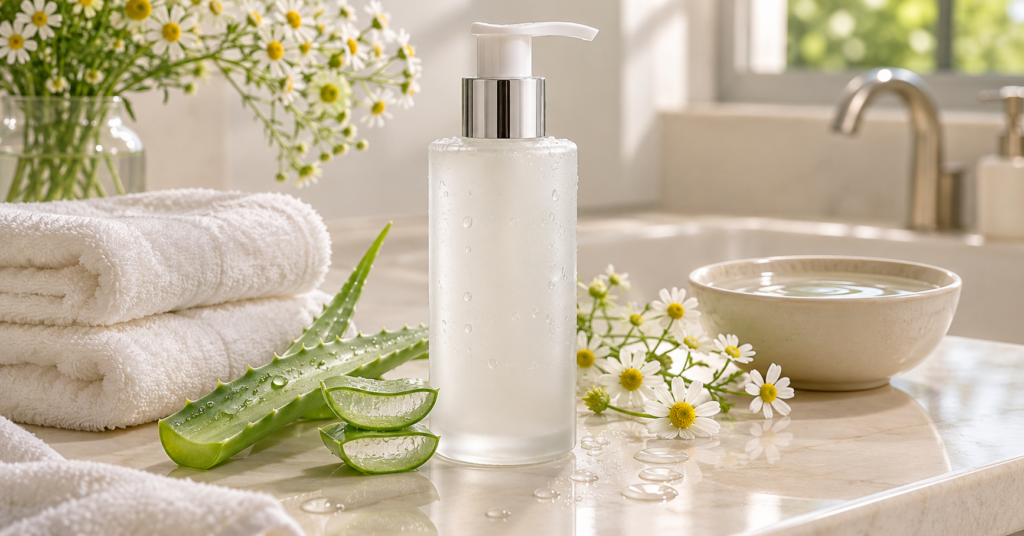
Taking care of sensitive skin can sometimes feel challenging. Products that work well for one person may cause dryness, redness, or discomfort for someone else. This is especially true when choosing facial cleansers because cleansing is one of the first steps in any skincare routine.
A good facial cleanser for sensitive skin should remove everyday dirt, excess oil, sweat, and makeup without unnecessarily irritating the skin. The right formula can help maintain skin comfort while supporting a consistent skincare routine.
However, not every product labeled gentle or suitable for sensitive skin is automatically appropriate for everyone. Ingredients, fragrance, cleansing agents, and individual skin conditions all influence how a product performs.
Whether your skin frequently feels tight, reacts to fragrances, or becomes uncomfortable after washing, understanding cleanser ingredients can help you make better choices.
This guide explores how sensitive skin works, which cleanser ingredients to consider, how to choose the right formula, and how to develop a gentle daily cleansing routine.
What Is a Facial Cleanser for Sensitive Skin?
A facial cleanser for sensitive skin is a skincare product formulated to remove impurities while aiming to minimize irritation and excessive dryness.
Unlike some stronger cleansing products, gentle formulas are generally designed to clean the skin without leaving it feeling overly tight or stripped.
They may contain ingredients such as:
- Glycerin
- Aloe vera
- Ceramides
- Panthenol
- Colloidal oatmeal
- Hyaluronic acid
- Mild cleansing agents
- Skin-conditioning ingredients
The exact formulation varies by manufacturer.
Some products have creamy textures, while others are gel-based or lightly foaming.
The best choice depends on your skin’s individual needs, personal sensitivities, and the type of makeup or sunscreen you regularly use.
What Causes Sensitive Skin?
Sensitive skin is not always a specific medical condition. It describes skin that reacts easily to environmental factors, skincare products, or certain ingredients.
Several factors can contribute to skin sensitivity.
1. A Weakened Skin Barrier
The skin barrier helps protect the body from external irritants and reduces water loss.
When this barrier becomes disrupted, the skin may feel dry, tight, irritated, or uncomfortable.
2. Harsh Skincare Products
Strong cleansers, excessive exfoliation, and products containing irritating ingredients may contribute to skin discomfort.
Using a facial cleanser for sensitive skin can help simplify your cleansing routine and reduce unnecessary exposure to potentially irritating ingredients.
3. Environmental Changes
Cold weather, dry indoor air, excessive heat, and pollution can affect skin comfort.
Some people notice increased sensitivity during seasonal changes.
4. Fragrance and Certain Ingredients
Fragrances, essential oils, and some preservatives can cause reactions in susceptible individuals.
This is why reviewing ingredient lists is particularly important when choosing facial skincare products.
5. Underlying Skin Conditions
Conditions such as eczema and rosacea can involve increased sensitivity.
If you experience persistent redness, burning, itching, or inflammation, a dermatologist can help identify the cause and recommend suitable treatment.
Benefits of Using a Gentle Facial Cleanser
Choosing the right cleanser can make your daily skincare routine more comfortable and manageable.
1. Helps Remove Everyday Impurities
A facial cleanser removes dirt, sweat, excess oil, and other impurities that accumulate throughout the day.
Gentle cleansing helps maintain cleanliness without unnecessary scrubbing.
2. Supports Skin Barrier Comfort
A suitable cleanser should clean without leaving your face feeling excessively dry or tight.
Some formulas include moisturizing ingredients that help maintain skin comfort during cleansing.
3. Helps Reduce Unnecessary Irritation
Using fewer potentially irritating ingredients can be helpful for people who experience sensitivity.
A facial cleanser for sensitive skin with a simple, fragrance-free formulation may be a suitable starting point.
4. Helps Maintain Skin Hydration
Cleansers containing ingredients such as glycerin can help attract and retain moisture in the outer layers of the skin.
Although cleansers are rinsed off, their formulation can influence how your skin feels afterward.
5. Creates a Better Foundation for Skincare
A comfortable cleansing routine prepares your skin for other skincare products, including moisturizers and sunscreen.
6. Supports Consistent Daily Skincare
A gentle formula that does not cause discomfort can make it easier to maintain a regular morning and evening skincare routine.
Best Ingredients to Look for in a Facial Cleanser for Sensitive Skin
Ingredients play an important role in determining how a cleanser feels and performs.
When selecting a facial cleanser for sensitive skin, consider formulas containing well-tolerated cleansing and moisturizing ingredients.
1. Glycerin
Glycerin is a humectant that attracts water and helps maintain skin hydration.
It is commonly used in facial cleansers, moisturizers, and other personal care products.
2. Ceramides
Ceramides are lipids naturally found in the skin barrier.
Skincare products containing ceramides are often designed to support skin barrier function and reduce moisture loss.
3. Aloe Vera
Aloe vera is commonly included in skincare formulations for its conditioning properties.
Some people find aloe-containing products comfortable to use, although individual sensitivities can vary.
4. Colloidal Oatmeal
Colloidal oatmeal is used in certain skincare products designed for dry or sensitive skin.
It can help soothe the feeling of dryness and support skin comfort.
5. Panthenol
Panthenol, also known as provitamin B5, is a conditioning ingredient frequently used in moisturizers and cleansers.
It helps improve the feel of skincare formulations and supports moisture retention.
6. Hyaluronic Acid
Hyaluronic acid is a humectant that helps attract water to the skin’s outer layers.
It is commonly included in hydrating skincare products.
Ingredients and Formulas to Approach With Caution
Not every ingredient is irritating, and sensitivity varies from person to person. However, certain formulations may be less comfortable for reactive skin.
1. Added Fragrance
Fragrance can trigger irritation or allergic reactions in some individuals.
If your skin frequently reacts to scented products, consider a fragrance-free formula.
2. Strong Cleansing Agents
Some highly cleansing formulas can leave skin feeling dry or tight, especially when used frequently.
Look for products marketed as gentle and suitable for your skin type.
3. Harsh Physical Exfoliants
Rough scrubbing particles may create additional friction.
People with sensitive skin may prefer a simple cleanser without abrasive exfoliating ingredients.
4. Strong Active Ingredients
Certain exfoliating acids and other active ingredients can cause discomfort when introduced too frequently.
A basic daily cleanser does not need to contain multiple active ingredients.
5. Essential Oils
Natural essential oils are not automatically gentle.
Some may trigger irritation or allergic reactions, particularly in people with fragrance sensitivities.
How to Choose the Best Facial Cleanser for Your Skin Type
Sensitive skin can also be dry, oily, combination, or normal. Choosing a product that addresses both sensitivity and your underlying skin type is important.
1. Dry and Sensitive Skin
Choose a creamy or lotion-based cleanser that removes impurities without creating an excessively tight feeling.
Look for moisturizing ingredients such as glycerin and ceramides.
2. Oily and Sensitive Skin
A lightweight gel cleanser may be suitable if your skin produces excess oil.
Avoid aggressive cleansing products that leave your face feeling stripped.
3. Combination and Sensitive Skin
Combination skin may have an oily forehead and nose but drier cheeks.
A balanced, gentle formula can help cleanse the entire face without excessive dryness.
4. Acne-Prone and Sensitive Skin
Look for non-comedogenic products designed for acne-prone skin.
Avoid introducing several new acne treatments simultaneously, especially if your skin is already irritated.
5. Mature and Sensitive Skin
As skin ages, it may become drier and more sensitive.
A moisturizing cleanser with a gentle formulation can be a comfortable addition to an age-appropriate skincare routine.
How to Use a Facial Cleanser for Sensitive Skin Correctly
Even a gentle product can cause discomfort if used incorrectly.
Follow these simple steps to make your cleansing routine more comfortable.
Step 1: Wash Your Hands
Clean your hands before touching your face to avoid transferring unnecessary dirt and impurities.
Step 2: Use Lukewarm Water
Wet your face with lukewarm water.
Avoid very hot water because it can contribute to dryness and discomfort.
Step 3: Apply a Small Amount of Cleanser
Dispense the recommended amount of your facial cleanser for sensitive skin into your hands.
Gently distribute it across your face using your fingertips.
Step 4: Massage Gently
Use light circular movements without scrubbing aggressively.
Pay attention to areas around your nose, forehead, and chin.
Step 5: Rinse Thoroughly
Remove the cleanser completely with lukewarm water.
Avoid leaving product residue around your hairline or jaw.
Step 6: Pat Your Face Dry
Use a clean, soft towel and gently pat your skin.
Do not rub your face aggressively.
Step 7: Apply Moisturizer
Apply a suitable moisturizer while your skin is slightly damp.
During the morning, finish your routine with broad-spectrum sunscreen rated SPF 30 or higher.
How Often Should You Cleanse Sensitive Skin?
Most people benefit from cleansing their face in the evening to remove sunscreen, makeup, sweat, and daily impurities.
A morning cleanse may also be appropriate depending on your skin type and personal preference.
However, excessive washing can contribute to dryness and discomfort.
If your skin feels tight after every wash, consider reducing cleansing frequency or choosing a gentler formula.
A facial cleanser for sensitive skin should fit comfortably into your routine rather than making your skin feel irritated.
Common Skincare Mistakes to Avoid
Even when using gentle products, certain habits can affect skin comfort.
- Overwashing: Cleansing too frequently may contribute to dryness.
- Scrubbing aggressively: Excessive friction can irritate the skin.
- Using very hot water: Hot water can worsen dryness.
- Introducing several new products together: This makes it difficult to identify the cause of a reaction.
- Ignoring ingredient labels: Products marketed as natural or gentle may still contain potential irritants.
- Skipping moisturizer: Cleansing should be followed by appropriate hydration.
- Using expired products: Check expiration dates and follow storage instructions.
When introducing a new facial cleanser for sensitive skin, consider testing it on a small area first. Stop using it if you experience persistent irritation.
Best Practices for Maintaining Healthy Sensitive Skin
A cleanser is only one part of a complete skincare routine. Your daily habits also influence how comfortable your skin feels.
1. Keep Your Routine Simple
Using too many products can make it difficult to identify ingredients that cause irritation.
Start with a cleanser, moisturizer, and sunscreen before introducing additional products.
2. Choose Fragrance-Free Products
If you frequently experience reactions to scented skincare, fragrance-free formulations may be a better option.
Remember that fragrance-free and unscented do not always mean the same thing.
3. Avoid Excessive Exfoliation
Frequent exfoliation can contribute to irritation, especially when your skin is already sensitive.
Choose exfoliating products carefully and follow their instructions.
4. Protect Your Skin From Sun Exposure
Daily sunscreen helps protect your skin from ultraviolet radiation.
Choose a broad-spectrum SPF 30 or higher product that feels comfortable on your skin.
5. Maintain Consistent Moisturizing Habits
Apply moisturizer after cleansing to help maintain hydration and skin comfort.
6. Pay Attention to Skin Reactions
If a product causes persistent redness, burning, itching, or swelling, discontinue use. Consult a dermatologist if symptoms continue or become severe.
Frequently Asked Questions
1. What is the best facial cleanser for sensitive skin?
The best option is generally a gentle, fragrance-free cleanser that suits your skin type. Look for moisturizing ingredients such as glycerin and ceramides, and avoid formulas that leave your skin feeling excessively dry.
2. Should sensitive skin use a foaming cleanser?
Yes, some foaming cleansers are suitable for sensitive skin. Choose a mild formula that does not cause tightness or irritation after washing.
3. How often should I wash my sensitive face?
Many people cleanse once in the evening and optionally in the morning. Adjust the frequency according to your skin’s needs and how comfortable it feels.
4. Is fragrance-free face wash better for sensitive skin?
Fragrance-free products may be helpful for people who react to scented skincare ingredients. However, every formulation is different, so always review the complete ingredient list.
5. Can a facial cleanser for sensitive skin help with redness?
A gentle cleanser may help avoid additional irritation caused by harsh cleansing products. However, it does not necessarily treat the underlying causes of persistent redness.
6. Can I use a facial cleanser for sensitive skin if I have acne?
Yes. Look for non-comedogenic formulas suitable for acne-prone skin. If you are using acne treatments, choose cleansing products that do not add unnecessary irritation.
7. Should I moisturize after using a gentle cleanser?
Yes. Applying an appropriate moisturizer after cleansing helps maintain hydration and supports the skin barrier.
8. How do I know if a cleanser is irritating my skin?
Common signs include persistent burning, itching, redness, dryness, or uncomfortable tightness. Stop using the product if these symptoms develop and seek professional advice when necessary.
Conclusion
Choosing the right skincare products can make a significant difference in how comfortable your skin feels every day. A facial cleanser for sensitive skin should provide effective cleansing while helping minimize unnecessary irritation and dryness.
When shopping for a new product, pay attention to its ingredients, fragrance, cleansing agents, and compatibility with your skin type.
Look for gentle formulations containing ingredients such as glycerin, ceramides, panthenol, or colloidal oatmeal. Avoid products that consistently cause discomfort, and introduce new skincare products gradually.
Remember that a successful skincare routine does not need to be complicated. Gentle cleansing, regular moisturizing, daily sunscreen, and careful ingredient selection can provide a practical foundation for maintaining comfortable skin.
By understanding your skin’s individual needs and choosing suitable products, you can develop a consistent routine that supports healthier-looking skin over time.