Diamonds have always been associated with beauty, elegance, romance, and special occasions. From engagement rings to anniversary gifts, these precious stones hold a special place in the jewelry industry. However, modern technology has introduced another option that is changing how people shop for diamond jewelry: lab-created diamonds.
If you have been researching what are lab grown diamonds, you may have noticed that they look remarkably similar to traditional mined diamonds. They offer the same sparkling appearance and are available in different shapes, sizes, and quality grades. The biggest difference is where and how they are created.
Lab-created diamonds have become increasingly popular among American shoppers because they provide more choices, flexible pricing, and access to beautiful diamond jewelry at different budgets.
In this guide, we explain how these diamonds are made, how they compare with natural diamonds, what they cost, and what you should consider before purchasing one.
What Are Lab Grown Diamonds?
To understand what are lab grown diamonds, it is important to know that they are real diamonds created in controlled laboratory environments instead of being extracted from the earth.
Natural diamonds develop deep underground over billions of years under extremely high temperatures and pressures. Laboratory-created diamonds are produced using advanced technology that recreates the essential conditions required for diamond formation.
The result is a genuine diamond with the same fundamental chemical composition, crystal structure, and optical properties as a natural diamond.
Both types consist primarily of crystallized carbon. They have the same hardness rating of 10 on the Mohs scale, making them suitable for everyday jewelry when properly set and maintained.
These diamonds are not simply glass, cubic zirconia, or ordinary imitation gemstones. They are actual diamonds, although their origins are different.
How Are Lab Grown Diamonds Made?
The production process involves sophisticated equipment and carefully controlled conditions. There are two primary methods used by manufacturers.
1. High Pressure High Temperature (HPHT)
HPHT technology recreates the extreme pressure and temperature conditions associated with natural diamond formation.
The process generally begins with a small diamond seed placed inside specialized equipment alongside a carbon source. The machine applies intense pressure and high temperatures, allowing carbon atoms to crystallize and form a larger diamond.
Important characteristics of HPHT production include:
- Uses extremely high pressure and temperature.
- Starts with a small diamond seed.
- Encourages carbon crystallization.
- Produces genuine diamond material.
- Requires specialized industrial equipment.
HPHT is one of the earliest established methods used to produce laboratory-created diamonds.
2. Chemical Vapor Deposition (CVD)
CVD is another widely used production technique.
In this process, a thin diamond seed is placed inside a controlled chamber. Carbon-containing gases are introduced and energized, allowing carbon atoms to deposit onto the seed and gradually form diamond material.
The process involves several carefully managed stages:
- A diamond seed is placed inside a vacuum chamber.
- Carbon-rich gases are introduced.
- Energy activates the gases.
- Carbon atoms gradually build up on the diamond seed.
- The growing diamond is processed and prepared for cutting.
Both HPHT and CVD can produce high-quality diamonds. The final appearance and quality depend on the growth process, post-growth treatments, and cutting standards.
Are Lab Grown Diamonds Real Diamonds?
Yes. This is one of the most important things to understand when exploring what are lab grown diamonds.
Laboratory-created diamonds are chemically and physically genuine diamonds. They are not simply gemstones designed to imitate the appearance of natural diamonds.
The distinction comes from their origin.
Natural diamonds form through geological processes beneath the earth’s surface, while laboratory-created diamonds develop through controlled technological processes.
Professional gemological laboratories can examine diamonds and identify characteristics that help distinguish their origins.
However, ordinary visual inspection is generally not enough to reliably determine whether a diamond is natural or laboratory-created.
This is why independent grading reports and accurate product descriptions are important when shopping for diamond jewelry.
Lab Grown Diamonds vs. Natural Diamonds
Although both types share the same essential diamond properties, there are several differences worth understanding.
1. Origin
Natural diamonds are formed deep within the earth over geological periods.
Laboratory-created diamonds are produced in specialized facilities using HPHT or CVD technology.
2. Physical Properties
Both types have essentially the same hardness, chemical composition, and crystal structure.
They also display similar brilliance, fire, and sparkle when cut to comparable standards.
3. Appearance
A well-cut laboratory-created diamond can look identical to a natural diamond.
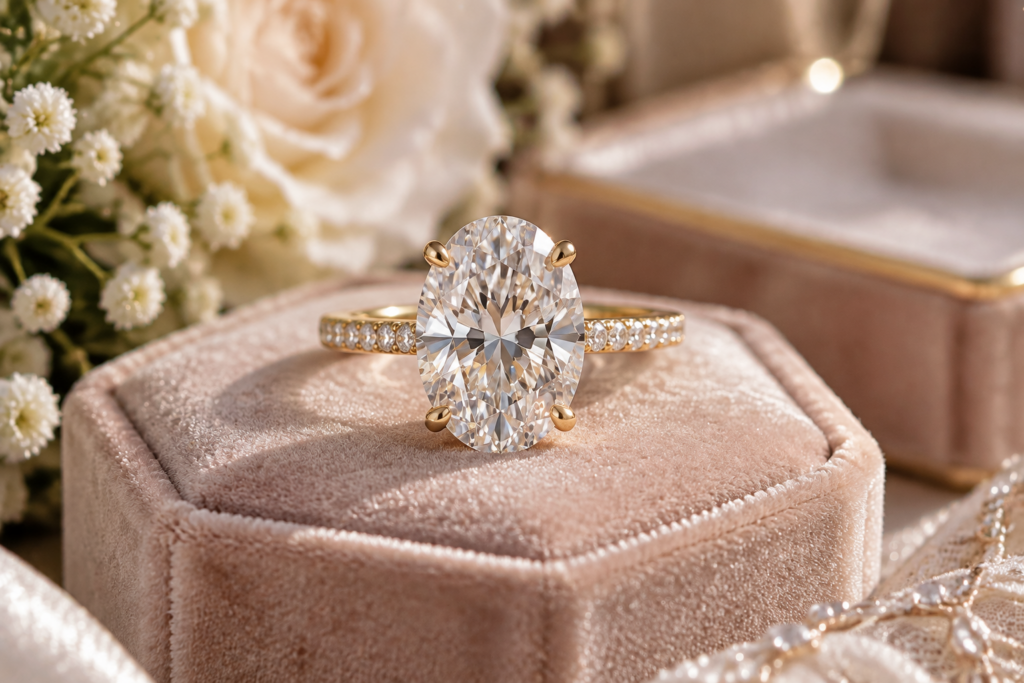
Both are available in popular shapes, including round brilliant, oval, princess, pear, emerald, and cushion cuts.
4. Price
Laboratory-created diamonds generally cost significantly less than comparable natural diamonds.
This allows buyers to consider larger carat weights or different jewelry settings within a particular budget.
5. Rarity and Market Value
Natural diamonds are geological products with a different supply structure and established traditional gemstone market.
Laboratory-created diamonds can be manufactured using specialized equipment, and their retail prices have generally declined as production technology has improved.
Their resale market is also different, and buyers should not assume they will retain their original purchase price.
How Much Do Lab Grown Diamonds Cost in the USA?
Price is one of the biggest reasons American shoppers explore what are lab grown diamonds.
The final cost depends on several factors, including carat weight, cut quality, color, clarity, certification, and the jewelry setting.
For example, a one-carat laboratory-created diamond may cost considerably less than a natural diamond with similar grading characteristics.
However, there is no single fixed price because retailers, suppliers, and market conditions vary.
Here are the major factors affecting diamond prices.
Carat Weight
Carat measures the weight of a diamond, not its physical dimensions.
Larger diamonds generally cost more because producing them requires additional growth time and resources.
Cut Quality
Cut quality affects how effectively a diamond reflects and returns light.
A well-cut diamond can appear more brilliant and visually attractive than a poorly cut stone of the same weight.
Color
Diamond color grading generally ranges from D to Z.
D represents colorless, while lower grades may display increasing yellow or brown tones.
Clarity
Clarity describes internal inclusions and external blemishes.
Higher clarity grades generally indicate fewer visible imperfections under standard grading conditions.
Understanding these four characteristics helps shoppers compare diamond options more effectively.
Are Lab Grown Diamonds Environmentally Friendly?
Environmental considerations are another important part of the conversation.
Some shoppers researching what are lab grown diamonds are particularly interested in their environmental impact.
Laboratory production avoids the traditional mining process, which can involve land disturbance, excavation, and significant infrastructure.
However, laboratory production also requires energy, specialized equipment, and industrial resources.
The environmental impact depends on factors such as:
- The energy source used during production.
- Manufacturing efficiency.
- Production technology.
- Facility location.
- Transportation and distribution.
- Packaging and additional processing.
A laboratory-created diamond manufactured using renewable electricity may have a different environmental footprint from one produced using electricity generated primarily from fossil fuels.
Therefore, it is better to evaluate specific manufacturer information rather than automatically assuming every laboratory-created diamond is environmentally friendly.
Buyers interested in sustainability should look for transparent sourcing and independently supported environmental claims.
How to Choose the Best Lab Grown Diamond
Choosing a beautiful diamond involves more than selecting the largest available stone.
If you are shopping for an engagement ring, necklace, earrings, or another jewelry item, consider these important recommendations.
1. Understand the 4Cs
The 4Cs stand for cut, color, clarity, and carat weight.
These characteristics provide a standardized framework for evaluating diamond quality.
Do not focus exclusively on carat weight. A smaller, well-cut diamond may offer more visual appeal than a larger stone with weaker proportions.
2. Check the Grading Report
Reputable grading organizations provide reports describing diamond characteristics.
Examples include the Gemological Institute of America (GIA) and the International Gemological Institute (IGI).
A grading report can help verify important details, including measurements, color, clarity, and diamond origin.
Always make sure the report corresponds to the actual stone being purchased.
3. Choose the Right Diamond Shape
Popular diamond shapes include:
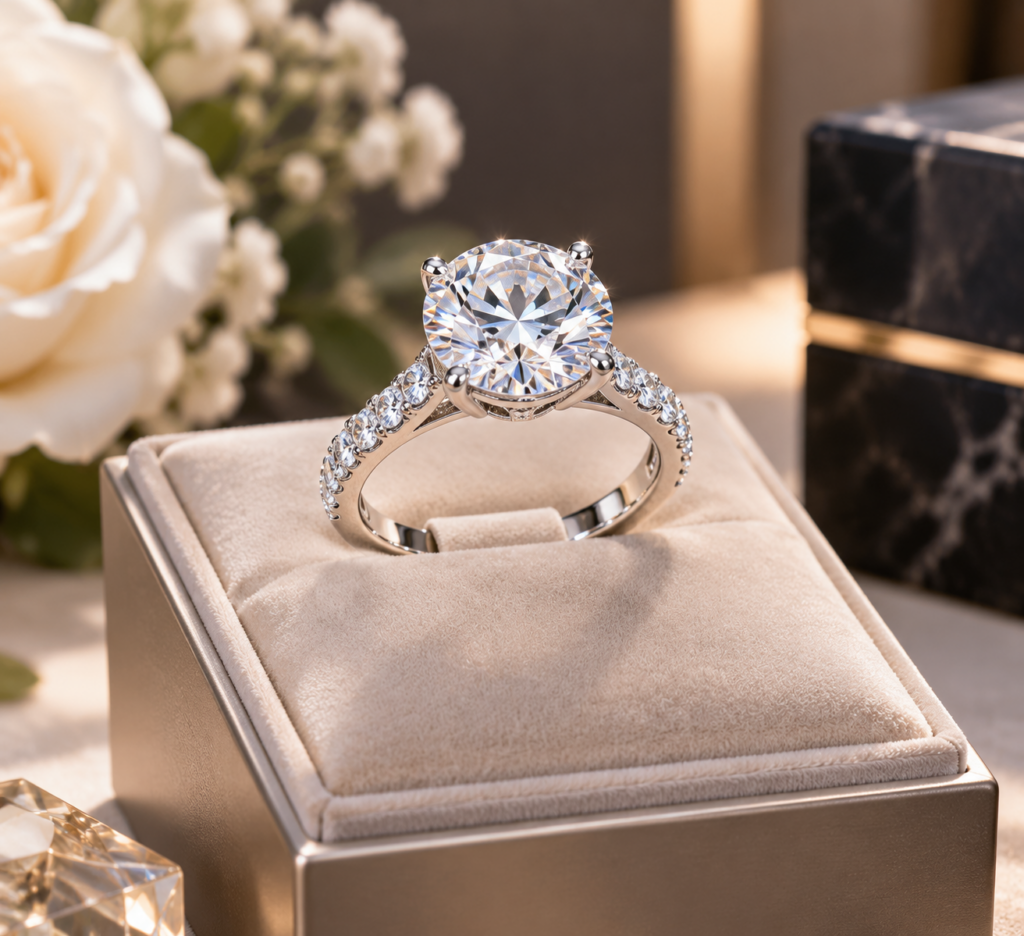
- Round brilliant: Classic and highly recognizable.
- Oval: Elegant with an elongated appearance.
- Princess: A contemporary square shape.
- Pear: A distinctive teardrop silhouette.
- Emerald: Known for its step-cut appearance.
- Cushion: A soft square or rectangular design.
Your choice should reflect personal taste and the overall jewelry design.
4. Compare Different Retailers
Before purchasing, compare several retailers.
Review diamond specifications, product photographs, grading reports, warranties, return policies, and customer service.
The cheapest option is not necessarily the best purchase.
Popular Jewelry Styles Featuring Lab Grown Diamonds
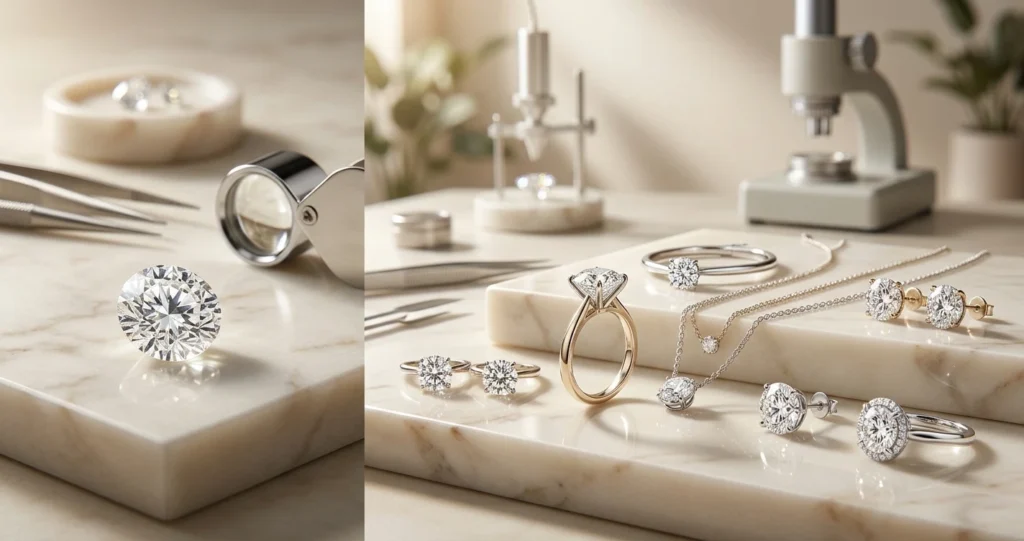
These diamonds are used in many types of jewelry, making them suitable for different occasions and personal styles.
Engagement Rings
Solitaire engagement rings remain a popular choice because they highlight the center diamond.
Halo, three-stone, and hidden-halo settings provide additional design options.
Diamond Earrings
Stud earrings are versatile accessories that work with casual and formal clothing.
They are available in different carat weights, shapes, and metal settings.
Diamond Necklaces
A solitaire pendant creates a simple and elegant appearance.
More decorative necklaces can feature multiple stones or intricate arrangements.
Diamond Bracelets
Tennis bracelets are another popular jewelry style.
They feature a continuous arrangement of diamonds and can complement both everyday and special-occasion outfits.
Common Myths About Lab Grown Diamonds
Several misconceptions can make purchasing decisions confusing.
Myth 1: They are fake diamonds.
Reality: They are genuine diamonds with the same essential chemical and physical properties as natural diamonds.
Myth 2: They look different from natural diamonds.
Reality: Their appearance can be visually indistinguishable without specialized testing.
Myth 3: All laboratory diamonds are environmentally harmless.
Reality: Their environmental impact depends on electricity sources, production methods, and manufacturing practices.
Myth 4: They have the same resale value as mined diamonds.
Reality: Their resale markets are different, and retail prices should not be treated as guaranteed future values.
Understanding these differences helps buyers make more informed choices.
Frequently Asked Questions (FAQs)
1. What are lab grown diamonds made of?
They are made primarily of crystallized carbon, just like natural diamonds. Their crystal structure and essential chemical composition are the same.
2. Are lab grown diamonds worth buying?
They can be an attractive option for buyers seeking genuine diamond jewelry at generally lower prices than comparable natural diamonds. Their suitability depends on personal preferences and budget.
3. Can you tell the difference between natural and lab grown diamonds?
Not reliably through ordinary visual inspection. Specialized gemological testing can identify characteristics associated with their different origins.
4. Do lab grown diamonds last forever?
Diamonds are extremely hard materials and can last for generations with proper care. However, they can still chip or break under certain conditions.
5. Are lab grown diamonds cheaper than natural diamonds?
Generally, yes. Comparable laboratory-created diamonds usually have substantially lower retail prices, although the exact difference depends on specifications and market conditions.
6. Can lab grown diamonds be certified?
Yes. Reputable gemological laboratories provide grading reports for laboratory-created diamonds. Buyers should check the issuing organization and verify the report details.
7. Do lab grown diamonds sparkle like natural diamonds?
Yes. Their brilliance and sparkle depend primarily on cut quality, proportions, and light performance rather than whether they were mined or manufactured.
8. Are lab grown diamonds suitable for engagement rings?
Absolutely. They are genuine diamonds and are widely used in solitaire, halo, three-stone, and other engagement ring designs.
Conclusion
Diamond jewelry continues to evolve as technology creates new opportunities for consumers. Laboratory-created gemstones have introduced another way to enjoy genuine diamonds without relying on traditional mining.
Understanding what are lab grown diamonds helps shoppers recognize that these stones are real diamonds, not ordinary imitations. Their chemical composition, hardness, and optical properties are essentially the same as those of natural diamonds, although their origins, pricing, and market values differ.
Whether you are purchasing an engagement ring, diamond earrings, or a special anniversary gift, take time to compare cut, color, clarity, carat weight, and grading reports.
The best diamond is ultimately the one that matches your style, expectations, and budget while providing confidence in the quality of your purchase.