Maintaining a healthy lawn or garden requires understanding the plants that grow in your outdoor space. While many homeowners focus on caring for flowers, grass, and landscaping plants, unwanted weeds can quickly compete for nutrients, sunlight, and water.
One of the most important concepts in weed management is understanding the difference between annual vs. perennial weeds.
Although both types of weeds can affect lawns and gardens, they grow differently, reproduce differently, and require different control methods. Knowing whether a weed is annual or perennial helps homeowners choose more effective solutions and prevent recurring problems.
This guide explains the differences between annual and perennial weeds, common examples, identification methods, and the best strategies for controlling them throughout the year.
What Are Weeds?
A weed is simply a plant growing where it is unwanted. A plant that may be considered valuable in one environment can become a weed in another.
For example:
- Wild plants growing in flower beds
- Grass growing between garden plants
- Unwanted plants spreading across lawns
Weeds become problematic because they compete with desirable plants for essential resources, including:
- Water
- Sunlight
- Nutrients
- Growing space
Effective weed control starts with understanding how weeds grow.
Understanding Annual vs Perennial Weeds
The main difference between annual vs perennial weeds is their life cycle.
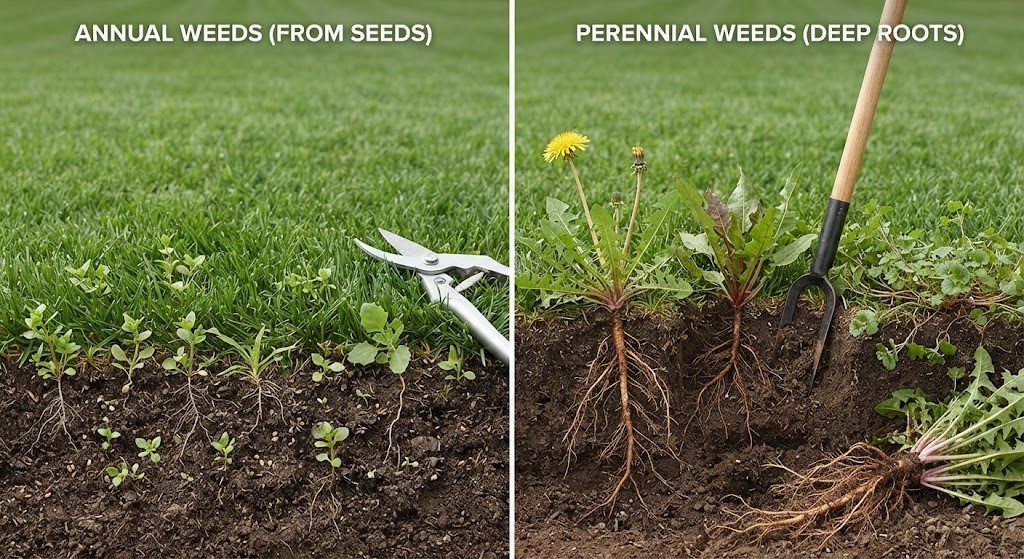
Annual weeds complete their entire life cycle within one growing season. They grow, produce seeds, and die within a year.
Perennial weeds live for multiple years. They can return season after season because of established root systems.
Understanding this difference is important because treatment methods that work for annual weeds may not work well for perennial weeds.
What Are Annual Weeds?
Annual weeds are plants that complete their life cycle in a single year.
The process includes:
- Seed germination
- Plant growth
- Flowering
- Seed production
- Plant death
Although the original plant dies, thousands of new seeds may remain in the soil and create future weed problems.
Characteristics of Annual Weeds
Annual weeds often:
- Grow quickly
- Produce large amounts of seeds
- Spread easily
- Appear seasonally
- Have shallow root systems
Because they rely heavily on seed production, preventing seed formation is an important control strategy.
Common Examples of Annual Weeds
Several common lawn and garden weeds are annual plants.
Crabgrass
Crabgrass is one of the most recognizable annual lawn weeds.
It commonly appears during warmer months and spreads through seeds.
Characteristics include:
- Low-growing habit
- Wide grass blades
- Rapid spreading
Preventing crabgrass often requires early-season control before seeds germinate.
Chickweed
Chickweed is a cool-season annual weed.
It often appears in:
- Lawns
- Gardens
- Landscape beds
It grows quickly and can form dense patches.
Annual Bluegrass
Annual bluegrass can appear in lawns during cooler seasons.
It produces many seeds, making long-term control challenging.
What Are Perennial Weeds?
Perennial weeds are plants that survive for multiple years.
Unlike annual weeds, they can return from existing roots, bulbs, or underground structures.
Even if the visible part of the plant is removed, the root system may continue growing.
Characteristics of Perennial Weeds
Perennial weeds often:
- Develop deep root systems
- Return every year
- Spread through roots or underground stems
- Require repeated management
Their survival ability makes them more difficult to control.
Common Examples of Perennial Weeds
Many common lawn problems involve perennial weeds.
Dandelions
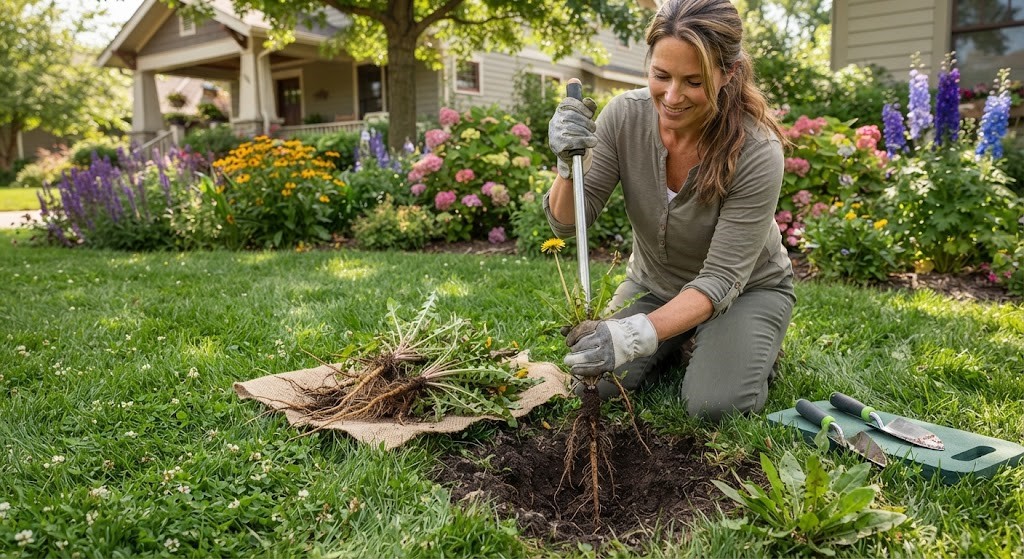
Dandelions are one of the most recognizable perennial weeds.
They produce:
- Deep taproots
- Yellow flowers
- Wind-dispersed seeds
Removing only the leaves often allows them to return because the root remains underground.
Clover
Clover can behave as a perennial weed in many lawns.
It spreads through:
- Seeds
- Creeping stems
While some people appreciate clover, others consider it unwanted in traditional grass lawns.
Nutsedge
Nutsedge is a persistent perennial weed.
It often grows faster than surrounding grass and can be difficult to eliminate because of underground structures.
Comparing Annual vs Perennial Weeds
Understanding the differences between these weed types makes control easier.
Life Cycle Differences
Annual Weeds
- Live for one growing season
- Reproduce mainly through seeds
- Die after producing seeds
Perennial Weeds
- Live for several years
- Regrow from roots or underground parts
- Require long-term management
Root Systems
Annual weeds usually have smaller root systems.
Perennial weeds often develop:
- Deep roots
- Underground stems
- Storage structures
This allows them to survive unfavorable conditions.
Reproduction Methods
Annual weeds depend heavily on seed production.
Perennial weeds can reproduce through:
- Seeds
- Roots
- Bulbs
- Underground stems
Difficulty of Control
Annual weeds are often easier to prevent by stopping seed germination.
Perennial weeds usually require more persistent treatment because they can regrow.
Why Identifying Weed Type Matters
Many homeowners make the mistake of treating all weeds the same way.
However, weed biology determines the best control approach.
For example:
- A pre-emergent treatment may help prevent annual weeds
- A root-focused treatment may be needed for perennial weeds
Correct identification saves time, money, and effort.
How to Identify Annual vs Perennial Weeds
Several characteristics can help determine weed type.
Check Growth Patterns
Annual weeds often appear suddenly and disappear after one season.
Perennial weeds return in the same areas year after year.
Examine the Roots
Root structure provides important clues.
Annual weeds usually have:
- Smaller roots
- Less underground growth
Perennial weeds often have:
- Deep roots
- Spreading underground systems
Observe Seasonal Behavior
Pay attention to when weeds appear.
Some weeds are associated with:
- Spring growth
- Summer heat
- Fall conditions
Effective Control Methods for Annual Weeds
Managing annual weeds focuses on preventing growth and seed production.
Use Pre-Emergent Weed Control
Pre-emergent products work by preventing weed seeds from developing.
Timing is important because they must be applied before germination.
Maintain a Healthy Lawn
Strong grass naturally reduces weed growth.
Healthy lawns benefit from:
- Proper mowing
- Fertilization
- Correct watering
- Soil improvement
Remove Weeds Before They Produce Seeds
Removing annual weeds early prevents future generations.
Effective Control Methods for Perennial Weeds
Perennial weeds require different strategies.
Remove the Entire Root System
Pulling weeds completely can help reduce regrowth.
This is especially important for weeds with deep roots.
Apply Targeted Treatments
Some perennial weeds require specific herbicides designed to affect the root system.
Repeat Treatment When Necessary
Because perennial weeds can survive underground, multiple treatments may be required.
Preventing Future Weed Problems
The best weed control strategy combines treatment and prevention.
Improve Soil Health
Healthy soil supports desirable plants and reduces weed opportunities.
Consider:
- Soil testing
- Proper nutrients
- Organic matter improvement
Use Proper Lawn Care Practices
Good lawn maintenance includes:
- Correct mowing height
- Proper watering
- Seasonal fertilization
Add Mulch to Garden Beds
Mulch helps block sunlight and reduce weed germination.
Benefits include:
- Moisture retention
- Better appearance
- Weed suppression
Common Weed Control Mistakes
Avoiding mistakes improves results.
Mowing Too Short
Short mowing weakens grass and creates opportunities for weeds.
Ignoring Early Growth
Small weeds are easier to manage than established infestations.
Using the Wrong Treatment
A product designed for annual weeds may not control perennial weeds effectively.
Overusing Chemicals
Excessive chemical use can damage desirable plants and the environment.
Natural Weed Control Options
Many homeowners prefer environmentally friendly methods.
Options include:
- Hand removal
- Mulching
- Improving soil conditions
- Maintaining healthy plants
Natural approaches often require more effort but can support long-term garden health.
Seasonal Weed Management Tips
Different seasons require different strategies.
Spring
Focus on:
- Preventing annual weed germination
- Lawn preparation
- Early identification
Summer
Focus on:
- Managing fast-growing weeds
- Maintaining lawn health
- Proper watering
Fall
Focus on:
- Removing existing weeds
- Preparing lawns for winter
- Reducing future growth
Frequently Asked Questions About Annual vs Perennial Weeds
What is the main difference between annual and perennial weeds?
Annual weeds complete their life cycle in one growing season, while perennial weeds survive for multiple years and return through established root systems.
Are perennial weeds harder to control than annual weeds?
Yes. Perennial weeds are often more difficult because they can regrow from roots and underground structures.
Can annual weeds come back every year?
Yes. Although annual weeds die after one season, they can return because they produce large numbers of seeds.
What is the best way to control annual weeds?
Preventing seed germination, maintaining a healthy lawn, and removing weeds before they produce seeds are effective strategies.
How do I permanently remove perennial weeds?
Removing the entire root system and using targeted treatments can help reduce perennial weed problems, although repeated management may be necessary.
Should I treat all weeds the same way?
No. Different weeds require different approaches based on their growth patterns and life cycles.
Conclusion
Understanding the difference between annual vs. perennial weeds is essential for effective lawn and garden care. While annual weeds survive through seed production and complete their life cycle within one season, perennial weeds return year after year through strong root systems.
Successful weed management depends on proper identification, timely action, and choosing the right control method. Annual weeds are often best managed through prevention and seed control, while perennial weeds require strategies that address their underground growth.
By maintaining healthy soil, practicing proper lawn care, and understanding weed behavior, homeowners can create stronger lawns and more beautiful gardens with fewer unwanted plants.
Knowing whether you are dealing with annual or perennial weeds is the first step toward creating a long-term weed control plan that keeps outdoor spaces healthy and attractive.