

Getting paid before the traditional payday can make a meaningful difference in how you manage everyday finances. Instead of waiting until the official payment date, some financial institutions make qualifying direct deposits available earlier.
This feature is commonly known as early direct deposit, early paycheck access, or early pay.
For people searching for banks that offer early direct deposit, it is important to understand that receiving money early does not necessarily mean your employer has changed your official payday. In many cases, the financial institution makes eligible funds available as soon as it receives the necessary information from the payroll provider.
The exact timing can vary by bank, employer, payroll provider, and other factors.
What Is Early Direct Deposit?
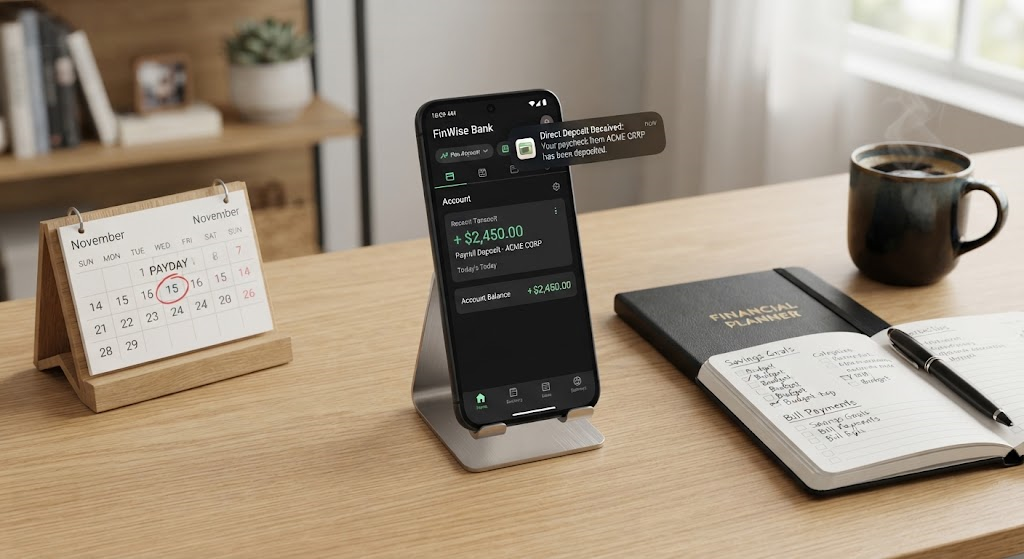
Early direct deposit is a banking feature that may allow customers to access qualifying electronic payments before the scheduled payday.
With a traditional direct deposit, your employer sends your paycheck through the banking system, and the funds generally become available on the designated payment date.
With early direct deposit, a bank or financial institution may make the funds available earlier after receiving information indicating that an incoming payment is on the way.
For example, if your regular payday is Friday, a financial institution might make an eligible paycheck available earlier in the week.
However, early access is not guaranteed to occur a specific number of days before payday.
Why Timing Can Vary
The timing of an early deposit can depend on when the employer or payroll provider sends the payment information.
Two employees who are paid on the same day could potentially see their deposits at different times if their employers or payroll processes operate differently.
Banks also have their own policies governing when qualifying deposits are credited.
How Early Direct Deposit Works
Understanding the basic process can make early paycheck access easier to understand.
Step 1: Your Employer Processes Payroll
Your employer or payroll provider prepares your paycheck and sends an electronic payment through the appropriate payment network.
Step 2: The Financial Institution Receives Deposit Information
The receiving bank may receive information about the incoming deposit before the official settlement date.
Step 3: The Bank Makes Eligible Funds Available
If the account qualifies for early direct deposit, the bank may make the money available before the scheduled payday.
Step 4: You Access the Funds
Once the funds are available, you can generally use them for purchases, transfers, bills, withdrawals, or other eligible transactions according to your account’s terms.
The important point is that the bank is not necessarily changing your employer’s payroll schedule. It may simply be giving you access to qualifying funds earlier.
What Types of Banks Offer Early Direct Deposit?
Early direct deposit is available from a variety of financial institutions and account providers.
Some traditional banks offer early paycheck access, while online banks and fintech banking providers may also advertise similar features.
When comparing banks that offer early direct deposit, look beyond the early-pay feature itself.
Consider:
- Monthly maintenance fees
- Minimum balance requirements
- ATM access
- Overdraft policies
- Savings options
- Mobile banking features
- Customer support
- Direct deposit requirements
- Deposit availability rules
- Other account fees
A bank offering early direct deposit may have different policies from another institution offering the same general feature.
What Is Considered a Qualifying Direct Deposit?
Not every payment sent electronically to your bank account necessarily qualifies for early access.
Qualifying deposits commonly involve recurring payments such as:
- Employer payroll
- Government benefits
- Certain pension payments
- Other eligible recurring electronic payments
However, eligibility depends on the specific financial institution’s current terms.
Transfers between your own accounts, mobile check deposits, cash deposits, or certain payment services may not receive the same treatment.
Before opening an account specifically for early paycheck access, read the provider’s definition of a qualifying direct deposit.
Benefits of Early Direct Deposit
There are several practical reasons consumers may be interested in early paycheck access.
Earlier Access to Income
The most obvious benefit is getting access to eligible funds sooner.
This can give consumers additional flexibility when managing regular expenses.
Easier Bill Management
If important bills are scheduled close to payday, early access may provide more time to move money and organize payments.
Greater Cash-Flow Flexibility
Early access can be helpful for people whose income and expenses occur at different points during the month.
Having funds available earlier may make it easier to manage the timing of purchases and recurring obligations.
Potentially Less Reliance on Credit
Some consumers may use credit cards or short-term borrowing when they are temporarily waiting for their next paycheck.
Earlier access to earned income could reduce the need to bridge certain short gaps, although individual financial circumstances vary.
Does Early Direct Deposit Mean You Get Paid Early?
Not exactly.
Your employer may still consider your official payday to be the same date.
Early direct deposit generally refers to when your bank makes qualifying funds available to you.
For example, your employer could continue reporting Friday as payday even if your bank makes the funds available on Wednesday.
This distinction matters because the exact early-access timing can change from one pay period to another.
How Many Days Early Can You Get Paid?
There is no universal answer.
Some financial institutions advertise access up to a certain number of days early, but the actual timing may depend on when the bank receives the relevant payment information.
If your employer submits payroll information later than usual, the deposit may not become available as early as it has during previous pay periods.
For this reason, consumers should avoid treating a particular early-deposit day as guaranteed unless their financial institution explicitly guarantees it.
How to Find Banks That Offer Early Direct Deposit
When researching financial institutions, start by looking for the bank’s official information about early paycheck access.
Search for terms such as:
- Early direct deposit
- Early paycheck
- Get paid early
- Early pay
- Early access to direct deposits
Then check the account disclosure and eligibility requirements.
Review the Fine Print
Look for information about:
- Which deposits qualify
- How early funds may become available
- Whether early availability is guaranteed
- Eligibility requirements
- Account fees
- Deposit limits
- Exceptions and exclusions
Marketing pages often summarize a feature, while the account agreement provides more detailed terms.
Traditional Banks vs. Online Banks
Both traditional and online financial institutions may offer early direct deposit.
Traditional banks may provide access to extensive branch networks, while online banks can focus heavily on mobile banking and digital account management.
Online financial institutions may also offer features designed around digital account users, such as mobile check deposits, budgeting tools, automatic savings, and instant account notifications.
However, the best account depends on your overall banking needs rather than one feature.
Someone who frequently deposits cash may place more importance on branch or ATM availability. Another customer may prioritize a strong mobile banking experience.
Early Direct Deposit and Budgeting
Receiving income early does not automatically improve financial health.
The real benefit comes from using the additional timing flexibility responsibly.
One approach is to treat your official payday as the anchor for your budget even if funds arrive earlier.
For example, if your paycheck usually arrives early on Wednesday but your official payday is Friday, you could continue planning your monthly budget around the regular pay schedule.
This can help prevent early access from encouraging unnecessary spending.
Create a Payday Routine
When your paycheck arrives, consider dividing it among:
- Essential bills
- Savings
- Debt payments
- Everyday spending
- Long-term financial goals
Automating some of these transfers can make money management easier.
Early Direct Deposit and Savings
Early paycheck access can also be incorporated into a savings strategy.
If you receive your paycheck early, you may choose to move a predetermined amount into a savings account immediately.
Even relatively small recurring transfers can contribute to a savings habit over time.
The important part is consistency.
Rather than viewing early access as extra income, consider it a timing feature that can give you greater control over money you were already scheduled to receive.
What to Consider Before Opening an Account
The promise of getting paid early can be attractive, but it should not be the only factor in choosing a bank.
Fees
Check for monthly fees, ATM fees, overdraft charges, wire fees, and other account costs.
APY and Savings Options
If you plan to keep money in savings, compare the available annual percentage yield and account conditions.
ATM Access
Consider whether the bank has convenient ATMs or participates in a large ATM network.
Customer Service
Reliable customer support can become important when dealing with account access, deposits, fraud alerts, or other banking issues.
Mobile Banking
If you prefer digital banking, review the mobile app’s features, security tools, notifications, and account-management capabilities.
Deposit Insurance
For eligible U.S. bank accounts, check whether the institution is FDIC-insured and understand applicable coverage limits. Credit unions have separate federal insurance arrangements through the NCUA.
Consumers should verify the institution’s current insurance status rather than assuming that every financial product or provider has the same coverage.
Common Misunderstandings About Early Direct Deposit
It Does Not Mean Every Deposit Arrives Early
Early access generally applies only to qualifying deposits.
The Timing May Change
Even if you normally receive your paycheck on the same early day, the timing can vary depending on payroll processing.
It Is Not Necessarily an Extra Payment
Early direct deposit changes when you can access an eligible payment. It does not increase the amount of your paycheck.
Not Every Bank Uses the Same Definition
Terms such as “early pay” and “early direct deposit” can refer to different policies. Always review the specific institution’s terms.
Frequently Asked Questions About Banks That Offer Early Direct Deposit
What are banks that offer early direct deposit?
They are financial institutions that may make qualifying direct deposits available before the official payday. The exact timing and eligibility rules vary by institution.
How early can a direct deposit arrive?
The timing varies. Some institutions may make qualifying deposits available several days before the scheduled payday, while others may provide a shorter early-access period. The actual timing can depend on when payroll information is received.
Does my employer have to offer early direct deposit?
Usually, your employer does not need to change its official payday for you to use early direct deposit. The financial institution may provide earlier access after receiving information about an incoming qualifying payment.
Can government benefits qualify for early direct deposit?
Some financial institutions may provide early access for eligible government benefit payments. Eligibility depends on the bank’s current policies and the specific type of payment.
Are all direct deposits eligible for early access?
No. Financial institutions typically define which deposits qualify. Review the provider’s current account terms for specific eligibility requirements.
Can early direct deposit help with budgeting?
It can provide additional timing flexibility, but consumers should still budget around their regular income and expenses. Receiving money earlier does not increase the amount of income received.
Is early direct deposit free?
Some accounts offer early direct deposit without a separate fee, but account fees may still apply. Check the complete fee schedule and account terms before opening an account.
Can I change banks just to get paid early?
You can compare banks based on early deposit availability, but it is sensible to evaluate the entire account, including fees, ATM access, customer service, savings options, mobile banking, and other features.
Conclusion
For consumers searching for banks that offer early direct deposit, the main attraction is simple: qualifying income may become available before the traditional payday.
However, early paycheck access is only one part of choosing a bank account. The actual timing can depend on payroll processing, when the financial institution receives payment information, the type of deposit, and the provider’s eligibility rules.
Before opening an account, compare the complete banking package. Look at fees, account requirements, ATM access, savings features, customer service, mobile banking, deposit insurance, and the terms governing early direct deposit.
Used thoughtfully, early access can provide additional cash-flow flexibility and make it easier to coordinate income with everyday expenses. The key is understanding how the feature works and incorporating it into a realistic budget rather than treating an early deposit as additional income.

