
For households that use a gravity-fed water filtration system, replacing the filter elements is an important part of maintaining the system. The Berkey Phoenix filter element, officially called the Phoenix Gravity New Millennium Edition™ Filter Element, is designed as a replacement element for Berkey gravity-fed systems and certain other compatible gravity filtration systems.
The Phoenix element was introduced as a replacement option for Black Berkey® elements. According to the manufacturer and authorized sellers, the Phoenix system uses a dense, microporous filtration medium based on activated carbon and is designed to reduce a range of substances commonly found in municipal water supplies.
For U.S. consumers considering this replacement, however, there is an important distinction between independent laboratory testing, NSF certification, and broad marketing claims. Current NSF listings identify specific Berkey system configurations using Phoenix elements under NSF/ANSI Standard 42, with claims including chlorine and taste-and-odor reduction. Standard 372 concerns lead-content requirements for materials rather than proving lead-removal performance.
Understanding these distinctions can help homeowners choose and maintain a filtration system more confidently.
What Is the Berkey Phoenix Filter Element?
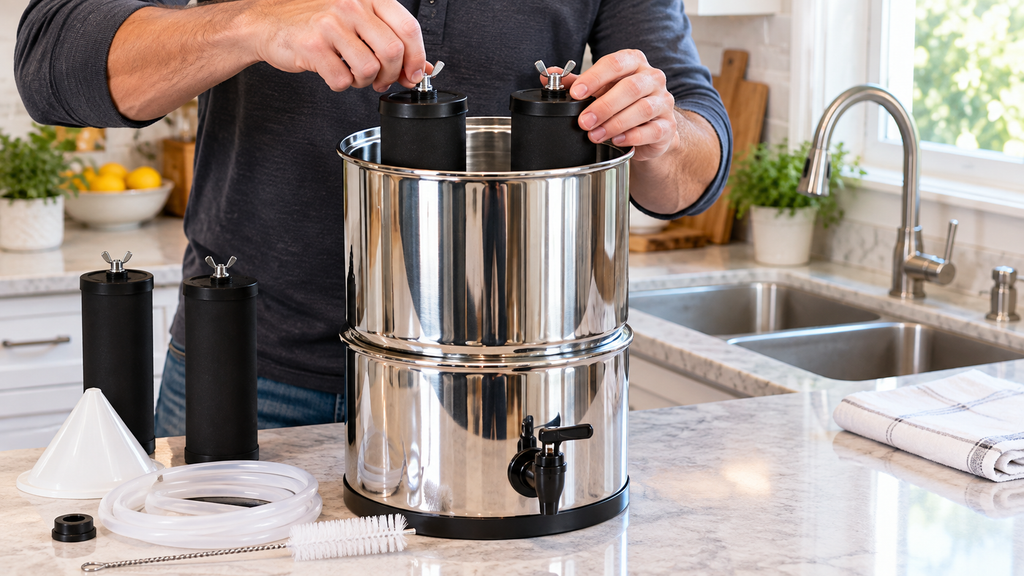
The Berkey Phoenix filter element is a replacement filtration element designed for gravity-fed water filtration systems.
The current product is officially identified as the Phoenix Gravity New Millennium Edition™ Filter Element, with product SKU PGF9-2. It is sold as a set of two elements. The manufacturer says the elements are designed for use in Berkey gravity-fed water systems and compatible systems.
Unlike an under-sink reverse-osmosis system, a gravity-fed system does not require electricity or household plumbing to force water through the filter. Water moves from an upper chamber through the filter elements into a lower chamber.
This makes gravity filtration attractive to households looking for a countertop or portable-style water filtration solution.
What Is Inside a Phoenix Filter Element?
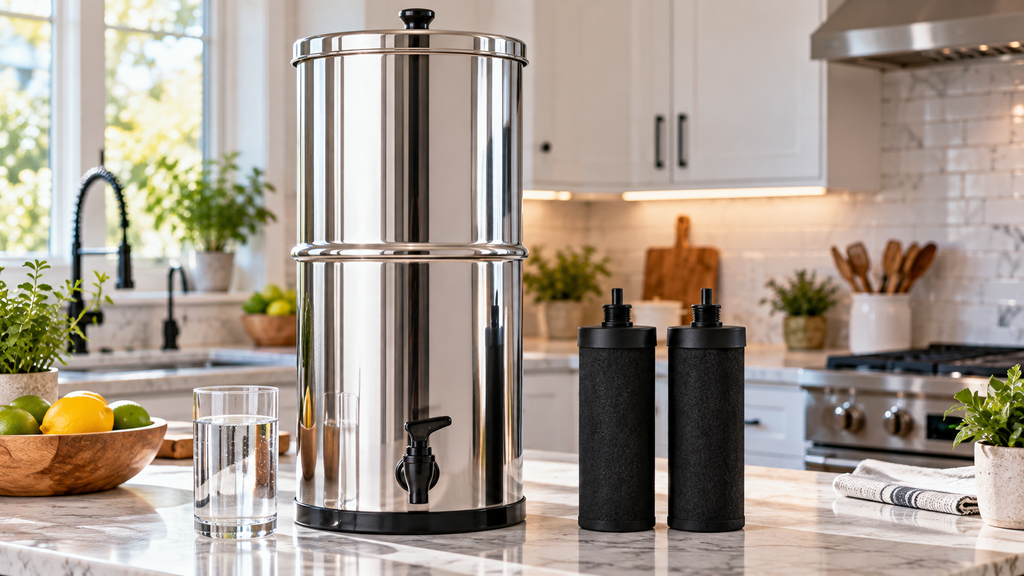
The Phoenix element uses a carbon-based filtration medium.
The manufacturer describes the media as a dense matrix containing millions of microscopic pores. These pores create a tortuous pathway through which water travels while certain particles and compounds are retained by the filtration media.
Product information identifies premium CTC-60 coconut-shell activated carbon as a key component of the filtration media. Activated carbon is widely used in water filtration because of its ability to adsorb certain compounds that can affect water taste, odor, and quality.
The Phoenix element is therefore different from a simple sediment screen. It combines physical filtration with carbon-based adsorption.
Key Berkey Phoenix Filter Element Specifications
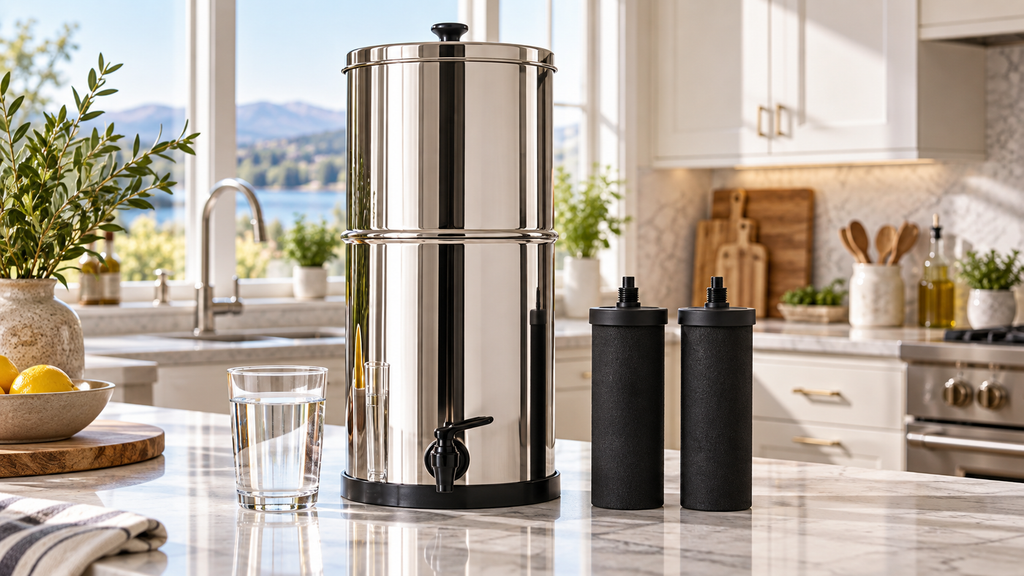
Understanding the basic specifications is useful when determining whether the filter is suitable for an existing system.
Product SKU
The product SKU is PGF9-2.
Element Size
Each Phoenix element measures approximately 9.5 inches by 2.5 inches, including the stem.
Filter Capacity
The manufacturer recommends replacing each element after approximately 2,750 gallons, or approximately 5,500 gallons for a set of two.
Actual service life can vary depending on source-water quality, sediment levels, and other conditions.
Flow Rate
The manufacturer lists a maximum flow rate of approximately 4.2 gallons per hour per pair when the upper chamber is full.
Flow naturally decreases as the water level in the upper chamber falls and may also vary according to water quality, filter condition, priming, and maintenance.
Electricity Requirement
The Phoenix system is designed for gravity filtration and does not require electricity or dedicated plumbing.
What Does the Berkey Phoenix Filter Element Filter?
The Phoenix product has been tested by independent laboratories for reduction of a broad range of waterborne contaminants.
Published manufacturer information references testing involving categories such as:
- PFAS compounds
- PFOA and PFOS
- Heavy metals
- Volatile organic compounds
- Pharmaceuticals
- Pesticides
- Industrial chemicals
- Chlorine
- Chloramines
- Sediment
- Other substances
However, consumers should pay close attention to the difference between laboratory test results and certified claims.
The current NSF listing shows Phoenix PGF9-2 elements used in certain Berkey systems under NSF/ANSI Standard 42, with certified claims for chlorine reduction and taste-and-odor reduction.
That does not mean every contaminant mentioned in separate laboratory reports is NSF-certified for reduction.
Understanding NSF/ANSI Standards for Phoenix Filters
Certification terminology can be confusing when comparing water filters.
The Phoenix product is associated with two standards frequently mentioned in its marketing materials.
NSF/ANSI Standard 42
NSF/ANSI 42 generally covers aesthetic effects associated with drinking water treatment, including substances that affect taste, odor, and appearance.
The current NSF listing for Berkey configurations featuring the Phoenix PGF9-2 element identifies chlorine reduction and taste-and-odor reduction under Standard 42.
NSF/ANSI/CAN Standard 372
Standard 372 relates to lead-content requirements for materials and components used in drinking-water products.
It should not automatically be interpreted as a certification that the filter removes lead from water.
That distinction is particularly important when consumers see phrases such as “lead certified” in water-filter marketing. Current information indicates that lead-reduction performance should instead be evaluated using the relevant laboratory testing and documentation.
Is the Phoenix Filter a Replacement for Black Berkey Elements?
The Phoenix Gravity New Millennium Edition was developed as a replacement option for Black Berkey elements.
New Millennium Concepts states that Phoenix elements are manufactured as economical replacement filters in lieu of Black Berkey elements for Berkey gravity-fed systems and other compatible gravity-fed systems.
The product is designed to use the existing filter mounting holes in compatible Berkey systems, which means users generally do not need to modify the stainless-steel system itself.
For anyone replacing an older filter, it is still important to confirm the correct installation instructions and compatibility before ordering.
Which Berkey Systems Are Compatible?
The Phoenix element is marketed as compatible with Berkey gravity-fed systems.
Published product information specifically references systems such as:
- Go Berkey
- Travel Berkey
- Berkey Light
- Big Berkey
- Royal Berkey
- Imperial Berkey
- Crown Berkey
It is also marketed for use with many other gravity-fed systems that use compatible mounting arrangements.
Current NSF listings, however, are configuration-specific. They identify Travel Berkey, Big Berkey, and Royal Berkey configurations featuring Phoenix elements under the relevant Standard 42 listing.
Therefore, “physically compatible” and “NSF-certified in a specific configuration” are not necessarily the same thing.
Does the Phoenix Filter Remove Fluoride?
The Phoenix element is compatible with Berkey PF-2® Fluoride and Arsenic Reduction Elements.
The manufacturer recommends using PF-2 elements when consistent fluoride reduction is desired.
This is an important consideration for households specifically shopping for fluoride reduction.
Consumers should not assume that a general contaminant-reduction claim means the same performance as a filter specifically designed and tested for fluoride.
If fluoride reduction is a primary requirement, check the current PF-2 documentation and applicable performance information before purchasing.
How to Install a Berkey Phoenix Filter Element
Installing a Phoenix element is designed to be relatively straightforward.
The package includes two filter elements, washers, wing nuts, a PrimeEasy™ Universal Primer, red food-coloring test vials, and instructions.
The general process involves:
1. Remove the Existing Filter
If replacing older elements, remove the existing filter elements according to the instructions for your Berkey system.
2. Prepare the Phoenix Elements
The elements should be properly primed before first use.
Priming flushes manufacturing dust and helps remove air from the filter pores so that water can flow correctly.
3. Install the Elements
Place the elements through the appropriate openings in the upper chamber and secure them using the supplied washers and wing nuts.
4. Check the Connections
Make sure the elements are seated correctly and the connections are secure.
5. Perform the Recommended Test
The included red food-coloring test can be used according to the manufacturer’s instructions to verify that the system is functioning correctly.
Always follow the specific instructions supplied with the filter rather than relying solely on general installation advice.
Why Priming the Phoenix Filter Matters
Priming is an important part of installing a new gravity filter.
The manufacturer explains that priming removes process dust and displaces air from the pores of the filter element.
Without appropriate priming, water flow may be slower than expected.
The manufacturer recommends priming when the filter is first installed and after a long period without use.
The included PrimeEasy™ Universal Primer is designed to make this process easier by creating a connection to a faucet or spigot.
How Long Does a Berkey Phoenix Filter Element Last?
The recommended capacity is approximately 2,750 gallons per filter element.
Because a standard package contains two elements, the combined recommended capacity is approximately 5,500 gallons per pair.
That number should not be treated as a guarantee that every filter will last exactly that long.
Source-water quality can affect filter life.
For example, water with significant sediment or other impurities may cause a filter to require cleaning or replacement sooner.
The manufacturer specifically notes that replacement timing can vary based on influent water quality.
Can Phoenix Filter Elements Be Cleaned?
Yes.
The manufacturer states that Phoenix elements are re-cleanable during their useful life.
Cleaning can help remove accumulated material from the outer surface and maintain water flow.
However, cleaning does not reset the filter’s total capacity to zero.
Once the element reaches the end of its useful life or can no longer maintain appropriate performance, it should be replaced.
Always use the manufacturer’s recommended cleaning procedure.
Phoenix Filter Element vs. Traditional Under-Sink Filtration
The Phoenix system is a gravity-fed approach, while many U.S. homes use under-sink or refrigerator filtration systems.
Each approach has different characteristics.
| Feature | Phoenix Gravity Filter | Typical Under-Sink Filter |
|---|---|---|
| Electricity | Not required | Usually not required |
| Plumbing | Not required | Usually required |
| Installation | Countertop assembly | Plumbing connection |
| Filtration method | Gravity | Pressure-driven |
| Portability | Relatively portable | Fixed |
| Storage | Upper/lower chambers | Usually separate |
| Maintenance | Element cleaning/replacement | Cartridge replacement |
The right system depends on household size, water source, available space, desired filtration performance, and maintenance preferences.
Does Phoenix Change Water’s Mineral Content?
Product information states that Phoenix elements are designed to leave minerals such as calcium and magnesium in the water rather than removing them in the same manner as reverse osmosis.
This is consistent with the general difference between activated-carbon filtration and reverse-osmosis systems.
However, consumers should not interpret “minerals retained” as proof that the filtered water has a specific nutritional advantage.
The primary purpose of a household water filter is to address specified water-quality concerns.
Where Is the Phoenix Filter Available?
Availability can change depending on manufacturing and distribution.
The manufacturer’s official site currently lists Phoenix Gravity New Millennium Edition elements through authorized Berkey dealers.
The product page supplied for this article currently lists the Phoenix elements as a replacement-filter product, although its displayed inventory information may change over time.
Consumers should check the seller’s current stock status, warranty terms, return policy, and authorization before ordering.
Are There U.S. State Restrictions?
There is an important geographic consideration for U.S. shoppers.
The manufacturer currently states that Phoenix Gravity New Millennium Edition replacement elements are not available for sale to residents of California and Iowa.
Because state regulations and product availability can change, consumers should confirm current eligibility before purchasing.
What Is Included in a Phoenix Filter Package?
A standard set includes:
- Two Phoenix Gravity New Millennium Edition filter elements
- Two sealing washers
- Two wing nuts
- PrimeEasy Universal Primer
- Two red food-coloring test vials
- Product instructions
This means buyers generally receive the major components needed to install and test the replacement elements without purchasing a separate priming kit.
Tips for Getting Better Performance From a Phoenix Filter
Proper maintenance can make a significant difference.
Prime New Filters Correctly
Follow the manufacturer’s priming procedure before drinking filtered water.
Monitor Flow Rate
A noticeable reduction in flow can indicate that the elements need cleaning or may be approaching replacement.
Use Appropriate Source Water
The Phoenix element is intended for water filtration applications described by the manufacturer. If your water source has unusual contamination, test the water and select treatment equipment specifically designed for the contaminants involved.
Keep the System Clean
Regularly clean the filtration chambers and other components according to the manufacturer’s instructions.
Replace Filters at the Appropriate Time
Do not rely exclusively on calendar age. Consider total gallons processed, source-water quality, flow changes, and manufacturer recommendations.
Frequently Asked Questions About the Berkey Phoenix Filter Element
What is a Berkey Phoenix filter element?
It is a replacement gravity-filtration element known officially as the Phoenix Gravity New Millennium Edition™ Filter Element. The product SKU is PGF9-2.
How many Phoenix elements come in a set?
A standard package contains two filter elements. The manufacturer gives a recommended capacity of approximately 5,500 gallons for the pair.
How long does each Phoenix filter last?
The manufacturer recommends replacing each element after approximately 2,750 gallons, although actual service life can vary according to source-water quality.
Does Phoenix replace Black Berkey filters?
The Phoenix element is manufactured as an economical replacement option for Black Berkey elements in compatible gravity-fed systems.
Does Phoenix remove fluoride?
Phoenix elements are compatible with PF-2 Fluoride and Arsenic Reduction Elements. The manufacturer recommends PF-2 elements when consistent fluoride reduction is desired.
Is Phoenix NSF certified?
Current NSF listings show specific Berkey system configurations featuring PGF9-2 under NSF/ANSI Standard 42, with claims including chlorine and taste-and-odor reduction. Standard 372 addresses lead-content requirements for materials and should not be interpreted as a lead-removal performance claim.
Does the Phoenix filter require electricity?
No. It is designed for gravity-fed filtration and does not require electricity.
Can Phoenix filters be cleaned?
Yes. The manufacturer states that the elements can be re-cleaned during their useful life.
How fast does a Phoenix filter work?
The manufacturer lists up to approximately 4.2 gallons per hour per pair when the upper chamber is full. Flow decreases as the water level drops and can vary with water conditions and filter condition.
Are Phoenix filters available in California and Iowa?
The manufacturer’s current product information states that Phoenix replacement elements are not available for sale to residents of California and Iowa.
Does the Phoenix filter remove every contaminant?
No water filter should be assumed to remove every possible contaminant. Phoenix elements have published laboratory testing for a broad range of substances, but certified claims apply only to specific standards, configurations, and claims. Consumers should review the applicable performance documentation for any contaminant of particular concern.
Conclusion
The Berkey Phoenix filter element is a modern replacement option for compatible Berkey gravity-fed water filtration systems. The Phoenix Gravity New Millennium Edition uses a carbon-based filtration medium and is designed to provide gravity-powered filtration without electricity or dedicated plumbing.
Its main practical advantages include compatibility with multiple Berkey systems, a recommended capacity of approximately 2,750 gallons per element, re-cleanability during its useful life, and compatibility with PF-2 fluoride and arsenic reduction elements.
For homeowners considering the Phoenix system, understanding certification claims is particularly important. Current NSF listings identify specific Berkey configurations using Phoenix PGF9-2 elements under NSF/ANSI Standard 42, including chlorine and taste-and-odor reduction claims. NSF/ANSI/CAN 372 addresses lead-content requirements for materials rather than establishing that the filter removes lead from drinking water.
The Phoenix element has also undergone independent laboratory testing for a wider range of contaminants, including PFAS, heavy metals, pharmaceuticals, pesticides, and other substances. Those laboratory results should be evaluated separately from NSF-certified claims rather than treating every tested contaminant as NSF-certified performance.
Installation is designed to be straightforward, but proper priming and testing are essential before regular use. Routine cleaning, monitoring of water flow, and replacement at the appropriate stage can help maintain the system.
For U.S. consumers, availability and regulatory considerations should also be checked before ordering, particularly because the manufacturer’s current information states that Phoenix replacement elements are not available for sale to residents of California and Iowa.
Ultimately, whether the Phoenix element is appropriate depends on your existing filtration system, water source, contaminants of concern, household water usage, and desired maintenance routine. Reviewing the current manufacturer documentation, NSF listing, laboratory reports, and installation instructions is the best way to determine whether this gravity-fed replacement filter meets your specific water-filtration requirements.