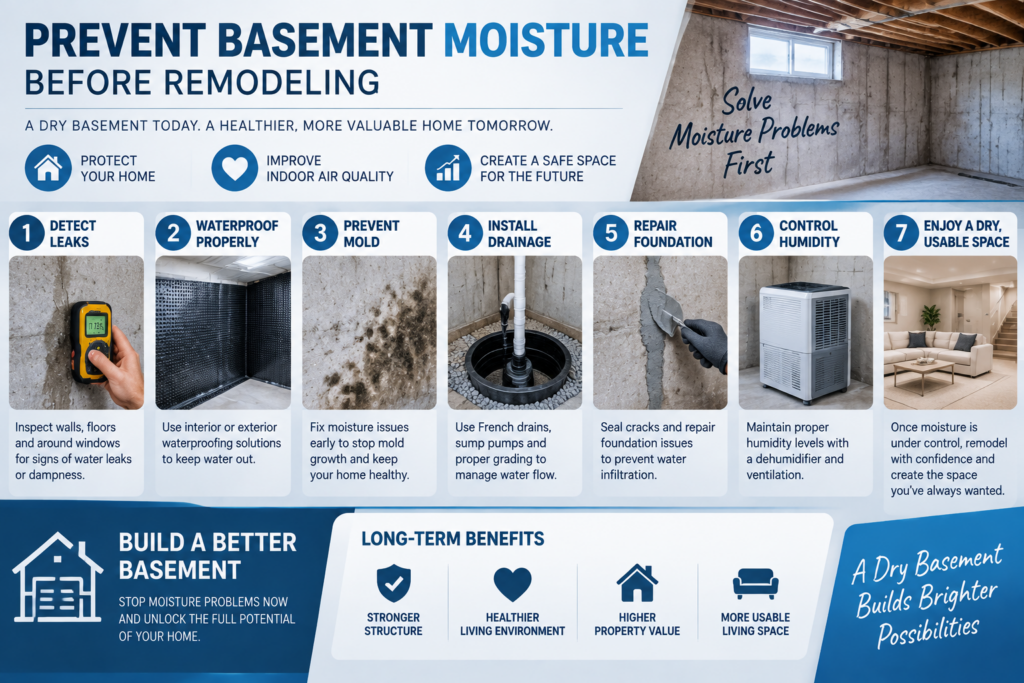
A basement conversion can be one of the best ways to add valuable living space to your home. Many homeowners transform unused basements into family rooms, home offices, guest bedrooms, entertainment areas, gyms, or rental spaces. However, before adding flooring, drywall, furniture, and decorations, one important step must come first: addressing moisture problems.
A basement that looks dry today may still have hidden issues behind walls, under floors, or around foundation areas. Water intrusion, high humidity, poor drainage, and condensation can create serious problems after a renovation is complete.
Homeowners should correct basement leaks and moisture problems before converting the area into a living space to protect the investment, maintain indoor air quality, and create a safe and comfortable environment.
Moisture-related problems can lead to mold growth, unpleasant odors, damaged building materials, and expensive repairs. Taking care of these issues before remodeling ensures that your finished basement remains healthy and functional for years.
This guide explains why basement moisture control is important, common causes of leaks, solutions for waterproofing, and what homeowners should consider before starting a basement renovation project.
Why Basement Moisture Problems Must Be Fixed Before Remodeling
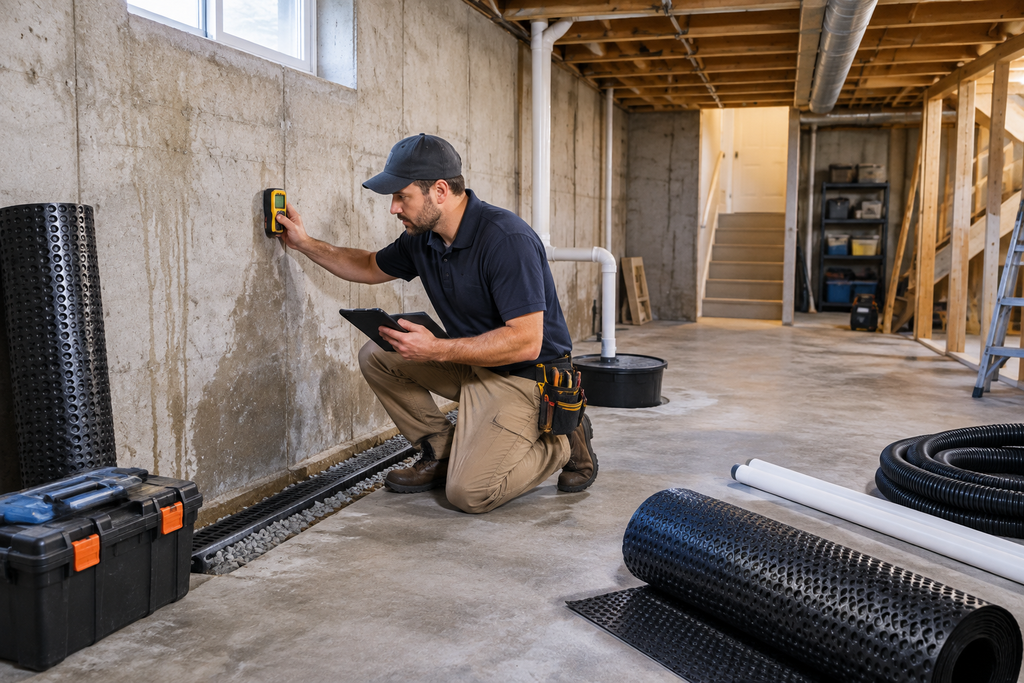
A finished basement covers many areas that are easy to inspect when they are unfinished. Once walls, ceilings, and flooring are installed, detecting water problems becomes much more difficult.
If moisture issues remain unresolved, they can damage newly installed materials such as:
- Drywall
- Insulation
- Flooring
- Wood framing
- Carpeting
- Furniture
A small leak behind a finished wall can slowly create major damage that may require removing sections of the renovation.
Fixing moisture problems before construction allows homeowners to:
- Identify the true source of water intrusion
- Repair foundation issues
- Improve drainage
- Prevent mold growth
- Protect renovation materials
- Maintain better indoor air quality
A dry basement provides the foundation for a successful remodeling project.
Understanding Common Basement Moisture Problems
Basement moisture can come from several different sources. Identifying the cause is the first step toward choosing the right solution.
Foundation Leaks
Foundation leaks are among the most common causes of basement water problems.
Cracks in foundation walls or floors may allow water from surrounding soil to enter the basement.
Common signs of foundation leaks include:
- Water stains on walls
- Damp concrete surfaces
- Visible cracks
- Pooling water
- Musty odors
Foundation movement, soil pressure, and changing weather conditions can contribute to these problems over time.
Before converting a basement into a living area, foundation leaks should be professionally inspected and repaired.
Poor Exterior Drainage
Water around the outside of your home can create pressure against the foundation.
Poor drainage may result from:
- Clogged gutters
- Damaged downspouts
- Improper yard grading
- Heavy rainfall
- Poor soil drainage
When rainwater collects near the foundation, it can eventually find pathways into the basement.
Improving exterior drainage is often one of the most effective ways to prevent basement moisture.
Basement Condensation
Not all basement moisture comes from leaks. Condensation is another common problem.
Basements are naturally cooler than other parts of the home. When warm, humid air enters the basement and contacts cold surfaces, condensation can form.
Signs of condensation problems include:
- Damp walls
- Water droplets on pipes
- High humidity
- Mold growth
- Musty smells
Controlling humidity and improving ventilation can help reduce condensation.
Plumbing Leaks
Water problems may also come from inside the home.
Common plumbing-related causes include:
- Leaking pipes
- Faulty water heaters
- Washing machine leaks
- Drain problems
These issues should be repaired before basement finishing begins.
Sump Pump Problems
Many homes rely on sump pumps to remove water collected beneath or around the basement.
A failing sump pump can allow water to accumulate during heavy rain or flooding events.
Warning signs include:
- Pump not activating
- Unusual noises
- Water accumulation
- Frequent basement flooding
Checking sump pump operation before remodeling is an important preventive step.
The Risks of Converting a Damp Basement Into a Living Space
Finishing a basement without addressing moisture problems can create several long-term issues.
Mold and Indoor Air Quality Concerns
Moist environments create conditions where mold can grow.
Mold can develop behind:
- Drywall
- Insulation
- Flooring
- Furniture
- Ceiling materials
A finished basement with hidden moisture problems may negatively affect indoor air quality.
Maintaining a dry environment is essential when creating bedrooms, offices, or family areas in a basement.
Damage to Building Materials
Many remodeling materials are sensitive to moisture.
Water exposure can cause:
- Warped flooring
- Damaged drywall
- Rotting wood
- Peeling paint
- Deteriorated insulation
Repairing these issues after renovation can be significantly more expensive than preventing them beforehand.
Unpleasant Odors
A damp basement often develops a musty smell.
These odors may come from:
- Mold growth
- Excess moisture
- Poor ventilation
- Wet materials
A properly waterproofed basement creates a fresher and more comfortable living environment.
Reduced Property Value
A finished basement should increase home value, but moisture problems can reduce buyer confidence.
Potential buyers may be concerned about:
- Water damage history
- Mold risks
- Future repair costs
- Foundation issues
Addressing moisture before remodeling helps protect the value of your investment.
How to Inspect a Basement for Moisture Problems Before Remodeling
Before starting a basement conversion, homeowners should perform a detailed moisture inspection.
Check for Visible Signs of Water Damage
Look for:
- Dark stains
- White powdery deposits on concrete
- Cracks
- Peeling paint
- Damp spots
- Mold growth
Even small signs may indicate a larger moisture issue.
Test Basement Humidity Levels
High humidity can create future problems.
A humidity meter can help measure moisture levels inside the basement.
Ideal basement humidity levels are generally maintained by:
- Proper ventilation
- Dehumidifiers
- Moisture control systems
Inspect Walls and Floors
Examine:
- Foundation walls
- Basement corners
- Floor joints
- Around windows
- Utility areas
Water often enters through vulnerable areas.
Check Exterior Conditions
Basement inspections should include the outside of the home.
Look at:
- Gutters
- Downspouts
- Landscaping slope
- Foundation condition
Preventing water from reaching the foundation is an important part of moisture control.
Effective Solutions for Basement Leaks and Moisture Problems
The correct solution depends on the cause of the moisture problem.
Basement Waterproofing
Basement waterproofing helps prevent water from entering the living space.
Common waterproofing methods include:
- Interior drainage systems
- Exterior waterproof coatings
- Foundation sealants
- Waterproof membranes
Professional waterproofing can provide long-term protection.
Repairing Foundation Cracks
Foundation cracks should be properly evaluated before finishing the basement.
Repair methods may include:
- Epoxy injection
- Polyurethane sealing
- Structural repairs
The correct repair depends on the size and cause of the crack.
Improving Drainage Around the Home
Exterior drainage improvements may include:
- Cleaning gutters
- Extending downspouts
- Adjusting landscaping slope
- Installing drainage systems
Keeping water away from the foundation reduces basement leak risks.
Installing or Maintaining a Sump Pump
A reliable sump pump system can help manage groundwater.
Homeowners should consider:
- Regular testing
- Backup power options
- Proper installation
- Routine maintenance
A functioning sump pump is especially important in areas with heavy rainfall or high groundwater levels.
Controlling Basement Humidity
Humidity control is essential after basement conversion.
Solutions include:
- Using a dehumidifier
- Improving ventilation
- Sealing air leaks
- Installing moisture barriers
Maintaining proper humidity helps protect the finished space.
Preparing Your Basement for Conversion After Moisture Repairs
Once leaks and moisture problems are corrected, the remodeling process can begin.
Choose Moisture-Resistant Materials
Basements require materials that can handle potential humidity changes.
Consider:
- Waterproof flooring options
- Mold-resistant drywall
- Treated framing materials
- Proper insulation
Selecting suitable materials improves durability.
Install Proper Insulation
Basement insulation helps improve comfort and energy efficiency.
Proper insulation can help control:
- Temperature changes
- Condensation
- Energy costs
Improve Ventilation
A comfortable basement needs good airflow.
Options include:
- HVAC extensions
- Ventilation systems
- Air circulation improvements
Good ventilation supports healthier indoor conditions.
Plan for Future Maintenance
Even after remodeling, regular maintenance remains important.
Homeowners should:
- Check for moisture signs
- Maintain gutters
- Test sump pumps
- Monitor humidity
- Inspect basement areas periodically
Prevention helps protect the finished space.
Benefits of Fixing Basement Moisture Before Remodeling
Taking care of moisture problems first provides several advantages.
Creates a Healthier Living Environment
A dry basement supports better indoor air quality and comfort.
Protects Your Remodeling Investment
Waterproofing helps prevent expensive damage to new finishes.
Reduces Future Repair Costs
Preventive repairs are usually less expensive than repairing finished basement damage.
Improves Home Comfort
A properly prepared basement feels more like a natural extension of the home.
Frequently Asked Questions About Basement Moisture Before Conversion
Why should I fix basement leaks before finishing my basement?
Basement leaks can damage finished materials and create mold problems. Fixing moisture issues before remodeling helps protect your investment and creates a healthier living space.
How do I know if my basement has moisture problems?
Common signs include damp walls, water stains, musty odors, mold growth, condensation, and visible cracks.
Can I finish a basement that has minor water issues?
It is recommended to address all moisture problems before finishing. Even small leaks can become larger issues after walls and flooring are installed.
How much does basement waterproofing cost?
Costs vary depending on the cause of the problem, basement size, repair method, and location. Professional inspection can help determine the best solution.
Does a dehumidifier solve basement moisture problems?
A dehumidifier can help control humidity but does not fix structural leaks or drainage problems.
Can basement mold grow behind finished walls?
Yes. Hidden moisture behind drywall or insulation can create conditions for mold growth.
How long should I wait after waterproofing before remodeling?
The timeline depends on the repair type and moisture conditions. A professional should confirm that the basement is dry before finishing work begins.
Conclusion
A basement conversion can add valuable living space and improve the functionality of your home, but proper preparation is essential.
Before installing flooring, drywall, furniture, or decorations, homeowners should correct basement leaks and moisture problems before converting the area into a living space.
Addressing foundation leaks, drainage issues, humidity, and water damage early helps prevent costly repairs and creates a safer, more comfortable environment.
A properly waterproofed basement provides a strong foundation for remodeling success. By investing time in moisture control before construction begins, homeowners can enjoy a finished basement that remains beautiful, functional, and protected for years to come.