
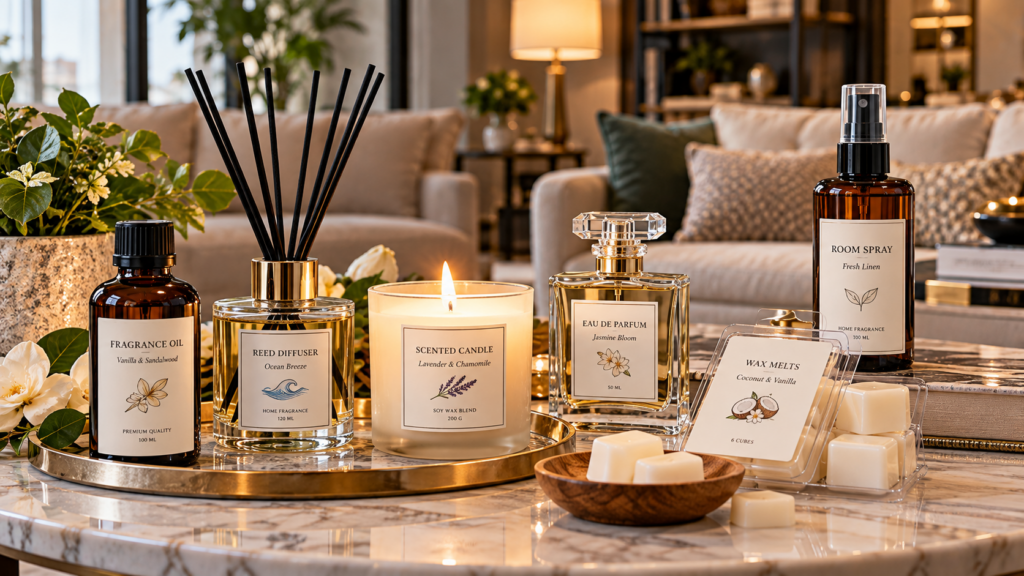
Scent has the power to completely change how a product or space feels. A warm vanilla aroma can make a room feel cozy, fresh citrus can create an uplifting atmosphere, and a sophisticated blend of amber and woods can give a handmade candle or perfume a luxurious personality.
That versatility is one reason fragrance oils have become popular among candle makers, soap makers, perfume creators, home fragrance businesses, cosmetic formulators, and DIY enthusiasts.
Unlike relying on one naturally occurring aromatic ingredient, fragrance oils can be carefully formulated to create a wide range of scent experiences. They can reproduce familiar floral, fruity, woody, fresh, sweet, seasonal, and luxury-inspired profiles.
VedaOils UK currently offers more than 200 products within its fragrance oil collection, including floral, fruity, woody, aquatic, gourmand, seasonal, and luxury-inspired scent profiles. The company markets its oils for applications including candles, soaps, perfumes, diffusers, incense, cosmetics, and home fragrance products.
Whether you are experimenting with your first scented candle or developing products for a growing business, understanding how fragrance oils work can help you choose and use them more effectively.
What Are Fragrance Oils?

Fragrance oils are aromatic blends designed to give products a particular scent.
Depending on the formula, the aromatic components may come from synthetic materials, naturally derived materials, or a combination of both.
This flexibility allows perfumers and manufacturers to create scent profiles that would be difficult to achieve using a single natural extract.
For example, fragrance oils may recreate or combine aromas such as:
- Fresh linen
- Ocean breeze
- Vanilla dessert
- Rose garden
- Tropical fruit
- Coffee
- Amber
- Sandalwood
- Jasmine
- Seasonal holiday scents
VedaOils UK’s current collection includes options such as Patchouli, Royal Rose, Rosewood & Citrus, Amber, Coffee, Jasmine, and Oceanic Mist fragrance oils.
The wide variety makes scented oils particularly useful for makers who want to develop different product collections without being restricted to aromas available directly from plants.
Fragrance Oils vs. Essential Oils
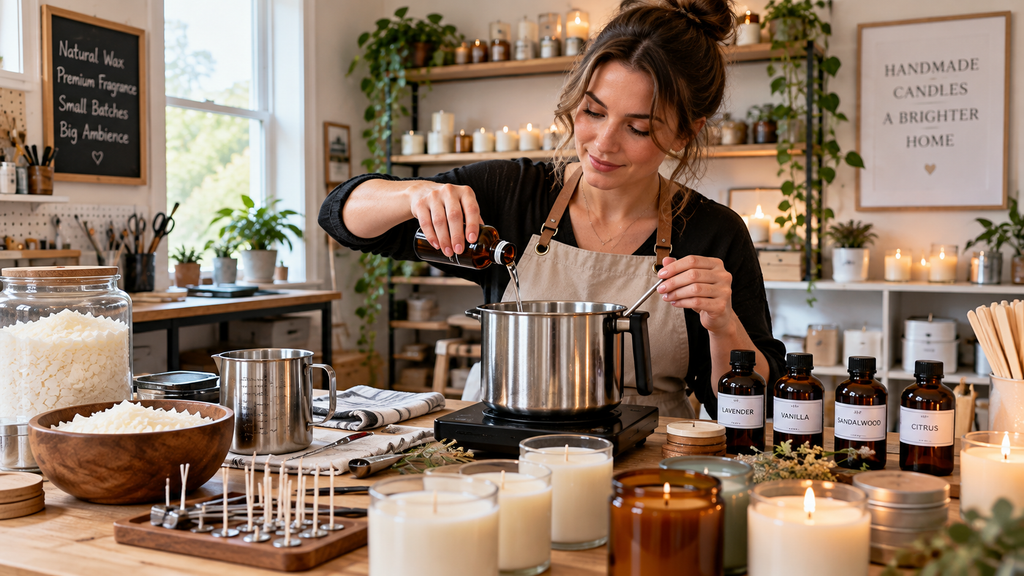
Fragrance oils and essential oils are sometimes confused, but they are not the same thing.
Essential Oils
Essential oils are aromatic materials obtained from botanical sources through methods such as steam distillation or cold pressing.
Examples include lavender essential oil, peppermint essential oil, lemon essential oil, and eucalyptus essential oil.
Because they originate from specific plants, their scent profiles are closely connected to those botanical materials.
Fragrance Oils
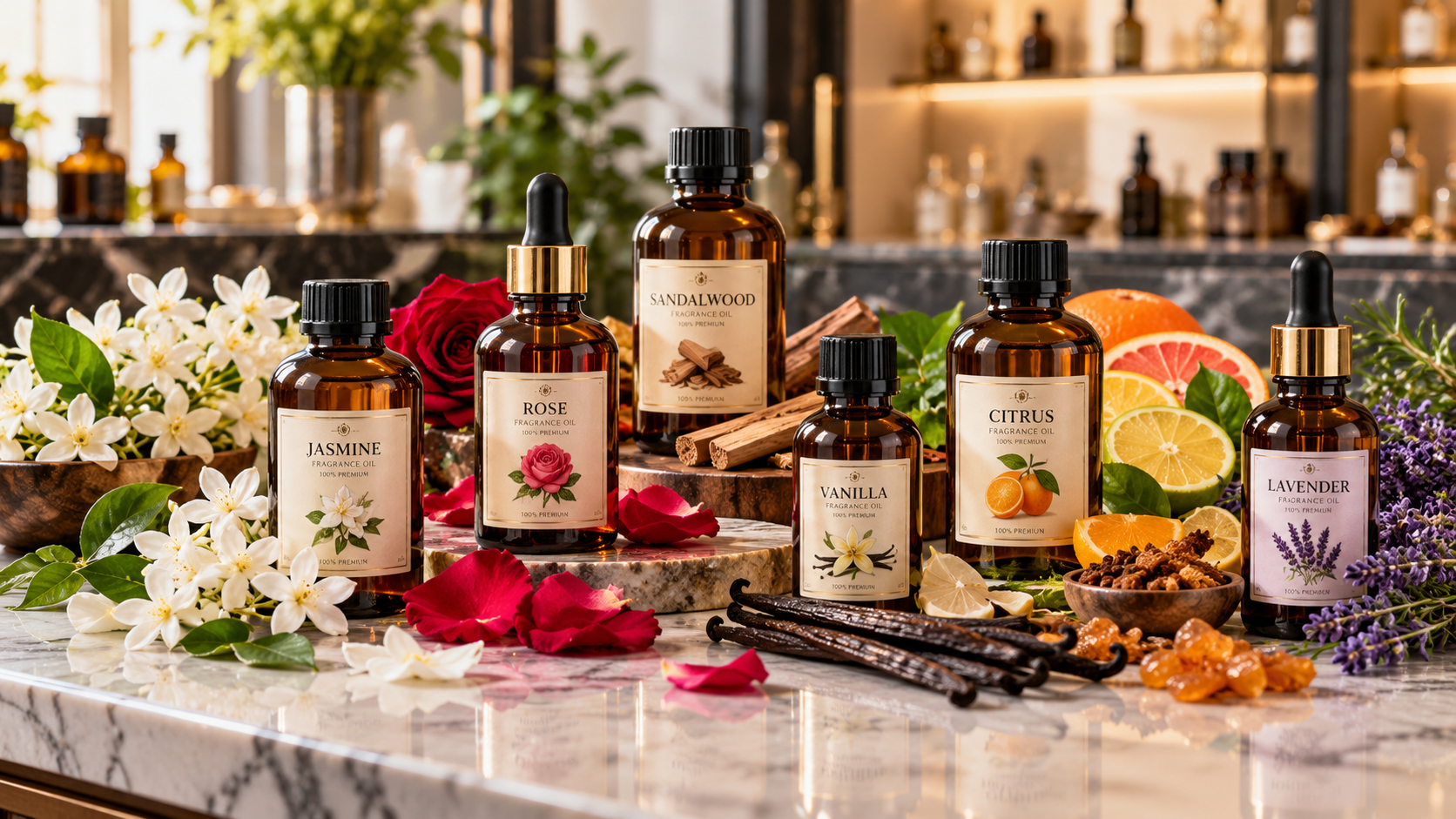
Fragrance oils are formulated specifically to produce a desired aroma.
A fragrance oil might recreate the scent of vanilla cake, fresh cotton, ocean air, luxury perfume, or a combination of flowers and woods.
This gives fragrance creators considerably more flexibility.
Neither category should automatically be considered suitable for every possible use. A fragrance designed for candles, for example, should not simply be assumed to be appropriate for a skin-applied product.
Always check the supplier’s documentation and intended-use information before formulating.
Popular Uses for Fragrance Oils
One major advantage of fragrance oils is their versatility.
VedaOils lists candles, soaps, perfume, incense, skincare and cosmetic products, home fragrance products, and cleaning or lifestyle products among the common applications for fragrance oils.
Fragrance Oils for Candle Making
Candles are one of the most popular applications.
When a candle burns, the combination of wax, wick, container, fragrance load, and fragrance composition influences the final scent experience.
Two terms candle makers often encounter are cold throw and hot throw.
Cold throw refers to how a candle smells before it is lit.
Hot throw refers to the fragrance released while the candle is burning.
Quality candle fragrance oils are formulated to work effectively with suitable wax systems when used at appropriate levels.
Popular candle scent families include:
- Vanilla and gourmand
- Floral
- Citrus
- Fresh and clean
- Woody
- Spiced
- Fruity
- Seasonal
- Amber and musk-inspired blends
Before production, candle makers should test each fragrance with their particular wax, wick, container, and manufacturing process.
A formula that performs well in one candle system may behave differently in another.
Fragrance Oils for Soap Making
Fragrance can turn a basic handmade soap into a more memorable product.
Soap makers use scented oils to create everything from soft floral bars to bright citrus collections and rich dessert-inspired soaps.
Popular fragrance directions include rose, jasmine, lavender-inspired blends, vanilla, fruit, coffee, sandalwood, coconut, and seasonal combinations.
However, soap making presents formulation challenges.
The fragrance must be suitable for the type of soap being produced, and some formulas may behave differently depending on ingredients and processing conditions.
For products intended for skin contact, makers should follow the supplier’s recommended usage level and relevant safety documentation.
VedaOils specifically markets fragrance oils for soap making and cosmetic applications while also providing product documentation for its range.
Using Fragrance Oils in Perfume
Perfume creation is another popular application.
Fragrance oils can help DIY creators and brands experiment with layered scent profiles without relying on a single aromatic note.
Perfumes are often described using three broad levels.
Top Notes
These are often the first scents noticed.
Examples can include citrus, fresh fruit, herbs, and light aromatic notes.
Middle Notes
Also called heart notes, these develop after the initial impression.
Floral and spicy aromas frequently appear here.
Base Notes
Base notes provide depth and often remain noticeable longer.
Common examples include woods, amber-style accords, musk-style notes, vanilla, and earthy scents.
Experimenting with these scent families makes it possible to build fragrance profiles that feel fresh, sweet, romantic, sophisticated, cozy, or bold.
VedaOils also carries perfume-making supplies and luxury-inspired fragrance options alongside its broader fragrance oil collection.
Fragrance Oils for Diffusers and Home Fragrance
Home fragrance has grown far beyond traditional scented candles.
Consumers now use reed diffusers, wax melts, room sprays, incense, scented sachets, and other aromatic products to personalize indoor spaces.
Fragrance oils can provide consistent scent profiles across different products in a coordinated collection.
For example, a brand might create the same amber-and-vanilla aroma as:
- A candle
- Wax melts
- A reed diffuser
- A room spray
This allows customers to experience a similar fragrance throughout different areas of the home.
VedaOils lists diffusers, room fragrance products, incense, and other home scent applications among the uses for its fragrance oils.
Popular Fragrance Oil Categories
Choosing a fragrance becomes easier when you understand common scent families.
Floral Fragrance Oils
Floral scents remain classics because they can feel fresh, elegant, romantic, or luxurious.
Popular floral profiles include:
- Rose
- Jasmine
- Lily
- Lotus
- Peony-inspired blends
- Garden-style bouquets
VedaOils currently highlights rose, jasmine, lily, and lotus among its floral options.
Fruity Fragrance Oils
Fruity fragrances are often bright, playful, juicy, and energetic.
Examples include watermelon, pineapple, banana, berries, peach, mango, and citrus-inspired scents.
They can work particularly well in seasonal candles, soaps, wax melts, and room fragrance products.
Woody and Earthy Fragrances
Woody fragrances can create a warmer and more sophisticated character.
Popular profiles may include sandalwood, cedarwood, vetiver, patchouli, and smoky or earthy accords.
VedaOils identifies sandalwood, vetiver, and cedarwood among the woody and earthy directions available within its range.
Fresh and Aquatic Fragrances
Fresh fragrances are popular for products designed to create a clean, airy atmosphere.
Examples include:
- Ocean-inspired scents
- Fresh cotton
- Rain-style accords
- Clean air
- Marine fragrances
- Crisp citrus
They are frequently used for room sprays, soaps, candles, diffusers, and cleaning-oriented products.
Sweet and Gourmand Fragrance Oils
Gourmand fragrances are inspired by foods, desserts, drinks, and sweet ingredients.
Think of aromas such as:
- Vanilla
- Caramel
- Coffee
- Chocolate
- Cookies
- Creamy desserts
- Warm spices
These fragrances are especially popular during fall and winter but can be used year-round depending on the product and audience.
How to Choose High-Quality Fragrance Oils
A pleasant scent is important, but it should not be your only consideration.
Check the Intended Application
Always determine whether the specific fragrance is recommended for your planned product.
An oil suitable for candle making may have different usage considerations from one intended for soaps, lotions, or perfumes.
Look for Technical Documentation
Businesses and serious DIY creators should look for suppliers that provide useful documentation.
VedaOils states that it can provide documents including Certificates of Analysis, safety data documentation, and allergen-related information for its products.
These documents can be particularly useful for manufacturers who need consistent specifications and safety information.
Understand IFRA Guidance
The International Fragrance Association maintains standards that restrict, prohibit, or set specifications for certain fragrance materials based on safety assessments. Maximum permitted concentrations can depend on the final product category.
An important point is that IFRA itself does not individually “certify” every fragrance product. A supplier or fragrance manufacturer can issue a Certificate of Conformity stating that a fragrance mixture complies with applicable IFRA Standards for a specific intended use.
When making products for sale, review the applicable documentation for your exact fragrance and product category.
Fragrance Oils and Cosmetic Safety in the USA
U.S. businesses creating fragranced cosmetics have additional responsibilities.
The U.S. Food and Drug Administration states that fragrance ingredients used in cosmetics must meet the same safety requirements as other cosmetic ingredients. Manufacturers and marketers are responsible for ensuring their products are safe when used according to labeled or customary conditions.
Fragrance ingredients can also cause sensitivities or allergic reactions in some individuals, even when they are considered safe for most consumers.
For that reason, never assume that a concentrated fragrance oil can be applied directly to skin.
Formulators should follow supplier directions, applicable IFRA limits, U.S. regulations, and appropriate testing procedures for the finished product.
Why Small Businesses Use Wholesale Fragrance Oils
Businesses producing candles, soaps, perfumes, or home fragrance products often move from small bottles to bulk purchasing as sales increase.
Buying fragrance oils wholesale can offer several practical benefits.
First, larger packaging can reduce the cost per unit.
Second, using the same fragrance supply across production runs can help improve scent consistency.
Third, keeping adequate inventory makes it easier to fulfill larger orders without repeatedly waiting for small quantities.
VedaOils offers both smaller formats for sampling and DIY work and larger packaging aimed at brands and manufacturers. The company also states that it offers worldwide shipping.
For growing businesses, testing a fragrance in a small quantity before committing to a large order is usually a sensible approach.
Tips for Storing Fragrance Oils
Proper storage can help preserve fragrance quality.
Keep fragrance oils:
- In tightly closed containers
- Away from direct sunlight
- Away from excessive heat
- In a dry, appropriate storage area
- Clearly labeled
- Away from children and pets
Businesses should also keep batch information and product documentation organized.
IFRA’s good operating practice recommendations emphasize proper labeling, quality records, batch identification, and appropriate storage conditions for fragrance ingredients and mixtures.
Frequently Asked Questions About Fragrance Oils
What are fragrance oils?
Fragrance oils are aromatic formulations used to add scent to products such as candles, soaps, perfumes, wax melts, diffusers, cosmetics, and home fragrance products.
Can fragrance oils be used in candles?
Yes, many fragrance oils are created specifically for candle applications. Always verify that your chosen fragrance is compatible with your wax and follow appropriate fragrance-load guidance.
Can I use fragrance oils in soap?
Some fragrance oils are suitable for soap making. Check the supplier’s product information, safety documentation, and usage recommendations before adding a fragrance to a soap formulation.
Are fragrance oils safe for skin?
Do not assume every fragrance oil is suitable for direct skin use. Skin-applied products require an appropriate formulation and must follow relevant usage limits and safety requirements.
What is the difference between fragrance oil and essential oil?
Essential oils come from botanical materials, while fragrance oils are formulated aromatic mixtures that can include natural and/or synthetic fragrance materials.
What are the most popular fragrance oil scents?
Popular categories include floral, fruity, woody, fresh, aquatic, gourmand, amber-style, seasonal, and luxury-inspired fragrances.
Can fragrance oils be mixed together?
Yes, compatible fragrance oils can often be blended to create new scent profiles. Start with small test batches and record ratios so successful combinations can be reproduced.
Can fragrance oils be used in reed diffusers?
Certain fragrances can be used in diffuser formulations when they are suitable for that application. Follow the fragrance supplier’s recommended usage guidance and use an appropriate diffuser base.
Where can businesses buy fragrance oils in bulk?
Fragrance suppliers such as VedaOils offer both smaller sample-oriented quantities and bulk packaging for candle makers, soap manufacturers, cosmetic brands, perfumers, and other businesses.
Does VedaOils offer different fragrance types?
Yes. Its current collection includes more than 200 products and covers floral, fruity, woody, earthy, fresh, aquatic, gourmand, seasonal, and luxury-inspired scent directions.
Conclusion
Fragrance can transform an ordinary product into something memorable.
From a warm vanilla candle and fresh floral soap to an elegant perfume or relaxing reed diffuser, fragrance oils give DIY creators and professional brands an enormous range of possibilities.
Their biggest advantage is versatility. Makers can choose from floral, fruity, woody, aquatic, fresh, gourmand, seasonal, and luxury-inspired scents and use suitable formulations across candles, soaps, perfumes, cosmetics, wax melts, diffusers, and other scented products.
VedaOils UK currently offers a large fragrance oil collection alongside candle-making, soap-making, perfume-making, and cosmetic ingredients, with options ranging from small quantities to bulk supply.
However, choosing a beautiful scent is only part of successful product creation. Always confirm that a fragrance is appropriate for your intended application, review available technical documentation, follow supplier instructions, and observe applicable IFRA guidance and U.S. safety requirements when manufacturing products for consumers.
With careful testing and the right fragrance selection, fragrance oils can help hobbyists and businesses create distinctive products that people remember not only for how they look, but also for how they smell.

