Modern construction projects require materials that are strong, efficient, lightweight, and adaptable to challenging site conditions. As engineers and contractors look for ways to reduce construction time, improve structural performance, and manage difficult soil conditions, innovative materials have become increasingly important.
GeoFoam is a lightweight engineered foam material used in geotechnical and construction applications to replace traditional heavy fill materials. Made from expanded polystyrene (EPS) or similar rigid foam materials, GeoFoam provides a combination of strength, durability, and extremely low weight.
From road construction and bridge approaches to landscaping projects and underground void filling, GeoFoam has become a valuable solution for engineers seeking alternatives to conventional soil and aggregate fills.
Understanding how GeoFoam works, its benefits, and its applications can help construction professionals make better decisions when planning infrastructure and building projects.
What Is GeoFoam?
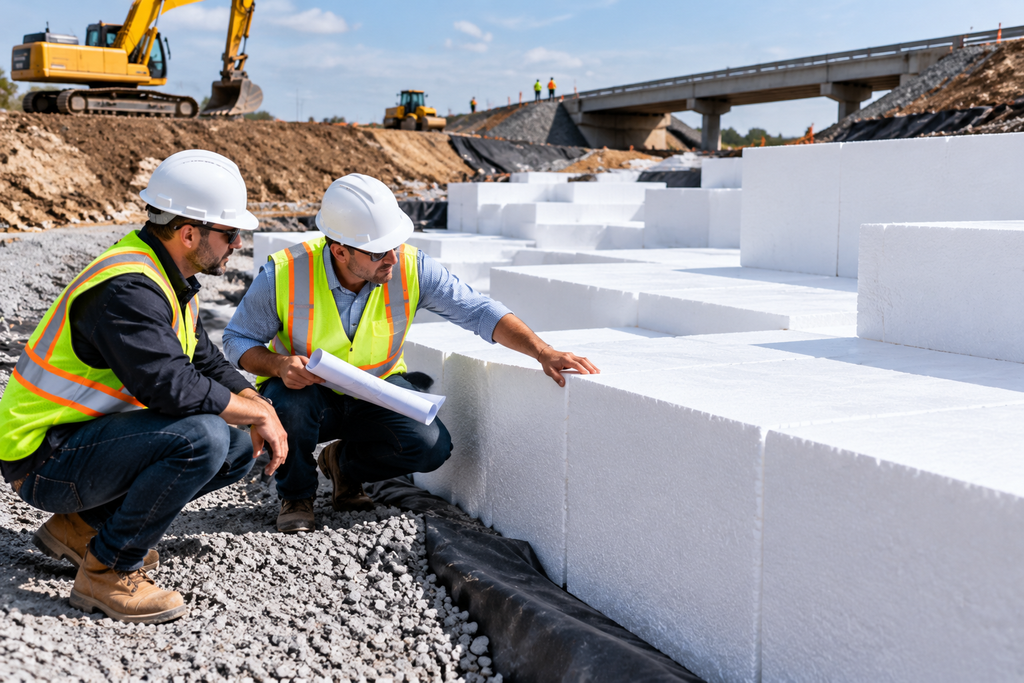
GeoFoam is a lightweight cellular foam material designed specifically for use in civil engineering and construction projects.
Unlike traditional fill materials such as soil, gravel, and concrete, GeoFoam has a very low density while maintaining sufficient compressive strength for many structural applications.
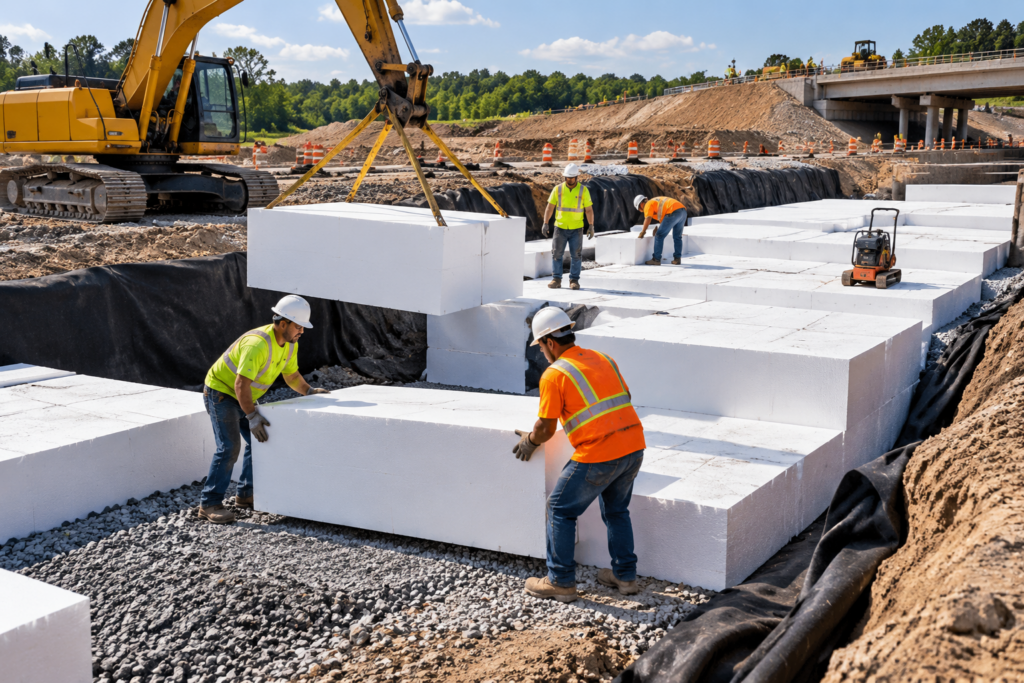
The material is commonly manufactured as large blocks that can be placed and stacked to create lightweight fills.
GeoFoam is used for:
- Road embankments
- Slope stabilization
- Void filling
- Landscaping projects
- Bridge approaches
- Ground improvement applications
Because of its lightweight properties, GeoFoam reduces pressure on underlying soils and structures.
Why GeoFoam Is Important in Modern Construction
Construction challenges often arise when projects involve weak soils, limited access areas, or weight restrictions.
Traditional materials can create problems because they add significant loads to the ground.
GeoFoam addresses these challenges by providing:
- Reduced structural loading
- Faster installation
- Easier transportation
- Improved project efficiency
- Flexible design options
For engineers and contractors, using lightweight materials can simplify construction while maintaining performance requirements.
How GeoFoam Works in Geotechnical Applications
The main advantage of GeoFoam comes from its unique physical properties.
Traditional fill materials rely on large quantities of heavy material to create stable structures. GeoFoam achieves similar volume requirements with significantly less weight.
When installed correctly, GeoFoam blocks create lightweight structural fills that reduce stress on:
- Weak soils
- Retaining structures
- Underground utilities
- Existing infrastructure
This makes it especially useful in areas where traditional construction methods may create settlement or stability issues.
Key Benefits of Using GeoFoam
GeoFoam provides several advantages compared with conventional construction fill materials.
Extremely Lightweight Material
One of the biggest benefits of GeoFoam is its low weight.
Because GeoFoam weighs significantly less than soil or concrete, it can reduce the load placed on the ground below.
This makes it useful for:
- Soft soil areas
- Land reclamation projects
- Expanding existing infrastructure
Reducing weight can help minimize settlement and improve long-term performance.
Faster Installation Process
Traditional fill materials often require multiple steps, including:
- Excavation
- Transportation
- Placement
- Compaction
GeoFoam installation is often faster because large blocks can be positioned directly at the construction site.
Benefits include:
- Reduced labor requirements
- Shorter construction schedules
- Less equipment use
Faster installation can help reduce project costs and minimize disruptions.
Reduced Settlement Risk
Settlement is a common concern in construction projects, especially when heavy fills are placed over weak soils.
Because GeoFoam applies less pressure to the ground, it can help reduce settlement-related problems.
This makes it valuable for projects requiring long-term stability.
Easy Transportation and Handling
Traditional construction materials require heavy equipment for movement and placement.
GeoFoam blocks are lightweight and easier to handle compared with traditional fill materials.
This can provide advantages in:
- Limited-access locations
- Urban construction areas
- Projects with restricted equipment access
Design Flexibility
GeoFoam can be cut and shaped according to project requirements.
This flexibility allows engineers to create solutions for different site conditions.
Applications can include:
- Custom fills
- Structural support systems
- Landscape features
- Complex construction geometries
Common Applications of GeoFoam
GeoFoam is used across many construction and infrastructure projects.
Road Construction
Road projects often require stable foundations and controlled loading conditions.
GeoFoam can be used for:
- Road widening
- Embankment construction
- Highway improvements
- Reducing loads over weak soils
Its lightweight nature can improve road performance while reducing construction challenges.
Bridge Approaches
Bridge approach areas can experience settlement problems because of differences between bridge structures and surrounding soil.
GeoFoam helps create lightweight fills that reduce settlement and improve transitions near bridges.
Benefits include:
- Better approach stability
- Reduced maintenance needs
- Improved long-term performance
Void Filling Applications
Underground voids can develop due to erosion, abandoned structures, or previous construction activities.
GeoFoam provides an efficient solution for filling large spaces without adding excessive weight.
Applications may include:
- Underground structures
- Cavities
- Utility areas
- Construction corrections
Landscaping and Architectural Projects
GeoFoam is not limited to large infrastructure projects.
It is also used in landscaping and architectural applications.
Examples include:
- Creating artificial terrain
- Building elevated landscapes
- Lightweight garden structures
- Decorative formations
Its ability to create volume without heavy loads makes it useful for creative designs.
Slope Stabilization
Steep slopes and unstable ground conditions can create construction challenges.
GeoFoam can help reduce the driving forces affecting slopes by replacing heavier materials with lightweight alternatives.
This can support safer and more stable designs.
GeoFoam Compared With Traditional Fill Materials
Understanding the difference between GeoFoam and conventional materials helps explain why engineers choose lightweight solutions.
GeoFoam vs Soil Fill
Soil fill is widely available but adds significant weight.
Compared with soil:
GeoFoam provides:
- Lower weight
- Faster installation
- Reduced settlement pressure
- Easier handling
However, proper engineering design is required to determine the best material for each project.
GeoFoam vs Concrete
Concrete provides excellent strength but is heavy.
GeoFoam is often selected when reducing weight is a priority.
While concrete may be better for certain structural applications, GeoFoam offers advantages where lightweight construction is needed.
GeoFoam vs Gravel
Gravel is commonly used for traditional fills but requires transportation and compaction.
GeoFoam reduces these requirements and can simplify installation.
Important Considerations When Using GeoFoam
Although GeoFoam offers many advantages, successful installation requires proper planning.
Engineering Design
Every project should be evaluated by qualified engineers.
Important factors include:
- Load requirements
- Soil conditions
- Environmental conditions
- Protective measures
Proper design ensures the material performs as expected.
Protection During Installation
GeoFoam requires appropriate protection during construction.
Considerations include:
- Handling procedures
- Surface protection
- Cover materials
- Site conditions
Following installation guidelines helps maintain performance.
Environmental Factors
Construction professionals should consider environmental conditions when selecting and installing GeoFoam.
Factors may include:
- Moisture exposure
- Chemical conditions
- Temperature changes
Proper planning helps extend service life.
The Future of Lightweight Construction Materials
As infrastructure demands continue to grow, lightweight materials like GeoFoam are becoming increasingly important.
Modern construction trends focus on:
- Faster project completion
- Reduced environmental impact
- Improved resource efficiency
- Better long-term performance
GeoFoam supports these goals by reducing material weight and simplifying construction processes.
Future applications may expand as engineers continue exploring innovative solutions for complex construction challenges.
Frequently Asked Questions About GeoFoam
What is GeoFoam used for?
GeoFoam is used in construction and geotechnical applications such as road embankments, bridge approaches, void filling, slope stabilization, and lightweight structural fills.
Is GeoFoam strong enough for construction projects?
Yes. GeoFoam is designed with specific density and strength characteristics to meet the requirements of various engineering applications.
Why is GeoFoam considered lightweight?
GeoFoam is made from cellular foam materials that contain many air-filled spaces, giving it a much lower density than traditional fill materials.
Can GeoFoam replace soil fill?
In many applications, GeoFoam can replace traditional soil fills when reducing weight and improving installation efficiency are important considerations.
Does GeoFoam require special installation methods?
GeoFoam installation requires proper engineering planning and handling procedures to ensure performance and durability.
Is GeoFoam environmentally friendly?
GeoFoam can support more efficient construction by reducing transportation needs and material usage. Environmental considerations depend on the specific project and material selection.
Conclusion
GeoFoam has become an important material in modern construction because it provides lightweight, efficient, and flexible solutions for challenging engineering projects. By reducing structural loads, improving installation speed, and minimizing settlement risks, GeoFoam helps engineers and contractors overcome limitations associated with traditional fill materials.
From highways and bridge approaches to landscaping and underground void filling, GeoFoam offers practical advantages across many applications.
As construction projects continue to demand faster, smarter, and more sustainable solutions, lightweight materials like GeoFoam will continue to play an important role in the future of civil engineering and infrastructure development.