
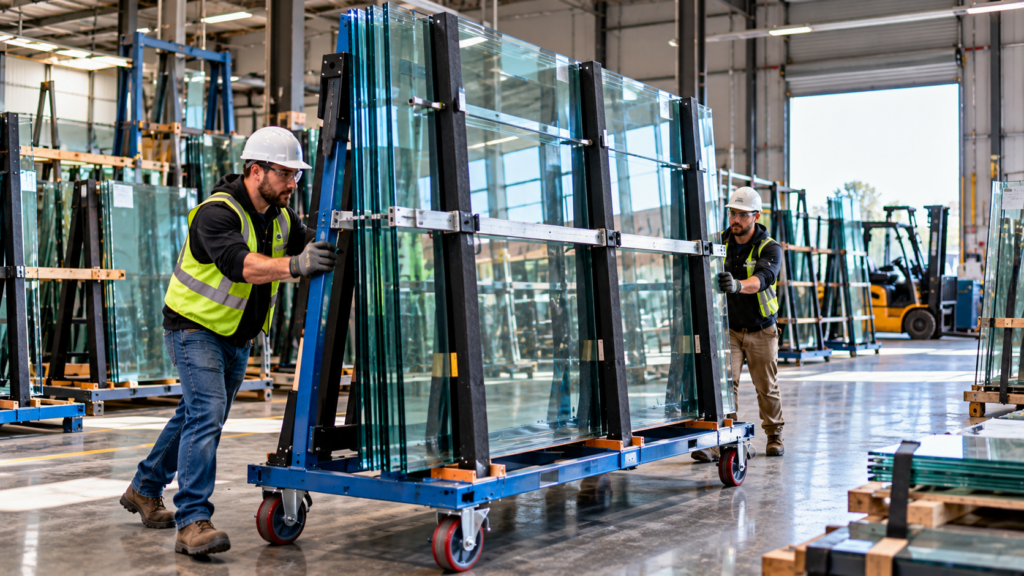
Large sheets of glass require more than ordinary shelving. Whether they are being stored in a fabrication facility, moved through a warehouse, prepared for installation, or transported to a construction site, glass panels need a stable and organized support system.
That is where glass A-frame racks come into the picture.
An A-frame rack provides an angled support structure that allows glass sheets to rest securely while keeping them organized and accessible. Depending on the design, these racks can be used for storage, internal transportation, loading, unloading, fabrication, and job-site operations.
For companies handling architectural glass, windows, doors, mirrors, stone slabs, or other large sheet materials, choosing the right rack can make material handling more organized and efficient.
Abaco Machines Australia’s glass A-frame and rack collection includes transport frames, storage solutions, trolley-style A-frames, folding models, heavy-duty designs, and specialized glass-handling equipment. The company’s published catalog also includes specifications for different capacities and configurations.
For U.S. businesses considering glass storage equipment, understanding how these systems work can help when comparing rack dimensions, capacity, mobility, security features, and workplace requirements.
What Are Glass A-Frame Racks?
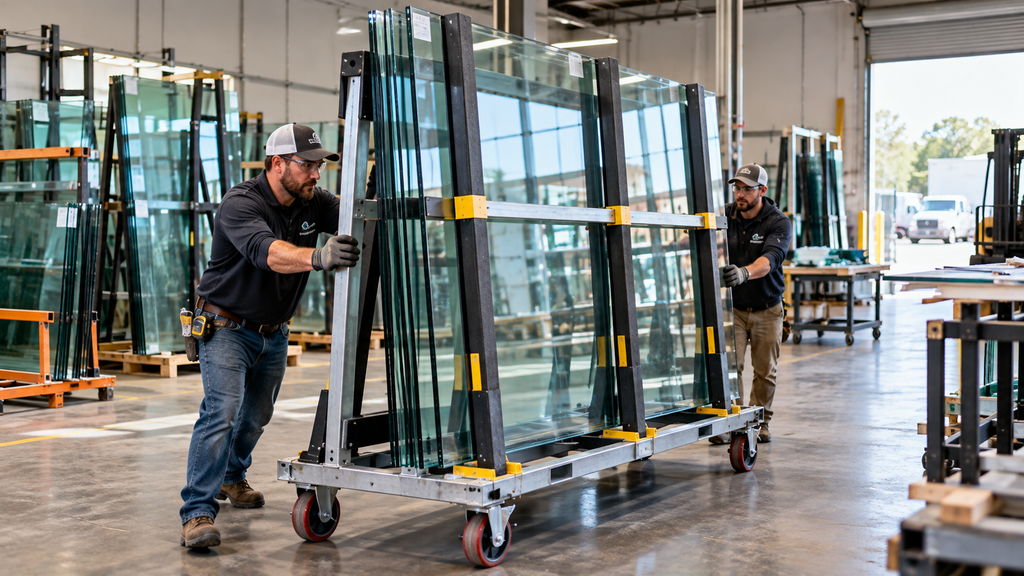
Glass A-frame racks are material-handling structures designed to support glass sheets in a tilted or near-vertical position.
The basic design resembles the letter “A.” Glass panels can be placed against one or both sides of the frame, depending on the particular model.
This configuration provides several practical advantages.
Instead of laying large sheets flat on the floor, businesses can organize them vertically or at an engineered angle. This can reduce the amount of floor area required while making individual sheets easier to identify and access.
A-frame designs can also be configured with features such as:
- Rubber strips
- Rubber support pads
- Securing bars
- Ratchet systems
- Casters
- Brakes
- Forklift pockets
- Crane lifting points
- Adjustable supports
- Folding mechanisms
The exact features vary considerably between models, so a rack should be selected based on the material being handled and the intended application.
Why Use Glass Storage Racks?
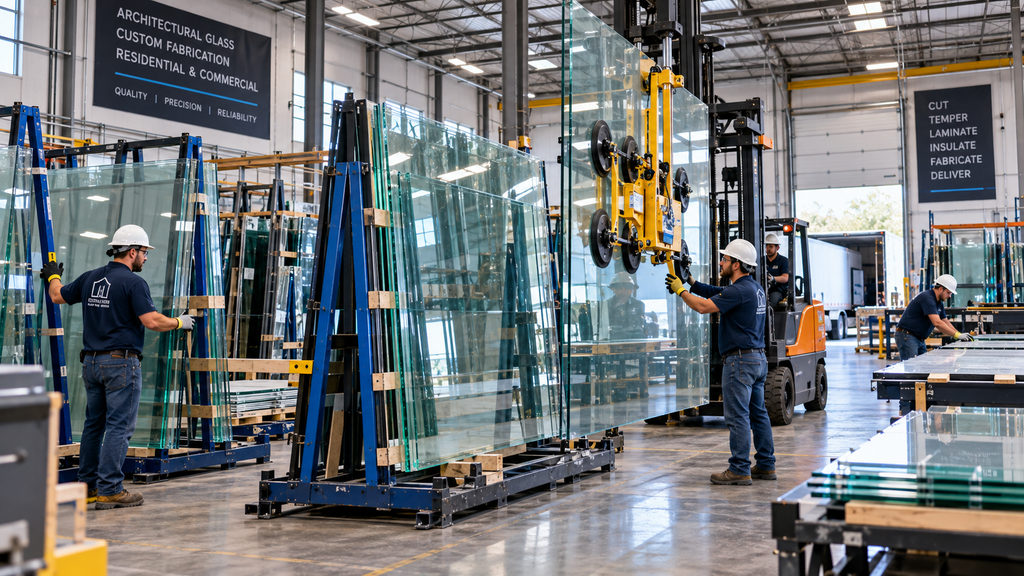
Glass is strong in certain applications but can be vulnerable to impact, edge damage, scratching, and improper handling.
A purpose-built rack provides a designated place for glass rather than leaving panels leaning against walls or resting in improvised storage areas.
Better Organization
A glass storage rack can help a fabrication shop organize different glass types, sizes, thicknesses, and orders.
Instead of keeping sheets scattered throughout a facility, operators can establish designated storage zones.
This can make it easier to identify material and reduce unnecessary movement.
Efficient Use of Floor Space
Large sheets can occupy substantial floor area when stored horizontally.
An appropriately designed A-frame can provide a more space-efficient method of supporting sheets.
The amount of space saved depends on the rack dimensions, number of sheets, material sizes, and facility layout.
Easier Internal Transportation
Some A-frame designs include casters or trolley systems.
This allows operators to move supported materials around a workshop or warehouse without repeatedly transferring individual sheets between separate handling systems.
Abaco’s One Stop A-Frame, for example, is described as having four casters, with two equipped with brakes, as well as lifting points for forklift or overhead-crane handling.
Types of Glass A-Frame Racks
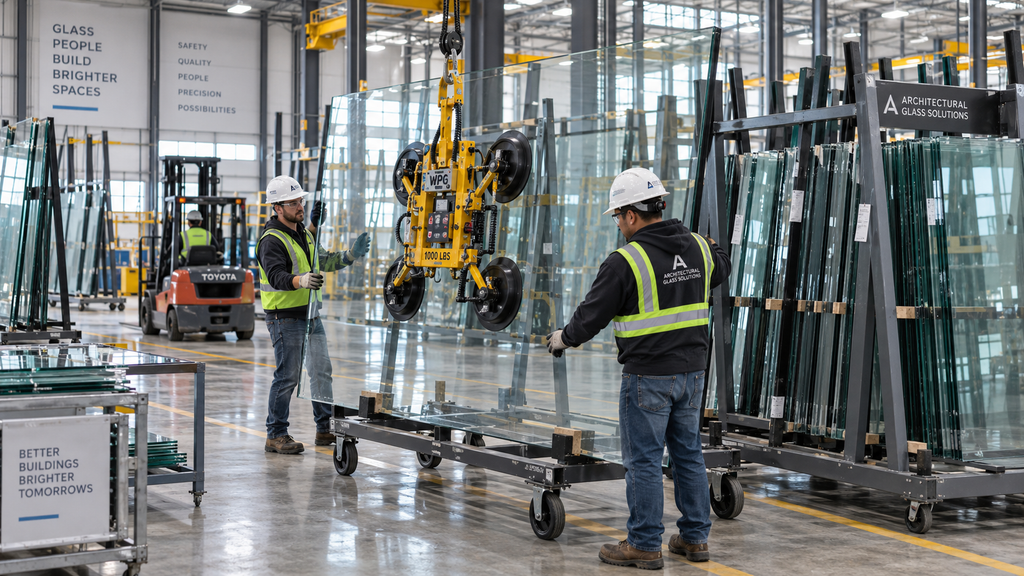
Not every glass-handling operation requires the same rack.
Different configurations are designed for different workloads and working environments.
Single-Sided A-Frame Racks
A single-sided rack supports glass primarily on one side.
This configuration can be useful when the rack is positioned against a wall or when the facility’s workflow only requires access from one direction.
The footprint and capacity should be checked against the intended glass sizes and weights.
Double-Sided A-Frame Racks
Double-sided models can hold glass on both sides of the central structure.
This can make them useful for higher-volume storage and situations where multiple sheets need to be organized around the same frame.
When loading a double-sided frame, weight distribution is important.
Abaco’s published One Stop A-Frame specifications specifically instruct users to distribute glass sheets equally on both sides.
Folding A-Frame Racks
Folding designs can be useful when storage space is limited or when the equipment needs to be transported between locations.
A folded frame can occupy less space when it is not being used.
However, operators should verify the manufacturer’s instructions for assembly, locking mechanisms, rated capacity, and intended use before loading material.
Heavy-Duty A-Frame Racks
Heavy-duty models are designed for applications involving larger or heavier loads.
These can be relevant to businesses working with thick architectural glass, large panels, stone slabs, or bundled materials.
The rack’s rated capacity should always be compared with the actual weight of the intended load.
Glass A-Frame Racks for Transportation
Storage is only one part of glass handling.
Many businesses need to move sheets between production areas, loading docks, warehouses, trucks, and construction sites.
Transport-oriented A-frame racks may include wheels, securing systems, lifting points, and reinforced frames.
The goal is to create a controlled way of moving the load rather than relying on improvised methods.
Casters and Brakes
Casters can make a rack easier to maneuver.
Brakes are particularly important when a rack needs to remain stationary during loading, unloading, or storage.
Abaco’s glass-handling products include models with swivel casters and safety brakes. Its oversized glass transport cart, for example, uses swivel casters with brakes and safety bars to secure large glass bundles.
The floor surface, aisle width, turning radius, and load size should all be considered before selecting a mobile rack.
Securing Glass on an A-Frame
One of the most important considerations when choosing glass A-frame racks is how the material is restrained.
A rack should not simply provide a surface for glass to lean against. The design should provide appropriate support and restraint for the intended application.
Depending on the equipment, securing systems can include:
- Ratchet bars
- Safety bars
- Locking arms
- Rubber strips
- Rubber buttons
- Protective pads
- Adjustable supports
Abaco describes its One Stop A-Frame as having rubber strips and ratchet securing bars designed to help keep slabs or glass sheets steady.
Its oversized glass transport cart uses two safety bars on each side and adjustable protective rubber disks for positioning different glass sizes and quantities.
These features can help reduce movement, but they do not replace proper loading procedures and operator training.
Rubber Protection and Glass Edge Care
Glass can be damaged by contact with hard or abrasive surfaces.
For that reason, many purpose-built glass racks incorporate rubber contact surfaces.
Rubber strips, pads, buttons, or disks can create a protective interface between the rack and the glass.
Abaco states that its Oversized Glass Transport Cart uses rubber strips and rubber buttons to help balance sheets and reduce chipping, while protective rubber disks help position the material.
The condition of these protective components matters.
Operators should inspect them periodically and replace damaged or excessively worn components according to the manufacturer’s maintenance instructions.
Glass A-Frame Racks and Large Glass Doors
Large-format glass doors can be particularly challenging to handle because of their dimensions and weight.
A specialized transport cart or A-frame can provide a dedicated structure for moving and storing these large components.
Abaco’s AOGTC11879 Oversized Glass Transport Cart is specifically described as being suitable for transporting and storing various glass sheet sizes, particularly packed large glass doors in warehouses, workshops, and construction sites.
The published specifications list the model at approximately 119 inches long, 44 inches wide, and 95 inches high, with a stated working-load limit of 3,300 pounds.
Those specifications illustrate why buyers should examine the actual dimensions and load rating rather than selecting a rack based solely on appearance.
Crane and Forklift Compatibility
Some industrial glass racks are designed to work with lifting equipment.
This can be valuable when heavy racks or glass bundles need to be repositioned.
For example, Abaco’s One Stop A-Frame includes base slots and upper bar eyelets intended for lifting with a forklift or overhead crane. Its published specifications for model OSA9463-M2 list a lifting capacity using eyelets of 5,500 pounds, a caster capacity of 4,400 pounds, and a stationary capacity without casters of 30,800 pounds.
These are model-specific ratings and should not be generalized to every A-frame.
Before using lifting equipment, operators should verify the exact rack model, rated capacity, attachment points, lifting method, and manufacturer’s instructions.
Choosing the Right Glass Storage Rack
Selecting glass A-frame racks should start with the application rather than the price.
Consider the following factors.
1. Glass Dimensions
Measure the largest glass sheets or panels the rack will need to accommodate.
Consider both height and width.
Also account for packaging, protective materials, frames, or other components that may increase the overall dimensions.
2. Total Load Weight
Calculate the maximum intended load.
Do not choose a rack based on average load weight alone.
The maximum expected configuration should remain within the manufacturer’s stated working-load limit.
3. Stationary or Mobile Use
Determine whether the rack will remain in one location or frequently move around the facility.
A stationary rack may have a different capacity and construction from a mobile trolley.
Some models can change capacity depending on whether casters are installed.
4. Loading Method
Think about how glass will be placed onto the rack.
Will operators load it manually?
Will a forklift be used?
Will an overhead crane be involved?
The rack needs to be compatible with the facility’s existing material-handling equipment.
5. Available Floor Space
Measure the available storage area, including aisles.
A rack that fits the storage location may still be impractical if workers cannot safely maneuver around it.
Glass Rack Safety Considerations
Glass storage involves significant material-handling hazards.
OSHA’s general storage requirements state that stored materials must be stacked, racked, blocked, interlocked, or otherwise secured to prevent sliding, falling, or collapse. OSHA also advises employers to ensure storage systems do not create hazards and that rack capacities are not exceeded.
These principles are especially important when working with large glass panels.
Inspect Racks Regularly
Inspect frames, supports, casters, brakes, securing bars, lifting points, and protective surfaces.
If structural damage is identified, the equipment should be taken out of service until it has been appropriately evaluated and repaired.
Do Not Exceed Capacity
Every rack has a maximum rated load.
The weight of the glass, packaging, and other supported materials should remain within that limit.
OSHA specifically recommends ensuring that storage shelving and rack load capacities are not exceeded.
Keep Aisles Clear
Mobile racks and glass carts require adequate space for maneuvering.
OSHA’s material-handling guidance calls for sufficient clearances where mechanical equipment is used and requires aisles and passageways to remain clear.
Distribute Loads Properly
Glass should be positioned according to the rack manufacturer’s loading instructions.
For double-sided A-frames, balanced loading can be especially important.
Do not assume that simply staying below the maximum total weight makes every loading configuration acceptable.
Common Mistakes When Storing Glass
Even a well-designed rack cannot compensate for poor loading practices.
Some common problems include:
Overloading
Adding more sheets than the rack’s rated capacity allows can create instability and structural stress.
Uneven Loading
Concentrating heavy glass on one side can affect stability.
Damaged Rubber Supports
Worn or missing protective components can increase the risk of glass damage.
Using the Wrong Rack
A small storage frame may not be appropriate for oversized architectural panels.
Moving an Unsecured Load
Glass should be properly restrained before a mobile rack is moved.
Ignoring Floor Conditions
Uneven or damaged flooring can affect mobile rack stability and maneuverability.
Glass A-Frame Racks vs. Glass Transport Carts
The terms “rack” and “cart” are sometimes used interchangeably, but they can describe different equipment configurations.
A storage-oriented A-frame may be designed primarily for stationary material organization.
A transport cart generally places more emphasis on mobility.
For example, Abaco’s collection includes both A-frame systems and dedicated glass transport carts. Its Oversized Glass Transport Cart is specifically designed to transport and store multiple glass sheets and incorporates swivel casters, safety brakes, securing bars, and protective supports.
The right choice depends on how frequently the material needs to move.
A facility that receives glass, stores it, fabricates it, and sends it to job sites may need several types of handling equipment rather than one universal rack.
Glass A-Frame Racks for Construction Sites
Construction environments can present different challenges from permanent warehouse facilities.
Space may be limited, surfaces may be uneven, and materials may need to move between staging areas and installation locations.
A mobile glass rack can provide a designated place to keep panels organized before installation.
However, construction companies should consider the rack’s capacity, mobility, lifting requirements, floor conditions, and site-specific safety procedures before using it.
OSHA’s construction storage requirements emphasize securing stored materials against sliding, falling, or collapse.
Maintenance Tips for Glass Storage Racks
Proper maintenance can help preserve rack performance.
A maintenance program can include:
- Checking structural welds and connections
- Inspecting wheels and casters
- Testing brakes
- Examining rubber strips and pads
- Checking securing bars
- Inspecting lifting points
- Removing debris
- Checking for corrosion
- Verifying labels and capacity markings
- Recording repairs and inspections
Follow the manufacturer’s maintenance instructions for the specific rack.
For example, Abaco states that its products include warranty conditions covering defects while excluding damage associated with misuse, incorrect handling, or inadequate maintenance.
Why Rack Specifications Matter
Industrial material-handling equipment should be evaluated using measurable specifications.
Important specifications include:
- Overall length
- Overall width
- Overall height
- Net weight
- Working-load limit
- Caster capacity
- Stationary capacity
- Lifting capacity
- Glass-size compatibility
- Number and type of securing mechanisms
For example, the published specifications for Abaco’s OSA9463-M2 provide separate ratings for lifting with eyelets, use with casters, and stationary use without casters.
This illustrates why buyers should read the complete technical specification instead of relying on a single advertised capacity.
Frequently Asked Questions About Glass A-Frame Racks
What are glass A-frame racks used for?
Glass A-frame racks are used to support, store, organize, and in some configurations transport large glass sheets, panels, doors, and related materials.
Why are A-frame racks used for glass?
The angled structure provides a dedicated support system for large sheets and can make storage and material organization more practical than leaving glass on the floor or using improvised supports.
Can glass A-frame racks be moved?
Some models are designed as mobile racks or trolleys and include casters. Other A-frames are intended primarily for stationary use. Always check the manufacturer’s specifications before moving a loaded rack.
How much weight can a glass A-frame rack hold?
Capacity varies significantly by model and configuration. Some industrial A-frames have separate ratings for stationary use, caster use, and lifting. Buyers should use the exact manufacturer’s rated capacity for the model being operated.
Can A-frame racks hold glass doors?
Yes. Specialized glass transport racks can be designed for large glass doors and oversized panels. Abaco’s AOGTC11879, for example, is specifically described for transporting and storing large packed glass doors.
Should glass be secured on an A-frame?
Yes. Glass should be loaded and secured according to the rack manufacturer’s instructions and the facility’s safety procedures. Specialized racks may use safety bars, ratchet systems, locking arms, and rubber supports.
Can a forklift be used with a glass A-frame rack?
Some models are designed with forklift-compatible lifting points or base slots. This is model-specific, so the rack’s technical documentation should be checked before using a forklift.
Are glass A-frame racks suitable for warehouses?
Yes. They can be useful in glass fabrication facilities, warehouses, workshops, and construction operations where large sheets need organized storage or transportation.
What should I consider when buying a glass rack?
Consider the maximum glass dimensions, total load weight, rack capacity, stationary or mobile use, loading method, floor space, securing system, protective surfaces, lifting compatibility, and maintenance requirements.
Conclusion
Glass A-frame racks are an important material-handling solution for businesses that regularly work with large glass sheets, doors, panels, mirrors, and other oversized materials.
A properly selected rack can help organize a facility, provide dedicated support for glass, simplify internal movement, and create a more structured storage system. Different designs serve different purposes, including stationary storage, mobile transportation, heavy-duty applications, construction-site handling, and large-format glass operations.
When choosing a rack, capacity should be one of the first considerations. Buyers should examine the maximum load, glass dimensions, lifting requirements, caster ratings, and intended configuration. Features such as rubber supports, safety bars, ratchet systems, brakes, and lifting points can also be important depending on the application. Abaco’s current product range demonstrates the variety available, from standard and heavy-duty A-frames to folding systems and oversized glass transport carts.
Safety should remain central to the decision. OSHA requires stored materials in covered workplace situations to be appropriately secured against sliding, falling, or collapse and emphasizes keeping aisles clear and respecting rack load capacities.
For U.S. glass fabricators, installers, contractors, warehouses, and construction companies, the best rack is therefore not necessarily the largest or most feature-rich option. It is the equipment whose capacity, dimensions, mobility, securing system, and lifting capabilities match the actual materials and workflow.
Before purchasing, measure your largest glass panels, calculate the maximum load, review your available floor space, identify how the material will be loaded and moved, and verify the manufacturer’s specifications.
With the right combination of equipment, loading procedures, inspections, and workplace practices, glass A-frame racks can become a practical part of a well-organized glass-handling operation.

