
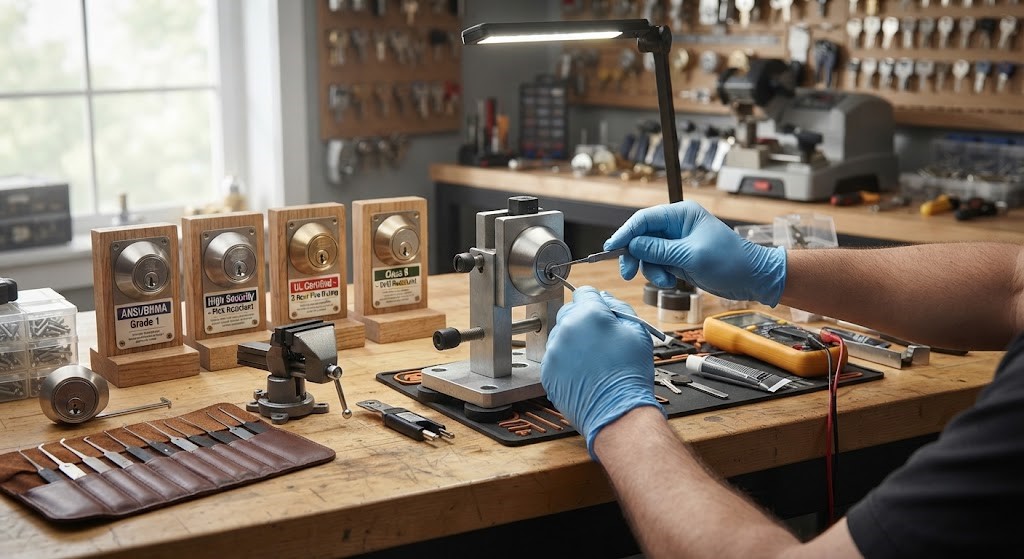
When choosing a lock for your home or business, many people look at appearance, price, or brand name. However, one of the most important factors is the security rating or grade assigned to the lock.
Lock grading helps consumers understand how well a product performs under different security tests. A properly graded lock can provide better protection against forced entry, wear, and everyday use.
Many homeowners wonder how the grading actually works and what terms like Grade 1, Grade 2, and Grade 3 mean when comparing deadbolts and security hardware.
Understanding lock grades makes it easier to choose the right product for your specific needs. Whether you are upgrading your front door security, replacing old hardware, or building a new property, knowing how these ratings work can help you make a more informed decision.
This guide explains lock grading systems, security tests, differences between grades, and how to choose a deadbolt that provides the right level of protection.
What Is Lock Grading?
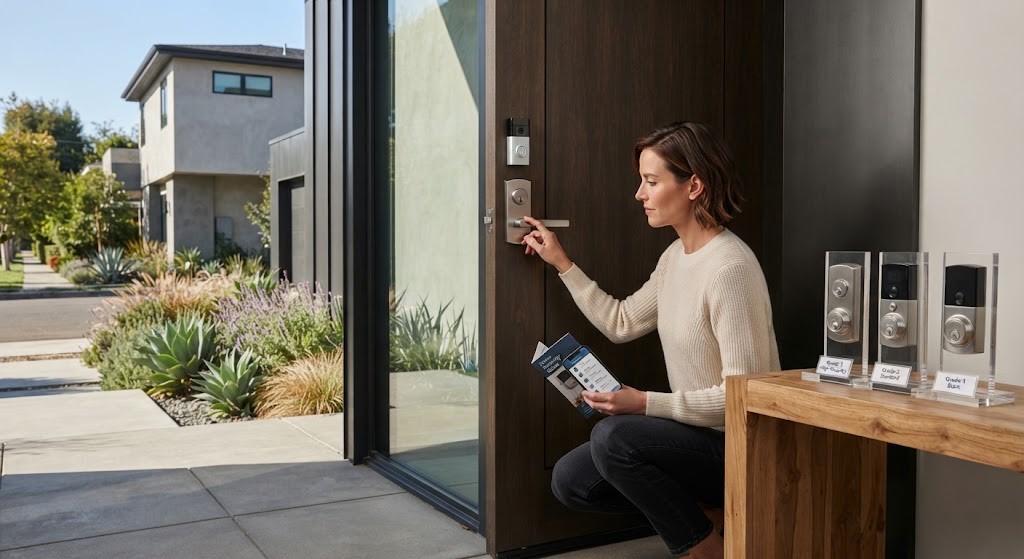
Lock grading is a classification system used to measure the performance, durability, and security capabilities of locks and related hardware.
In the United States, many locks are tested and classified according to standards created by organizations such as the Builders Hardware Manufacturers Association (BHMA) and the American National Standards Institute (ANSI).
These tests evaluate factors including:
- Strength
- Durability
- Resistance to forced entry
- Performance over repeated use
- Security features
A lock’s grade provides consumers with a general understanding of its expected performance.
Why Lock Grades Matter
Not all locks provide the same level of protection.
A decorative lock may look attractive but may not offer the same security features as a high-quality deadbolt.
Understanding lock grades helps homeowners identify:
- Residential security levels
- Commercial-grade options
- Long-term durability
- Better protection against unauthorized entry
Choosing the correct grade depends on where the lock will be installed and the level of security required.
How the Grading Actually Works
The grading process involves several performance tests designed to measure how a lock performs under controlled conditions.
Strength Testing
One major part of lock grading involves testing the physical strength of the hardware.
Manufacturers evaluate:
- Force resistance
- Structural durability
- Lock component strength
A stronger lock is generally better equipped to withstand attempts at forced entry.
Cycle Testing
Locks are tested through repeated opening and closing cycles.
This measures:
- Long-term reliability
- Internal component durability
- Performance over time
A lock that performs well after thousands of uses receives a stronger durability rating.
Security Testing
Security tests examine how well locks resist common attack methods.
Testing may evaluate resistance against:
- Forced impact
- Manipulation attempts
- Physical attacks
Higher-grade locks typically include stronger construction and improved security features.
Material and Construction Testing
The materials used in a lock affect performance.
Testing considers:
- Metal quality
- Internal components
- Manufacturing standards
High-quality materials generally contribute to better durability.
Understanding ANSI/BHMA Lock Grades
Most residential and commercial locks are classified using three main grades.
Grade 1 Locks
Grade 1 represents the highest level of ANSI/BHMA lock performance.
These locks are commonly used for:
- Commercial buildings
- High-security applications
- Areas requiring frequent use
Features often include:
- Strong construction
- High durability
- Advanced security performance
Some homeowners choose Grade 1 locks for maximum residential protection.
Grade 2 Locks
Grade 2 locks provide a balance between security, durability, and affordability.
They are commonly used in:
- Residential homes
- Small businesses
- Office environments
For many homeowners, Grade 2 deadbolts provide strong everyday protection.
Grade 3 Locks
Grade 3 represents basic residential security.
These locks are often used for:
- Interior doors
- Lower-risk applications
- Budget-friendly installations
While Grade 3 locks may meet basic requirements, they typically provide less protection than higher grades.
Grade 1 vs Grade 2 vs Grade 3 Deadbolts
Understanding the differences between grades helps homeowners choose appropriately.
Security Level
Grade 1 offers the highest security level.
Grade 2 provides moderate-to-high protection.
Grade 3 provides basic residential protection.
Durability
Higher-grade locks are designed for more frequent use and longer service life.
Cost Differences
Generally:
- Grade 1 locks cost more
- Grade 2 locks offer balanced value
- Grade 3 locks are more affordable
The best option depends on your security requirements and budget.
Decorative Locks vs Security Locks
One common mistake is assuming all locks provide the same protection.
A decorative lock may improve the appearance of a door but may not offer advanced security features.
Decorative Hardware
Decorative hardware focuses on:
- Style
- Appearance
- Design matching
It may not be designed for high-security applications.
Security Hardware
Security-focused locks prioritize:
- Strength
- Durability
- Resistance to attacks
When protecting exterior doors, security should usually be the primary consideration.
What Makes a Serious Deadbolt Different?
A serious security deadbolt includes features designed to improve protection.
Important features include:
Solid Construction
Quality deadbolts often use stronger materials and reinforced components.
Longer Bolt Throw
The bolt extends deeper into the door frame, making forced entry more difficult.
Reinforced Strike Plates
A strong strike plate helps distribute force and improve door security.
Anti-Pick Features
Some locks include designs that make unauthorized manipulation more difficult.
Strong Cylinder Design
The internal cylinder plays an important role in lock performance.
Factors to Consider When Choosing a Deadbolt
Lock grade is important, but other factors also matter.
Door Type
Consider:
- Front doors
- Garage entrances
- Side entrances
- Interior doors
Different locations may require different security levels.
Location Risk
Security needs vary depending on:
- Neighborhood
- Property type
- Building access
Usage Frequency
A frequently used door may benefit from a more durable lock.
Smart Features
Modern locks may include:
- Keyless entry
- Smartphone control
- Access codes
- Remote monitoring
Installation Quality
Even a high-quality lock may perform poorly if installed incorrectly.
Proper installation ensures:
- Correct alignment
- Strong attachment
- Smooth operation
Common Mistakes When Buying Locks
Avoiding common mistakes can improve home security.
Choosing Based Only on Price
The cheapest option may not provide the protection needed.
Ignoring Lock Grade
Appearance alone does not determine security quality.
Buying the Wrong Size
Deadbolts must match the door and installation requirements.
Installing Without Proper Knowledge
Incorrect installation can reduce effectiveness.
How to Improve Door Security Beyond Lock Grades
A strong lock is only one part of a complete security system.
Reinforce the Door Frame
A strong frame helps support the locking system.
Use Quality Door Materials
Weak doors can reduce overall security.
Add Additional Security Features
Consider:
- Security cameras
- Door sensors
- Smart home monitoring
Maintain Your Locks
Regular maintenance improves performance.
Tips include:
- Cleaning hardware
- Checking alignment
- Lubricating moving parts when needed
The Importance of Choosing the Right Lock Grade for Your Home
Every property has different security requirements.
A homeowner living in a standard residential area may have different needs than a business owner managing a commercial property.
The goal is not always choosing the highest grade available. The goal is selecting a lock that provides appropriate protection based on:
- Risk level
- Usage
- Budget
- Personal preferences
How Lock Grades Help Consumers Make Better Decisions
Without grading systems, comparing locks would be difficult.
Lock grades provide a standard way to evaluate:
- Performance
- Reliability
- Security capabilities
They help consumers move beyond marketing claims and focus on measurable characteristics.
Frequently Asked Questions About How the Grading Actually Works
What does lock grading mean?
Lock grading is a classification system that measures a lock’s strength, durability, and security performance through standardized testing.
Is Grade 1 the best lock grade?
Yes, Grade 1 is generally considered the highest ANSI/BHMA performance grade for locks.
Are Grade 3 locks safe for homes?
Grade 3 locks can provide basic residential security, but many homeowners choose Grade 1 or Grade 2 options for exterior doors.
What is the difference between a decorative lock and a security lock?
Decorative locks focus mainly on appearance, while security locks are designed and tested for strength and protection.
Does a higher lock grade guarantee complete security?
No lock can guarantee complete protection, but higher-grade locks generally provide stronger resistance and durability.
Should I choose a Grade 1 or Grade 2 deadbolt?
The choice depends on your security needs, budget, and where the lock will be installed.
Conclusion
Understanding how the grading actually works helps homeowners make smarter decisions when choosing locks and deadbolts. Lock grades provide valuable information about strength, durability, and security performance.
While appearance and price are important factors, the security rating of a lock plays a major role in protecting your property. Grade 1, Grade 2, and Grade 3 classifications help consumers compare products and choose solutions that match their needs.
A strong security system starts with quality hardware, proper installation, and regular maintenance. By understanding lock grades and focusing on tested performance rather than appearance alone, homeowners can improve safety and create a more secure living environment.

