
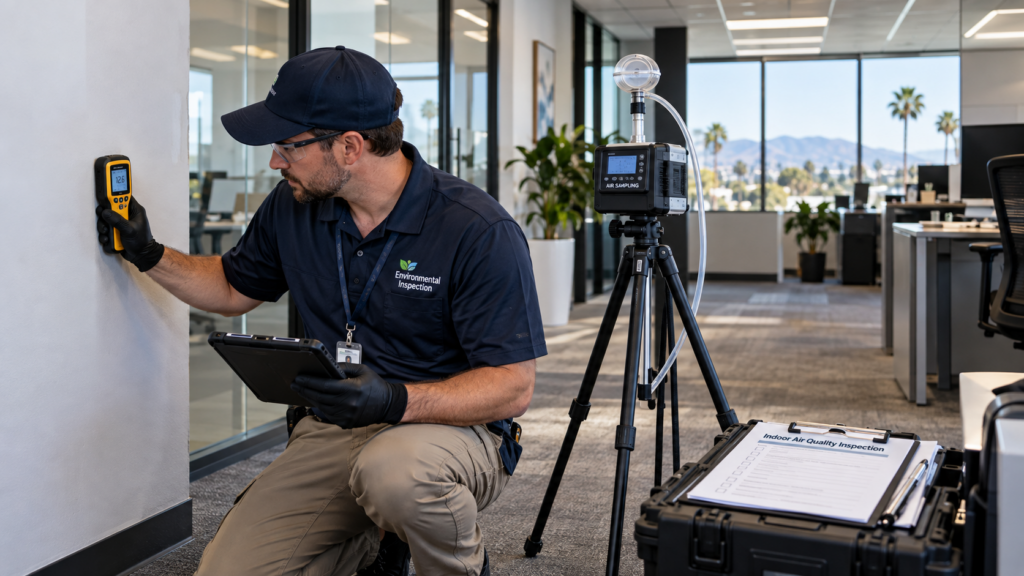
Hidden property problems can become expensive when they are discovered too late. A small plumbing leak may lead to moisture behind drywall. An older flooring material may contain asbestos. Water damage can create conditions where mold develops in areas that are difficult to see.
When questions like these arise, guessing is rarely the best approach.
Interlink Inspection provides independent mold and asbestos inspection services for residential and commercial properties throughout Los Angeles, Orange County, and Riverside. The company focuses on identifying potential environmental concerns through professional site assessments, documented sampling, independent laboratory analysis, and clear reports.
Whether you are a homeowner investigating moisture, a buyer evaluating a property, a contractor preparing for renovation, or a property manager responsible for multiple buildings, accurate information can help you make better decisions.
Why Professional Environmental Property Testing Matters
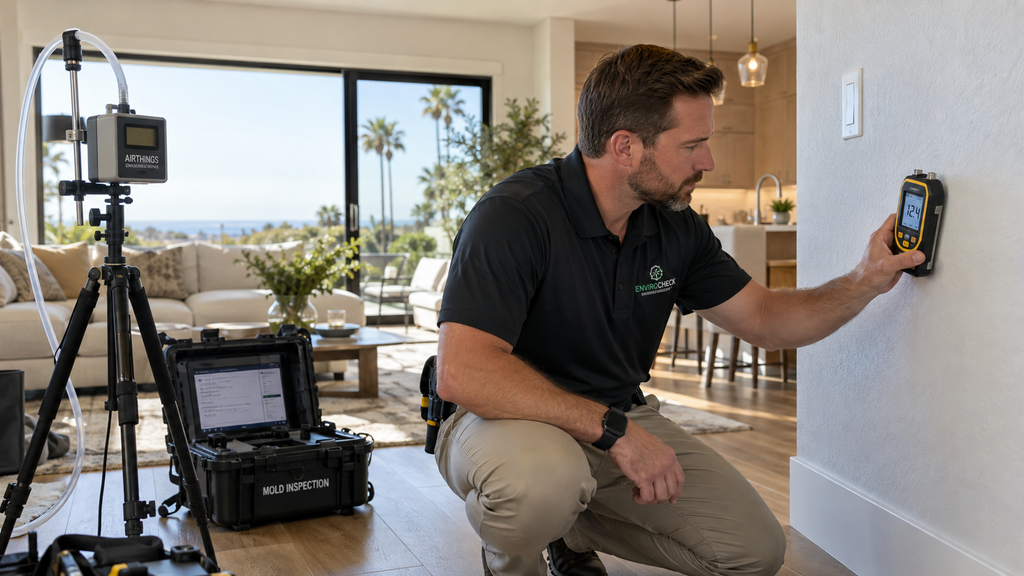
Many building concerns are not immediately visible.
Moisture can remain behind walls, beneath flooring, around windows, or inside ceiling assemblies. Mold may begin growing where persistent moisture exists. Older construction materials may also require asbestos testing before they are cut, drilled, sanded, removed, or demolished.
The U.S. Environmental Protection Agency emphasizes that moisture control is the key to controlling indoor mold growth. It also recommends addressing water problems quickly and drying wet materials as soon as possible.
Professional testing can help determine whether a concern deserves further action instead of relying only on visual appearance.
A detailed inspection may answer questions such as:
- Is abnormal moisture present?
- Where could the moisture be coming from?
- Is air or surface mold sampling appropriate?
- Do suspect construction materials contain asbestos?
- Which materials may be affected by a renovation project?
- What do laboratory results mean for the property?
- What steps should be considered next?
This is where an experienced inspection company can provide valuable context.
What Is Interlink Inspection?
Interlink Inspection is an independent environmental inspection company serving Southern California.
Its two primary specialties are mold inspection and asbestos testing. According to the company, it does not operate a mold remediation or asbestos abatement division and does not receive contractor referral fees. Its role is to test, document, and report rather than sell the removal work that may follow a positive finding.
That separation can be important for property owners who want an inspection based on evidence rather than a sales proposal.
Areas Served by Interlink Inspection
Interlink Inspection provides services throughout:
- Los Angeles County
- Orange County
- Riverside County
The company works with homeowners, home buyers, sellers, property managers, investors, contractors, and commercial property professionals.
Mold Inspection and Moisture Assessment
Mold problems often begin with moisture.
Common sources can include leaking pipes, roofing problems, poor ventilation, flooding, air-conditioning issues, condensation, and water intrusion around windows or exterior walls.
The EPA notes that mold spores exist naturally in indoor and outdoor environments, but indoor mold growth occurs when spores have access to sufficient moisture.
That is why a professional mold inspection should look beyond visible discoloration.
What Can a Mold Inspection Include?
Depending on the property and the concern, Interlink Inspection lists services such as:
- Visual property assessment
- Moisture mapping
- Moisture intrusion investigation
- Indoor air sampling
- Outdoor comparison samples
- Surface sampling when appropriate
- Photographic documentation
- Laboratory analysis
- Written findings and recommendations
The purpose is to combine property conditions with laboratory evidence instead of relying on one piece of information alone.
Why Moisture Mapping Is Important
A wall may look completely normal while moisture is present behind the surface.
Professional moisture meters can help identify areas that deserve closer investigation. Inspectors may also consider plumbing, roofing, ventilation, HVAC systems, previous leaks, and the history of the building.
This building-level context matters because removing visible mold without correcting the underlying moisture source may allow the problem to return.
The EPA similarly recommends correcting leaks and moisture sources as part of effective mold control.
Mold Air and Surface Sampling
Not every mold inspection requires the same type of sampling.
When sampling is appropriate, indoor air samples can provide information about airborne mold spores. Outdoor samples may also be collected as a comparison point.
Surface samples may be useful when an inspector wants laboratory information about growth or material found in a particular area.
Samples can then be sent to a laboratory for analysis.
Why Laboratory Analysis Matters
The appearance of a stain alone cannot provide all the information a property owner may need.
Laboratory analysis adds measurable evidence to an inspection. Interlink Inspection states that its mold samples are analyzed by accredited laboratories and interpreted together with property conditions and sampling locations.
This combination can be especially useful after:
- Plumbing leaks
- Roof leaks
- Flooding
- Water heater failures
- HVAC condensation
- Repeated indoor humidity problems
- Visible mold-like growth
- Persistent musty odors
- Previous water damage
Asbestos Testing Before Renovation or Demolition
Asbestos testing is another major part of environmental property evaluation.
Many older building products can be considered suspect materials depending on the building and construction history.
Examples may include certain flooring products, adhesives, ceiling textures, wall systems, insulation, roofing products, stucco, and other construction materials.
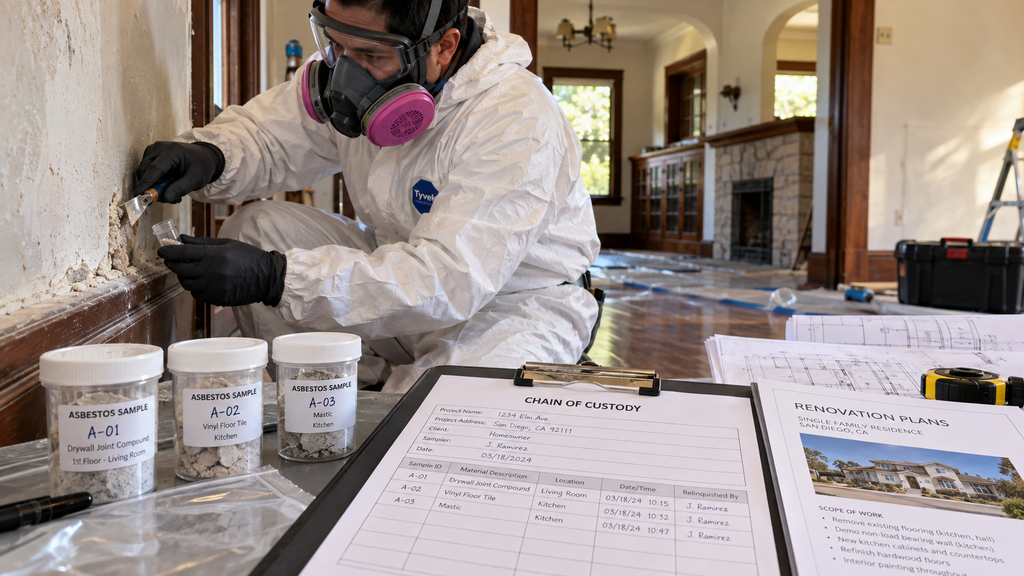
You cannot reliably determine asbestos content simply by looking at a material. Representative sampling and laboratory testing are used to determine whether asbestos is present.
Why Test Before Disturbing Building Materials?
Renovation work often involves cutting, sanding, drilling, breaking, or removing materials.
Finding an asbestos concern after demolition has already begun can create delays and additional complications.
Testing appropriate materials before work starts helps contractors and property owners better understand the planned work area.
For projects covered by South Coast AQMD Rule 1403, asbestos survey requirements may apply before renovation or demolition. The agency states that renovation surveys focus on affected construction materials that may be disturbed, while demolition projects can require a broader survey.
Specific regulatory requirements depend on the project, property, materials, and scope, so owners and contractors should verify what applies to their situation.
Interlink Inspection’s Asbestos Testing Process
Interlink Inspection describes its asbestos service as a combination of site assessment, representative material sampling, laboratory analysis, documentation, and reporting.
Step 1: Define the Project Scope
The inspector first needs to understand what work is planned.
For example:
- Is a kitchen being remodeled?
- Will bathroom walls be removed?
- Is flooring being replaced?
- Is a commercial tenant space being renovated?
- Is the entire building being demolished?
Defining the scope helps determine which materials may need evaluation.
Step 2: Identify Suspect Materials
Materials in the affected project area are reviewed.
The inspector may evaluate flooring layers, ceiling materials, wall systems, adhesives, insulation, stucco, roofing, or other products depending on the building and planned work.
Step 3: Collect Representative Samples
Appropriate samples are carefully collected and documented.
Interlink Inspection states that sample locations, material descriptions, handling, and laboratory submission are documented through a chain-of-custody process.
Step 4: Laboratory Analysis
Samples are submitted to an appropriate laboratory for analysis.
Laboratory findings help determine whether sampled materials contain asbestos.
Step 5: Receive the Report
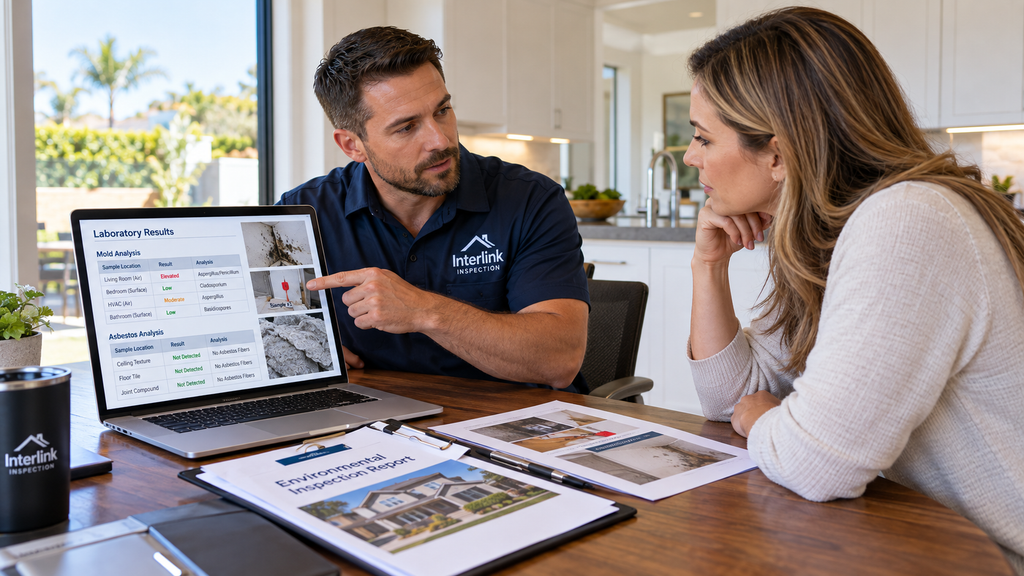
The final documentation can include sample locations, laboratory findings, photographs, material information, and context relevant to the renovation or property decision.
Why Independent Testing Can Be Valuable
One notable feature of Interlink Inspection is its testing-only model.
The company states that it does not sell mold remediation or asbestos abatement services.
This means the company inspecting the property is not also trying to sell the property owner a removal project.
For homeowners, investors, buyers, and property managers, this structure can help keep the inspection focused on answering the original question: what was actually found?
Independent testing can also provide useful documentation when a property owner later requests remediation estimates from separate contractors.
When Should You Consider Calling Interlink Inspection?
There are several situations where professional mold or asbestos testing may be worth considering.
After Water Damage
A plumbing leak, roof leak, flood, or appliance failure can introduce moisture into materials that are difficult to dry.
If affected materials stay wet, mold growth may become a concern.
Before a Major Renovation
If a project involves disturbing suspect materials, asbestos testing may help identify potential concerns before demolition begins.
During a Property Purchase
Home buyers may request additional environmental evaluation when a general property inspection identifies moisture damage, suspicious staining, previous leaks, or potentially concerning materials.
When Managing Rental or Commercial Property
Property managers frequently need clear documentation.
Professional testing can help document the conditions observed, locations sampled, laboratory results, and potential next steps.
When You Notice a Persistent Musty Odor
The EPA notes that a moldy or musty odor can suggest mold growth and may warrant investigation, particularly when the source is not obvious.
What to Look for in an Environmental Inspection Company
Selecting the right provider is just as important as deciding to test.
Ask About Independence
Find out whether the inspection company also sells remediation or abatement.
Understanding the financial relationship can help you evaluate how the company operates.
Ask Who Performs the Testing
For asbestos-related work, qualifications and regulatory requirements can matter.
California maintains certification information for asbestos consultants, and certain asbestos-related professional services require appropriate certification.
Ask About the Laboratory
Find out:
- Which laboratory analyzes the samples?
- What testing method is being used?
- Will you receive the laboratory documentation?
- Are sample locations clearly identified?
Ask What the Final Report Includes
A useful environmental inspection report should provide more than a simple positive or negative result.
Ideally, it should explain where samples came from, what was observed, what the laboratory found, and how those findings relate to the property.
Interlink Inspection for Residential Properties
Homeowners often need straightforward answers without complicated technical language.
For residential clients, an inspection may help clarify concerns around:
- Water leaks
- Mold-like growth
- Musty odors
- Moisture around windows
- Bathroom moisture problems
- Older flooring
- Ceiling textures
- Remodeling projects
- Property purchases and sales
Interlink Inspection emphasizes plain-language reporting intended to help property owners understand what was tested and what the results mean.
Interlink Inspection for Commercial Properties
Commercial environmental inspections can involve different priorities.
Building owners, contractors, and property managers may need documentation for tenant improvements, renovations, repairs, due diligence, or demolition planning.
Projects may involve offices, apartment buildings, retail properties, schools, warehouses, and other facilities.
Accurate sample locations, chain-of-custody documentation, laboratory results, and organized reports can make it easier for multiple project stakeholders to work from the same information.
Frequently Asked Questions About Interlink Inspection
What does Interlink Inspection specialize in?
Interlink Inspection specializes in independent mold inspection, moisture assessment, mold sampling, asbestos material testing, laboratory-backed findings, and environmental property reporting.
Where does Interlink Inspection provide services?
The company primarily serves Los Angeles County, Orange County, and Riverside County in Southern California.
Does Interlink Inspection perform mold removal?
No. The company states that it performs testing and inspections but does not sell mold remediation or asbestos abatement services.
Can Interlink Inspection test a property before renovation?
Yes. Pre-renovation asbestos testing is one of the company’s key services. Testing can help identify suspect materials that may be affected by planned construction work.
Does every mold inspection need air testing?
Not necessarily. The appropriate inspection and sampling approach depends on the property conditions and reason for the investigation.
Why is moisture important when investigating mold?
Mold growth depends on moisture. Identifying and correcting the moisture source is therefore an important part of addressing an indoor mold problem.
Can asbestos be identified visually?
Visual appearance alone generally cannot confirm whether a suspect material contains asbestos. Proper sampling and laboratory analysis are used to determine asbestos content.
How quickly are laboratory results available?
Interlink Inspection lists standard accredited laboratory turnaround in the range of approximately 12–24 hours in parts of its current service information, while some services and circumstances may require different timelines. Property owners should confirm the expected turnaround for their specific inspection when scheduling.
Conclusion
Property problems are easier to manage when you know exactly what you are dealing with.
Whether the concern is hidden moisture, possible mold growth, suspect asbestos-containing materials, or an upcoming renovation, professional testing can provide useful evidence before major decisions are made.
Interlink Inspection offers independent mold and asbestos testing across Los Angeles, Orange County, and Riverside. Its approach combines property assessment, documented sampling, independent laboratory analysis, and clear reporting without selling mold remediation or asbestos abatement services.
For homeowners, buyers, contractors, investors, and property managers, that information can help reduce uncertainty and make it easier to plan the appropriate next step.
Hidden property concerns do not always announce themselves before they become expensive. Identifying them early through professional inspection and laboratory-backed testing can provide the clarity needed to protect a property, prepare for renovation, and move forward with greater confidence.

