
A sharp knife is one of the most important tools in any kitchen, workshop, or outdoor environment. Whether you are a professional chef, home cook, hunter, or hobbyist, maintaining a sharp blade improves performance, safety, and overall efficiency.
Over time, even the highest-quality knives become dull due to regular use. A dull knife requires more pressure, reduces cutting precision, and can increase the risk of accidents. Instead of replacing knives frequently, many people invest in knife sharpening sets to restore blade performance and extend the life of their tools.
Knife sharpening sets provide everything needed to maintain sharp edges, including sharpening stones, guided systems, angle controls, and finishing tools. With the right sharpening method, users can keep their knives performing at their best for years.
This guide explains how knife sharpening sets work, the different types available, important features to consider, and how to choose the right sharpening solution for your needs.
Why Knife Sharpening Is Important
A sharp knife is not only more effective but also safer to use.
Many people assume that a sharp blade is more dangerous, but the opposite is often true. A dull knife requires extra force, making it more likely to slip during cutting.
A properly sharpened knife provides:
- Better cutting control
- Cleaner slices
- Improved efficiency
- Reduced effort
- Longer blade lifespan
Regular sharpening helps protect your investment and ensures consistent performance.
What Are Knife Sharpening Sets?
Knife sharpening sets are complete sharpening solutions designed to help users restore and maintain blade edges.
Unlike simple sharpeners, complete sharpening sets often include multiple tools that work together.
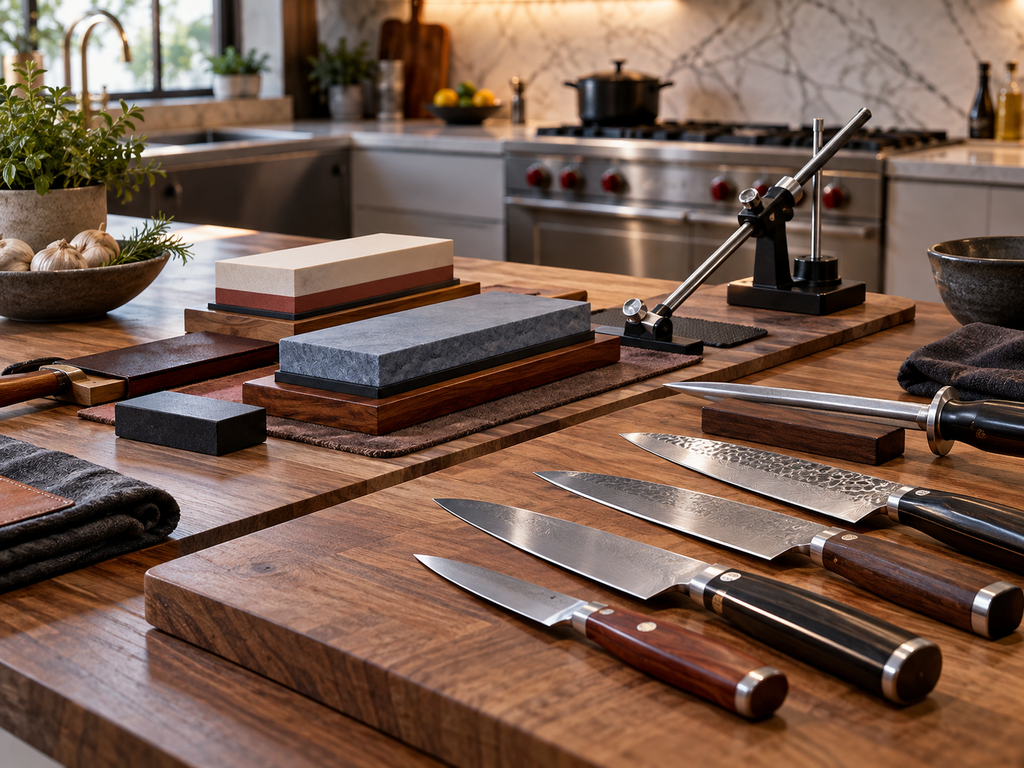
A typical set may include:
- Sharpening stones
- Honing tools
- Angle guides
- Polishing compounds
- Sharpening accessories
- Storage cases
These components allow users to perform different levels of sharpening depending on the condition of the blade.
How Knife Sharpening Sets Work
Sharpening a knife involves removing small amounts of metal to create a new, sharp edge.
The process generally includes several stages.
Creating the Edge
The first stage involves reshaping the blade edge.
Coarse sharpening materials remove enough metal to repair:
- Dull edges
- Small chips
- Uneven areas
Refining the Edge
After the basic edge is restored, finer materials smooth the surface.
This improves:
- Sharpness
- Cutting performance
- Edge consistency
Polishing the Blade
Some sharpening systems include finishing steps that polish the edge.
This creates a refined cutting surface and improves performance.
Types of Knife Sharpening Sets
Different sharpening systems are designed for different users and preferences.
Whetstone Sharpening Sets
Whetstones are one of the oldest and most respected sharpening methods.
They use abrasive stones to manually sharpen blades.
Advantages include:
- Precise control
- Professional results
- Versatility
Whetstones are popular among chefs and sharpening enthusiasts.
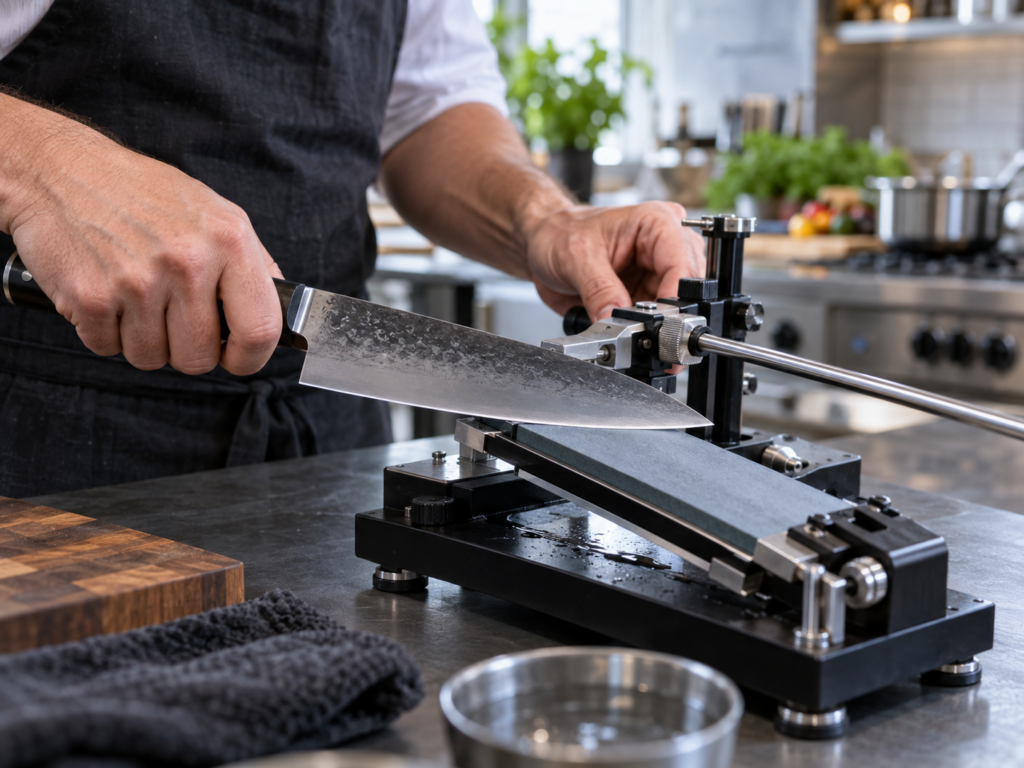
Guided Sharpening Systems
Guided systems help users maintain a consistent sharpening angle.
They are useful because proper angle control is one of the most important parts of sharpening.
Benefits include:
- Easier learning process
- More consistent results
- Reduced sharpening mistakes
Pull-Through Sharpeners
Pull-through systems are designed for convenience.
They typically include preset angles and require minimal technique.
Advantages include:
- Simple operation
- Fast sharpening
- Beginner-friendly design
Electric Knife Sharpeners
Electric sharpening systems use motor-powered abrasive wheels.
They are often chosen for:
- Speed
- Convenience
- Regular home use
However, users should select models designed for their specific knives.
Professional Knife Sharpening Sets
Professional systems are designed for users who require maximum precision.
They often include:
- Multiple sharpening stages
- Advanced angle control
- Premium materials
These systems are popular among:
- Chefs
- Culinary professionals
- Knife collectors
Benefits of Using Knife Sharpening Sets
Investing in a quality sharpening system provides several advantages.
Extends Knife Lifespan
Regular maintenance prevents knives from becoming permanently damaged.
Proper sharpening helps preserve:
- Blade shape
- Cutting ability
- Overall value
Saves Money
Replacing expensive knives can become costly.
A good sharpening set allows users to maintain existing knives instead of purchasing replacements.
Improves Cutting Performance
Sharp knives provide:
- Cleaner cuts
- Better precision
- More control
This is especially important for professional cooking.
Provides Consistent Results
A complete sharpening system helps users maintain the same sharpening process every time.
Important Features to Consider When Buying Knife Sharpening Sets
Choosing the right sharpening set requires understanding your needs.
Sharpening Material Quality
The abrasive material affects performance.
Common materials include:
Diamond Abrasives
Diamond sharpening surfaces are known for durability and fast material removal.
Ceramic Materials
Ceramic sharpeners are often used for finishing and refining edges.
Natural Stones
Natural stones are valued by traditional sharpening enthusiasts.
Angle Control
Maintaining the correct angle is essential.
Different knives require different angles depending on:
- Blade design
- Intended use
- Steel type
Guided systems can make angle control easier.
Number of Sharpening Stages
Many quality sets include multiple stages:
- Coarse sharpening
- Medium sharpening
- Fine polishing
Multiple stages provide better control over the final edge.
Ease of Use
Consider how comfortable the system is for your experience level.
Beginners may prefer:
- Guided systems
- Simple instructions
- Angle assistance
Experienced users may prefer:
- Manual stones
- Advanced sharpening kits
Portability
Some sharpening sets include carrying cases.
Portable systems are useful for:
- Outdoor activities
- Hunting trips
- Travel
How to Use Knife Sharpening Sets Correctly
Proper technique helps achieve better results.
Step 1: Understand Your Knife
Before sharpening, identify:
- Blade type
- Steel characteristics
- Current condition
Different knives require different approaches.
Step 2: Choose the Correct Angle
The sharpening angle affects:
- Sharpness
- Durability
- Cutting performance
Follow the recommended angle for your knife.
Step 3: Start With Coarse Sharpening
Use coarse materials only when needed.
This stage is useful for repairing dull or damaged edges.
Step 4: Move to Finer Sharpening
Refine the blade using finer abrasives.
This improves smoothness and sharpness.
Step 5: Finish and Test
After sharpening:
- Clean the blade
- Test cutting performance
- Store the knife safely
Common Knife Sharpening Mistakes
Avoiding mistakes helps protect your blades.
Using the Wrong Angle
Incorrect angles can damage the edge or reduce performance.
Applying Too Much Pressure
Excessive pressure can remove unnecessary metal.
Use controlled movements instead.
Skipping Maintenance
Waiting until a knife becomes extremely dull makes sharpening more difficult.
Regular maintenance is easier.
Using Low-Quality Tools
Poor-quality sharpening tools may create inconsistent results.
Knife Sharpening Sets for Different Users
Different users have different requirements.
Home Cooks
Home users often need:
- Easy operation
- Reliable results
- Low maintenance
A simple guided system may be ideal.
Professional Chefs
Chefs often require:
- Precision
- Fast sharpening
- Consistent edges
Advanced sharpening sets provide greater control.
Outdoor Enthusiasts
Hunters and campers need portable solutions.
Important features include:
- Durability
- Compact design
- Versatility
Knife Collectors
Collectors often prefer systems that preserve valuable blades.
Gentle sharpening methods help maintain knife quality.
Maintaining Your Sharpening Equipment
Sharpening tools also require care.
Clean Sharpening Stones
Remove metal particles after use.
Proper cleaning extends stone life.
Store Equipment Properly
Keep sharpening tools protected from:
- Moisture
- Damage
- Contamination
Replace Worn Components
Over time, sharpening materials wear down.
Replacing worn parts ensures consistent performance.
The Difference Between Sharpening and Honing
Many people confuse sharpening and honing.
Sharpening
Sharpening removes metal to create a new edge.
It is needed when a knife becomes dull.
Honing
Honing realigns the existing edge.
It helps maintain sharpness between sharpening sessions.
Both processes are important for knife care.
Why Quality Knife Sharpening Sets Are Worth the Investment
A quality sharpening system provides long-term value.
Benefits include:
- Better knife performance
- Reduced replacement costs
- Improved cooking experience
- Greater control
For anyone who regularly uses knives, proper maintenance is a valuable skill.
Future Trends in Knife Sharpening Technology
Sharpening technology continues to improve.
Future developments may include:
- More precise angle systems
- Smarter sharpening tools
- Improved abrasive materials
- Compact professional systems
These innovations make knife maintenance easier for more users.
Frequently Asked Questions About Knife Sharpening Sets
What are knife sharpening sets used for?
Knife sharpening sets are used to restore and maintain sharp edges on kitchen knives, outdoor blades, and other cutting tools.
Are knife sharpening sets better than simple sharpeners?
Complete sharpening sets often provide more control and better results because they include multiple tools and sharpening stages.
How often should I sharpen my knives?
The frequency depends on usage. Regularly used knives may require sharpening every few months, while lighter-use knives may need it less often.
Are knife sharpening sets difficult for beginners?
Many modern sharpening sets are beginner-friendly, especially guided sharpening systems that help maintain the correct angle.
Can sharpening damage a knife?
Improper technique can damage a blade. Using the correct angle, pressure, and tools helps protect the knife.
What is the best sharpening method?
The best method depends on experience, knife type, and personal preference. Whetstones provide precision, while guided systems offer convenience.
Conclusion
Knife sharpening sets are essential tools for anyone who wants to maintain sharp, reliable, and long-lasting blades. Whether you are a professional chef, home cook, outdoor enthusiast, or knife collector, the right sharpening system can significantly improve your cutting experience.
Choosing the best set depends on factors such as sharpening method, materials, angle control, and your personal skill level. With proper technique and regular maintenance, a quality sharpening set helps preserve your knives and ensures they continue performing at their best.
Investing in proper blade care is not just about keeping knives sharp—it is about improving safety, efficiency, and the overall enjoyment of using quality cutting tools.

