
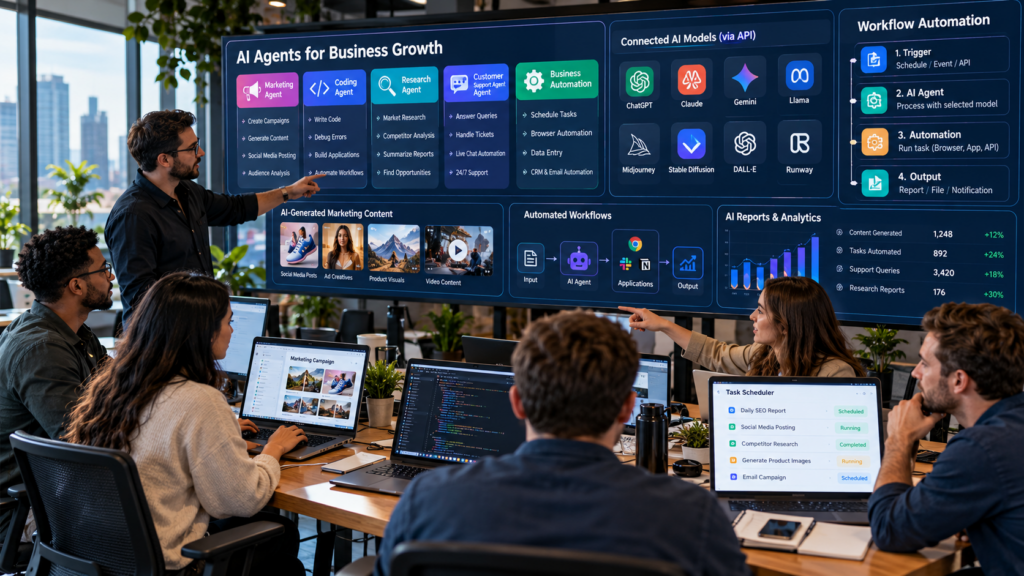
Artificial intelligence is moving beyond traditional chatbots. Instead of simply answering a question and waiting for the next prompt, modern AI agents can research information, browse websites, work with files, use connected applications, write code, monitor data, and perform multi-step tasks.
The challenge is that running an AI agent continuously can require technical infrastructure. Users may need a server, software environment, updates, security configuration, storage, networking, and a way to keep the agent available when their personal computer is turned off.
MyClaw is designed to address that infrastructure problem by providing managed cloud hosting for AI agents. The platform allows users to deploy AI agents such as OpenClaw and Hermes Agent in an always-on cloud environment rather than maintaining the underlying server themselves.
For individuals, developers, marketers, agencies, and businesses in the United States, this type of infrastructure can make it easier to turn AI agents into recurring digital workers instead of using them only for individual conversations.
What Is MyClaw?
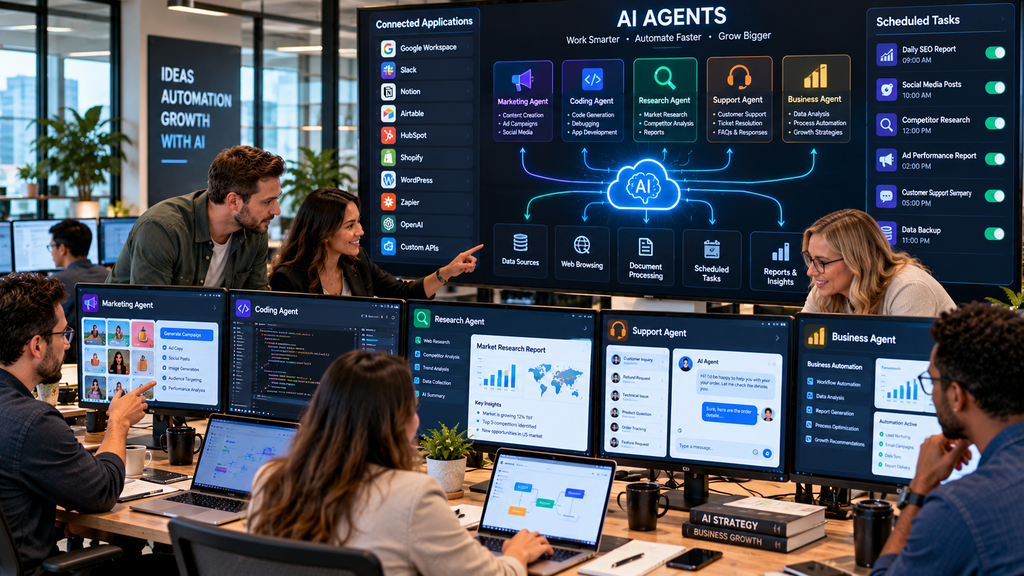
MyClaw is a managed AI agent hosting platform designed to deploy, run, and maintain AI agents in the cloud.
The basic concept is different from a conventional AI chatbot.
A chatbot generally waits for a user to send a message. An AI agent can be configured around a goal and given access to tools, files, applications, websites, schedules, and other resources.
MyClaw provides the cloud environment where an agent can remain available and perform tasks over time.
The platform currently focuses on AI agent runtimes including OpenClaw and Hermes Agent, with support for additional agentic development workflows.
This means a user does not necessarily need to maintain their own server just to keep an AI agent online.
How Does MyClaw Work?
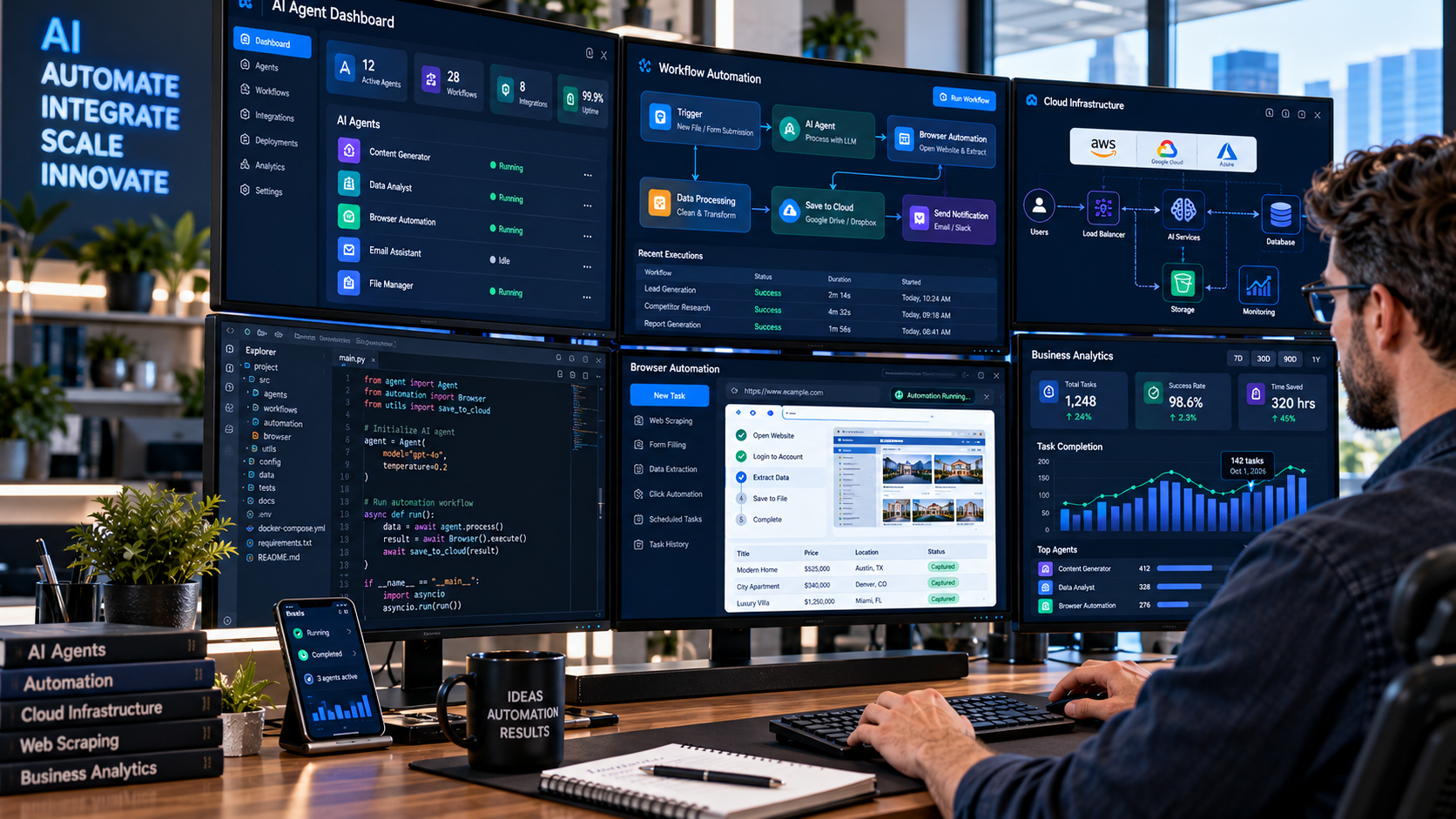
The MyClaw model can be understood through three basic components:
- AI agent
- Cloud infrastructure
- Connected tools and workflows
The agent provides the reasoning and task execution layer.
The cloud environment gives the agent a persistent place to operate.
Connected tools allow the agent to interact with the information and applications required to complete a task.
For example, a business could create an AI agent workflow that checks selected websites every morning, analyzes changes, prepares a report, and sends the results to a team channel.
The user does not necessarily need to keep a laptop running overnight for the process to continue.
What Makes an AI Agent Different From a Chatbot?

The distinction between AI chat and AI agents is important.
A chatbot might answer:
“What are the latest changes on these competitor websites?”
An AI agent can potentially be configured to:
- Visit the websites
- Collect information
- Compare changes
- Identify important updates
- Prepare a summary
- Save the report
- Send the results to a team
- Repeat the process every week
The difference is not simply the quality of the AI model.
It is the combination of reasoning, tools, memory, schedules, and the ability to execute multiple steps.
This is why persistent AI agents can be useful for recurring business workflows.
Why Run an AI Agent in the Cloud?
Running an AI agent locally can be useful for experimentation, but continuous workflows introduce additional requirements.
A computer needs to remain powered on. Software needs to stay updated. Network access needs to remain available. Files and credentials need to be managed securely.
Cloud hosting can shift much of that infrastructure responsibility away from the user.
MyClaw provides an always-on environment designed for AI agents, with automated updates, backups, and managed infrastructure.
For a business, this can be useful when an AI workflow needs to operate outside normal working hours.
MyClaw for Business Automation
Business automation is one of the most practical applications for AI agents.
Instead of automating only one simple action, businesses can create workflows that involve several stages.
For example, a sales research agent might:
Step 1: Find New Prospects
The agent researches publicly available business information.
Step 2: Organize the Data
Relevant information can be structured into a report or spreadsheet.
Step 3: Research the Company
The agent can review websites, product pages, announcements, and other available sources.
Step 4: Prepare a Brief
The information can be turned into a concise sales research document.
Step 5: Notify the Team
The completed research can be delivered to a designated workspace.
Human review can then take place before any customer-facing communication is sent.
This approach can reduce repetitive research while keeping important decisions under human control.
MyClaw for Marketing Teams
Marketing departments perform many recurring tasks that can potentially benefit from AI agents.
These include:
- Competitor monitoring
- SEO research
- Content research
- Campaign reporting
- Keyword analysis
- Social media monitoring
- Content briefs
- Market research
- Performance summaries
An AI marketing agent can be scheduled to perform a recurring task rather than waiting for someone to manually request it.
For example, an SEO agent could check selected competitor pages every week, identify major content changes, compare them with the company’s own content, and prepare a report for the marketing team.
The human team can then decide which recommendations are worth implementing.
MyClaw for SEO Automation
SEO is particularly suitable for recurring AI workflows because search optimization involves continuous monitoring.
An SEO AI agent can potentially help with:
Keyword Research
The agent can organize keyword opportunities according to search intent, relevance, and content priorities.
Website Audits
It can inspect pages for technical and content-related issues and organize findings into a prioritized list.
Competitor Monitoring
The agent can periodically review competitor pages and identify changes in content, structure, messaging, or other publicly observable elements.
Content Refreshes
An agent can identify older pages that may need updating and prepare recommendations for a human editor.
Reporting
Instead of manually compiling information every week, the agent can prepare a recurring SEO report.
MyClaw’s SEO-focused workflows are designed around hosting an always-on agent with browser access, files, tools, and scheduled routines.
MyClaw for Coding Agents
Software developers can also use persistent AI agents.
Traditional coding assistants generally help with code while a developer is actively working.
An agentic coding workflow can potentially operate on a repository, review issues, inspect code, run tests, prepare documentation, or organize development tasks.
A MyClaw coding workflow can connect an agent with development tools such as GitHub and project-management systems.
Possible use cases include:
- Code review preparation
- Test execution
- Issue investigation
- Documentation generation
- Release-note preparation
- Repository analysis
- Backlog organization
- Repetitive coding tasks
Human developers should still review important code changes before they reach production.
AI agents can accelerate development, but automated execution does not remove the need for software engineering judgment.
MyClaw and Business Integrations
An AI agent becomes more useful when it can work with the systems a business already uses.
MyClaw’s OpenClaw environment supports connections to a range of business and productivity tools.
Potential integrations include:
- Gmail
- Google Docs
- Google Calendar
- Google Sheets
- Slack
- Shopify
- Canva
- Salesforce
- GitHub
- Notion
- Discord
- ClickUp
- Jira
- Linear
- Trello
- Telegram
The exact capabilities available through each integration depend on the connector, permissions, agent runtime, and workflow configuration.
The broader advantage is that the AI agent can work with existing business information instead of operating as an isolated chatbot.
Persistent AI Agents and Scheduled Tasks
One of the most interesting aspects of agentic AI is persistence.
A user can define a recurring workflow instead of manually starting the process each time.
For example:
Every morning: prepare a business briefing.
Every Monday: review competitor activity.
Every week: identify SEO content opportunities.
Every night: check selected system information.
Every month: prepare a performance report.
The agent can continue operating according to the defined schedule.
This can be particularly useful for tasks that are repetitive, information-heavy, and predictable.
MyClaw for Personal Productivity
AI agents are not limited to companies.
Individuals can use persistent agents for personal workflows as well.
Potential applications include:
- Daily research summaries
- Calendar preparation
- File organization
- Personal reminders
- Travel research
- News monitoring
- Document summaries
- Recurring reports
- Personal knowledge management
For example, an agent could review a collection of documents and create a summary of important changes.
Another workflow could prepare a daily briefing based on a user’s calendar and selected information sources.
The advantage comes from reducing repetitive preparation rather than simply generating another chat response.
MyClaw and File Management
Modern AI agents can work with more than text prompts.
Documents, spreadsheets, PDFs, images, and other files can provide important context.
An agent can potentially:
- Locate relevant files.
- Read the information.
- Compare documents.
- Extract important details.
- Organize findings.
- Produce a new report.
This can be useful for businesses with large collections of internal documents.
For example, a finance team could use an agent to organize monthly reports and prepare a summary for review.
A marketing team could use an agent to compare campaign documents and identify changes.
MyClaw for Research
Research is another strong use case for AI agents.
Instead of manually opening dozens of browser tabs, an agent can be given a research objective and instructed to gather relevant information.
A research workflow could include:
- Finding relevant sources
- Comparing information
- Extracting key facts
- Organizing findings
- Identifying differences
- Preparing a summary
Human review remains important, particularly when research involves financial, legal, medical, or other high-stakes information.
An agent should be treated as a research assistant rather than an unquestionable source of truth.
Security and Privacy Considerations
AI agents can have access to powerful tools, which makes security especially important.
A hosted AI agent may have access to email, documents, repositories, calendars, browser sessions, or business applications.
Users should therefore follow basic security practices.
Use Minimum Necessary Permissions
Only connect the applications an agent actually needs.
Protect Credentials
API keys, passwords, authentication tokens, and other credentials should never be exposed unnecessarily.
Separate Sensitive Workflows
Highly sensitive business processes should use appropriate access controls and review procedures.
Review Agent Actions
For important workflows, configure human approval before sending emails, publishing content, modifying production systems, or performing other consequential actions.
Maintain Backups
Important files and agent configurations should have appropriate backups.
MyClaw advertises isolated environments, encryption, daily backups, and automated maintenance as part of its managed hosting plans. Users should still review the provider’s current security and data-handling documentation before connecting sensitive business systems.
MyClaw Pricing and Resources
AI agent hosting costs can depend on the amount of computing power an agent requires.
MyClaw currently offers multiple hosting tiers with different CPU, RAM, storage, and traffic allocations. Its published plans range from smaller environments for personal projects to substantially larger configurations for demanding workloads.
The company also notes that AI token usage is separate from the hosting subscription in its current pricing structure.
This distinction is important when calculating the total cost of an AI agent.
A business should consider both:
- Cloud infrastructure cost
- AI model or token usage
Additional costs can also arise from third-party services or integrations.
Because pricing and included resources can change, users should review the current pricing information before choosing a plan.
How to Get Started With MyClaw
Getting started with an AI agent does not require automating an entire company immediately.
A smaller workflow is usually easier to evaluate.
Step 1: Choose One Repetitive Task
Start with a task that happens frequently.
For example, create a weekly competitor report.
Step 2: Define the Goal
Tell the agent exactly what successful completion looks like.
Step 3: Connect Only Necessary Tools
Give the agent access to the minimum data sources required.
Step 4: Add Human Review
For early testing, require approval before important actions are taken.
Step 5: Measure Results
Track time saved, accuracy, useful outputs, and errors.
Step 6: Expand Gradually
Once one workflow is reliable, additional workflows can be added.
This approach is generally easier to manage than attempting to create a completely autonomous AI business system from day one.
Who Can Benefit From MyClaw?
MyClaw may be relevant to several types of users.
Entrepreneurs
Founders can use agents for research, reporting, administration, and recurring business tasks.
Marketing Agencies
Agencies managing multiple clients can create repeatable workflows for SEO research, competitor monitoring, and reporting.
Developers
Developers can use persistent coding agents and connected repositories for recurring engineering workflows.
Small Businesses
Small teams can use AI agents to handle repetitive research and administrative work without building their own infrastructure.
Enterprise Teams
Larger organizations may use managed agents for controlled internal workflows, provided that security, permissions, compliance, and governance requirements are properly addressed.
Frequently Asked Questions About MyClaw
What is MyClaw?
MyClaw is a managed cloud platform designed to host AI agents continuously. It provides infrastructure for agent runtimes such as OpenClaw and Hermes Agent.
What is an AI agent?
An AI agent is a software system that can use AI reasoning, tools, data, and multi-step workflows to accomplish goals rather than simply responding to individual questions.
What is OpenClaw?
OpenClaw is an AI agent runtime designed to connect AI models with tools, files, applications, and recurring workflows. MyClaw provides managed cloud hosting for OpenClaw so users do not have to maintain the underlying server themselves.
Can MyClaw run AI agents 24/7?
Yes. Always-on operation is one of the core features of the MyClaw hosting platform.
Can MyClaw be used for SEO?
Yes. MyClaw provides workflows designed for SEO agents, including keyword research, website audits, competitor monitoring, content briefs, and scheduled SEO reporting.
Can MyClaw be used for coding?
Yes. MyClaw supports coding-agent workflows involving repositories, development tools, testing, reviews, and recurring engineering tasks.
Can MyClaw connect to Gmail?
MyClaw’s OpenClaw environment supports integrations with Gmail and other productivity applications, subject to the permissions and connector capabilities being used.
Does MyClaw replace ChatGPT?
MyClaw and ChatGPT serve different purposes. MyClaw focuses on hosting persistent AI agents and connecting them to tools and recurring workflows, while AI chat applications focus primarily on interactive conversations. MyClaw can also provide access to multiple AI models depending on the configured environment.
Does MyClaw include AI model usage?
The current hosting plans separate cloud infrastructure from AI token usage. Users should check the latest pricing and model-usage terms when estimating total costs.
Is MyClaw suitable for businesses?
It can be useful for businesses that want persistent AI workflows without managing their own agent infrastructure. Businesses should evaluate security, permissions, data handling, compliance, and workflow requirements before connecting sensitive systems.
Conclusion
MyClaw represents a shift from using AI only as an interactive chatbot toward running AI agents as persistent digital workers.
The core idea is straightforward: instead of starting an AI workflow manually every time, businesses and individuals can host an agent in the cloud, connect it to the tools it needs, and schedule recurring tasks.
This can be useful for SEO monitoring, marketing research, coding, reporting, file analysis, business operations, productivity, and other repetitive workflows.
The biggest potential benefit is not simply faster AI responses. It is continuity.
An always-on agent can continue working when a user’s laptop is closed. It can monitor information on a schedule, prepare reports, interact with connected applications, and maintain the context required for recurring tasks.
For U.S. businesses, this can create opportunities to automate parts of workflows that traditionally required significant manual effort. Marketing teams can automate research. Developers can create persistent coding workflows. Agencies can standardize recurring client reports. Founders can delegate repetitive research and administrative tasks to an AI agent.
However, effective agent automation requires thoughtful implementation. Not every task should be fully autonomous. Sensitive communications, financial decisions, production code, and other consequential actions should generally include appropriate human review and access controls.
The best approach is to start small. Choose one repetitive workflow, define a clear goal, connect only the necessary tools, measure the results, and expand after the process proves reliable.
For users who want the capabilities of persistent AI agents without maintaining their own server infrastructure, MyClaw provides a managed environment for running agentic workflows continuously.
As AI moves from answering questions toward completing multi-step tasks, platforms built around persistent agents, cloud infrastructure, connected tools, and scheduled automation may become an increasingly important part of how individuals and businesses work.

