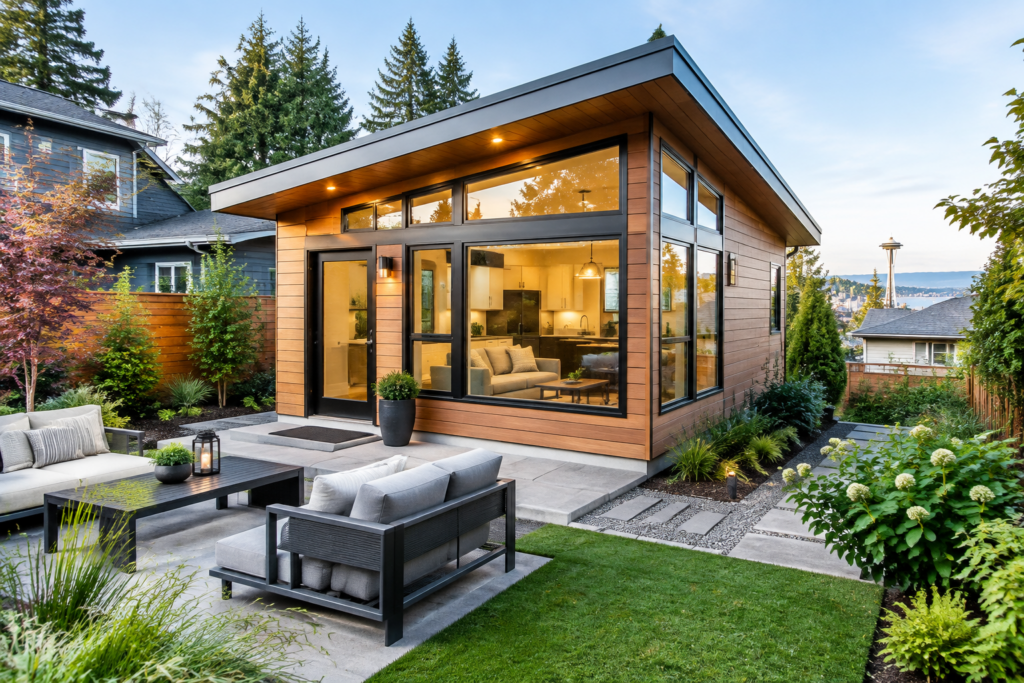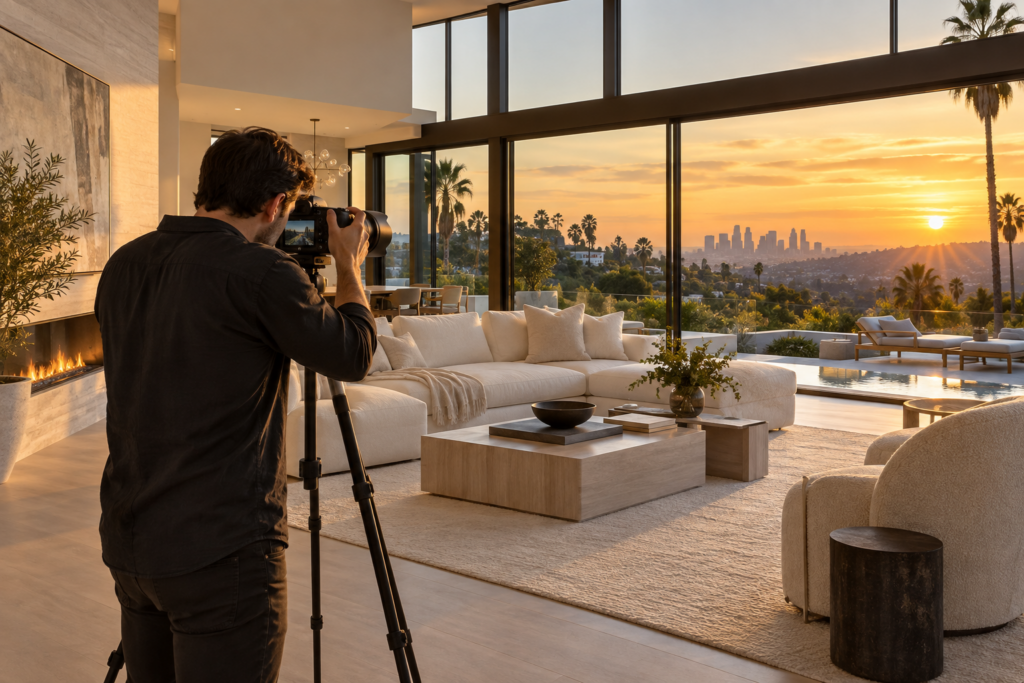
Los Angeles is one of the most visually diverse real estate markets in the United States. Buyers and renters can explore everything from Hollywood Hills estates and downtown lofts to Santa Monica apartments, Spanish-style homes, modern condos, multifamily developments, and commercial buildings.
With so many properties competing for attention online, presentation matters. The images attached to a listing often create a potential buyer’s or renter’s first meaningful impression of the property. If the photographs are dark, poorly composed, or incomplete, viewers may move to another listing before reading the description.
Professional real estate photography helps a property look bright, accurate, and inviting while showing its layout and most important features. It combines suitable equipment, thoughtful composition, controlled lighting, and careful editing to produce images designed for property marketing.
A complete media package can go beyond still photographs. Depending on the property, agents and owners may also use aerial drone images, video walkthroughs, floor plans, Matterport 3D tours, virtual staging, and vertical videos for social media.
This guide explains what professional real estate photography includes, why it is valuable in Los Angeles, how to prepare a property, and what to consider when choosing a photographer.
What Is Professional Real Estate Photography?
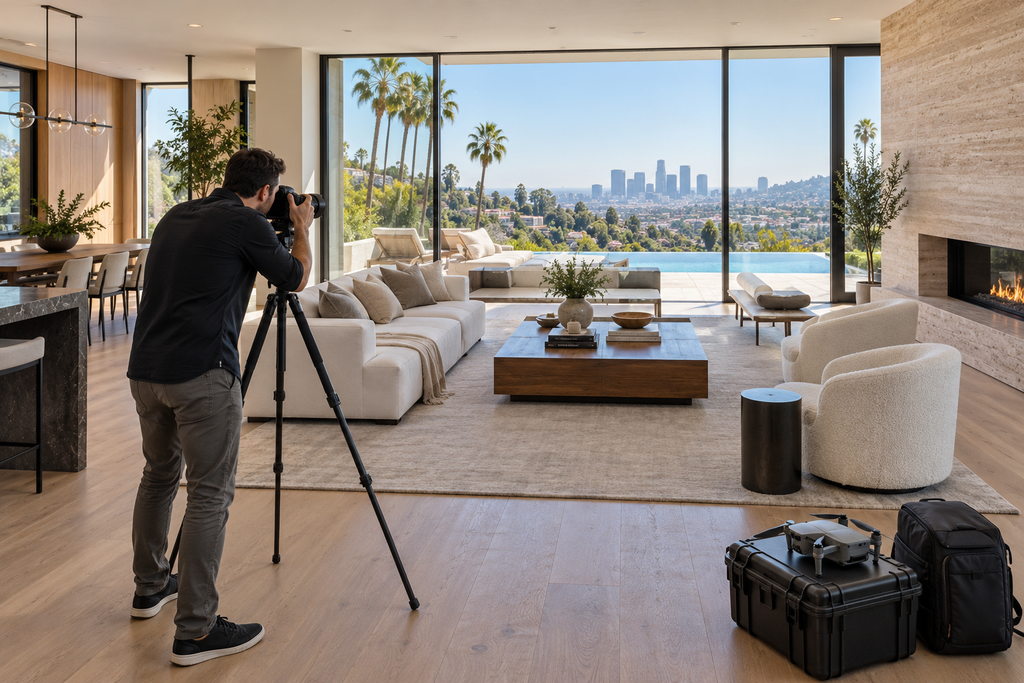
Professional real estate photography is the creation of interior and exterior images specifically for selling, renting, leasing, or promoting a property.
It differs from casual photography because the goal is not simply to document a room. A real estate photographer must present the space clearly, maintain realistic proportions, control difficult lighting, and create a consistent visual story throughout the listing.
Professional photographers commonly use:
- Full-frame or high-quality mirrorless cameras
- Wide-angle lenses
- Sturdy tripods
- Portable lighting equipment
- Remote triggers
- Exposure-bracketing techniques
- Professional editing software
- Drones for authorized aerial work
- 3D cameras for virtual tours
The equipment matters, but experience is equally important. A skilled photographer understands where to position the camera, how high it should be placed, which lights to turn on, when to use natural light, and how to balance bright windows with darker interiors.
Providers specializing in real estate photography in Los Angeles may offer a complete media package that includes HDR photography, aerial drone imagery, 4K video, Matterport 3D tours, virtual staging, and floor plans. Combining these services through one team can help create a consistent presentation across the entire marketing campaign.
Why Professional Real Estate Photography Matters
Online property search has made visual content central to real estate marketing. Buyers, renters, and investors often review many listings in a short period. Strong photographs help a property earn attention during that initial browsing stage.
It Creates a Strong First Impression
The primary listing image is usually the first feature a person notices. A polished exterior, attractive living room, or distinctive view can encourage viewers to open the complete listing.
A poorly selected lead image can have the opposite effect. Even an impressive property may be overlooked when the first photograph is dark, tilted, cluttered, or unflattering.
It Shows the Property More Clearly
Professional photography helps viewers understand the property before arranging a visit. A complete gallery can show the relationship between rooms, the scale of major spaces, the condition of finishes, and the appearance of outdoor areas.
Clear presentation can reduce confusion and help prospective buyers or renters decide whether the property matches their needs.
It Supports the Asking Price
Photography cannot change a property’s location, size, or condition. However, it can ensure that valuable features are visible.
Custom cabinetry, renovated bathrooms, hardwood flooring, architectural details, outdoor kitchens, pools, views, landscaped yards, and natural light should not disappear in poorly exposed images. Professional photos help communicate the features that contribute to the property’s value.
It Strengthens an Agent’s Brand
The quality of a listing also reflects on the real estate professional marketing it. Consistent photography can make an agent’s website, social media profiles, advertisements, and listing portfolio look more professional.
Sellers may be more confident hiring an agent who demonstrates a clear commitment to property presentation. Over time, consistent visuals can become part of the agent’s recognizable brand.
It Produces Reusable Marketing Assets
Professional property images can often be used across multiple channels, subject to the photographer’s licensing terms. These may include:
- Multiple listing services
- Brokerage websites
- Property websites
- Email campaigns
- Digital advertisements
- Social media
- Printed brochures
- Leasing presentations
- Investor packages
- Developer portfolios
Before using images outside the original listing, confirm what usage rights are included in the photography agreement.
Types of Real Estate Photography Services
Modern real estate campaigns may include several forms of visual media. The right combination depends on the property, marketing goals, target audience, and budget.
HDR Real Estate Photography
High dynamic range, or HDR, photography combines multiple exposures to capture detail in bright and dark areas.
This technique is valuable in rooms with large windows. A single exposure may produce an interior that is too dark or a window view that is completely white. HDR editing can balance these areas while maintaining a natural appearance.
Good HDR photography should not look artificial. Colors should remain believable, whites should appear neutral, and exterior views should not seem pasted into the windows.
HDR images are useful for:
- Homes and condos
- Apartments
- Luxury properties
- Vacation rentals
- Offices
- Retail spaces
- Multifamily buildings
- Commercial interiors
Exterior Property Photography
Exterior photographs introduce the building and its surroundings. They may include the front elevation, entrance, driveway, yard, pool, patio, balcony, landscaping, garage, and architectural details.
The photographer may schedule exterior images based on the sun’s direction. A façade photographed at the wrong time can be covered in harsh shadows, while the same building may look bright and welcoming at another hour.
Vehicles, trash containers, hoses, toys, and gardening equipment should be removed whenever possible.
Twilight Photography
Twilight photography captures a property around sunset, when the sky still has color and interior lights create a warm glow.
It is particularly effective for:
- Luxury homes
- Properties with pools
- Rooftop spaces
- Homes with dramatic lighting
- Buildings with impressive views
- Restaurants and hospitality properties
- Contemporary architecture
A twilight shoot may require a separate visit because the ideal lighting period is brief. Some photographers also offer digitally created virtual twilight images. Ask whether the final image will be photographed at dusk or digitally transformed from a daytime photograph.
Aerial Drone Photography
Drone photography provides a wider view of the property, land, outdoor amenities, and surrounding location.
It can be valuable for:
- Large estates
- Hillside homes
- Coastal properties
- Apartment communities
- Commercial buildings
- Development sites
- Large lots
- Properties near parks or landmarks
Commercial drone operations in the United States must follow applicable Federal Aviation Administration rules. Airspace restrictions, weather, privacy considerations, and local flight conditions can affect whether aerial photography is possible.
A professional drone operator should understand these requirements and avoid making guarantees before checking the location.
Real Estate Videography
Video communicates movement and flow in a way still photographs cannot. A professionally produced walkthrough can guide viewers from the entrance through the primary rooms and into outdoor spaces.
Real estate video may include:
- Horizontal property tours
- Cinematic luxury videos
- Agent-guided introductions
- Aerial drone footage
- Neighborhood footage
- Vertical social media clips
- Short listing teasers
- Commercial property walkthroughs
The final format should match the intended platform. A horizontal video works well for YouTube and property websites, while a vertical edit may be more suitable for Instagram Reels, TikTok, and other mobile-first platforms.
Matterport 3D Virtual Tours
A Matterport tour creates an interactive digital representation of the property. Viewers can move through rooms, change viewing angles, and gain a stronger understanding of the layout.
Three-dimensional tours are useful for:
- Relocation buyers
- Out-of-state investors
- Rental properties
- Multifamily leasing
- Commercial spaces
- Luxury homes
- Buyers unable to attend an early showing
A virtual tour should complement rather than replace strong still photography. Photos attract initial attention, while the tour allows interested viewers to explore the space more deeply.
Zillow 3D Home Tours
Zillow 3D Home Tours are designed to give users an interactive experience within Zillow’s property ecosystem. They can help viewers understand the relationship between rooms before scheduling an in-person visit.
Agents should confirm platform requirements, hosting terms, delivery procedures, and whether the photographer can publish the tour directly to the relevant listing.
Floor Plans
Photos show appearance, but they do not always explain the complete layout. A floor plan helps viewers understand room relationships, entrances, circulation, and overall organization.
Floor plans can be especially helpful for properties with:
- Multiple levels
- Guest houses
- Unusual layouts
- Connected outdoor areas
- Separate office spaces
- Accessory dwelling units
- Commercial suites
- Multifamily units
Measurements should be treated as approximations unless the plan has been created and verified for a specific professional or legal purpose. Marketing floor plans should not be presented as architectural surveys.
Virtual Staging
Virtual staging digitally adds furniture and décor to photographs of vacant rooms. It can help viewers imagine how a space may function without the cost and logistics of physical staging.
Virtual staging is commonly used for:
- Vacant apartments
- Empty condos
- Unfurnished homes
- New construction
- Commercial suites
- Renovated properties
The result should look realistic and match the room’s scale. Digital additions should not conceal permanent defects or misrepresent structural features. Listings should disclose virtual staging when required by the applicable platform, brokerage, or local rules.
What Makes Los Angeles Real Estate Photography Different?
Los Angeles is not a single visual market. Each neighborhood, property type, and target audience may require a different approach.
Diverse Architectural Styles
The region includes Spanish Colonial Revival homes, mid-century modern houses, Craftsman bungalows, luxury estates, contemporary hillside residences, industrial lofts, and new multifamily developments.
A photographer should adapt the composition to the property. The best approach for a compact downtown loft may not suit a large Bel Air estate.
Strong Indoor-Outdoor Living
Outdoor space is an important part of many Los Angeles properties. Patios, pools, balconies, gardens, rooftop decks, outdoor kitchens, and views may be central selling features.
A complete photography package should show how indoor spaces connect with exterior living areas.
Challenging Natural Light
Bright California sunlight can create strong contrast, deep shadows, and blown-out windows. Professional photographers use timing, exposure techniques, supplemental lighting, and editing to manage these conditions.
West-facing rooms may look dramatically different in the afternoon than in the morning. Scheduling can therefore influence the final result.
Views and Location
For some Los Angeles properties, the surrounding location is part of the story. Ocean views, city skylines, canyon scenery, palm-lined streets, mountains, and recognizable neighborhoods may all influence buyer interest.
Photography should provide useful context without exaggerating distance or altering the actual view.
Competitive Luxury Marketing
Luxury listings often require more than a standard photo package. Agents may combine editorial-style photography, twilight images, drone footage, cinematic video, floor plans, and a 3D tour.
The goal is not to add media simply for quantity. Each asset should contribute to a unified presentation and speak to the intended buyer.
How to Prepare a Property for a Photography Shoot
Even the best photographer cannot fully overcome clutter, unfinished cleaning, or poor preparation. The property should be ready before the scheduled arrival time.
Clean Every Visible Surface
Complete a thorough cleaning before the shoot. Give special attention to:
- Floors
- Windows
- Mirrors
- Countertops
- Stainless-steel appliances
- Glass shower doors
- Bathroom fixtures
- Cabinet fronts
- Light switches
- Outdoor furniture
Dust and fingerprints may become more visible in high-resolution photographs.
Remove Clutter
Clear countertops, tables, desks, nightstands, bathroom vanities, and open shelving. A few intentional decorative pieces can remain, but crowded surfaces make rooms feel smaller.
Hide personal paperwork, medication, valuables, pet supplies, cleaning products, remote controls, charging cables, and refrigerator magnets.
Depersonalize Carefully
Family photographs, names, certificates, and highly personal collections can distract viewers and create privacy concerns.
The property should still feel welcoming, but prospective buyers need enough visual space to imagine living there themselves.
Prepare the Kitchen
Remove dishes, sponges, soap bottles, trash containers, paper towels, and small appliances that crowd the counters. Straighten chairs and barstools, clean the sink, and check that cabinet doors are closed.
A small bowl of fruit or one decorative item may add warmth without creating clutter.
Prepare Bathrooms
Close toilet lids, remove bath products, hang clean towels, clean mirrors, and clear the vanity. Replace heavily used towels with simple, coordinated ones when possible.
Make sure shower curtains and glass doors are positioned neatly.
Prepare Bedrooms
Make beds carefully, smooth the bedding, arrange pillows, remove clothing, clear nightstands, and hide laundry baskets. Check beneath beds for visible storage.
In small rooms, removing unnecessary furniture can improve the sense of space.
Prepare Outdoor Areas
Mow or tidy the lawn, sweep hard surfaces, clean the pool, arrange patio furniture, remove covers, coil hoses, hide trash cans, and pick up pet waste.
Cars should be moved away from the driveway and front elevation before the photographer arrives.
Check Lighting
Replace burned-out bulbs and use bulbs with reasonably consistent color temperatures within each room. Mixed orange, blue, and green light can be difficult to correct naturally.
The photographer may decide which lights and window treatments should be open during the shoot.
Secure People and Pets
Photographers work more efficiently when rooms are clear. Arrange for occupants, children, and pets to remain away from the active shooting area.
This also protects privacy and reduces the chance of someone appearing in mirrors or through windows.
What Happens During a Professional Photography Appointment?
Understanding the process helps agents, sellers, and property managers prepare for the day.
Step 1: Project Planning
The client provides the address, property type, approximate size, desired services, access instructions, deadline, and special features.
The photographer may ask about occupied rooms, tenants, pets, parking, gated access, and community restrictions.
Step 2: Property Walkthrough
After arriving, the photographer may conduct a brief walkthrough to evaluate lighting, room order, and important features.
This is the time to identify upgrades, views, amenities, or architectural elements that deserve special attention.
Step 3: Interior and Exterior Capture
The photographer works through the property using a consistent visual sequence. A tripod helps maintain stable compositions and even camera height.
If video, drone coverage, or a 3D tour is included, those services may be completed during the same visit.
Step 4: Editing and Quality Control
Editing may include exposure balancing, color correction, perspective adjustment, minor object cleanup, window balancing, and image sharpening.
Ethical editing should improve clarity without materially misrepresenting the property. Permanent defects, neighboring structures, power lines, or major environmental conditions should not be deceptively removed.
Step 5: File Delivery
Final files are commonly delivered through an online gallery or download link. The package may include versions optimized for the MLS and larger files for print or marketing use.
Confirm the expected turnaround time before the shoot, especially if the listing has a fixed launch date.
How Much Does Real Estate Photography Cost in Los Angeles?
Pricing varies according to the property and requested services. There is no single rate that fits every project.
Common pricing factors include:
- Property size
- Number of final images
- Residential or commercial use
- Travel distance
- Complexity of the space
- Required turnaround
- Twilight scheduling
- Drone coverage
- Video length
- 3D tour size
- Floor plan requirements
- Virtual staging
- Licensing and usage needs
A small apartment photography package will usually require less production than a large luxury estate with video, drone footage, twilight images, and a Matterport tour.
Request a written quote that explains what is included, how many images will be delivered, when files will arrive, and what usage rights apply.
How to Choose a Los Angeles Real Estate Photographer
The right photographer should understand both visual production and real estate marketing.
Review Complete Property Galleries
A portfolio’s best five images do not show whether the photographer can cover an entire listing consistently. Ask to see complete galleries.
Look for natural colors, straight vertical lines, balanced windows, consistent brightness, and coverage of all important areas.
Match Experience to the Property Type
A photographer who regularly shoots apartments may be excellent at working efficiently in compact spaces. A luxury estate may require experience with larger productions, twilight work, advanced lighting, and cinematic video.
Commercial properties also have distinct needs. Offices, hotels, industrial buildings, retail spaces, and multifamily developments should be photographed according to their intended audience.
Confirm Turnaround Time
Ask when photos and other media will be delivered. Photography, video, virtual staging, and 3D tours may have different timelines.
Do not assume that every service will arrive at the same time.
Ask About Licensing
Confirm where and how the media may be used. Standard listing use may not automatically include unlimited advertising, third-party use, long-term developer campaigns, or transfer to another company.
Clear licensing protects both the photographer and the client.
Verify Drone Qualifications
If aerial imagery is included, ask whether the drone operator holds the required FAA certification for commercial flights. The operator should also assess airspace and local conditions before the shoot.
Evaluate Communication
A professional photography company should respond clearly, confirm scheduling, explain preparation requirements, and provide organized delivery.
Reliable communication is especially important for occupied rentals, multifamily properties, and commercial buildings where access must be coordinated with several people.
Common Real Estate Photography Mistakes
Avoiding common errors can improve the effectiveness of a listing.
Using Phone Photos for a Major Listing
Modern phones can produce attractive images, but automated processing cannot replace thoughtful composition, lighting control, consistent editing, and complete coverage.
Phone images may be adequate for documentation, but a professionally marketed property benefits from a planned shoot.
Using an Extremely Wide Lens
A wide-angle lens helps show rooms, but excessive width can distort walls and make spaces appear unrealistically large. This may disappoint buyers during an in-person showing.
The goal should be a spacious but believable representation.
Photographing Before the Property Is Ready
Scheduling photography before cleaning, staging, landscaping, or repairs are complete can waste the marketing opportunity.
Whenever possible, finish visible work before the camera arrives.
Overediting the Images
Oversaturated colors, unnatural skies, glowing windows, extreme brightness, and excessive sharpening can make a property look artificial.
Editing should polish the presentation while preserving credibility.
Leaving Out Important Areas
A listing gallery should not create unanswered questions. If a second bathroom, laundry area, balcony, or primary bedroom is missing, viewers may wonder whether that space has a problem.
Not every utility area requires a photograph, but the gallery should cover the property logically.
Ignoring Mobile Viewing
Many people first encounter listings on a phone. Lead images should remain clear and attractive at a small size.
Vertical social media content should be created intentionally rather than awkwardly cropped from horizontal footage.
Who Benefits From Professional Property Photography?
Professional real estate photography is useful for more than agents selling single-family homes.
It can support:
- Home sellers
- Real estate agents
- Brokerages
- Property managers
- Landlords
- Apartment leasing teams
- Developers
- Architects
- Interior designers
- Vacation-rental operators
- Commercial brokers
- Hotel owners
- Senior-living communities
- Construction companies
- Investors
Each client has different goals. A home seller wants buyer interest, an apartment manager needs leasing inquiries, and a developer may need long-term marketing assets. The photographer should understand the intended use before creating the package.
Frequently Asked Questions About Real Estate Photography in Los Angeles
How long does a real estate photography shoot take?
A small property may be photographed relatively quickly, while a large home or commercial building can require several hours. Video, drone imagery, floor plans, and 3D tours add time. Ask for an estimate based on the property and selected services.
How many photos will I receive?
The number depends on property size, package, and photographer. The goal should be enough images to tell a complete story without filling the gallery with repetitive angles.
How quickly are photos delivered?
Many Los Angeles photographers deliver standard edited photographs within one or two business days, but timelines vary. Video, virtual staging, and advanced editing may take longer. Confirm delivery before booking.
Should the seller be present?
The seller does not usually need to follow the photographer from room to room. It is often easier to work when occupants and pets remain away from active shooting areas.
Is staging necessary?
Physical staging is not mandatory, but clean, organized, and thoughtfully arranged spaces generally photograph better. Vacant rooms may benefit from virtual staging.
Should all lights be turned on?
That decision depends on the room and the photographer’s approach. Replace burned-out bulbs and allow the photographer to decide which lights create the most natural, consistent result.
Are drone photos necessary for every listing?
No. Drone photography is most useful when the property’s lot, location, view, architecture, or nearby amenities add meaningful context. A small interior-focused property may not require aerial coverage.
What is the difference between a 3D tour and a video?
A video provides a guided, edited presentation. A 3D tour allows viewers to navigate the property interactively and choose where to look. Some campaigns benefit from using both.
Can photographers remove unwanted objects during editing?
Minor temporary distractions may sometimes be removed, depending on the service agreement. However, edits should not materially misrepresent the property. Major object removal or digital renovation may require specialized editing and appropriate disclosure.
Is virtual staging allowed?
Virtual staging is widely used, but applicable MLS, brokerage, platform, and advertising rules should be followed. Digitally staged images should be identified when required, and permanent features should not be deceptively altered.
What happens if the weather is cloudy?
Cloudy conditions can produce soft, even light and may still work well. Heavy rain, strong wind, poor visibility, or unsafe drone conditions may require rescheduling part or all of the shoot.
Can real estate photography be used for rental listings?
Yes. Professional photography is valuable for apartments, long-term rentals, multifamily communities, vacation rentals, and furnished corporate housing. Confirm that the image license permits the intended ongoing use.
Conclusion
Professional real estate photography in Los Angeles helps agents, sellers, landlords, developers, and property managers present properties clearly in a highly visual market. Strong images can attract attention, communicate important features, support a professional marketing strategy, and help viewers determine whether a property deserves a closer look.
The most effective media package depends on the property. Standard HDR photography may be enough for a small apartment, while a luxury estate or commercial development may benefit from drone imagery, twilight photographs, 4K video, floor plans, and a Matterport 3D tour.
Successful results begin before the photographer arrives. Clean every room, remove clutter, organize outdoor areas, replace burned-out bulbs, secure pets, and complete visible repairs. Careful preparation allows the photographer to focus on composition and lighting instead of moving personal belongings.
When comparing photographers, review complete galleries, confirm experience with similar properties, ask about delivery times, understand image licensing, and verify qualifications for aerial work. Choose a professional who provides realistic images, reliable scheduling, organized files, and clear communication.
Los Angeles properties have stories shaped by architecture, light, lifestyle, outdoor spaces, and location. Thoughtful photography brings those elements together and gives each listing the polished visual introduction it deserves.