
A home’s foundation plays a critical role in keeping the entire structure safe and stable. However, hidden plumbing problems beneath a concrete foundation can create serious risks if they are ignored. One of the most common and potentially damaging issues homeowners face is a slab leak.
A slab leak occurs when water pipes located underneath or inside a concrete foundation develop cracks, corrosion, or damage. Because these leaks happen below the surface, they can remain unnoticed for weeks or months while causing water damage, foundation problems, mold growth, and increased utility bills.
Professional slab leak repair helps identify the source of the problem, stop water loss, and protect the structural integrity of your home. Understanding the causes, signs, detection methods, and repair options can help homeowners make informed decisions before a small plumbing issue becomes an expensive repair.
What Is a Slab Leak?
A slab leak is a plumbing leak that occurs in the water supply lines or drainage pipes located beneath a concrete foundation slab. Many modern homes in the United States are built on concrete slab foundations, where plumbing pipes run underneath the foundation to supply water throughout the property.
When these underground pipes become damaged, water can escape into the soil beneath the foundation. Since the leak is hidden from view, homeowners often do not notice the problem until visible warning signs appear.
Slab leaks can occur in both older and newer homes. Factors such as soil movement, pipe corrosion, poor installation, high water pressure, and temperature changes can contribute to underground pipe damage.
Unlike a regular faucet leak or exposed pipe issue, a slab leak requires specialized equipment and professional expertise because the damaged area is difficult to access.
Common Causes of Slab Leaks
Understanding what causes slab leaks can help homeowners recognize potential risks and schedule inspections before major damage occurs.
Corroded or Aging Pipes
One of the most common causes of slab leaks is pipe deterioration. Over time, metal pipes may develop corrosion due to water chemistry, mineral buildup, or natural aging.
Older homes with copper or galvanized steel pipes may experience more frequent underground plumbing issues as the materials weaken over decades.
Poor Pipe Installation
Improper installation can create long-term plumbing problems. Pipes that were not installed correctly may experience excessive pressure, weak connections, or unnecessary stress points.
Professional plumbing installation is important because underground pipes must be properly supported and protected to prevent future leaks.
High Water Pressure
Excessive water pressure places additional stress on plumbing systems. Over time, constant pressure can weaken pipe walls and joints, increasing the chance of cracks and leaks.
A professional plumber can test water pressure levels and recommend solutions if adjustments are needed.
Soil Movement and Foundation Shifting
The ground beneath a home naturally expands and contracts due to moisture changes, temperature fluctuations, and geological conditions.
When soil shifts, it can put pressure on underground pipes and cause them to bend, crack, or separate at connection points.
Chemical Reactions and Mineral Deposits
Certain water conditions can accelerate pipe damage. Hard water contains minerals that may build up inside pipes, reducing water flow and increasing pressure within the system.
In some cases, chemical reactions between water and pipe materials can contribute to corrosion.
Signs You May Need Slab Leak Repair
Because slab leaks are hidden, recognizing early warning signs is extremely important. Homeowners should contact a professional plumber if they notice any of these symptoms.
Unusually High Water Bills
A sudden increase in your water bill without a change in usage may indicate a hidden leak.
If your water consumption habits have remained the same but your monthly bill continues rising, an underground plumbing leak could be wasting hundreds of gallons of water.
Sound of Running Water
Hearing water running when all faucets and appliances are turned off is a common sign of a possible slab leak.
You may hear:
- Hissing sounds
- Dripping noises
- Running water beneath floors
- Unusual plumbing sounds
These noises should not be ignored because they often indicate water escaping from hidden pipes.
Warm Spots on Floors
Hot water slab leaks may create warm areas on your flooring.
If a section of tile, hardwood, or concrete feels warmer than surrounding areas, a damaged hot water line underneath the slab could be the cause.
Damp Flooring or Moisture Problems
Water escaping beneath the foundation can eventually reach the surface.
Signs may include:
- Wet spots on floors
- Damp carpets
- Mold growth
- Musty odors
- Warped flooring materials
Cracks in Walls or Flooring
A serious slab leak can affect the foundation and surrounding structures.
Homeowners may notice:
- Floor cracks
- Wall cracks
- Separating baseboards
- Uneven flooring
These signs require immediate attention because prolonged water exposure can damage the home’s foundation.
Low Water Pressure
A leaking underground pipe can reduce the amount of water reaching faucets and fixtures.
If your home suddenly experiences lower water pressure, a hidden plumbing problem may be responsible.
How Professionals Detect Slab Leaks
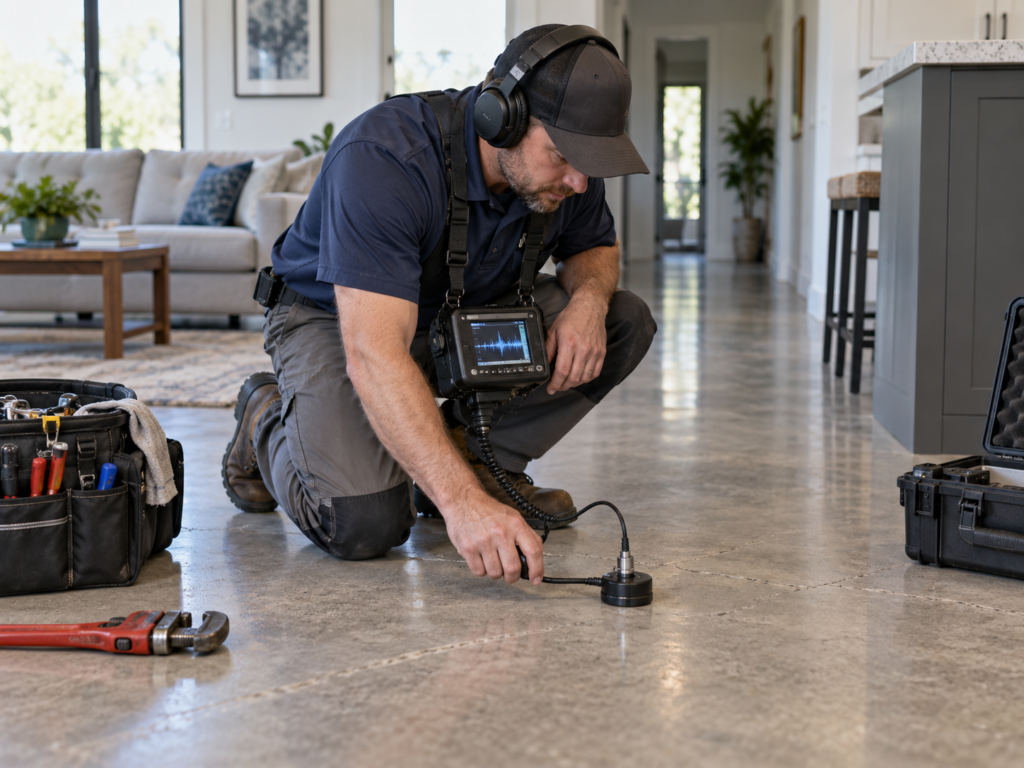
Finding a slab leak requires specialized tools and experience. Professional plumbers use several methods to locate underground leaks without unnecessary damage to the property.
Electronic Leak Detection
Modern plumbing companies use electronic listening equipment to detect the sound of water escaping from underground pipes.
These tools help pinpoint the location of leaks beneath concrete surfaces.
Pressure Testing
Pressure tests allow plumbers to determine whether water lines are losing pressure due to leaks.
A drop in pressure can indicate a damaged pipe system.
Thermal Imaging Technology
Infrared cameras can identify temperature differences caused by hot water leaks beneath floors.
This technology helps technicians locate problem areas more accurately.
Video Pipe Inspection
For certain plumbing systems, plumbers may use specialized cameras inserted into pipes to inspect internal conditions.
Video inspections can reveal:
- Cracks
- Corrosion
- Blockages
- Pipe damage
Why Professional Slab Leak Repair Is Important
Attempting to repair a slab leak without professional equipment can lead to additional damage and costly mistakes.
Experienced plumbers understand how to locate underground leaks, choose appropriate repair methods, and protect your home during the process.
Professional slab leak repair provides several benefits:
- Accurate leak detection
- Reduced property damage
- Proper pipe repairs
- Prevention of future plumbing issues
- Protection against foundation damage
Because slab leaks involve your home’s foundation and underground plumbing system, professional assistance is usually the safest approach.
Slab Leak Repair Options
The best repair method depends on factors such as pipe location, leak severity, pipe condition, and overall plumbing system design.
Spot Repair
If the damaged section of pipe is easy to access and the problem is limited, plumbers may repair only the affected area.
This method is usually suitable for isolated leaks.
Pipe Rerouting
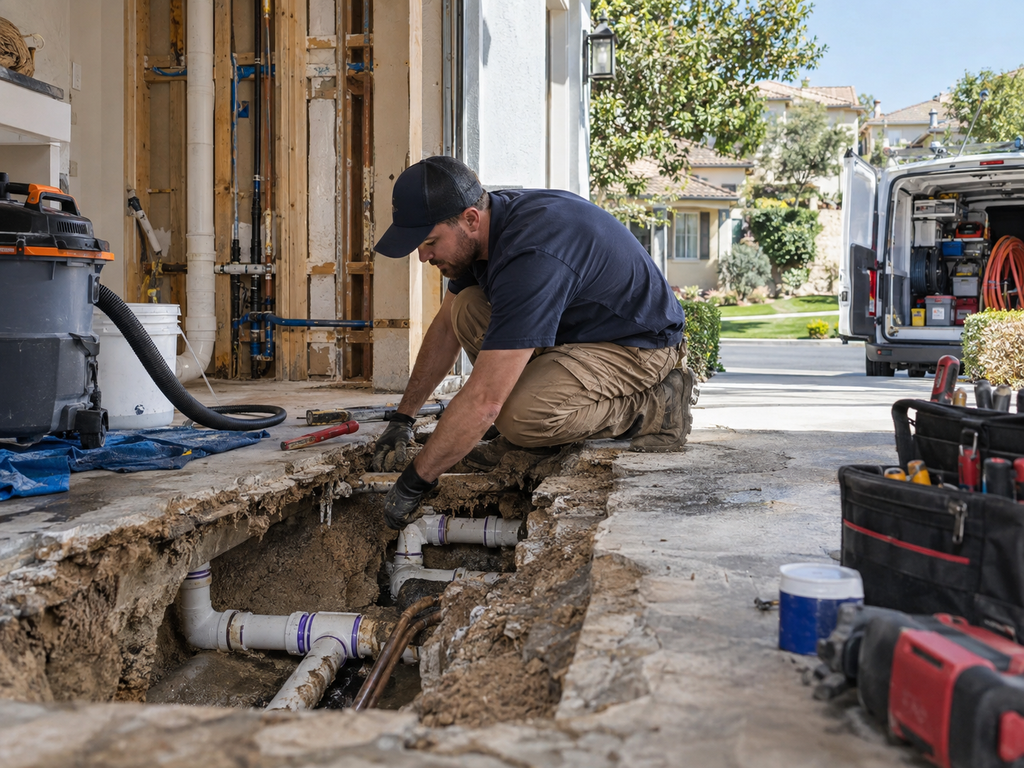
In some cases, accessing pipes beneath the slab is not practical. A plumber may recommend rerouting the affected water line through walls or ceilings instead.
This avoids breaking through large sections of concrete.
Pipe Replacement
If underground pipes are severely damaged or aging, replacing sections of the plumbing system may provide a longer-term solution.
Pipe replacement can help prevent repeated leaks.
Trenchless Repair Methods
Modern plumbing technology allows some repairs to be completed with minimal digging.
Trenchless solutions can reduce disruption while restoring damaged pipes.
How Much Does Slab Leak Repair Cost?
The cost of slab leak repair varies depending on several factors, including:
- Leak location
- Repair complexity
- Amount of concrete removal required
- Pipe material
- Labor costs
- Damage caused by the leak
Minor repairs may cost less, while extensive repairs involving foundation access or pipe replacement can become significantly more expensive.
Early detection often reduces repair costs because it prevents additional water damage and structural problems.
Homeowners should request a professional inspection to receive an accurate estimate based on their specific situation.
Can You Prevent Slab Leaks?
While not every slab leak can be prevented, homeowners can reduce risks by maintaining their plumbing system.
Helpful prevention steps include:
Monitor Water Bills
Regularly reviewing water usage can help identify unusual increases before major damage occurs.
Maintain Proper Water Pressure
Have your plumbing system inspected if water pressure seems unusually high.
Schedule Plumbing Inspections
Routine inspections can identify aging pipes, corrosion, and potential weaknesses before leaks develop.
Address Small Plumbing Problems Quickly
Minor leaks, unusual noises, or pressure changes should be investigated instead of ignored.
Small plumbing problems can become major repairs when left untreated.
Slab Leak Repair vs. Traditional Plumbing Repairs
Many homeowners wonder how slab leak repair differs from normal plumbing repairs.
The main difference is accessibility. Traditional plumbing repairs usually involve exposed pipes that are easy to reach. Slab leaks involve underground pipes hidden beneath concrete foundations.
Because the plumbing system is inaccessible, slab leak repairs require:
- Advanced detection equipment
- Specialized knowledge
- Careful planning
- Proper repair techniques
Professional plumbers evaluate the entire system before deciding on the best repair approach.
Frequently Asked Questions About Slab Leak Repair
What is the most common cause of slab leaks?
The most common causes include aging pipes, corrosion, high water pressure, soil movement, and poor pipe installation. Over time, these factors can weaken underground plumbing lines.
How do I know if I have a slab leak?
Common warning signs include increased water bills, warm flooring, damp areas, low water pressure, running water sounds, and cracks around your home.
Is slab leak repair expensive?
The cost depends on the severity and location of the leak. Minor repairs may be affordable, while major repairs involving pipe replacement or foundation access can cost more.
Can a slab leak damage my foundation?
Yes. Long-term water leakage beneath a concrete foundation can weaken surrounding soil, create moisture problems, and potentially affect structural stability.
How long does slab leak repair take?
The repair timeline depends on the repair method and complexity. Some repairs may be completed quickly, while larger projects involving rerouting or replacement may take longer.
Can I ignore a small slab leak?
Ignoring a slab leak can allow water damage to continue. Even a small underground leak can increase utility costs and create larger repair problems over time.
Conclusion
A slab leak is one of the most serious plumbing issues a homeowner can experience because it affects hidden pipes beneath the foundation. Without proper attention, a small underground leak can lead to expensive water damage, mold problems, and structural concerns.
Recognizing early warning signs such as rising water bills, unusual sounds, warm floors, and moisture problems allows homeowners to take action quickly.
Professional slab leak repair provides accurate detection, reliable solutions, and protection for your home’s plumbing and foundation. Whether the solution involves spot repair, pipe rerouting, replacement, or advanced repair methods, addressing the problem early can save time, money, and stress.
Regular plumbing inspections and proactive maintenance are key steps toward preventing underground leaks and keeping your home safe for years to come.

