
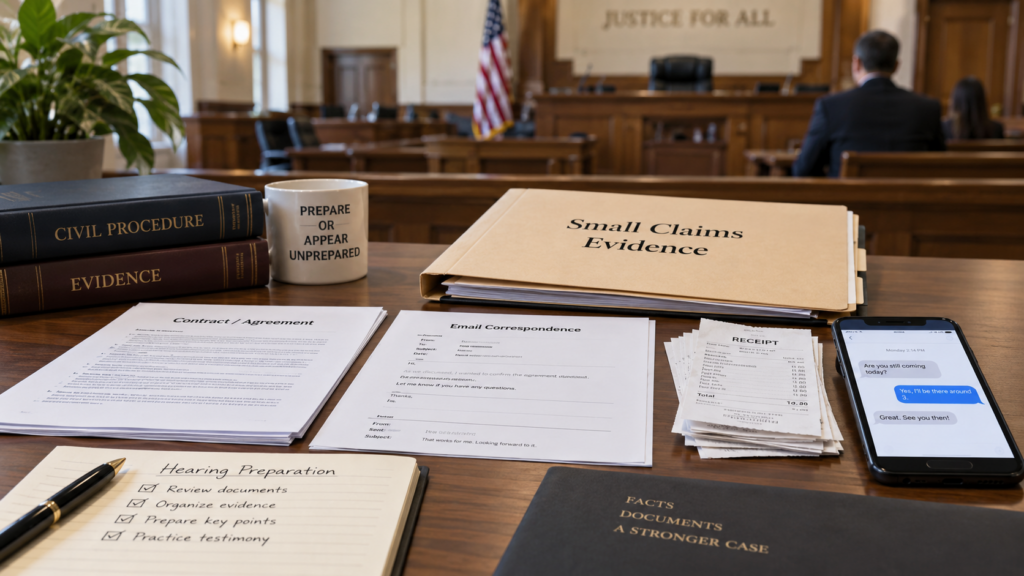
When filing a small claims case, having the right evidence can make the difference between a successful outcome and a dismissed claim. Unlike complicated lawsuits that may involve extensive legal procedures, small claims court is designed to help individuals and businesses resolve disputes more simply. However, simplicity does not mean evidence is unnecessary.
Strong small claims evidence helps explain what happened, supports your statements, and allows the judge to understand the facts of your dispute. Whether you are seeking payment for unpaid services, recovering money for damaged property, resolving a contract disagreement, or handling a personal financial dispute, organized evidence can significantly strengthen your position.
Many people enter small claims court believing that their personal explanation is enough. While your testimony is important, judges usually make decisions based on facts, documentation, and proof. Learning what evidence to collect, how to organize it, and how to present it properly can improve your preparation and confidence.
This guide explains everything you need to know about small claims evidence, including the types of evidence commonly used, preparation strategies, mistakes to avoid, and answers to frequently asked questions.
Why Small Claims Evidence Matters
Small claims court focuses on resolving disputes using facts rather than complicated legal arguments. Because there are usually no lengthy discovery processes like in larger lawsuits, the evidence you bring to court plays a major role.
Evidence helps answer important questions:
- What happened?
- Who was involved?
- What agreement existed?
- What financial loss occurred?
- Why should the court rule in your favor?
Without supporting evidence, even a legitimate claim may be difficult to prove.
Evidence Supports Your Story
Every small claims case has a story. However, courts require more than explanations. Evidence connects your statements to actual events.
For example:
If someone claims a contractor failed to complete work, evidence might include:
- Written agreements
- Payment receipts
- Photos of unfinished work
- Text messages
- Estimates for repairs
Together, these documents create a clearer picture of the dispute.
Evidence Helps Judges Make Decisions
Judges review information from both sides before making decisions. Organized and relevant evidence allows them to quickly understand the situation.
Strong evidence should be:
- Relevant to the dispute
- Accurate
- Clearly organized
- Easy to understand
Types of Small Claims Evidence You Can Use
Different disputes require different types of evidence. The best evidence depends on the facts of your case.
Written Contracts and Agreements
Contracts are among the strongest forms of evidence in many small claims cases.
Examples include:
- Service agreements
- Rental agreements
- Sales contracts
- Written promises
- Business agreements
A written agreement can show:
- What both parties agreed to do
- Payment terms
- Deadlines
- Responsibilities
Even informal written agreements, such as signed notes or emails confirming terms, may help support your claim.
Receipts and Financial Records
Money-related disputes often depend on financial documentation.
Useful financial evidence includes:
- Receipts
- Bank statements
- Payment confirmations
- Invoices
- Credit card records
- Transaction histories
For example, if you paid someone for a service that was never completed, proof of payment can demonstrate your financial loss.
Emails and Text Messages
Digital communication has become one of the most common forms of small claims evidence.
Messages may show:
- Agreements between parties
- Promises made
- Attempts to resolve the problem
- Admissions of responsibility
Important digital evidence may include:
- Email conversations
- Text messages
- Online chats
- Social media messages
When using digital communication, keep complete conversations rather than isolated screenshots. Context is important.
Photos and Videos
Visual evidence can be extremely useful because it shows the condition of property or completed work.
Examples include:
- Photos of damaged property
- Images of poor workmanship
- Videos showing problems
- Before-and-after comparisons
Good photos should include:
- Clear details
- Dates when possible
- Multiple angles
- Relevant locations
Witness Statements
People who personally observed events may provide valuable information.
Witnesses can include:
- Customers
- Neighbors
- Employees
- Friends
- Professionals
A witness can explain what they saw, heard, or experienced.
However, firsthand knowledge is usually more useful than someone simply repeating what another person told them.
Expert Opinions and Estimates
Some disputes involve technical issues that require professional explanations.
Examples include:
- Repair estimates
- Professional inspections
- Written evaluations
- Industry opinions
For example, if a mechanic claims a repair was completed incorrectly, another professional evaluation may help demonstrate the problem.
How to Organize Small Claims Evidence
Collecting evidence is only the first step. Organization is equally important.
A judge may have limited time to review your materials, so presenting information clearly makes your case easier to understand.
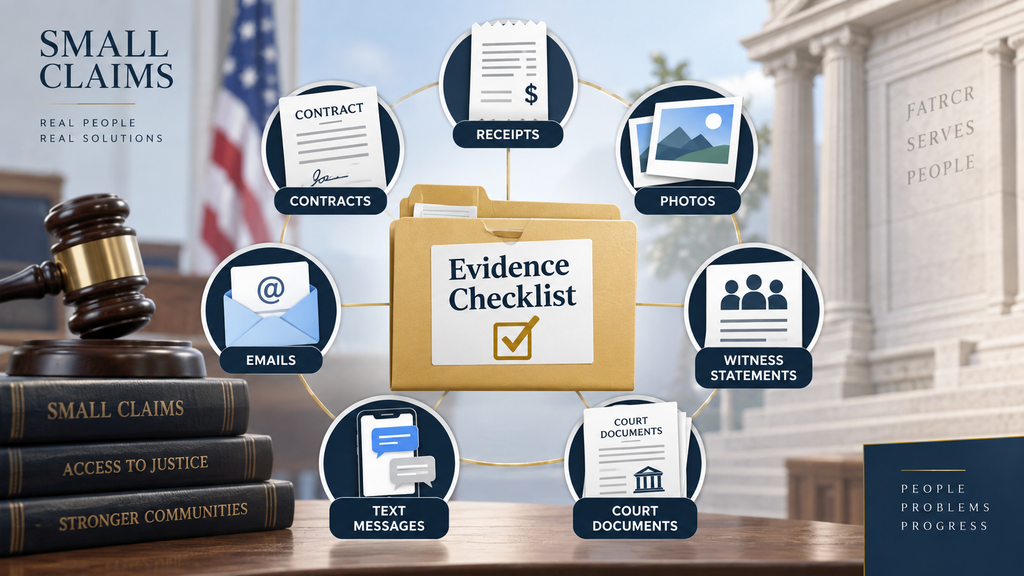
Create an Evidence Checklist
Start by listing everything related to your dispute.
Your checklist may include:
- Contracts
- Payments
- Messages
- Photos
- Witness information
- Repair estimates
- Official records
Review the list before your hearing to ensure nothing important is missing.
Arrange Evidence Chronologically
A timeline helps explain what happened.
For example:
January 5:
Agreement signed.
January 10:
Payment made.
February 1:
Problems discovered.
February 5:
Messages sent requesting resolution.
March 1:
Small claims case filed.
A clear timeline allows the judge to follow events easily.
Label Your Documents
Avoid bringing a random collection of papers.
Instead, organize documents using labels such as:
- Exhibit A: Contract
- Exhibit B: Payment Records
- Exhibit C: Communication Records
- Exhibit D: Photos
This makes referencing evidence during the hearing much easier.
Keep Copies
Bring copies of all evidence.
You may need:
- A copy for yourself
- A copy for the other party
- A copy for the court
Requirements vary by location, so check your local small claims court rules.
How to Present Evidence in Small Claims Court
Having good evidence is important, but presenting it properly is equally important.
Explain Evidence Clearly
Avoid overwhelming the judge with unnecessary details.
Focus on:
- Important facts
- Relevant documents
- Financial impact
- Timeline of events
Explain why each piece of evidence matters.
Stay Focused on Facts
Small claims hearings are usually focused on resolving the dispute, not personal disagreements.
Instead of saying:
“They were dishonest.”
Explain:
“The agreement required completion by June 1, but the work remained unfinished. These photos show the condition on June 15.”
Facts are more persuasive than emotional statements.
Respond to Questions Directly
The judge may ask questions about your evidence.
Answer clearly and honestly.
If you do not know an answer, it is better to say so rather than guess.
Common Small Claims Evidence Mistakes
Many people weaken their cases by making avoidable mistakes.
Bringing Too Much Unrelated Information
More evidence does not always mean stronger evidence.
A large amount of irrelevant information can make your case confusing.
Focus on evidence directly connected to the dispute.
Using Poor Quality Copies
Unreadable screenshots, unclear photos, or incomplete documents may reduce the usefulness of your evidence.
Make sure all materials are easy to read.
Waiting Too Long to Collect Evidence
Important records may disappear over time.
Messages may be deleted, receipts may be lost, and memories may become unclear.
Collect evidence as soon as possible.
Ignoring Digital Evidence
Many modern agreements happen online.
Ignoring emails, messages, and digital records can mean losing valuable proof.
Not Preparing a Timeline
Without a timeline, even strong evidence may appear confusing.
A simple sequence of events helps the judge understand your position.
Small Claims Evidence for Different Types of Cases
Evidence requirements vary depending on the dispute.
Unpaid Debt Cases
For money owed disputes, useful evidence may include:
- Loan agreements
- Payment records
- Messages confirming debt
- Invoices
- Collection attempts
Property Damage Cases
Common evidence includes:
- Photos
- Repair estimates
- Insurance reports
- Ownership documents
- Witness statements
Contractor and Service Disputes
Useful evidence may include:
- Contracts
- Work schedules
- Payment receipts
- Communication records
- Inspection reports
Landlord and Tenant Disputes
Possible evidence includes:
- Lease agreements
- Rent records
- Property photos
- Maintenance requests
- Security deposit records
Digital Small Claims Evidence: What You Should Know
Technology has changed how people prove their cases.
Today, many disputes involve online transactions and digital communication.
Screenshots
Screenshots may show:
- Conversations
- Advertisements
- Online agreements
- Payment confirmations
Make sure screenshots include enough information to show context.
Online Transactions
Evidence from online platforms may include:
- Order confirmations
- Account records
- Messages with sellers
- Delivery information
Email Records
Emails can demonstrate agreements, promises, and attempts to resolve disputes.
Keep original emails whenever possible rather than only printed copies.
Tips for Building Strong Small Claims Evidence
Start Collecting Evidence Immediately
Do not wait until your hearing date.
Save important documents as soon as a dispute begins.
Keep Communication Professional
Written communication may become evidence.
Remain polite and factual when communicating with the other party.
Make Backups
Store copies of important evidence digitally and physically.
Consider saving:
- Documents
- Photos
- Messages
- Receipts
Review Court Requirements
Different states and courts may have specific rules regarding evidence submission.
Check your local court procedures before your hearing.
Frequently Asked Questions (FAQs)
What is considered small claims evidence?
Small claims evidence includes documents, photographs, messages, receipts, contracts, witness statements, and other information that supports your position in a dispute.
Do I need evidence to win a small claims case?
Evidence is usually important because courts make decisions based on facts and proof. Personal statements alone may not be enough.
Can text messages be used as small claims evidence?
Yes, text messages may be used when they are relevant and help prove agreements, conversations, or events related to the dispute.
Are screenshots acceptable evidence in small claims court?
Screenshots may be accepted, but requirements vary by court. It is important to provide clear and complete information.
How should I organize evidence for small claims court?
Organize evidence chronologically, label documents, create copies, and prepare a simple explanation of why each item supports your claim.
Can photos be used as evidence?
Yes, photos can help prove property damage, incomplete work, or the condition of an item involved in a dispute.
What happens if I do not have written evidence?
You may still present your case using testimony and other available proof, such as witnesses, photos, or financial records.
Conclusion
Preparing strong small claims evidence is one of the most important steps when taking a dispute to court. Clear documentation helps explain your situation, supports your statements, and gives the judge the information needed to make a decision.
Whether your case involves unpaid money, property damage, contract problems, or service disputes, collecting the right evidence can greatly improve your preparation. Contracts, receipts, photographs, digital messages, and witness information all play valuable roles in proving what happened.
The key to successful evidence preparation is organization. Gather documents early, create a clear timeline, focus on relevant information, and present everything simply and understandably.
By understanding what qualifies as small claims evidence and how to use it effectively, you can approach your court hearing with better preparation and confidence.

