Hot water is essential for everyday household activities, including showering, washing dishes, cooking, and doing laundry. When your water heater stops working properly, it can disrupt your daily routine and create unnecessary stress.
Professional water heater repair can help restore your hot water supply, improve equipment performance, and prevent certain problems from developing into expensive plumbing emergencies.
Whether you own a traditional gas water heater, an electric storage tank, or a modern tankless system, understanding common equipment problems can help you make informed maintenance decisions.
This comprehensive guide explores warning signs, common causes of equipment failure, repair options, maintenance strategies, and practical tips for American homeowners looking to maintain a reliable hot water supply.
What Is Water Heater Repair?
It involves identifying, diagnosing, and correcting problems that prevent residential or commercial water heating equipment from functioning properly.
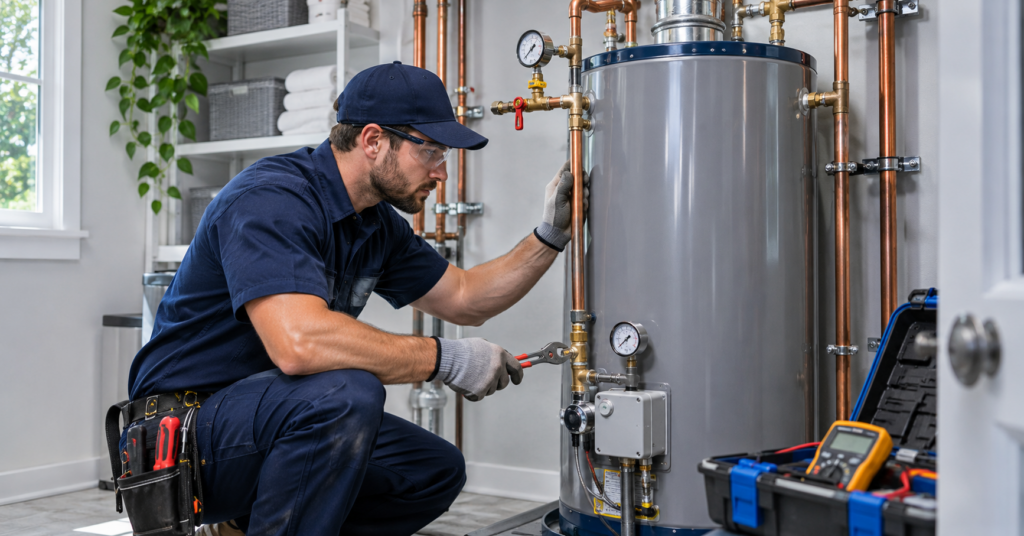
Professional plumbers inspect various components, including thermostats, heating elements, burners, valves, electrical connections, and water supply pipes.
Common repair services include:
- Heating element replacement
- Thermostat repairs
- Water leak detection
- Pressure relief valve replacement
- Sediment removal
- Burner and ignition system servicing
- Electrical component inspections
- Tankless system troubleshooting
Timely water heater repair can help homeowners restore equipment functionality while reducing unnecessary energy consumption and preventing further property damage.
Common Signs Your Water Heater Needs Repair
Recognizing early warning signs can help prevent minor equipment problems from becoming major household emergencies.
1. No Hot Water
A complete loss of hot water is one of the most obvious signs of equipment failure.
Possible causes include damaged heating elements, faulty thermostats, ignition problems, or interrupted power supplies.
Professional water heater repair can help identify the underlying problem and determine whether repairing or replacing affected components is appropriate.
2. Inconsistent Water Temperature
If your shower frequently changes between hot and cold water, your heating equipment may have performance issues.
Temperature fluctuations can result from thermostat problems, sediment accumulation, faulty components, or insufficient heating capacity.
A professional inspection can help determine the specific cause.
3. Unusual Noises
Popping, rumbling, or banging sounds coming from a storage tank may indicate sediment accumulation or other internal problems.
Mineral deposits can build up over time, particularly in areas with hard water.
Scheduling water heater repair when unusual noises develop may help identify maintenance concerns before additional complications occur.
4. Water Leaking Around the Tank
Visible water accumulation around heating equipment should never be ignored.
Leaks may originate from loose plumbing connections, damaged valves, or internal tank corrosion.
A leaking storage tank often requires replacement, while certain external plumbing leaks may be repairable.
5. Rusty or Discolored Hot Water
Brown or reddish hot water may indicate corrosion within the heating equipment or household plumbing system.
Professional water heater repair services can help identify whether discoloration originates from the heater, supply pipes, or another source.
6. Increasing Energy Bills
An inefficient heating system may consume additional energy while providing the same amount of hot water.
Sediment buildup, aging components, and mechanical problems can contribute to reduced efficiency.
Unexpected increases in utility expenses may indicate that your equipment requires inspection.
Different Types of Water Heaters and Their Repair Requirements
Understanding your equipment type can help you recognize potential problems and communicate effectively with plumbing professionals.
Gas Water Heaters
Gas-powered systems use natural gas or propane to heat water.
Common problems include faulty ignition systems, damaged gas control valves, burner issues, and ventilation concerns.
Gas water heater repair should always be performed by appropriately qualified professionals because improper servicing can create fire, explosion, or carbon monoxide hazards.
Electric Water Heaters
Electric models typically use heating elements to warm stored water.
Common problems involve damaged heating elements, thermostat failures, electrical connections, and power interruptions.
Qualified technicians can inspect the equipment and recommend suitable corrective measures.
Tankless Water Heaters
Tankless systems heat water on demand instead of maintaining a large supply of heated water inside a storage tank. Building Science Education
Tankless water heater repair may involve addressing mineral buildup, flow sensor problems, ignition failures, or electronic control issues.
Regular maintenance is particularly important in regions with hard water.
Heat Pump Water Heaters
Heat pump models transfer heat from surrounding air into stored water.
Potential problems include restricted airflow, sensor failures, condensate drainage issues, and mechanical component malfunctions.
These systems may require technicians with specialized equipment knowledge.
Key Benefits of Professional Water Heater Repair
Hiring experienced plumbing professionals offers several advantages for homeowners dealing with hot water system problems.
Restores Reliable Hot Water
Professional diagnosis helps identify the underlying cause of equipment failure rather than simply addressing visible symptoms.
Appropriate repairs can restore dependable hot water for everyday household activities.
Improves Energy Efficiency
Damaged components and mineral accumulation may affect heating performance.
Professional water heater repair can help address certain efficiency problems, potentially reducing unnecessary energy consumption.
Actual energy savings depend on equipment condition, household usage, and repair requirements.
Reduces the Risk of Costly Damage
Water leaks and equipment malfunctions can damage flooring, walls, furniture, and surrounding property.
Prompt professional attention may help reduce the risk of extensive water damage and additional repair expenses.
Extends Equipment Lifespan
Addressing minor mechanical problems and following maintenance recommendations can help preserve equipment functionality.
However, older systems with extensive corrosion or repeated failures may benefit more from replacement.
Understanding the Professional Repair Process
Most qualified plumbers follow a structured approach when diagnosing and servicing water heating equipment.
Step 1: Initial Equipment Inspection
The technician examines the equipment, discusses existing symptoms, and checks for visible damage or safety concerns.
Step 2: Problem Diagnosis
During water heater repair, professionals may evaluate temperature settings, electrical performance, water pressure, heating components, and plumbing connections.
Diagnostic procedures depend on the equipment type and reported problems.
Step 3: Repair Recommendations
The technician explains identified issues and recommends appropriate corrective work.
Homeowners should request a clear estimate covering labor, replacement parts, and potential additional expenses.
Step 4: Component Repair or Replacement
Qualified professionals complete approved repairs using compatible components and suitable servicing techniques.
Step 5: Performance and Safety Testing
After completing the work, technicians evaluate equipment operation, inspect repaired connections, and confirm that the system functions appropriately.
Water Heater Repair vs. Replacement
Deciding whether to repair or replace existing equipment depends on several practical considerations.
| Factor | Repair | Replacement |
|---|---|---|
| Equipment age | Relatively new system | Older equipment with declining performance |
| Initial expense | Generally lower | Generally higher |
| Mechanical condition | Isolated component failure | Extensive deterioration |
| Energy efficiency | Existing equipment performance | Potential efficiency improvements |
| Tank corrosion | Limited repair options | Often necessary for a leaking tank |
| Future reliability | Depends on equipment condition | New equipment with applicable warranty |
Consider water heater repair when the equipment remains structurally sound and the problem involves a replaceable component.
Replacement may be more practical when the tank itself leaks, major components repeatedly fail, or repair expenses approach the cost of new equipment.
How Much Does Water Heater Repair Cost in the USA?
Repair expenses vary depending on equipment type, replacement parts, labor rates, geographic location, and problem complexity.
Minor component replacements generally cost less than extensive mechanical repairs or specialized tankless system servicing.
Additional charges may apply for emergency appointments, diagnostic services, and after-hours assistance.
Before approving any work, request a detailed written estimate that explains the necessary repairs, replacement parts, labor charges, and applicable warranties.
Comparing professional quotations can help homeowners understand their options and avoid unexpected expenses.
Essential Water Heater Maintenance Tips
Preventive maintenance can help reduce the likelihood of avoidable equipment problems.
Schedule Regular Professional Inspections
Routine inspections allow qualified technicians to identify corrosion, leaks, mineral accumulation, and mechanical concerns.
Preventive servicing may help reduce the frequency of emergency water heater repair appointments.
Manage Sediment and Mineral Buildup
Storage tanks may accumulate sediment, while tankless systems can develop mineral deposits.
Arrange appropriate flushing or descaling according to manufacturer recommendations and local water conditions.
Monitor Temperature Settings
The U.S. Department of Energy identifies approximately 120°F as an energy-saving water heater setting for many households. Individual health considerations and system requirements may differ. Department of Energy
Inspect for Visible Leaks
Regularly check accessible areas around your equipment for moisture, corrosion, and damaged connections.
Contact a plumber promptly if you discover persistent leakage.
When Should You Request Emergency Water Heater Repair?
Certain equipment problems require immediate professional attention.
Major water leaks, burning smells, electrical sparks, excessive overheating, and suspected gas leaks should never be ignored.
If you smell natural gas, leave the building immediately and contact your gas utility or emergency services from a safe location. Avoid operating electrical switches or attempting repairs.
For significant water leakage, shut off the water supply only if it is safe to do so.
Never attempt to modify gas connections, bypass safety devices, or repair unfamiliar electrical components independently.
Frequently Asked Questions
How long does water heater repair take?
Minor repairs may be completed during a single service appointment. More complicated problems may require additional diagnostic work, replacement parts, or multiple visits.
Can I repair my water heater myself?
Homeowners can perform basic visual inspections and check accessible settings. Gas-related repairs, electrical servicing, and pressure system problems require qualified professionals.
Is water heater repair worth it for an older system?
It depends on equipment age, condition, repair expenses, and expected remaining lifespan. A professional assessment can help determine whether replacement offers better long-term value.
Why is my water heater making popping sounds?
Popping sounds may result from sediment accumulation inside the storage tank. Other mechanical problems are also possible, making professional inspection advisable.
How often should a water heater be serviced?
Annual inspections are a useful starting point for many residential systems. Follow manufacturer recommendations and consider local water hardness and equipment usage.
Conclusion
Timely water heater repair is essential for maintaining household comfort, restoring reliable hot water, and addressing potential plumbing problems.
From faulty thermostats and damaged heating elements to sediment buildup and leaking connections, identifying warning signs early can help homeowners avoid unnecessary complications.
Regular maintenance, professional inspections, and appropriate repair decisions can support equipment efficiency and dependable performance.
Whether you own a traditional storage tank or a modern tankless system, prioritize safety and work with qualified plumbing professionals.
Taking preventive action today can help protect your property and maintain a reliable hot water supply throughout every season.