

The 2020–2025 Dietary Guidelines for Americans provided a framework for healthy eating across every stage of life. Published jointly by the U.S. Department of Agriculture (USDA) and the U.S. Department of Health and Human Services (HHS), the edition emphasized overall dietary patterns rather than focusing on a single food, nutrient, or meal.
The guidelines encouraged Americans to build eating patterns around nutrient-dense foods and beverages, meet food-group needs within calorie limits, and limit foods and drinks higher in added sugars, saturated fat, and sodium. They also addressed alcohol consumption and provided guidance across the lifespan.
It is important to note that the 2020–2025 Dietary Guidelines for Americans are now a previous edition. The federal government released the 2025–2030 Dietary Guidelines for Americans on January 7, 2026. This article focuses specifically on the 2020–2025 edition because it remains relevant for historical research, educational content, and understanding the development of U.S. nutrition guidance.
What Were the 2020–2025 Dietary Guidelines for Americans?
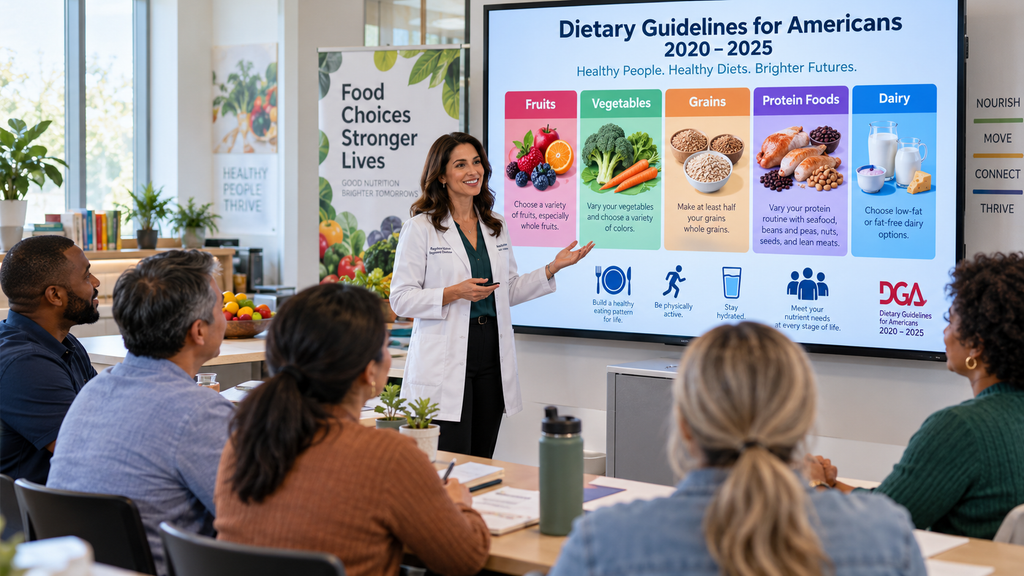
The 2020–2025 Dietary Guidelines for Americans were designed to provide evidence-based recommendations for healthy dietary patterns throughout life.
Rather than prescribing one specific diet, the guidelines focused on a flexible approach that could accommodate different cultures, preferences, lifestyles, and budgets.
The central message was often summarized as “Make every bite count.”
The guidelines presented four broad principles:
- Follow a healthy dietary pattern at every life stage.
- Customize nutrient-dense food and beverage choices according to personal preferences, cultural traditions, and budget.
- Meet food-group needs primarily with nutrient-dense foods and beverages while staying within calorie limits.
- Limit foods and beverages higher in added sugars, saturated fat, and sodium, and limit alcoholic beverages.
This approach recognized that healthy eating does not look exactly the same for every American.
Why Dietary Patterns Matter
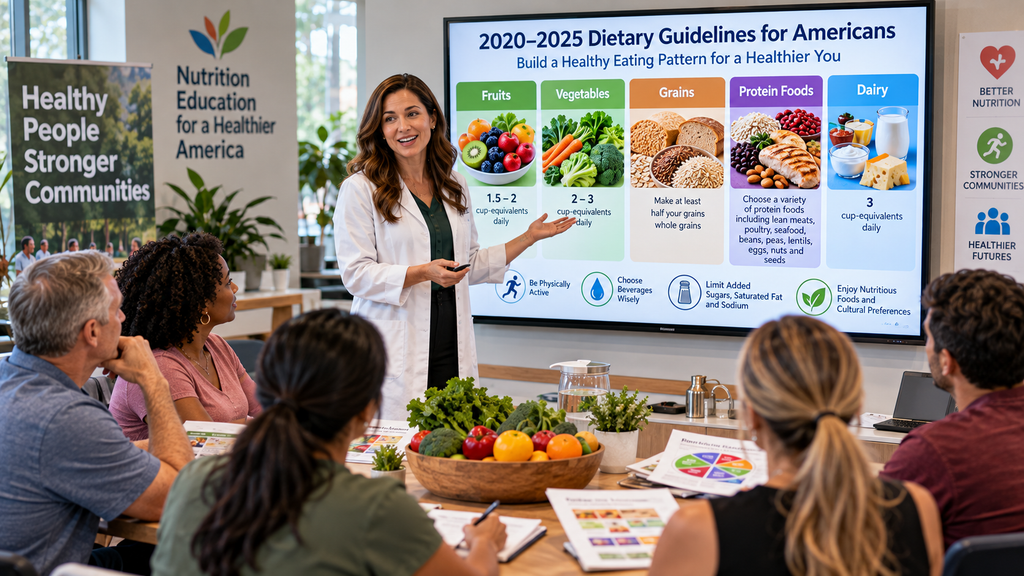
A dietary pattern is the combination of foods and beverages a person regularly consumes.
The 2020–2025 Dietary Guidelines for Americans emphasized the overall pattern rather than suggesting that one particular food could determine someone’s health.
For example, eating a nutritious breakfast does not necessarily compensate for an otherwise unbalanced diet. Likewise, enjoying an occasional dessert does not automatically make an overall dietary pattern unhealthy.
The guidelines encouraged people to focus on what they eat consistently over time.
Nutrient-Dense Foods

A major concept in the guidelines was choosing nutrient-dense foods.
These foods provide important vitamins, minerals, protein, fiber, or other nutrients relative to the calories they contain.
Examples can include:
- Fruits
- Vegetables
- Whole grains
- Seafood
- Lean meats
- Poultry
- Eggs
- Beans
- Peas
- Lentils
- Nuts
- Seeds
- Dairy products
- Fortified soy products
The goal was to make most daily food choices nutrient-dense while keeping overall calorie intake appropriate for individual needs.
Fruits and Vegetables in the 2020–2025 Guidelines
Fruits and vegetables were important components of the healthy dietary patterns described in the guidelines.
The CDC, when discussing the 2020–2025 guidelines, stated that adults should consume approximately 1.5–2 cup-equivalents of fruit and 2–3 cup-equivalents of vegetables daily, with the specific amount depending on factors such as calorie needs and activity level.
A cup-equivalent does not always mean simply measuring one cup of every food.
For example, MyPlate explains that different forms and portions can count toward the food groups. Vegetables may be fresh, frozen, canned, dried, raw, cooked, cut up, or puréed.
Why Variety Matters
Eating different types of produce can help provide a broader range of nutrients.
Vegetables were grouped into categories including:
- Dark green vegetables
- Red and orange vegetables
- Beans, peas, and lentils
- Starchy vegetables
- Other vegetables
For fruit, choosing different varieties can make meals and snacks more interesting while contributing different nutrients.
Fresh produce is not the only option. Frozen and canned fruits and vegetables can also fit into a healthy dietary pattern.
What Did the Guidelines Say About Grains?
Grains were another major food group.
The 2020–2025 guidelines encouraged Americans to make at least half of their grain intake whole grains.
Whole grains include foods such as:
- Oatmeal
- Whole-wheat bread
- Brown rice
- Barley
- Whole-grain pasta
- Popcorn
Whole grains generally provide more fiber and nutrients than refined grains.
The guidelines did not recommend eliminating grains. Instead, they emphasized choosing nutrient-dense options and maintaining appropriate portions within overall calorie needs.
Protein Foods and Healthy Choices
The 2020–2025 Dietary Guidelines for Americans included a broad Protein Foods Group.
This group included:
- Meat
- Poultry
- Seafood
- Eggs
- Beans
- Peas
- Lentils
- Nuts
- Seeds
- Soy products
MyPlate also encourages variety within this group. Different protein foods can provide different combinations of nutrients.
Seafood
The guidelines encouraged Americans to include seafood as part of a healthy eating pattern.
Fish and shellfish can provide protein and other nutrients, including omega-3 fatty acids in certain varieties.
Consumers should still consider species-specific guidance concerning contaminants such as mercury, particularly for children and pregnant individuals.
Plant-Based Protein
The guidelines also allowed considerable flexibility for people who follow vegetarian or vegan diets.
Beans, peas, lentils, nuts, seeds, and soy products can contribute protein and other nutrients. MyPlate specifically identifies these foods as options within the Protein Foods Group.
Dairy and Fortified Alternatives
Dairy foods were included as another important food group.
Milk, yogurt, cheese, lactose-free dairy products, and fortified soy milk and yogurt can provide nutrients such as calcium, vitamin D, potassium, and protein.
For individuals who do not consume dairy, the guidelines provided ways to obtain important nutrients from other foods and fortified products.
For example, fortified soy beverages can be included in the Dairy Group when their nutrient content is comparable to dairy milk.
The specific choice depends on individual dietary needs, preferences, allergies, intolerances, and overall eating patterns.
Added Sugars: What Did the Guidelines Recommend?
One of the most frequently discussed recommendations was the limit on added sugars.
The 2020–2025 Dietary Guidelines for Americans recommended that people age 2 and older consume less than 10% of total daily calories from added sugars. For children younger than age 2, the guidelines recommended avoiding foods and beverages with added sugars.
Added sugars are different from naturally occurring sugars found in foods such as whole fruit and plain milk.
Common sources of added sugars include:
- Sugar-sweetened beverages
- Desserts
- Sweetened breakfast foods
- Candy
- Some flavored dairy products
- Sweet snacks
Reducing added sugar does not necessarily mean eliminating every sweet food. Instead, the guideline emphasized keeping added sugars within the recommended limit while prioritizing nutrient-dense foods.
Saturated Fat Recommendations
The guidelines also recommended limiting saturated fat.
For people age 2 and older, saturated fat was recommended to account for less than 10% of daily calories.
Foods can contain different amounts of saturated fat depending on the type and preparation.
The practical approach was to emphasize nutrient-dense foods and choose sources of fat within an overall healthy dietary pattern.
Reading Nutrition Facts labels can help consumers compare products and understand how much saturated fat a particular food contributes.
Sodium and the 2020–2025 Dietary Guidelines
Sodium was another major focus.
The guidelines recommended limiting sodium intake to less than 2,300 milligrams per day for adults and children age 14 and older, with lower limits applying to younger children.
Many foods contain sodium naturally, but processed and packaged foods can be significant sources.
Common sources can include:
- Processed meats
- Packaged soups
- Salty snacks
- Sauces
- Restaurant meals
- Processed convenience foods
Choosing foods with less sodium and checking Nutrition Facts labels can help consumers manage their intake.
Alcohol Guidance
The 2020–2025 guidelines also addressed alcoholic beverages.
For adults of legal drinking age who choose to drink, the guidance recommended no more than two drinks per day for men and one drink per day for women on days when alcohol was consumed. It also stated that drinking less is better for health than drinking more and identified groups who should not drink, including people who are pregnant.
The guidelines also recognized that choosing not to drink is an option.
Alcohol recommendations can be particularly important when considering pregnancy, medications, medical conditions, recovery from alcohol use disorder, and other individual circumstances.
Healthy Eating Across Every Life Stage
One notable feature of the 2020–2025 Dietary Guidelines for Americans was its emphasis on the entire lifespan.
The edition provided guidance beginning in infancy and continuing through older adulthood. The guidelines emphasized that nutritional needs change as people age.
Infants and Young Children
Early childhood is an important period for establishing eating habits and meeting nutrient requirements.
The guidelines included recommendations related to breastfeeding, complementary foods, nutrient needs, and the introduction of foods during infancy.
Children and Teenagers
Growing children and adolescents have changing energy and nutrient requirements.
A balanced pattern that includes fruits, vegetables, grains, protein foods, and dairy or appropriate alternatives can help support nutritional needs.
Adults
Adults can use the dietary pattern framework to balance nutrition, calorie needs, physical activity, preferences, and lifestyle.
The exact amount of food needed varies between individuals.
Older Adults
Older adults may have different nutritional priorities because energy requirements can decline while the need for certain nutrients remains important.
The guidelines therefore emphasized nutrient-dense choices across older adulthood as well.
What Did Americans Actually Eat?
The guidelines were partly designed in response to gaps between recommended eating patterns and actual U.S. dietary habits.
The 2020–2025 guidelines reported that many Americans consumed too few vegetables, fruits, and dairy foods while exceeding recommended limits for added sugars, saturated fat, and sodium.
CDC research published in 2022 further illustrated the gap for fruits and vegetables. Using 2019 data, CDC estimated that only 12.3% of U.S. adults met fruit recommendations and 10.0% met vegetable recommendations.
Those figures are historical—they describe 2019 intake, not current consumption—but they help explain why fruit and vegetable intake was emphasized during the 2020–2025 period.
Making the Guidelines Practical
Nutrition recommendations can seem complicated when viewed as a long list of numbers.
The broader framework can be easier to apply in everyday life.
Build Meals Around Nutrient-Dense Foods
A simple meal might combine:
- Vegetables
- Fruit
- A protein source
- A whole grain
- Dairy or a fortified alternative
The exact combination can change according to personal preferences and dietary needs.
Choose Convenient Healthy Options
Healthy eating does not require everything to be fresh or prepared from scratch.
Frozen vegetables, canned beans, frozen fruit, plain yogurt, whole-grain products, and other convenient foods can make it easier to build nutritious meals.
Read Food Labels
Nutrition Facts labels can help consumers compare:
- Added sugars
- Saturated fat
- Sodium
- Serving size
- Calories
- Other nutrients
Understanding serving sizes is especially important because a package may contain multiple servings.
What the 2020–2025 Guidelines Did Not Mean
The guidelines were not intended to require every American to eat exactly the same foods.
They explicitly emphasized customization according to personal preferences, cultural traditions, and budget.
A healthy dietary pattern can therefore look different from one household to another.
For example, one family might regularly prepare beans and rice, another might eat seafood and whole grains, and another might rely on vegetarian meals. What matters is how the overall pattern meets nutritional needs.
2020–2025 vs. the Current Dietary Guidelines
Because it is now 2026, readers should understand that the 2020–2025 Dietary Guidelines for Americans are no longer the current federal edition.
On January 7, 2026, HHS and USDA released the 2025–2030 Dietary Guidelines for Americans. The new edition introduced updated recommendations and replaced the 2020–2025 edition as the current federal dietary guidance.
Therefore, someone researching the 2020–2025 guidelines for a historical article, academic assignment, or comparison should use the original edition. Someone looking for the recommendations currently in effect should consult the 2025–2030 guidelines.
This distinction is especially important for online content because older dietary recommendations can continue appearing in search results after a new edition has been published.
Frequently Asked Questions About the 2020–2025 Dietary Guidelines for Americans
What were the 2020–2025 Dietary Guidelines for Americans?
They were the federal U.S. dietary guidelines covering the period from 2020 through 2025. They emphasized healthy dietary patterns, nutrient-dense foods, appropriate calorie intake, and limiting added sugars, saturated fat, sodium, and alcohol.
How much fruit did the 2020–2025 guidelines recommend?
For adults, CDC summarized the guidance as approximately 1.5–2 cup-equivalents of fruit per day, depending on individual circumstances such as calorie needs and activity level.
How many vegetables should adults eat each day?
CDC summarized the 2020–2025 guidance as approximately 2–3 cup-equivalents of vegetables per day for adults, with individual needs varying.
What was the added sugar limit?
The guidelines recommended that people age 2 and older consume less than 10% of daily calories from added sugars. They recommended avoiding foods and beverages with added sugars for children younger than age 2.
What was the sodium recommendation?
The 2020–2025 guidelines recommended less than 2,300 milligrams of sodium per day for adults and children age 14 and older, with lower limits for younger children.
Did the guidelines recommend avoiding carbohydrates?
No. The 2020–2025 guidelines included grains as one of the major food groups and emphasized choosing nutrient-dense foods, including whole grains, while staying within calorie needs.
Are the 2020–2025 Dietary Guidelines still current?
No. They have been superseded by the 2025–2030 Dietary Guidelines for Americans, released January 7, 2026. The 2020–2025 edition remains useful when researching recommendations from that period.
Did the guidelines apply to children?
Yes. The 2020–2025 edition was the first Dietary Guidelines edition to provide recommendations across every life stage, beginning with infancy and continuing through older adulthood.
Conclusion
The 2020–2025 Dietary Guidelines for Americans provided a broad framework for healthy eating based on overall dietary patterns rather than a single food or nutrient.
The central message was to make every bite count by choosing nutrient-dense foods, meeting food-group needs, staying within appropriate calorie limits, and limiting added sugars, saturated fat, sodium, and alcoholic beverages.
Fruits and vegetables were an important part of that framework. CDC data from 2019 showed that relatively few U.S. adults were meeting the recommended amounts, highlighting one of the practical challenges the guidelines sought to address.
The guidelines also emphasized flexibility. Healthy eating could reflect cultural traditions, personal preferences, budget, age, and life stage rather than requiring every person to follow an identical menu.
For historical and educational purposes, the 2020–2025 Dietary Guidelines for Americans remain an important reference for understanding federal nutrition guidance during that period. However, readers seeking current U.S. dietary recommendations should use the 2025–2030 Dietary Guidelines for Americans, which replaced the previous edition in January 2026.
Ultimately, the most useful lesson from the 2020–2025 edition was its focus on the overall pattern of eating: build meals around nutrient-dense foods, include a variety of food groups, pay attention to portions, and make sustainable choices that fit individual needs and everyday life.

