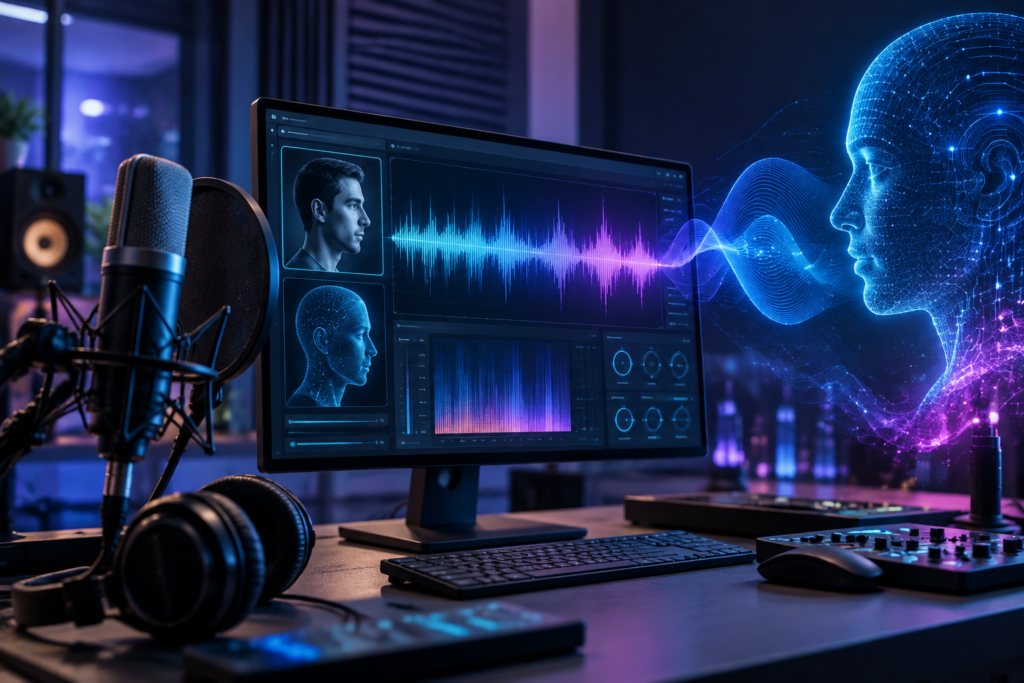
Artificial intelligence is transforming the way people create, communicate, and interact with digital content. One of the most exciting developments in modern AI technology is AI voice cloning, a system that can analyze a person’s voice and generate realistic speech that sounds natural and human-like.
From content creation and entertainment to customer service and accessibility solutions, AI voice cloning is opening new possibilities for individuals and businesses. Instead of recording every sentence manually, users can create realistic voice content through advanced artificial intelligence models.
As voice technology continues to improve, more industries are exploring how synthetic voices can make communication faster, more personalized, and more efficient.
This guide explains what AI voice cloning is, how it works, its benefits, common applications, and what users should consider when choosing voice AI technology.
What Is AI Voice Cloning?
AI voice cloning is a technology that uses artificial intelligence to create a digital copy of a person’s voice. By analyzing voice recordings, AI systems can learn characteristics such as:
- Tone
- Pitch
- Speaking style
- Pronunciation patterns
- Emotional expression
- Voice rhythm
After learning these features, the AI model can generate new speech that closely matches the original voice.
Unlike traditional text-to-speech systems that use generic voices, AI voice cloning creates a more personalized and realistic audio experience.
For example, a content creator can generate narration in their own voice without recording every script manually.
How Does AI Voice Cloning Work?
AI voice cloning combines machine learning, speech processing, and deep neural networks to recreate human speech.
The process usually involves several steps.
Voice Data Collection
The AI system requires voice samples to understand the characteristics of a speaker’s voice.
The quality and length of recordings can affect the final result. Clear audio samples help AI models create more accurate voice outputs.
Voice Analysis
Artificial intelligence analyzes different elements of the recording, including:
- Frequency patterns
- Speech speed
- Accent features
- Emotional tone
- Vocal characteristics
This creates a digital representation of the voice.
AI Voice Generation
After training, the AI model can convert written text into speech using the cloned voice.
The generated audio can include natural variations such as:
- Pauses
- Emphasis
- Different emotions
- Conversational patterns
Why Is AI Voice Cloning Becoming Popular?
The growth of AI voice cloning is connected to increasing demand for faster and more personalized digital content.
Businesses, creators, and developers use voice AI because it provides:
- Faster content production
- Lower recording costs
- Consistent voice output
- Personalized user experiences
As online videos, podcasts, virtual assistants, and digital learning continue growing, realistic voice generation has become increasingly valuable.
7 Major Applications of AI Voice Cloning
1. Content Creation and Video Production
One of the biggest uses of AI voice cloning is in digital content creation.
YouTube creators, marketers, and video producers can use AI-generated voices for:
- Video narration
- Educational content
- Social media videos
- Marketing campaigns
- Explainer videos
Creators can produce high-quality voiceovers without spending hours recording and editing audio.
2. Audiobooks and Digital Publishing
The audiobook industry has experienced significant growth, increasing demand for professional narration.
AI voice cloning can help publishers create:
- Faster audiobook production
- Multiple language versions
- Consistent narration styles
Authors can also create audiobook versions of their work using a digital version of their own voice.
3. Virtual Assistants and Customer Support
Businesses are using AI-powered voices to improve customer interactions.
Voice AI can support:
- Automated customer service
- Virtual assistants
- Appointment systems
- Interactive voice response platforms
A natural-sounding AI voice can create smoother and more engaging conversations.
4. Accessibility Technology
AI voice cloning can help improve accessibility for people who have difficulty speaking.
For example, individuals who lose their ability to speak may use personalized synthetic voices to communicate digitally.
This technology allows users to maintain a more personal connection through a voice that represents them.
5. Gaming and Entertainment
The gaming and entertainment industries use voice technology to create realistic characters and experiences.
AI voice cloning can help with:
- Character dialogue
- Interactive storytelling
- Personalized gaming experiences
- Digital characters
Developers can create more immersive experiences using advanced voice generation.
6. Business Training and E-Learning
Online education platforms can use AI voice technology for:
- Training videos
- Online courses
- Educational applications
- Corporate learning materials
AI-generated narration allows companies to update training content quickly without repeated recording sessions.
7. Personalized Digital Experiences
Businesses are increasingly focusing on personalization.
AI voice cloning can create customized experiences such as:
- Personalized recommendations
- Brand voice assistants
- Interactive applications
- Digital companions
This allows technology to feel more natural and human-centered.
Benefits of Using AI Voice Cloning
Faster Audio Production
Traditional voice recording requires scheduling, equipment, and editing time.
With AI voice cloning, users can generate speech quickly from written text.
This is especially useful for businesses producing large amounts of audio content.
Cost Efficiency
Professional voice recording can be expensive, especially for projects requiring frequent updates.
AI-generated voices can reduce production costs while maintaining high-quality results.
Consistent Voice Quality
Human recordings can vary depending on:
- Energy levels
- Recording conditions
- Speaker availability
AI voice cloning provides consistent output across different projects.
Multilingual Content Creation
Many AI voice systems support multiple languages and accents.
This helps businesses expand content to global audiences more efficiently.
AI Voice Cloning vs Traditional Text-to-Speech
Traditional text-to-speech technology generates speech using pre-created artificial voices.
AI voice cloning is different because it focuses on replicating specific voices.
Traditional Text-to-Speech
Advantages:
- Easy to use
- Fast generation
- Available in many applications
Limitations:
- Less personalized
- May sound robotic
- Limited voice identity
AI Voice Cloning
Advantages:
- Personalized voices
- More realistic speech
- Emotional expression
- Custom voice identity
Limitations:
- Requires careful ethical use
- Needs quality voice samples
- Requires responsible implementation
Important Considerations When Using AI Voice Cloning
Voice Permission and Consent
Responsible use of AI voice cloning requires proper permission from the person whose voice is being replicated.
Using someone’s voice without authorization can create ethical and legal concerns.
Quality of Voice Samples
Better recordings usually produce better results.
High-quality audio should have:
- Minimal background noise
- Clear speech
- Consistent recording quality
Choosing a Reliable AI Voice Platform
When selecting an AI voice cloning solution, consider:
- Voice quality
- Security features
- Ease of use
- Available customization options
- Privacy policies
The Future of AI Voice Cloning Technology
AI voice technology is expected to continue improving as artificial intelligence models become more advanced.
Future developments may include:
- More realistic emotional expression
- Real-time voice conversion
- Better multilingual support
- Improved personalization
- More natural conversations
As the technology develops, AI voices may become an important part of communication, entertainment, education, and business applications.
Is AI Voice Cloning Safe?
AI voice cloning itself is a technology tool. Like many digital technologies, its impact depends on how it is used.
Positive applications include:
- Accessibility support
- Creative production
- Education
- Business communication
However, responsible use is important to prevent misuse such as unauthorized impersonation or misleading content.
Using trusted platforms and respecting voice ownership helps promote safer adoption.
How Businesses Can Use AI Voice Cloning Effectively
Companies can integrate voice AI into their workflows by identifying areas where automation improves efficiency.
Potential business uses include:
- Marketing videos
- Product demonstrations
- Customer communication
- Training materials
- Digital assistants
When combined with human creativity, AI voice technology can help businesses produce more engaging experiences.
Frequently Asked Questions About AI Voice Cloning
What is AI voice cloning used for?
AI voice cloning is used for content creation, audiobooks, virtual assistants, accessibility tools, gaming, education, and personalized digital experiences.
How accurate is AI voice cloning?
Modern AI voice cloning systems can create highly realistic speech, especially when trained with clear and high-quality voice samples.
Can AI clone any voice?
AI systems can replicate voices when sufficient voice data is available, but ethical use requires permission from the voice owner.
Is AI voice cloning free?
Some platforms offer free trials or limited free versions, while advanced features may require paid plans.
How long does it take to create a cloned voice?
The time depends on the platform, voice sample quality, and complexity of the AI model.
Can AI voice cloning create emotional speech?
Advanced AI voice systems can produce different emotional tones, including excitement, calmness, and conversational expressions.
Conclusion
AI voice cloning is changing the way people create and experience digital audio. From content production and education to accessibility and customer communication, this technology provides powerful opportunities for faster and more personalized voice experiences.
As artificial intelligence continues advancing, voice cloning will likely become an increasingly important tool across many industries.
By using AI voice technology responsibly and ethically, businesses and creators can benefit from realistic digital voices while maintaining trust and authenticity in communication.