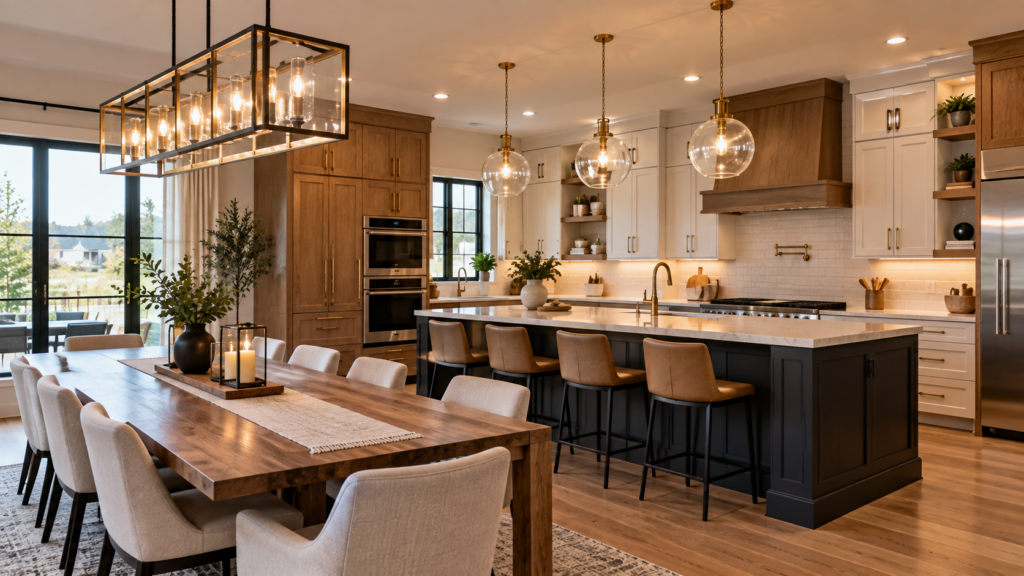
Lighting can completely change the way a home looks and feels.
A beautifully furnished room may still feel flat or uncomfortable if the lighting is too harsh, too dim, or poorly positioned. On the other hand, the right overhead fixture can make furniture look better, define different areas, create atmosphere, and make everyday activities easier.
That is why ceiling lamps remain one of the most important elements of interior design.
Modern ceiling lighting is available in a wide range of styles, including pendant lights, hanging fixtures, cluster lights, chandeliers, flush mounts, and semi-flush designs. Materials range from glass and metal to wood, steel, and decorative crystal.
The ceiling lamp collection currently featured by Home Centre includes pendant lamps, cluster fixtures, hanging lamps, flush mounts, metal designs, glass designs, mid-century styles, and decorative multi-light arrangements.
For U.S. homeowners, the biggest challenge is not finding options. It is choosing a fixture that fits the room, ceiling height, lighting requirements, decorating style, and electrical setup.
This guide explains how to make that choice.
Why Ceiling Lamps Matter in Interior Design
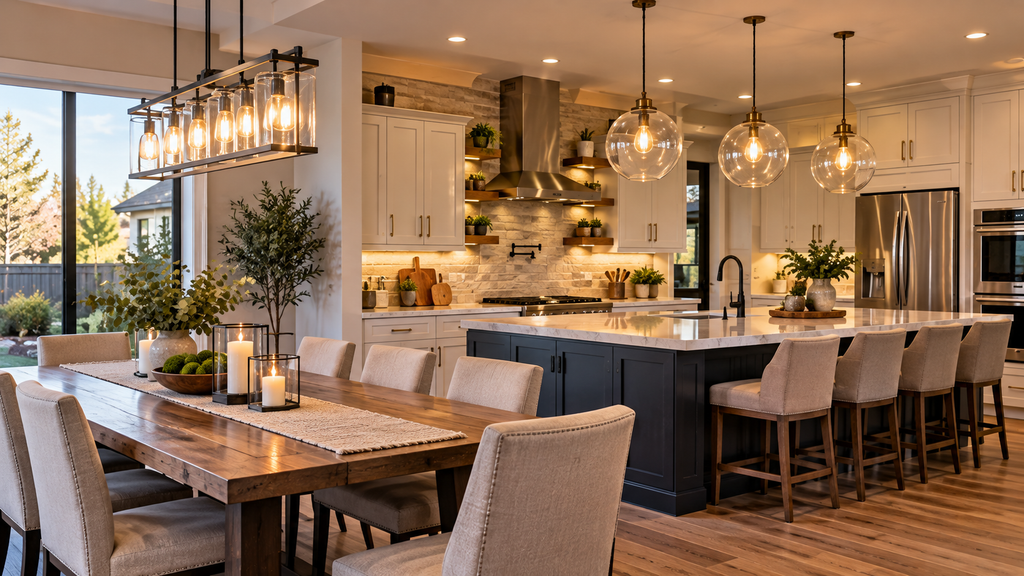
Ceiling lighting is usually one of the first sources of illumination people notice when they enter a room.
It often provides the main ambient light for the space.
But modern ceiling lamps do more than provide brightness.
They can also:
- Create a visual focal point
- Make a room feel larger or more intimate
- Highlight furniture
- Define dining or seating areas
- Add warmth to minimalist interiors
- Introduce metal, glass, wood, or other decorative materials
- Improve task visibility
- Support layered lighting designs
A dramatic pendant can become part of the decor even when it is turned off.
A subtle flush-mount fixture, by contrast, can provide practical lighting while almost disappearing into the ceiling.
The right choice depends on what the room needs.
Main Types of Ceiling Lamps
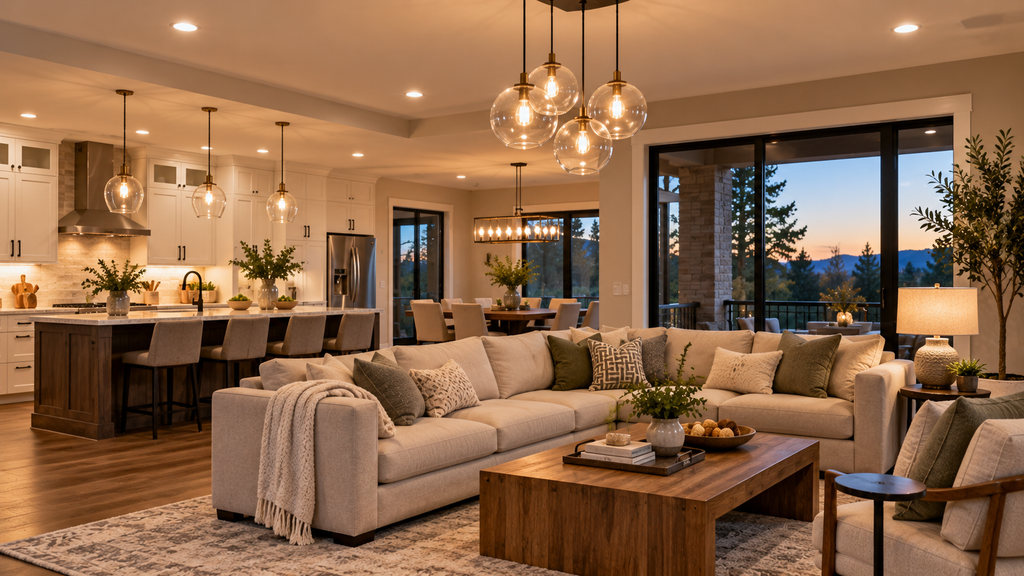
Not every overhead light works the same way.
Understanding the major categories makes shopping much easier.
Pendant Lamps
Pendant lights hang from the ceiling using a cord, cable, chain, or rod.
They are among the most versatile types of ceiling lighting.
Pendant lamps are commonly used over:
- Kitchen islands
- Dining tables
- Breakfast bars
- Reading corners
- Entryways
- Side tables
Home Centre’s current ceiling-lighting range includes a broad selection of pendant and hanging styles, with both single fixtures and decorative arrangements.
Pendant lights are especially effective when you want both practical illumination and a visible design feature.
Cluster Lamps
Cluster lights combine several hanging bulbs or shades into one fixture.
The lights may hang at the same level or at different heights.
This layered arrangement creates a stronger visual statement than a single pendant.
Cluster lamps work especially well in:
- Stairwells
- High-ceiling rooms
- Dining areas
- Entry halls
- Open-plan interiors
Home Centre currently features numerous metal and glass cluster ceiling lamp designs in its collection.
Hanging Lamps
Hanging ceiling lamps generally extend farther downward than standard flush fixtures.
They can bring light closer to tables, counters, or seating areas.
This can make the lighting feel more intimate.
Hanging lamps are commonly used where the fixture is not positioned directly above a major walking path.
Flush-Mount Ceiling Lamps
Flush-mount lights sit directly against or very close to the ceiling.
They are useful when ceiling height is limited.
These fixtures are often chosen for:
- Hallways
- Bedrooms
- Closets
- Small living rooms
- Utility spaces
- Entry areas
Because they do not hang far into the room, they help preserve headroom.
Home Centre describes flush mounts as a practical choice where overhead clearance is important.
Semi-Flush Mount Fixtures
Semi-flush lights extend slightly below the ceiling while remaining relatively compact.
They provide some of the decorative appearance of a hanging fixture without the full drop of a pendant.
These can work well in rooms with average ceiling heights.
Chandeliers
Chandeliers typically use multiple light sources and are designed to make a stronger visual statement.
Modern chandeliers can range from traditional crystal designs to clean geometric metal frames.
They are often used in:
- Dining rooms
- Foyers
- Formal living rooms
- Large bedrooms
- Double-height spaces
Choosing Ceiling Lamps for the Living Room
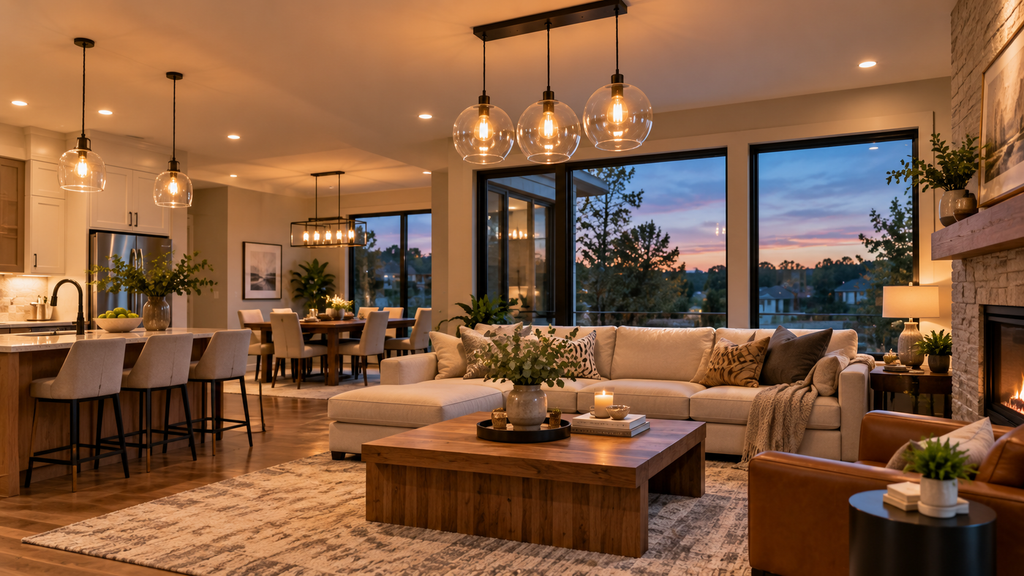
Living room lighting needs to be flexible.
The room may be used for:
- Conversation
- Television
- Reading
- Entertaining
- Relaxing
- Family activities
A single ceiling lamp may provide general illumination, but the most comfortable living rooms usually use layered lighting.
This can include:
- Ceiling light
- Floor lamps
- Table lamps
- Wall sconces
- Accent lighting
Home Centre’s lighting guidance similarly emphasizes combining different light sources to create depth and atmosphere rather than relying entirely on one fixture.
For modern living rooms, popular ceiling lamp materials include:
- Black metal
- Brass-toned metal
- Clear glass
- Smoked glass
- Wood
- Matte finishes
Choose a fixture that complements the scale of the room.
A very small ceiling light can disappear visually in a large living space, while an oversized chandelier can dominate a compact room.
Best Ceiling Lamps for Bedrooms
Bedroom lighting should generally feel softer and more relaxing than kitchen or workspace lighting.
Warm light can help create a calmer evening atmosphere.
Good bedroom options include:
- Semi-flush mounts
- Soft glass fixtures
- Fabric-shade ceiling lamps
- Compact pendants
- Minimalist modern ceiling lights
Pendant lights can also be installed beside the bed instead of using table lamps.
This can free up space on nightstands while creating a cleaner visual look.
Home Centre specifically highlights bedroom pendant lighting as an alternative to traditional bedside lamps.
Dimming capability can be especially useful in bedrooms.
Bright light may be useful while getting dressed or cleaning, while softer light is usually more comfortable before sleep.
Ceiling Lamps for Kitchens
Kitchen lighting needs to balance style and function.
A kitchen often benefits from multiple types of illumination.
For example:
Ambient lighting provides overall brightness.
Task lighting helps illuminate countertops and food-preparation areas.
Accent lighting can highlight cabinets, artwork, or architectural features.
Pendant lamps are especially popular over kitchen islands.
Two or three evenly spaced pendants can create balanced illumination while defining the island as the visual center of the room.
Home Centre’s pendant-lighting guidance notes that multiple pendants are commonly used over kitchen islands to distribute light more evenly.
For busy kitchens, choose fixtures that are relatively easy to clean.
Glass and metal can often be more practical than highly textured fabric shades in areas exposed to cooking residue.
Ceiling Lamps for Dining Rooms
Dining room lighting is often more decorative.
Because the fixture hangs above the table rather than a major walking route, homeowners have more freedom to use larger or lower-hanging designs.
Popular choices include:
- Pendant lights
- Cluster fixtures
- Linear chandeliers
- Glass globes
- Metal chandeliers
- Sculptural fixtures
The ceiling lamp can visually anchor the dining table.
As a general design principle, the fixture should feel proportional to the table rather than to the entire room.
Home Centre recommends pendant lighting over dining tables and currently offers both single and cluster designs suited to this purpose.
Materials Used in Ceiling Lamps
Material has a major impact on both appearance and light distribution.
Metal Ceiling Lamps
Metal fixtures can create a structured, contemporary appearance.
Common finishes include:
- Matte black
- Brushed brass
- Gold tone
- Chrome
- Bronze
- Nickel
Dark metal works well in industrial and minimalist interiors.
Warmer metals can add a more luxurious or traditional feeling.
Home Centre’s current collection features a large number of metal ceiling and cluster fixtures.
Glass Ceiling Lamps
Glass can allow light to spread more freely through a room.
Popular variations include:
- Clear glass
- Frosted glass
- Smoked glass
- Colored glass
- Textured glass
Clear glass can make a fixture feel visually lighter, which is useful in smaller rooms.
Home Centre currently offers numerous glass and metal-and-glass ceiling lamp styles.
Wood Ceiling Lamps
Wood introduces warmth and texture.
Wood ceiling fixtures can work especially well with:
- Scandinavian interiors
- Farmhouse decor
- Organic modern design
- Coastal homes
- Neutral interiors
Natural grain can make overhead lighting feel less industrial.
Crystal Fixtures
Crystal lighting reflects and refracts light, producing a decorative sparkling effect.
Traditional crystal chandeliers are often used in formal rooms, but modern crystal designs can be much more minimal.
Matching Ceiling Lamps to Interior Style
Lighting should connect visually with the rest of the room.
Modern Interiors
Look for:
- Clean lines
- Simple geometry
- Black metal
- Clear glass
- Neutral colors
Industrial Interiors
Consider:
- Exposed bulbs
- Steel
- Dark metal
- Cage-style fixtures
- Vintage-inspired forms
Mid-Century Modern
Look for:
- Globe shades
- Brass finishes
- Sculptural arms
- Warm tones
- Simple geometric forms
Home Centre currently features several mid-century ceiling lamp styles among its listings.
Farmhouse Interiors
Popular choices include:
- Matte black frames
- Wood accents
- Lantern-style fixtures
- Warm bulbs
- Simple glass shades
Luxury Interiors
Consider:
- Crystal
- Brass
- Sculptural glass
- Multi-light clusters
- Large statement pieces
Choosing the Right Size
Scale is one of the most common lighting mistakes.
A fixture that is too small can make the room look unfinished.
A fixture that is too large can overwhelm the space.
Consider:
- Room dimensions
- Ceiling height
- Furniture size
- Table size
- Fixture drop
- Walking clearance
For pendant fixtures, ceiling height is especially important.
A design that looks perfect in a room with a 10-foot ceiling may hang too low in a room with an 8-foot ceiling.
Home Centre’s buying guidance similarly recommends starting with room scale and ceiling height before selecting the fixture.
Understanding Light Color
Light bulbs are available in different color temperatures.
These are generally described in Kelvin.
Lower Kelvin values produce warmer, more yellow light.
Higher values create cooler, whiter illumination.
For example:
Warm white can work well in bedrooms, living rooms, and dining spaces.
Neutral white is often useful for kitchens and general-purpose areas.
Cooler white may be appropriate for workspaces or task-oriented environments.
The best choice depends on the mood and purpose of the room.
LED Ceiling Lamps
LED lighting has become common in modern homes because it generally uses less electricity and lasts longer than older incandescent technology.
LED ceiling fixtures may include:
- Replaceable LED bulbs
- Integrated LED modules
- Smart LED systems
- Dimmable LEDs
Home Centre’s broader lighting collection includes LED options alongside decorative lamps, pendant lights, and other fixtures.
When buying an integrated LED fixture, check whether the LED module is replaceable and what happens when it eventually reaches the end of its service life.
Dimmable Ceiling Lamps
Dimming gives one fixture multiple uses.
For example, a dining room may need brighter lighting during meals or cleaning but softer illumination during entertaining.
Before installing a dimmer, confirm that:
- The fixture is dimmable
- The bulbs are dimmable
- The dimmer switch is compatible with the LED technology
Not every LED bulb works properly with every dimmer.
Smart Ceiling Lamps
Smart lighting can provide additional control through:
- Mobile apps
- Voice assistants
- Schedules
- Dimming
- Color temperature adjustment
- Automation
Some fixtures include built-in smart technology, while others become smart when compatible smart bulbs are installed.
Home Centre’s ceiling-lamp guidance also highlights smart lighting as an option for users who want adjustable brightness, color temperature, and automated schedules.
U.S. Electrical Compatibility Matters
The linked Home Centre collection is primarily designed for the Indian market.
For U.S. homeowners, this creates an important consideration.
A fixture that looks attractive online should not automatically be assumed to be suitable for installation in an American home.
Before purchasing an imported light fixture, verify:
- Voltage compatibility
- Bulb base type
- Wiring requirements
- Fixture certification or listing
- Mounting hardware
- Ceiling-box compatibility
- Replacement bulb availability
Professional electrical installation may also be appropriate for hardwired fixtures.
If a product is intended primarily for another country’s electrical system, confirm compatibility before ordering.
Installation Considerations
Some simple fixtures can replace existing fixtures relatively easily, but ceiling lighting still involves household electrical wiring.
Larger fixtures may also require structural support.
Examples include:
- Heavy chandeliers
- Large cluster lights
- Multi-arm fixtures
- Oversized pendants
Home Centre’s buying guidance notes that heavier decorative fixtures may require additional ceiling support or professional installation.
If you are unsure whether the existing electrical box can support the fixture, consult a qualified electrician.
Common Ceiling Lamp Mistakes
Choosing Style Before Function
A beautiful fixture is not useful if it fails to provide the needed light.
Ignoring Ceiling Height
Long pendants can create headroom problems in low-ceiling rooms.
Using Only One Light Source
Layered lighting often creates a more comfortable room than relying entirely on a single overhead fixture.
Choosing the Wrong Bulb Temperature
Very cool white lighting can make a bedroom feel harsh, while overly warm lighting may reduce visibility in a task-oriented kitchen.
Ignoring Fixture Scale
Match the lamp to the furniture and room size.
Forgetting Maintenance
Highly complex fixtures can be harder to clean.
Consider accessibility before installing an elaborate chandelier in a tall stairwell.
Frequently Asked Questions About Ceiling Lamps
What are the main types of ceiling lamps?
Common types include pendant lights, hanging lamps, cluster fixtures, chandeliers, flush mounts, and semi-flush ceiling lights.
Which ceiling lamps are best for low ceilings?
Flush-mount and semi-flush fixtures are generally good choices because they preserve headroom.
Are pendant lamps suitable for kitchens?
Yes. Pendant lamps are commonly installed over kitchen islands and breakfast bars because they provide both decorative and task lighting.
How many pendant lamps should I use over a kitchen island?
The answer depends on the island length and fixture size. Two or three evenly spaced pendants are common for many standard kitchen islands.
What type of ceiling lamp works best in a bedroom?
Soft glass fixtures, compact pendants, flush mounts, and dimmable ceiling lights can all work well in bedrooms.
Are glass ceiling lamps good for small rooms?
Yes. Clear or lightly colored glass can visually reduce the weight of the fixture and allow more light to pass through.
What color temperature is best for living rooms?
Warm white lighting is popular because it creates a comfortable and inviting atmosphere.
Are LED ceiling lamps energy efficient?
LED lighting generally uses less electricity than traditional incandescent lighting and can offer a longer useful life.
Can ceiling lamps be used with dimmer switches?
Many can, but the fixture, bulb, and dimmer need to be compatible.
Can I install a Home Centre ceiling lamp in the United States?
Possibly, but Home Centre’s linked collection is aimed primarily at the Indian market. U.S. buyers should verify voltage, wiring, bulb sockets, mounting requirements, and applicable electrical certifications before purchasing or installing a fixture.
How do I clean ceiling lamps?
Turn off power and allow the fixture to cool first. Metal and glass fixtures can often be cleaned with a soft dry or lightly damp cloth. Always follow the manufacturer’s instructions and avoid harsh chemicals that may damage finishes.
Conclusion
The right ceiling lamps can transform the appearance and atmosphere of a home.
They provide essential overhead illumination while also becoming part of the interior design itself.
Pendant lights can create a strong focal point over a kitchen island or dining table. Cluster fixtures add drama to rooms with more vertical space. Flush mounts keep low-ceiling rooms open and practical. Chandeliers can add elegance, while minimalist metal and glass fixtures work well in contemporary homes.
Home Centre’s current ceiling-lighting collection illustrates how broad the category has become, with metal, glass, mid-century, pendant, cluster, hanging, and flush-style designs available across different decorative styles.
The most important step is choosing according to the room rather than simply selecting the fixture that looks most attractive in a product photograph.
Consider the ceiling height, room dimensions, furniture scale, brightness required, bulb color temperature, material, maintenance, and how the fixture will work alongside other light sources.
Bedrooms usually benefit from warmer, softer illumination. Kitchens need practical task visibility. Dining rooms can support more decorative fixtures. Living rooms often work best when ceiling lighting is layered with floor lamps, table lamps, or wall lighting.
U.S. homeowners should also pay attention to electrical compatibility when shopping from international retailers. The linked Home Centre collection primarily serves the Indian market, so voltage, wiring, bulb type, mounting hardware, and certification requirements should be verified before installation.
Installation matters too. Lightweight fixtures may be relatively simple replacements, while large chandeliers and cluster lamps can require professional mounting and additional structural support.
Ultimately, successful lighting combines function, scale, style, and atmosphere.
Whether you prefer minimalist metal pendants, transparent glass shades, dramatic clusters, warm wooden fixtures, or elegant chandeliers, modern ceiling lamps provide countless ways to personalize your home.
Choosing thoughtfully can make every room more practical during the day, more comfortable at night, and more visually complete at all times.