
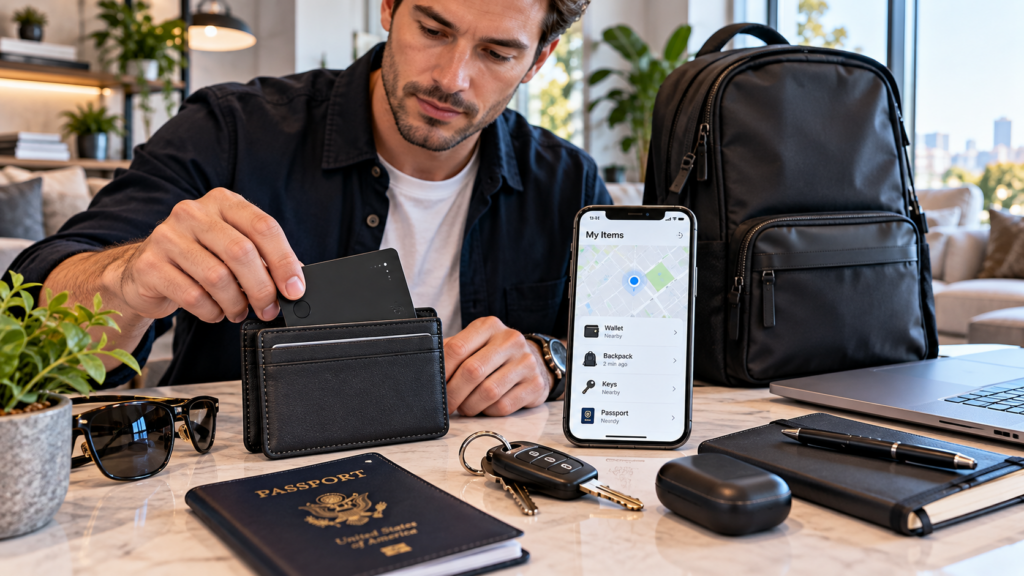
Losing a wallet can turn an ordinary day into a frustrating search through your home, car, office, restaurant, airport terminal, or hotel room.
Even when a wallet is only misplaced for a few minutes, the experience can be stressful. Credit cards, identification, driver’s licenses, travel documents, and other important items may all be inside.
Traditional Bluetooth trackers have helped solve this problem, but many are designed as round tags or keychain accessories. That shape works well for keys and backpacks but can feel bulky inside a slim wallet.
A cross-platform tracker card offers a different approach.
Designed in the shape of a payment card, it can slide into a wallet, passport holder, bag, or luggage pocket while providing location tracking through a smartphone.
Ekster’s current Tracker Card is designed to work with either Apple’s Find My network or Google’s Find Hub network, giving both iPhone and Android users access to the same physical tracker. The user chooses one network during setup rather than purchasing separate Apple and Android models.
For people who regularly switch devices, travel frequently, or simply want a thin way to keep track of important belongings, that flexibility can be especially useful.
What Is a Cross-Platform Tracker Card?
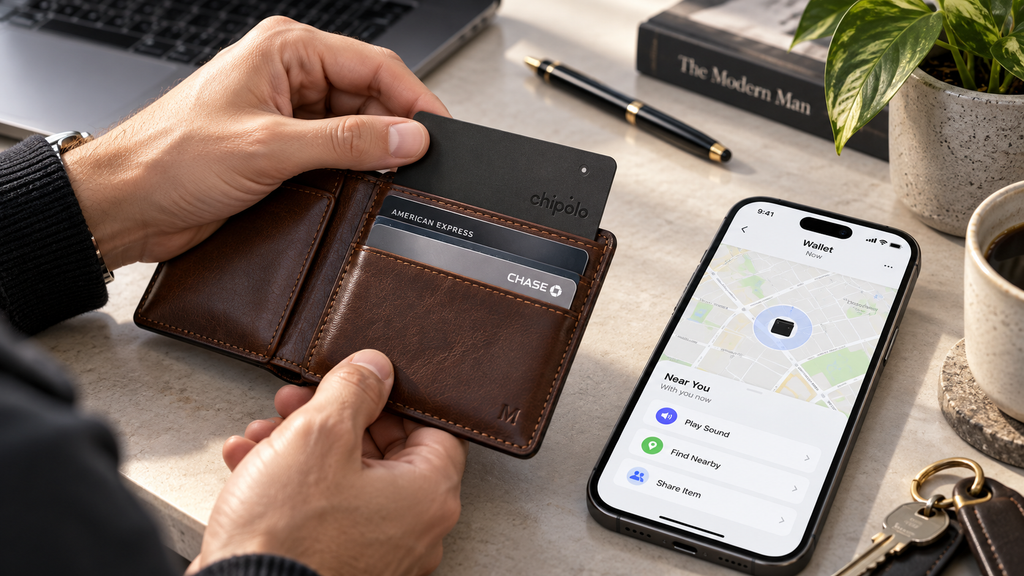
A tracker card is a thin electronic tracking device built to fit into spaces where a traditional tracking tag may be inconvenient.
Most are approximately the size of a credit card and use Bluetooth technology along with a larger device-finding network.
A cross-platform tracker card goes one step further by supporting more than one major smartphone ecosystem.
Instead of being locked permanently to iPhone or Android hardware, the same device can be configured for either platform.
The Ekster Tracker Card, for example, can connect to:
- Apple Find My on supported Apple devices
- Google Find Hub on supported Android devices
It cannot operate on both networks at the same time. To switch platforms, the card must first be removed from its existing network and then configured on the other one.
That distinction is important. Cross-platform compatibility means one physical card can work with either ecosystem, not that Apple and Google tracking networks are used simultaneously.
Why Cross-Platform Compatibility Matters
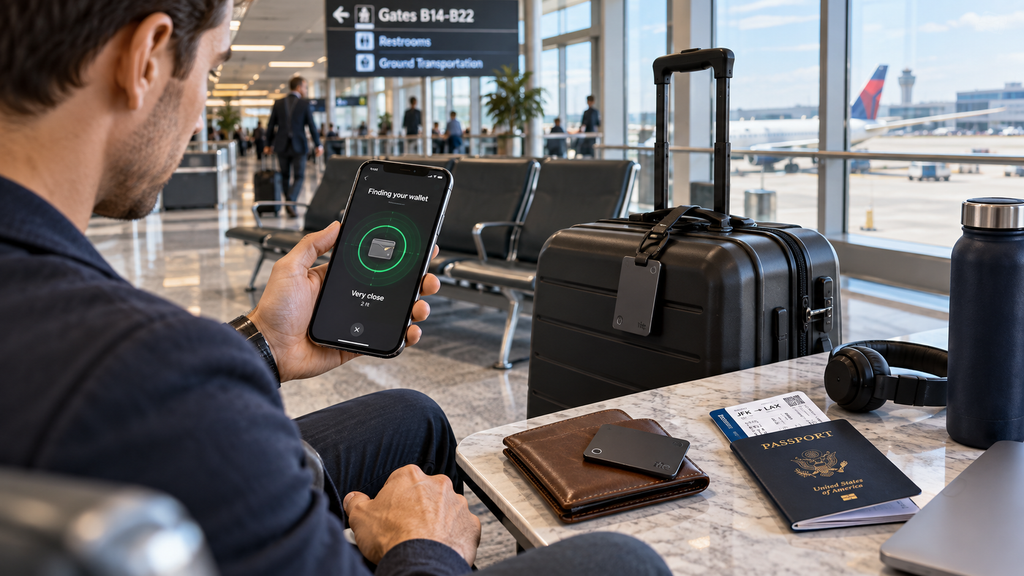
For years, Bluetooth trackers were often closely tied to a particular technology ecosystem.
That created an obvious inconvenience.
If someone moved from iPhone to Android, or vice versa, the tracker they already owned might no longer fit naturally into their new setup.
One Tracker for Different Phones
With a cross-platform design, the same card can remain useful even if your phone changes.
This is particularly attractive for households in which one person uses iPhone while another uses Android.
It can also be useful for people whose employer provides one phone platform while their personal phone uses another.
Ekster states that its Tracker Card supports compatible iPhones, Apple Watches, Android phones, and Pixel Watches through the appropriate finding network.
No Separate Tracking App
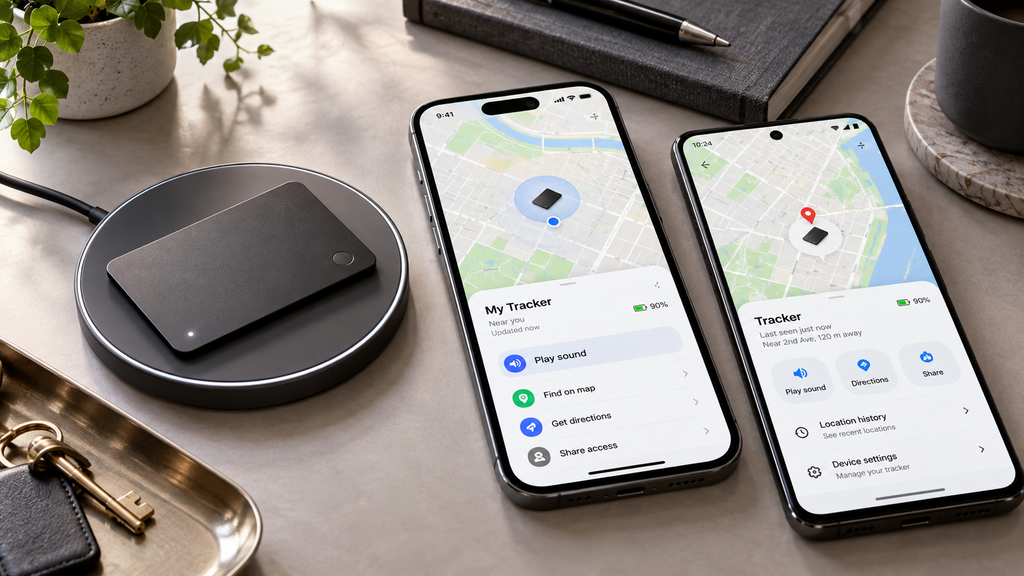
Another advantage is that users do not need a dedicated third-party tracking app for normal operation.
On iPhone, the card works through Apple’s Find My app.
On Android, it works through Google’s Find Hub.
That means users can manage the card inside a familiar system rather than maintaining another account and app just for one accessory.
How a Cross-Platform Tracker Card Works
A wallet tracker card combines nearby Bluetooth tracking with a larger device network.
Nearby Tracking
When the tracker is within Bluetooth range, your phone can communicate with it directly.
If you cannot see your wallet but believe it is nearby, you can activate the card’s built-in sound.
Ekster lists a 95 dB ringer and Bluetooth ringer range of up to 300 feet under suitable conditions. Real-world range can vary because walls, furniture, buildings, interference, and other obstacles affect Bluetooth signals.
This feature is useful when a wallet is under a couch cushion, inside a jacket, buried in a backpack, or sitting somewhere in another room.
Finding Items Farther Away
If the card is outside direct Bluetooth range, Apple’s or Google’s finding network may help update its location when compatible devices detect it.
Ekster describes its Tracker Card as using Apple’s Find My network when paired with an iPhone and Google’s Find Hub when paired with Android.
This means the tracker does not need its own cellular plan.
Instead, the larger crowdsourced network helps report location information through nearby participating devices.
Actual location availability depends on factors such as network coverage, nearby devices, connectivity, and the settings of the tracking ecosystem being used.
A Slimmer Alternative for Wallet Tracking
Size is one of the biggest advantages of a tracker card.
Round tracking tags work well when attached to keys, backpacks, or luggage, but their thickness can create a noticeable bulge inside a wallet.
A card-shaped device distributes its profile across a larger, flatter surface.
Ekster’s current Tracker Card measures approximately 3.35 by 2.13 inches and is about 0.07 inches, or 1.8 mm, thick.
That allows it to sit in many standard card slots.
Why Thickness Matters
Modern wallets are increasingly designed to stay slim.
Adding a thick tracker can defeat the purpose of using a minimalist wallet in the first place.
A thin wallet tracker card can sit alongside bank cards, identification, or business cards without requiring a special tracker pocket.
This also makes the format useful for:
- Passport holders
- Purses
- Backpacks
- Briefcases
- Jackets
- Carry-on luggage
- Travel organizers
Ekster lists wallets, purses, luggage, passports, clothing, and other items capable of holding a credit-card-sized tracker among common use cases.
Rechargeable Battery vs. Disposable Coin Cells
Battery design is another important factor when choosing a tracker.
Some tracking devices use replaceable coin-cell batteries.
Others use rechargeable batteries.
Ekster’s Tracker Card uses wireless charging and is rated for up to 10 months of battery life from a full charge. A charger is not included, but the card can use a standard compatible wireless charger.
Benefits of Wireless Charging
A rechargeable tracker eliminates the need to regularly purchase small replacement batteries.
When the battery runs low, users can place the card on a wireless charger and then return it to the wallet.
For people who already use wireless charging for phones or earbuds, this can fit naturally into an existing charging setup.
Actual battery duration can vary depending on usage and operating conditions, so users should still check battery status periodically instead of assuming the maximum rated life will apply in every situation.
Useful Features for Everyday Carry
The usefulness of a cross-platform tracker card extends beyond simply placing a dot on a map.
Several features can make it more practical for everyday use.
Left-Behind Alerts
A compatible tracking network can help alert you when an item has been left behind.
That can be particularly useful in places such as:
- Coffee shops
- Hotels
- Restaurants
- Airports
- Offices
- Rideshare vehicles
- Friends’ homes
The notification may give you an opportunity to return for the item before you travel too far away.
Loud Ringer
When the item is nearby, sound can be more useful than a map.
Ekster’s tracker includes a 95 dB ringer designed to help locate the card through items such as bags or cushions.
Last Known Location
If a wallet is not nearby, users can check its last reported position in the appropriate tracking app.
This can help answer one of the most useful questions after something goes missing: “Where did I last have it?”
Water Resistance for Everyday Accidents
Wallets and bags occasionally encounter rain, spilled drinks, wet countertops, and other accidents.
A tracker intended for everyday carry should therefore offer reasonable resistance to moisture.
Ekster rates its current Tracker Card at IP68 and states that it is protected against immersion in water up to 1.5 meters for 30 minutes under specified conditions.
Water resistance does not mean a device should intentionally be exposed to water whenever possible, but the rating provides useful protection against common accidents.
Cross-Platform Tracker Cards for Travel
Travel is one of the strongest use cases for tracking technology.
A trip may involve wallets, passports, backpacks, carry-on bags, checked luggage, hotel rooms, rental cars, and multiple transfers between locations.
A slim tracker can be placed inside several types of travel gear without adding significant weight or bulk.
Wallet and Passport Tracking
A traveler’s wallet and passport are among the most important items to protect.
A card-shaped tracker can fit easily into a wallet or passport organizer.
Luggage Tracking
A tracker card can also be slipped into an interior luggage pocket.
If the bag is separated from the traveler, location information from the relevant Find My or Find Hub network may help show where it was last detected.
A tracker should not be considered a replacement for airline baggage systems, identification tags, or normal travel precautions, but it can provide an additional way to monitor belongings.
Tracker Card vs. Traditional Tracking Tag
Both designs have advantages.
Choose a Tracker Card When
A card format makes sense when you want to track:
- A wallet
- Passport holder
- Slim purse
- Laptop sleeve
- Travel organizer
- Jacket pocket
- Flat interior luggage compartment
The main advantage is the thin profile.
Choose a Tracking Tag When
A tag-style tracker may be more convenient for:
- Keys
- Pet collars
- Bicycles
- Equipment
- Bag handles
- Keychains
Tags usually include an attachment point that makes them easier to secure externally.
The right format depends on the item being tracked rather than one design being universally better.
Does the Ekster Tracker Card Have Precision Finding?
No.
Ekster states that its Tracker Card does not support Apple’s UWB-based Precision Finding feature. The company explains that third-party wallet cards do not currently have access to that same AirTag-style implementation. Instead, the Tracker Card uses its audible ringer to help users locate nearby items.
This is worth understanding before purchase.
If AirTag-style directional arrows and distance measurements are essential to you, a card tracker will behave differently.
If your priority is a thin wallet-friendly format with normal map tracking and an audible nearby search feature, the tradeoff may be reasonable.
No Subscription Requirement
Some smart devices require monthly or annual service fees.
The Ekster Tracker Card does not.
According to the company, tracking works through Apple Find My or Google Find Hub without an additional subscription or separate paid tracking plan.
For buyers comparing long-term costs, that means the primary expense is the hardware itself rather than an ongoing service charge.
What to Look for When Buying a Tracker Card
Not all tracker cards offer the same features.
Before buying one, check several specifications.
Platform Compatibility
Confirm whether it works with:
- Apple Find My
- Google Find Hub
- A proprietary tracking app
- Only one operating system
If you may change phones in the future, cross-platform compatibility can provide additional flexibility.
Thickness
For wallet use, thickness matters significantly.
A device that technically fits into a card slot may still make the wallet uncomfortable if it is several times thicker than a normal card.
Battery Type
Decide whether you prefer:
- Rechargeable battery
- Replaceable battery
- Non-replaceable disposable device
Water Resistance
Check the IP rating if the device will travel frequently or remain in a wallet exposed to daily life.
Ringer Volume
A loud ringer can make finding the device easier when it is nearby but hidden.
Subscription Costs
Check whether core tracking functions require an ongoing fee.
Frequently Asked Questions About Cross-Platform Tracker Cards
What is a cross-platform tracker card?
A cross-platform tracker card is a thin Bluetooth tracking device designed to work with more than one smartphone ecosystem. Ekster’s Tracker Card can be configured for either Apple Find My or Google Find Hub.
Does the Ekster Tracker Card work with iPhone and Android?
Yes. The same physical card supports both platforms. However, it connects to only one network at a time.
Can I use Apple Find My and Google Find Hub simultaneously?
No. You must choose one network. To switch, remove or reset the tracker from the current network and set it up on the other platform.
How thin is the Ekster Tracker Card?
The current model is approximately 0.07 inches, or 1.8 mm, thick and is roughly the size of a credit card.
How long does the battery last?
Ekster rates the current Tracker Card for up to 10 months from a full charge.
Is the tracker rechargeable?
Yes. It supports wireless charging using a compatible wireless charger.
Does it require a monthly subscription?
No. Ekster states that there is no subscription fee for the Tracker Card.
Can I use a tracker card in luggage?
Yes. A tracker card can be placed inside luggage, backpacks, purses, passport holders, and other items with a suitable pocket or card slot.
Is the Ekster Tracker Card waterproof?
It has an IP68 rating, with Ekster specifying protection against water immersion up to 1.5 meters for 30 minutes under the rated conditions.
Does it have AirTag-style Precision Finding?
No. It uses map-based location information and a loud proximity ringer rather than Apple’s UWB Precision Finding system.
Conclusion
Tracking technology is most useful when it fits naturally into everyday life.
For wallets in particular, traditional round trackers can create unnecessary bulk. A cross-platform tracker card solves that problem by placing tracking hardware into a thin, card-shaped device that can sit inside a normal wallet slot.
Ekster’s current Tracker Card combines compatibility with either Apple Find My or Google Find Hub, a 1.8 mm profile, wireless charging, up to 10 months of rated battery life, a 95 dB ringer, IP68 water resistance, and no subscription requirement.
Its biggest advantage is flexibility. An iPhone user can configure it for Find My, while an Android user can configure the same hardware for Find Hub. If you later change ecosystems, the card can be reset and paired with the other supported network instead of requiring a completely different tracker.
For people who frequently misplace a wallet, travel with valuable documents, carry important items in a backpack, or simply want another layer of protection for everyday essentials, a slim tracker card can be a practical addition to an everyday carry setup.
The right tracker should ultimately fit both your phone and the item you want to protect. If keeping bulk to a minimum while retaining access to a major finding network is the priority, a cross-platform card-style tracker offers a strong balance of convenience, portability, and everyday usefulness.

