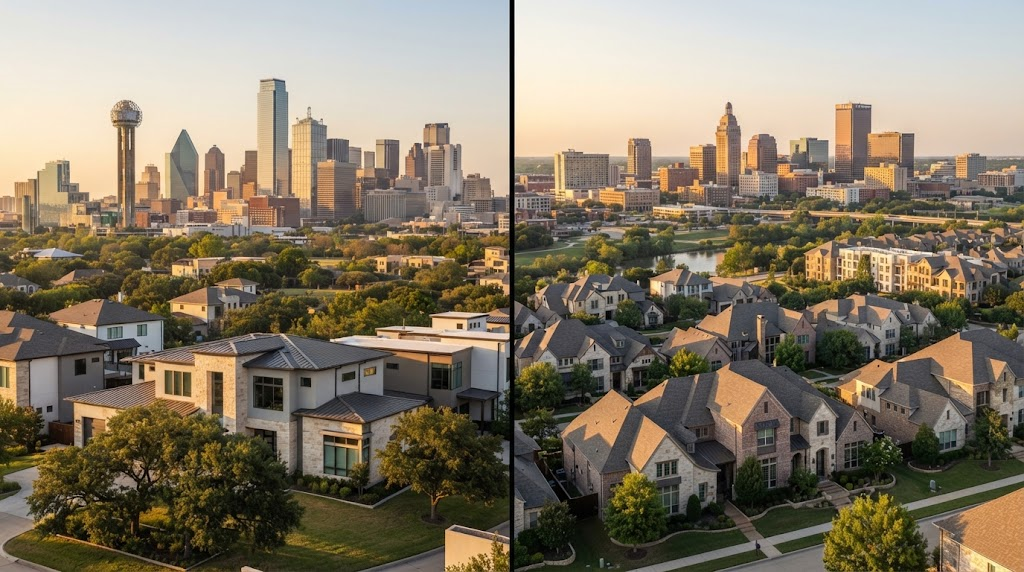
The Dallas-Fort Worth housing market entered the second half of 2026 looking very different from the highly competitive real estate environment buyers experienced just a few years ago.
More homes are available than during the extreme inventory shortages of the pandemic era, buyers are taking more time to make decisions, and sellers are increasingly aware that aggressive pricing may not produce immediate offers. At the same time, the market has not experienced the dramatic collapse that some observers once expected.
Instead, Dallas-Fort Worth appears to be moving toward a more balanced environment.
The Texas Real Estate Research Center’s August 2026 Housing Insight report described DFW as moving closer to price stabilization after an extended period of softness. Fort Worth-Arlington was particularly notable because it had already recorded consecutive months of year-over-year price gains by June. Texas Real Estate Research Center
Statewide sales were also strengthening during the first half of the year. Texas recorded 34,956 closed sales in June, an 8.6% increase from June 2025, while year-to-date sales were 3.2% higher. Texas Real Estate Research Center
For DFW buyers, sellers, investors, and homeowners, the key question is no longer simply whether the market is rising or falling. The more useful question is how changing inventory, mortgage rates, home prices, and local demand are reshaping individual real estate decisions.
Understanding the Dallas-Fort Worth Housing Market in 2026

Dallas-Fort Worth is one of the largest metropolitan areas in the United States, and its housing market includes many very different communities.
Dallas, Plano, Frisco, McKinney, Arlington, Fort Worth, Denton, Grapevine, Mansfield, and surrounding cities do not necessarily move at exactly the same pace.
That is important when interpreting regional housing statistics.
A broad DFW trend might show modest price movement, while a particular neighborhood could still experience strong competition because of schools, employment access, housing type, or limited inventory.
Likewise, new construction may create more buyer choices in one suburb while an established neighborhood several miles away remains supply constrained.
The best way to understand the market is therefore to use metro-level data as a starting point and then evaluate conditions in the specific area where you plan to buy or sell.
DFW Home Prices Are Moving Toward Stabilization
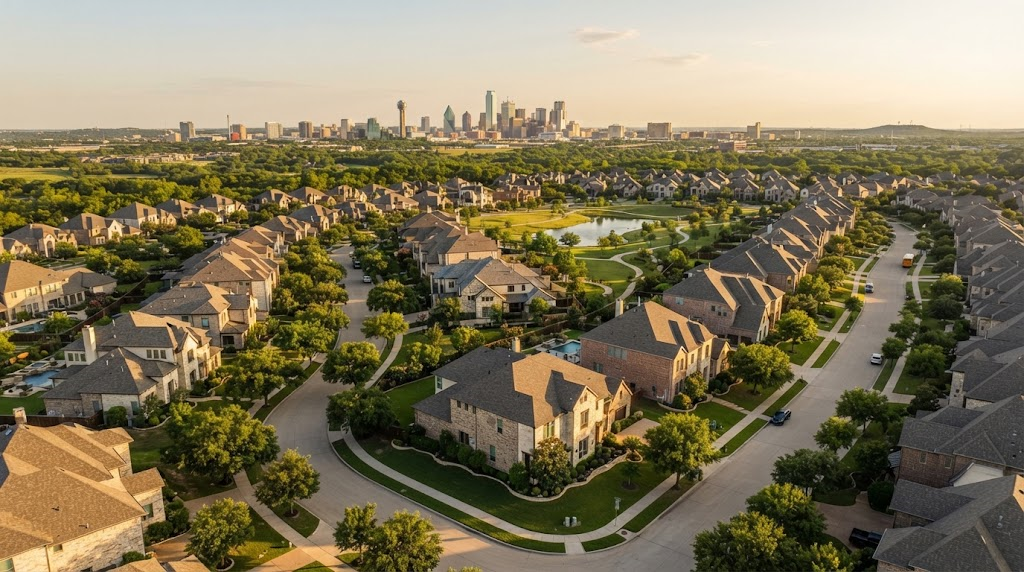
One of the most important developments in 2026 has been the gradual moderation in home-price declines.
The August Texas Housing Insight report noted that Dallas-Plano was showing further signs of stabilization by June, while Fort Worth-Arlington recorded its second consecutive month of year-over-year price gains. Overall, the Center described DFW as being in transition after an extended period of price softening. Texas Real Estate Research Center
This matters because price stabilization can change behavior on both sides of a transaction.
What Stabilizing Prices Mean for Buyers

Buyers may still have more negotiating power than they did during the intense bidding wars of earlier years, but waiting indefinitely for a major price collapse may not necessarily produce better opportunities.
If prices flatten while mortgage rates remain elevated, affordability may improve only slowly.
Buyers should therefore focus on the total monthly cost rather than attempting to perfectly time the bottom of the market.
What Stabilizing Prices Mean for Sellers
Sellers should not interpret stabilization as a return to automatic appreciation.
Homes that are overpriced may still remain on the market longer than appropriately priced alternatives.
Condition, presentation, neighborhood competition, incentives, and the original list price can all influence how quickly a home sells.
Housing Inventory Gives DFW Buyers More Choice
Inventory is another major factor shaping the 2026 market.
Across Texas, active inventory reached approximately 153,800 listings at the end of June. Statewide supply stood at about 5.4 months, compared with 5.3 months in May. Texas Real Estate Research Center
DFW followed a somewhat different pattern.
The August report noted that active listings and months of supply in DFW were actually lower than a year earlier, even as statewide inventory remained relatively balanced. New-listing activity in DFW also trailed the previous year on a year-to-date basis through June. Texas Real Estate Research Center
That is an important distinction.
The market has more choice than the extremely tight conditions seen several years ago, but that does not mean inventory is expanding without limit.
A later September update showed DFW active inventory down 4.3% year over year in July, with approximately 4.6 months of supply. Texas Real Estate Research Center
This suggests that demand is still absorbing a meaningful portion of available homes.
Mortgage Rates Remain the Biggest Affordability Challenge
Home prices receive a great deal of attention, but mortgage rates may have an even larger effect on many buyers’ budgets.
The Texas Real Estate Research Center reported that the average 30-year mortgage rate was about 6.66% in August 2026. Texas Real Estate Research Center
Rates at that level can significantly change monthly payments compared with the unusually low financing costs available earlier in the decade.
For example, two buyers purchasing the same home at the same price can face very different monthly payments depending on their mortgage rate, down payment, insurance, taxes, and loan structure.
Buyers Are Adapting to Higher Rates
Despite expensive financing, housing activity improved during the first half of 2026.
The August report said buyers appeared increasingly willing to operate within the current rate environment as inventory became more stable and choices improved. Texas Real Estate Research Center
That does not mean affordability concerns have disappeared.
Instead, households may be adjusting expectations by considering:
- Smaller homes
- Different suburbs
- Larger down payments
- Seller concessions
- Mortgage-rate buydowns
- New construction incentives
- Longer ownership periods
The financing strategy has become almost as important as the purchase price itself.
Dallas and Fort Worth Are Not Moving Identically
One of the most useful insights from the 2026 data is the difference between different parts of DFW.
Dallas-Plano
Dallas-Plano experienced price pressure during the earlier market slowdown, but the pace of decline was moderating by mid-2026.
The Texas Real Estate Research Center described this portion of the metro as moving closer to stabilization. Texas Real Estate Research Center
This can create opportunities for buyers who previously felt priced out, particularly when sellers are willing to negotiate.
However, highly desirable neighborhoods can still behave differently from overall metro statistics.
Fort Worth-Arlington
Fort Worth-Arlington showed stronger price momentum.
By June, the market had recorded two consecutive months of year-over-year home-price gains. The following report said that streak had reached four consecutive months by July. Texas Real Estate Research Center
That does not necessarily mean Fort Worth has returned to rapid appreciation.
Instead, it suggests that downward price pressure has eased more quickly there than in some other major Texas markets.
How Long Are Homes Taking to Sell?
Homes are generally taking longer to sell than they did during the most competitive market periods.
Statewide, homes sold in June 2026 spent an average of 62 days on the market, compared with 60 days one year earlier. Unsold inventory had been available for an average of about 90 days. Texas Real Estate Research Center
The difference between sold and unsold properties highlights an important lesson.
Pricing and presentation matter.
A home listed at a realistic price and prepared properly for buyers may still sell reasonably quickly, while an overpriced property can remain available considerably longer.
Sellers should therefore pay close attention to recent comparable sales rather than relying only on what neighboring homes sold for several years ago.
Price Reductions Are Still Part of the Market
Seller price adjustments remain common in a slower market.
Across Texas, the median seller price reduction in June was approximately $12,000, equal to about 3.3% of the initial listing price. Texas Real Estate Research Center
For DFW buyers, this reinforces the value of researching how long a property has been listed and whether the seller has already adjusted the asking price.
A longer listing period can sometimes create room for negotiation around:
- Purchase price
- Closing costs
- Repairs
- Home warranties
- Mortgage-rate buydowns
- Other seller concessions
However, buyers should not assume every seller is under pressure.
A well-priced home in a desirable location can still attract multiple interested buyers.
New Construction Continues to Influence DFW Real Estate
Dallas-Fort Worth has experienced extensive suburban development for years.
New communities around the metro can increase housing options and create competition for existing-home sellers.
Builders may also offer incentives that individual homeowners cannot easily match.
These can include financing promotions, closing-cost assistance, design upgrades, or temporary rate buydowns.
For buyers comparing new and existing homes, it is important to look beyond the advertised base price.
Consider property taxes, homeowners association fees, commuting distance, landscaping costs, lot premiums, upgrades, and future development around the property.
Is DFW a Buyer’s or Seller’s Market?
The simplest answer is that it is becoming more balanced.
During an extreme seller’s market, homes sell quickly, inventory is very limited, and buyers often compete aggressively.
During a strong buyer’s market, inventory is abundant and sellers may need major concessions to complete a sale.
DFW in 2026 sits somewhere between those extremes.
Inventory around the metro gives buyers substantially more breathing room than during the pandemic housing boom, yet supply is not expanding uncontrollably. Prices are also showing signs of stabilization rather than continuing to fall sharply.
That means negotiation is important, but good properties can still sell.
Advice for DFW Homebuyers in 2026
Buyers should begin with financing.
Get preapproved, understand your realistic monthly budget, and compare lenders before focusing heavily on individual homes.
Remember to include:
- Principal and interest
- Property taxes
- Homeowners insurance
- HOA fees
- Maintenance
- Possible mortgage insurance
Texas property taxes can make the monthly ownership cost significantly different from what the sale price alone suggests.
Buyers should also avoid treating every DFW community the same.
Review neighborhood-level comparable sales, inventory, school districts, commute times, future development, and property condition before making an offer.
Advice for DFW Home Sellers
Sellers need realistic expectations.
A strategy that worked during the 2021 or 2022 housing boom may not work in 2026.
Homes should be priced using recent comparable properties rather than optimistic assumptions.
Presentation also matters more when buyers have choices.
Basic improvements such as cleaning, decluttering, repairing visible defects, improving landscaping, and using professional photography can help a listing compete.
If the property receives little interest during the first few weeks, sellers should evaluate price and condition rather than assuming buyers simply have not noticed the listing.
What Investors Should Watch
Real estate investors should pay attention to more than home prices.
Rental demand, property taxes, insurance premiums, maintenance expenses, financing costs, and neighborhood-level supply can significantly affect returns.
A property purchased below its previous peak value is not automatically a good investment if carrying costs are high.
Investors should calculate:
- Expected rent
- Vacancy
- Property management
- Taxes
- Insurance
- Repairs
- Financing
- Capital expenditures
DFW’s large and diverse economy continues to make the region important for long-term housing demand, but individual investments should still be evaluated carefully.
Frequently Asked Questions About the Dallas-Fort Worth Housing Market
Is the Dallas-Fort Worth housing market crashing?
Current data does not indicate a broad DFW housing crash. The Texas Real Estate Research Center describes the market as moving toward stabilization after a period of price softness. Texas Real Estate Research Center
Are DFW home prices going down?
Some parts of DFW experienced year-over-year price declines, but those declines have been moderating. By July 2026, overall DFW prices were only about 0.2% below year-earlier levels, while Fort Worth-Arlington was posting annual gains. Texas Real Estate Research Center
Is 2026 a good time to buy a home in Dallas-Fort Worth?
It can be, depending on your finances and long-term plans. Buyers currently have more choice and negotiating opportunities than during the most competitive years, although mortgage rates remain a major affordability challenge.
Is Dallas or Fort Worth performing better?
Recent data has shown stronger price momentum in Fort Worth-Arlington, while Dallas-Plano has been moving toward stabilization following earlier declines. Texas Real Estate Research Center
How much housing inventory is available in DFW?
The September 2026 Texas Housing Insight update reported approximately 4.6 months of supply in DFW for July, with active inventory down 4.3% year over year. Texas Real Estate Research Center
Are sellers reducing home prices?
Yes. Price reductions remain part of the Texas market. Statewide, the median seller price cut was around $12,000 in June 2026. Texas Real Estate Research Center
Are mortgage rates still affecting DFW buyers?
Yes. Average 30-year mortgage rates were around 6.66% in August 2026, keeping monthly payments and affordability under pressure. Texas Real Estate Research Center
Should buyers wait for mortgage rates to fall?
Nobody can reliably predict the perfect time to buy. Buyers should focus on affordability, financial stability, expected ownership duration, and whether a property fits their needs rather than relying entirely on forecasts.
Conclusion
The Dallas-Fort Worth housing market in 2026 is increasingly defined by balance rather than extreme conditions.
The rapid price growth and severe inventory shortages of earlier years have faded, but DFW has also avoided the type of dramatic market breakdown some buyers expected.
The Texas Real Estate Research Center’s August report showed Dallas-Plano moving closer to price stabilization and Fort Worth-Arlington already returning to modest year-over-year price gains. Inventory remains sufficient to provide buyers with greater choice, while demand continues to absorb much of the available supply. Texas Real Estate Research Center
Mortgage rates remain the largest challenge. Higher borrowing costs affect purchasing power even when home prices soften, making financing strategy an essential part of buying a home in 2026.
For buyers, the current environment provides more time to compare properties, negotiate, and carefully evaluate neighborhoods. Sellers, meanwhile, need realistic pricing and strong presentation because buyers have more alternatives.
The most important takeaway is that Dallas-Fort Worth is not one single housing market. Dallas, Fort Worth, Plano, Arlington, Frisco, McKinney, and surrounding communities can experience different inventory and pricing trends.
Whether you are buying, selling, or investing, use regional data to understand the broader direction—but make decisions using current neighborhood-level information, financing costs, and your own long-term goals.