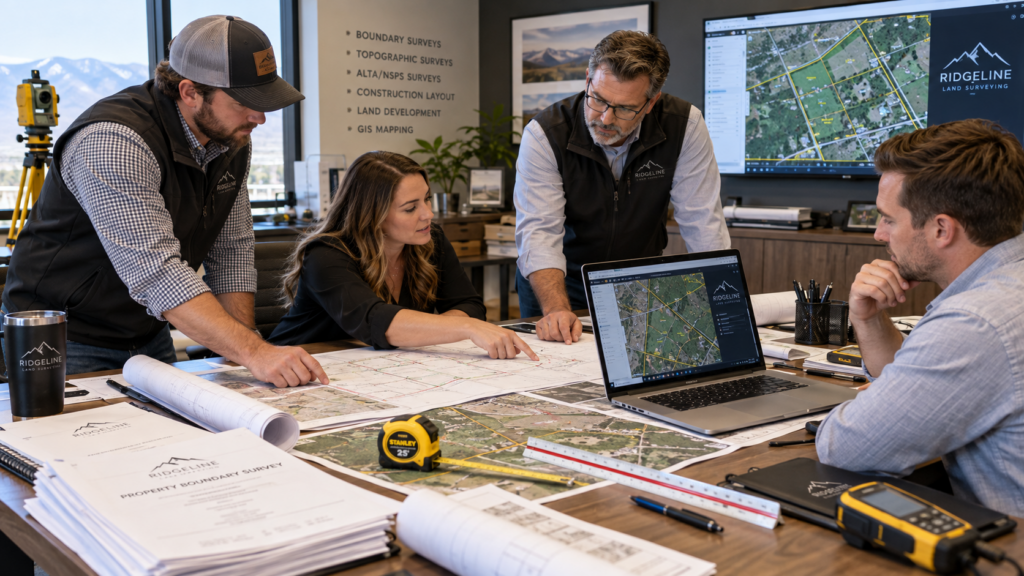
Buying property, building a home, developing land, or resolving a boundary question often requires more than looking at a property deed or online map. Accurate information about the land itself can make a significant difference when important decisions depend on property boundaries, measurements, elevations, or existing improvements.
This is where experienced land surveyors play an important role.
Land surveying is a specialized profession that uses measurements, research, mapping, and technical equipment to establish and document information about a particular piece of land. Surveyors can help property owners, builders, developers, architects, engineers, attorneys, and real estate professionals better understand the physical characteristics and legal boundaries associated with a property.
For homeowners in the USA, professional surveying can be particularly important when buying property, constructing improvements, installing fences, planning additions, subdividing land, or dealing with questions about property lines.
A professional survey is not simply a drawing of a property. It is the result of a process that can involve reviewing records, conducting field measurements, analyzing existing evidence, and preparing documentation appropriate for the specific project.
What Do Land Surveyors Actually Do?
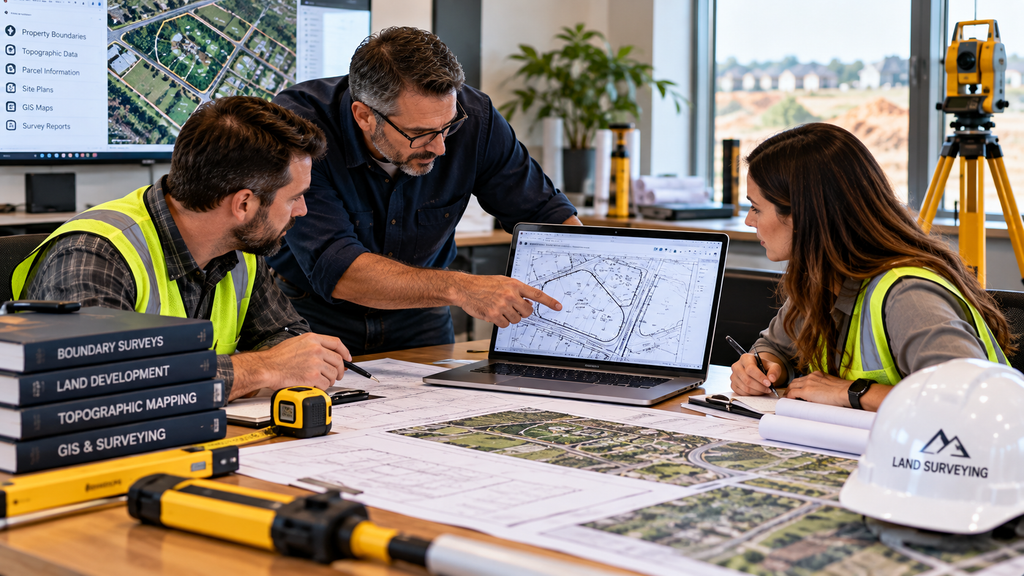
Land surveyors are professionals who measure and document land and property features. Their work can involve both fieldwork and office-based research and analysis.
Depending on the project, a surveyor may examine:
- Property boundaries
- Buildings and structures
- Fences and walls
- Roads and driveways
- Easements
- Utilities
- Elevations
- Trees and other site features
- Existing improvements
The exact scope depends on the type of survey requested.
Field Measurements and Site Investigation
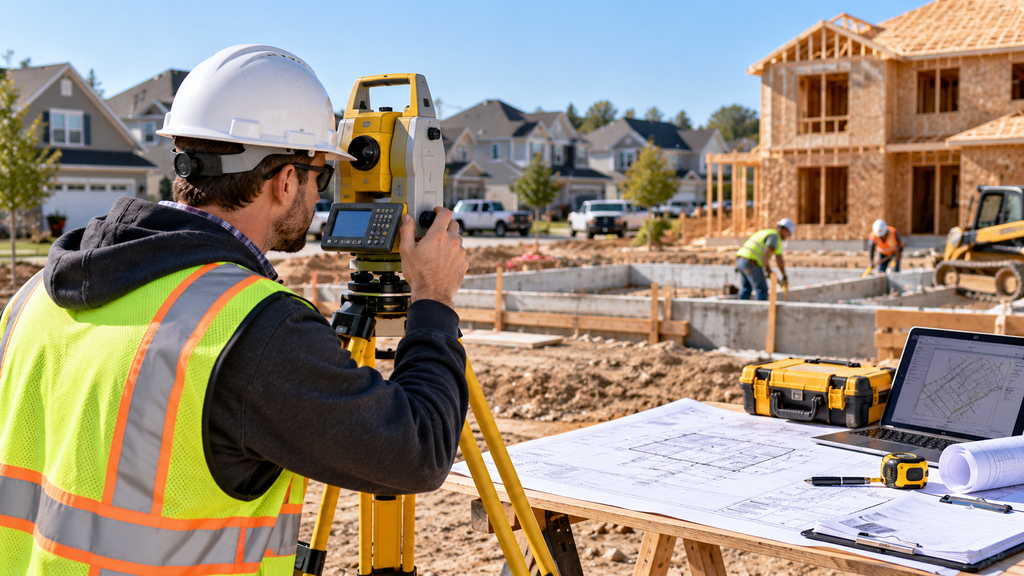
Surveying typically begins with gathering information about the property and identifying the features that need to be measured.
Modern surveyors may use equipment such as total stations, GNSS/GPS technology, digital levels, data collectors, and other specialized instruments.
These tools allow survey professionals to collect precise measurements that can later be processed and represented on survey drawings or plans.
Researching Existing Property Records
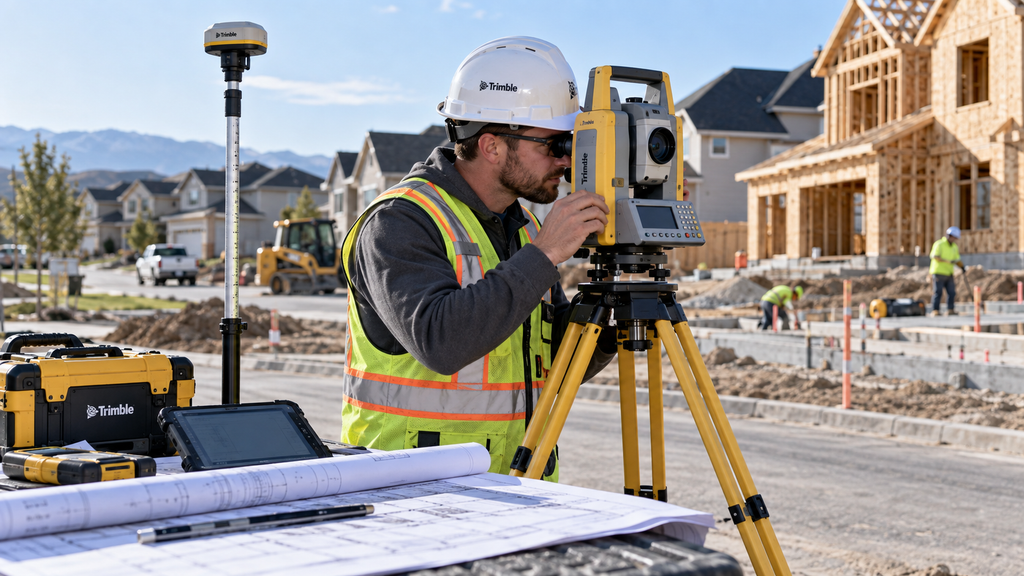
Field measurements are only one part of professional surveying.
Surveyors may also review available records, previous surveys, deeds, plats, maps, easements, and other relevant documentation.
This combination of historical information and current field evidence can help create a more complete understanding of the property.
Why Experience Matters When Choosing a Land Surveyor
Not every property presents the same challenges.
A straightforward residential property may require a different approach from a large development site, irregular parcel, commercial property, or property with complicated boundary history.
Working with experienced land surveyors can provide valuable expertise when a project involves unusual conditions or multiple sources of information.
Understanding Complex Property Boundaries
Property boundaries are not always obvious from fences, landscaping, driveways, or other visible features.
For example, a fence may not necessarily sit directly on a legal property boundary. Similarly, the apparent edge of a driveway or lawn does not automatically establish where one parcel ends and another begins.
A professional surveyor examines available evidence rather than relying solely on visual assumptions.
Identifying Potential Issues Early
Professional surveying can help identify potential issues before they become more expensive problems.
For example, a survey may reveal questions involving:
- Encroachments
- Boundary discrepancies
- Easements
- Unrecorded improvements
- Differences between physical features and recorded information
Identifying such matters early can give property owners an opportunity to investigate them before construction or a transaction progresses further.
Common Types of Land Surveys
Different projects require different types of surveys. Property owners should discuss their specific objectives with a qualified survey professional before ordering a survey.
Boundary Survey
A boundary survey focuses primarily on determining and documenting property boundaries.
This type of survey can be useful when:
- Buying or selling property
- Building near a property line
- Installing a fence
- Resolving boundary questions
- Planning improvements
A boundary survey can provide information that is more reliable than estimating property lines from online maps or existing landscaping.
Topographic Survey
A topographic survey focuses on the physical characteristics and elevations of a site.
It may document features such as:
- Ground elevations
- Slopes
- Buildings
- Roads
- Drainage features
- Other physical improvements
Architects, engineers, and developers may use topographic information when planning construction or land development.
Construction Survey
Construction surveying helps contractors and construction teams establish the locations and elevations needed for building projects.
Surveyors may provide layout information for foundations, structures, roads, utilities, and other improvements depending on the project requirements.
Accurate construction layout can help ensure that planned improvements are positioned according to the approved design.
ALTA/NSPS Land Title Survey
For certain commercial real estate transactions, an ALTA/NSPS Land Title Survey may be requested.
These surveys follow standards developed by the American Land Title Association and the National Society of Professional Surveyors.
They can provide detailed information relevant to title matters, property boundaries, improvements, easements, and other site conditions.
The exact requirements depend on the project, lender, title company, and applicable standards.
When Should You Hire Experienced Land Surveyors?
Many people wait until a problem occurs before considering a land survey. In reality, surveying can be useful much earlier in the property process.
Before Buying Property
A property purchase can represent one of the largest financial commitments a person makes.
Understanding the property and its boundaries before completing a transaction can help buyers make better-informed decisions.
Depending on the circumstances, a survey may help identify issues that are not immediately visible during a property viewing.
Before Building a Fence
Fence projects are one of the most common situations where homeowners become concerned about property lines.
Installing a fence based on an assumption about the boundary can create disputes if its location is later challenged.
A professional survey can provide more reliable information about where the boundary is located.
Before Building an Addition
Planning a garage, home addition, pool, deck, shed, or other improvement may require an understanding of property boundaries and applicable setback requirements.
A survey can help provide the site information needed for planning.
However, local building and zoning authorities may have additional requirements, so property owners should confirm the applicable rules before construction.
During Land Development
Developers often need detailed information about a site before designing and constructing improvements.
Surveying can support planning for subdivisions, roads, drainage, utilities, buildings, and other infrastructure.
How Land Surveying Supports Real Estate Transactions
Real estate transactions involve numerous documents and professionals. Survey information can be an important part of that process.
Helping Buyers Understand the Property
A property listing may show approximate dimensions or photographs, but these materials do not replace a professional survey.
A survey can provide more detailed information about the physical property and its relationship to surrounding features.
Supporting Title and Closing Processes
Depending on the transaction, a lender, title company, attorney, or buyer may request a particular type of survey.
Commercial transactions can involve especially detailed surveying requirements.
Because requirements vary by property and jurisdiction, it is useful to determine early in the transaction whether a survey is needed and what type is appropriate.
Modern Technology Used by Experienced Land Surveyors
Land surveying has evolved significantly over the years.
While traditional surveying principles remain important, modern technology can improve the speed, detail, and efficiency of field data collection.
GPS and GNSS Equipment
Satellite-based positioning technology allows surveyors to collect highly accurate location information when appropriate conditions and equipment are available.
Total Stations
Total stations combine electronic distance measurement with precise angle measurement.
They remain an important tool for many surveying applications, particularly where detailed site measurements are required.
3D Laser Scanning
Some surveying projects use laser scanning technology to capture large amounts of spatial information.
The resulting data can support detailed representations of buildings, structures, and terrain.
Drone Surveying
Unmanned aerial systems can also be used for certain surveying and mapping applications.
Drones can capture aerial imagery and other data across large areas efficiently, although their use is subject to applicable regulations, site conditions, and project requirements.
Technology can make surveying more efficient, but professional judgment remains essential. Equipment produces measurements; experienced professionals determine how those measurements should be interpreted and documented.
What Should You Look for in a Land Surveying Company?
Choosing a surveyor involves more than comparing prices.
Property owners should consider several factors before selecting a professional.
Appropriate Licensing and Qualifications
Land surveying is regulated at the state level in the USA, and requirements vary by jurisdiction.
When a project requires a legally recognized boundary determination or signed survey, make sure the professional is appropriately licensed for the state and type of work involved.
Relevant Project Experience
Ask whether the surveyor has experience with projects similar to yours.
A residential boundary survey, commercial development, construction project, and large land subdivision can involve very different requirements.
Clear Scope of Work
Before hiring a surveyor, make sure you understand what the survey will include.
Ask:
- What type of survey is recommended?
- What features will be measured?
- What documents will be provided?
- How long is the expected turnaround?
- Are additional services available if issues are discovered?
A clear scope helps avoid misunderstandings.
Why Cutting Corners on Surveying Can Be Expensive
Property owners sometimes look for the lowest-cost surveying option. While budget is a legitimate consideration, price should not be the only factor.
An inaccurate or incomplete survey can potentially create much larger costs later.
For example, discovering a boundary problem after a structure has been built may require redesign, relocation, legal consultation, or other corrective work.
Investing in appropriate professional surveying at the right stage of a project can help reduce uncertainty.
Land Surveying for Homeowners vs. Developers
The needs of a homeowner and a large-scale developer can be very different.
A homeowner may need a boundary survey before installing a fence or building an addition.
A developer may require detailed topographic, boundary, construction, and subdivision surveying throughout multiple stages of a project.
This is why choosing experienced land surveyors with relevant project experience can be particularly valuable.
The right professional should understand the purpose of the survey and tailor the work to the project’s actual requirements.
Frequently Asked Questions About Experienced Land Surveyors
What does an experienced land surveyor do?
An experienced land surveyor measures and analyzes land and property features, researches relevant records, and prepares survey documents based on the requirements of the specific project.
Why should I hire experienced land surveyors?
Experienced professionals may be better equipped to handle complex boundaries, difficult site conditions, historical property records, construction requirements, and other project-specific challenges.
How much does a land survey cost in the USA?
The cost varies considerably depending on location, property size, survey type, terrain, research requirements, and project complexity. It is best to request a detailed quote based on the specific property and scope of work.
Do I need a survey when buying a house?
Not every residential purchase requires a new survey. Whether one is appropriate depends on the property, transaction, lender, title requirements, and local circumstances. Buyers should ask their real estate, title, or legal professionals whether a survey is recommended or required.
Can a surveyor determine my property line?
A properly licensed surveyor can perform the type of boundary survey appropriate for the property and applicable requirements. Property boundaries should not be assumed based only on fences, landscaping, online maps, or visual observations.
Is a land survey the same as a home inspection?
No. A home inspection generally evaluates the condition of a property’s structures and systems, while a land survey focuses on location, measurements, boundaries, and other land-related information.
How long does a land survey take?
Turnaround depends on the property, survey type, records that must be researched, site conditions, and the surveyor’s workload. Simple projects may be completed relatively quickly, while complex surveys can take considerably longer.
Conclusion
Land is one of the most valuable assets people and businesses own, which makes accurate property information extremely important. Whether you are purchasing a home, installing a fence, planning an addition, developing land, or preparing a commercial project, professional surveying can provide information that is difficult to establish through visual inspection alone.
Experienced land surveyors bring together field measurements, property research, technical knowledge, and professional judgment to create reliable information about a site.
Modern surveying technology has made it possible to collect increasingly detailed information through tools such as GNSS equipment, total stations, laser scanners, and drones. However, technology is only part of the process. Experience, appropriate licensing, careful research, and an understanding of the project’s requirements remain essential.
Before hiring a surveyor, determine what type of survey you need, confirm the professional’s licensing and experience, understand the scope of work, and request a clear estimate.
Whether the project involves a single-family property or a large development site, obtaining accurate land information at the right time can help property owners, builders, developers, and other professionals make more informed decisions and avoid unnecessary complications.