
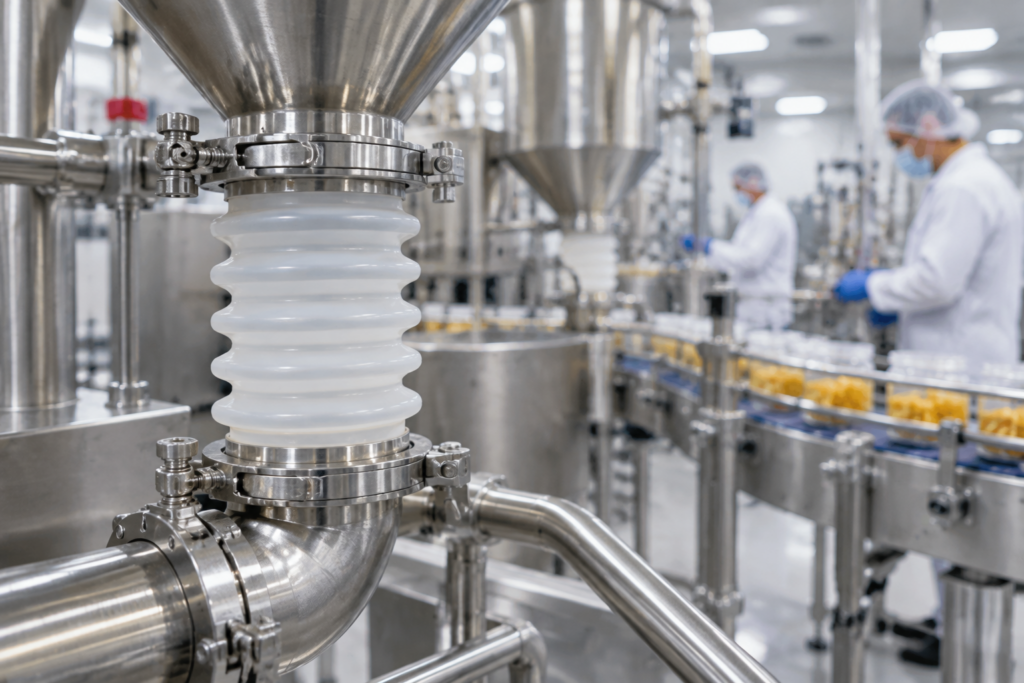
The food processing industry depends on reliable, hygienic, and durable components to maintain product safety and operational efficiency. Every part used in food manufacturing equipment must meet strict cleanliness requirements because even small contamination risks can affect product quality and consumer safety.
Among these important components, food-grade silicone bellows play a critical role in protecting machinery, maintaining flexibility, and supporting sanitary processing environments. These specialized silicone components are designed to handle demanding conditions found in food production facilities, including temperature changes, chemical exposure, repeated movement, and strict hygiene requirements.
Unlike standard rubber bellows, food-grade silicone bellows are manufactured using silicone materials specifically selected for applications where safety, cleanliness, and durability are essential. They are commonly used in food processing equipment, pharmaceutical machinery, beverage production systems, packaging machines, and other industries requiring contamination-resistant solutions.
This guide explains what food-grade silicone bellows are, their advantages, applications, safety considerations, and important factors to consider when selecting the right product for your equipment.
What Are Food-Grade Silicone Bellows?
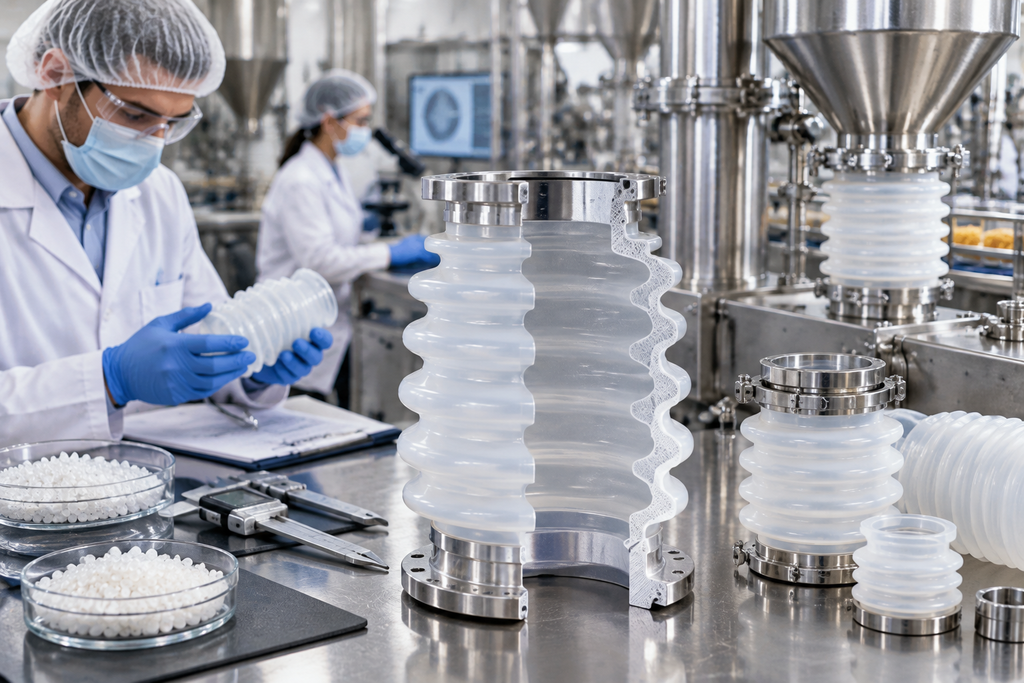
Food-grade silicone bellows are flexible protective components made from silicone rubber that meets requirements for use in food-related applications. Their primary purpose is to provide protection, flexibility, and sealing performance in machinery where movement, vibration, pressure changes, or environmental exposure occur.
A bellows design features a series of flexible folds that allow expansion and compression while maintaining protection against dust, moisture, chemicals, and other contaminants.
In food processing equipment, these components help protect moving parts while preventing external contaminants from entering sensitive areas of machinery.
Common functions of food-grade silicone bellows include:
- Protecting machine shafts and moving components
- Preventing contamination from entering equipment
- Providing flexible connections between components
- Absorbing movement and vibration
- Supporting hygienic equipment designs
- Improving equipment lifespan
Because food manufacturing requires strict sanitation procedures, materials used in these environments must be safe, reliable, and easy to clean.
Why Silicone Is Used for Food Processing Applications
Silicone rubber has become a preferred material for many food and beverage applications because of its unique combination of properties.
Unlike many traditional rubber materials, silicone performs well in extreme temperatures and demanding environments.
Excellent Temperature Resistance
Food processing equipment often experiences high temperatures during cooking, sterilization, cleaning, and sanitation processes.
Food-grade silicone bellows can maintain flexibility and performance across a wide temperature range, making them suitable for applications involving:
- Heating systems
- Steam cleaning
- Hot food processing
- Industrial ovens
- Sterilization procedures
This temperature stability helps reduce material failure and extends component life.
Hygienic and Safe Material Properties
Food-grade silicone is designed for environments where cleanliness is essential. It typically has a smooth surface that reduces areas where bacteria and contaminants can accumulate.
The material can be manufactured to meet food safety requirements, depending on the specific formulation and certifications provided by the manufacturer.
Resistance to Chemicals and Cleaning Agents
Food processing equipment is regularly exposed to cleaning chemicals, detergents, and sanitizing solutions.
High-quality silicone materials offer resistance against many common cleaning substances, helping components maintain their performance during repeated sanitation cycles.
Flexibility and Durability
The flexible design of silicone bellows allows them to expand, compress, and move repeatedly without easily cracking or losing shape.
This makes them useful in equipment where mechanical movement occurs continuously.
Key Benefits of Food-Grade Silicone Bellows
Food-grade silicone bellows provide several advantages for manufacturers looking for safe and dependable equipment components.
Improved Equipment Protection
Machinery used in food production often contains sensitive moving parts that require protection from contamination, moisture, and particles.
Silicone bellows act as protective barriers, helping prevent damage caused by environmental exposure.
Support for Hygienic Manufacturing
Maintaining hygiene is one of the biggest priorities in food production.
Food-safe silicone bellows help equipment maintain cleaner operating conditions by reducing contamination risks around moving components.
Long Service Life
Silicone materials are known for durability and resistance to aging.
Compared with some traditional rubber materials, silicone can maintain its properties for longer periods when properly selected and used within recommended conditions.
Reduced Maintenance Requirements
Durable components can reduce the frequency of replacements and maintenance interruptions.
For food processing companies, reliable silicone components can contribute to smoother production schedules.
Custom Design Possibilities
Manufacturers can produce custom silicone bellows based on specific equipment requirements.
Customization options may include:
- Size and dimensions
- Shape and folding design
- Wall thickness
- Connection methods
- Material hardness
- Color requirements
Common Applications of Food-Grade Silicone Bellows
Food-grade silicone bellows are used across many industries where hygiene, flexibility, and chemical resistance are important.
Food Processing Equipment
Food manufacturing machinery often requires flexible protective components to maintain clean operations.
Applications include:
- Filling machines
- Mixing equipment
- Food packaging systems
- Conveyor machinery
- Processing machines
Silicone bellows help protect mechanical systems while supporting sanitary production.
Beverage Production Systems
Beverage manufacturing involves strict cleanliness standards because liquids can easily become contaminated.
Food-safe silicone bellows may be used in:
- Beverage filling equipment
- Pump systems
- Dispensing machines
- Liquid processing equipment
Dairy Processing Equipment
Dairy production requires materials that can handle frequent cleaning and temperature changes.
Silicone components are commonly selected for dairy equipment because of their hygienic properties and durability.
Pharmaceutical and Biotechnology Equipment
Although pharmaceutical applications have additional requirements, silicone materials are frequently used because of their purity, flexibility, and resistance characteristics.
Packaging Machinery
Automated packaging equipment requires components that can handle repeated movement.
Silicone bellows help protect mechanical parts in packaging machines while supporting efficient operation.
Food Safety Standards for Silicone Components
When selecting food-grade silicone bellows, manufacturers should consider applicable safety standards and certifications.
Different industries and regions may have specific requirements regarding materials used in food-related equipment.
Important considerations include:
FDA Compliance
Many food-related silicone products are manufactured using materials designed to meet FDA requirements for food contact applications.
However, buyers should verify specific certifications and documentation from manufacturers.
Food Contact Regulations
Depending on the application and location, additional regulations may apply.
Manufacturers should provide information about:
- Material composition
- Testing documentation
- Temperature limitations
- Recommended applications
Quality Manufacturing Practices
Reliable manufacturers typically follow controlled production processes to maintain consistent quality.
Important factors include:
- Material traceability
- Quality inspections
- Manufacturing standards
- Testing procedures
Food-Grade Silicone Bellows vs Standard Rubber Bellows
While both silicone and rubber bellows can provide flexibility and protection, they have different characteristics.
Temperature Performance
Silicone generally performs better in extreme temperature environments compared with many standard rubber materials.
Hygiene Requirements
Food-grade silicone is specifically designed for applications requiring cleanliness and safety.
Standard rubber materials may not meet the requirements needed for food processing environments.
Chemical Resistance
Silicone often provides strong resistance against cleaning agents and environmental exposure.
Application Suitability
Standard rubber bellows may work well in general industrial applications, while food-grade silicone bellows are better suited for industries requiring strict hygiene controls.
How to Choose the Right Food-Grade Silicone Bellows
Selecting the correct component requires understanding your equipment requirements and operating environment.
Consider Operating Temperature
Determine the temperature range your equipment experiences during normal operation and cleaning procedures.
The selected silicone material should handle these conditions safely.
Evaluate Chemical Exposure
Consider contact with:
- Cleaning solutions
- Oils
- Food ingredients
- Sanitizing agents
The silicone formulation should be compatible with the environment.
Check Size and Design Requirements
Proper fitting is essential for effective performance.
Important measurements include:
- Inner diameter
- Outer diameter
- Length
- Compression range
- Connection points
Review Certification Requirements
Always confirm whether the product meets the required standards for your industry.
Work With an Experienced Manufacturer
A specialized custom silicone bellows manufacturer can help design components based on specific equipment needs.
Custom Food-Grade Silicone Bellows Manufacturing
Many industries require customized silicone solutions because standard sizes may not fit specialized machinery.
Custom manufacturing allows companies to create bellows designed for specific applications.
A custom manufacturer may help with:
- Material selection
- Prototype development
- Mold design
- Performance testing
- Production scaling
Custom food-grade silicone bellows can improve equipment compatibility and provide better long-term performance.
Maintenance Tips for Silicone Bellows
Although silicone bellows are durable, proper maintenance helps maximize their lifespan.
Recommended practices include:
Regular Inspections
Check components for:
- Cracks
- Tears
- Surface damage
- Loss of flexibility
Proper Cleaning Procedures
Follow manufacturer recommendations when cleaning silicone components.
Avoid using unsuitable chemicals that may affect material performance.
Replace Damaged Components
A damaged bellows may no longer provide adequate protection.
Replacing worn components helps maintain equipment safety and efficiency.
Future Trends in Food-Grade Silicone Components
The demand for safer and more efficient food manufacturing continues to grow.
Manufacturers are increasingly focusing on:
- Advanced silicone formulations
- Improved durability
- Sustainable production methods
- More efficient hygienic designs
- Customized engineering solutions
As automation increases in food processing facilities, reliable flexible components such as silicone bellows will continue to play an important role.
Frequently Asked Questions About Food-Grade Silicone Bellows
What are food-grade silicone bellows used for?
Food-grade silicone bellows are used to protect moving parts, provide flexible connections, and maintain hygienic conditions in food processing, beverage, pharmaceutical, and packaging equipment.
Are silicone bellows safe for food applications?
Food-grade silicone bellows made from approved materials can be suitable for food-related applications. Buyers should verify certifications and manufacturer documentation.
What makes silicone better than traditional rubber for food equipment?
Silicone generally offers better temperature resistance, flexibility, durability, and suitability for hygienic environments compared with many standard rubber materials.
Can food-grade silicone bellows be customized?
Yes. Manufacturers can create custom silicone bellows based on specific dimensions, equipment requirements, and operating conditions.
How long do silicone bellows last?
The lifespan depends on factors such as temperature exposure, chemical contact, movement frequency, and maintenance practices.
Where are food-grade silicone bellows commonly used?
They are commonly used in food processing machinery, beverage systems, dairy equipment, packaging machines, and other sanitary industrial applications.
How do I choose a food-grade silicone bellows manufacturer?
Look for manufacturers with experience in silicone products, quality control procedures, material documentation, customization capabilities, and industry-specific knowledge.
Conclusion
Food-grade silicone bellows are essential components for industries that require reliable protection, flexibility, and hygienic performance. Their resistance to temperature changes, cleaning chemicals, and repeated movement makes them valuable in food processing, beverage production, pharmaceutical equipment, and other demanding applications.
Choosing the right silicone bellows requires careful consideration of material quality, operating conditions, certifications, and equipment requirements. Working with an experienced manufacturer can help ensure that the final product meets both performance and safety expectations.
As food manufacturing continues to become more automated and quality-focused, durable components such as food-grade silicone bellows will remain an important part of maintaining efficient, safe, and hygienic production systems.

