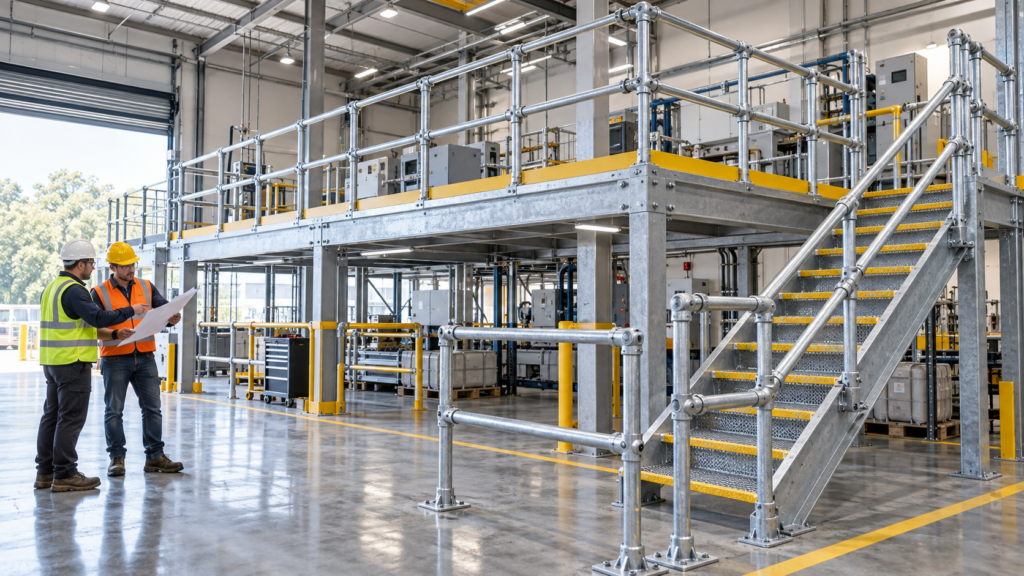
Modular construction systems have changed the way contractors, facility managers, engineers, and safety professionals build handrails, guardrails, barriers, and other tubular structures.
Instead of welding every connection, modular pipe systems use mechanical fittings that connect standard steel tubing at different angles and junctions. One of the best-known examples is the Kee Klamp system.
For professionals researching key clamps from Kee Systems, the product range provides a modular alternative to conventional welded fabrication. Kee Klamp fittings connect steel tubes using slip-on cast fittings secured with set screws, allowing many structures to be assembled without welding, threading, or complex fabrication.
Kee Systems describes itself as the UK’s leading supplier of Kee Klamp Key Clamp fittings and has supplied tubular safety systems since its establishment in 1946. Kee Klamp itself was originally developed in 1934 and has since been used internationally in handrails, guardrails, barriers, access platforms, industrial facilities, and public infrastructure.
For U.S. contractors and engineers evaluating modular pipe fittings, understanding how these components work, how they are specified, and where they can be used can help determine whether this type of system fits a particular project.
What Are Key Clamps?
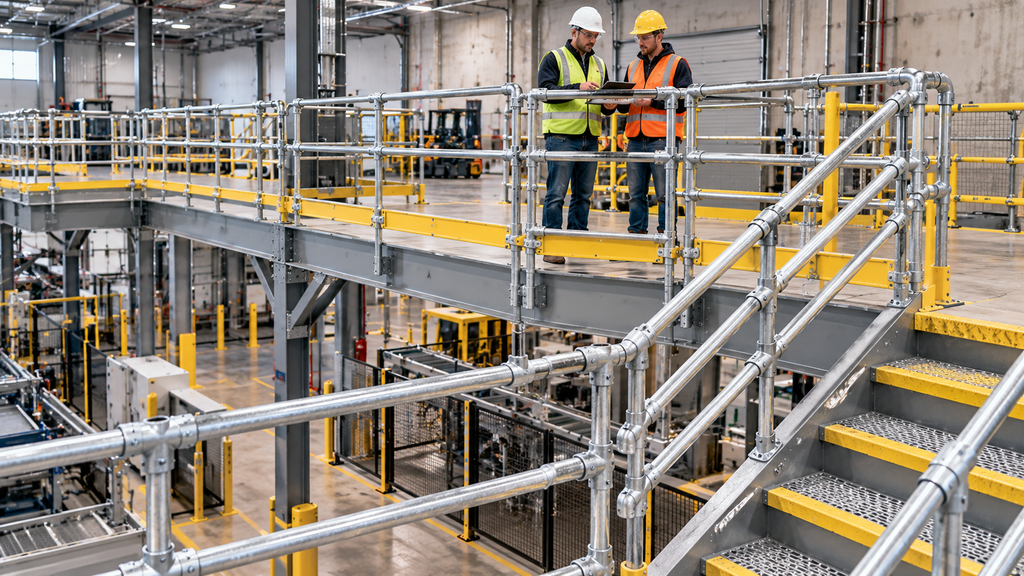
Key clamps are mechanical fittings designed to join sections of metal tubing without permanently welding them together.
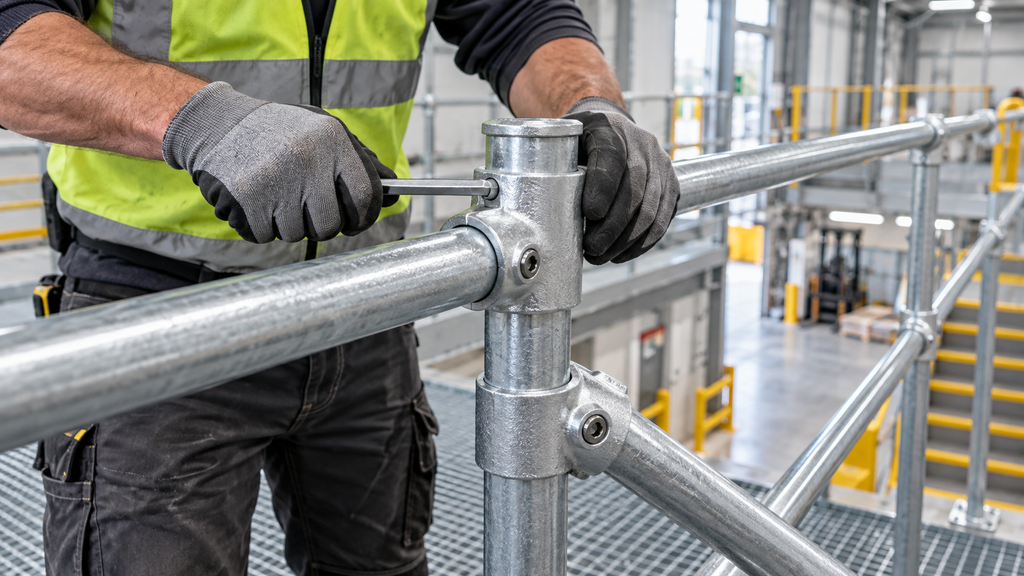
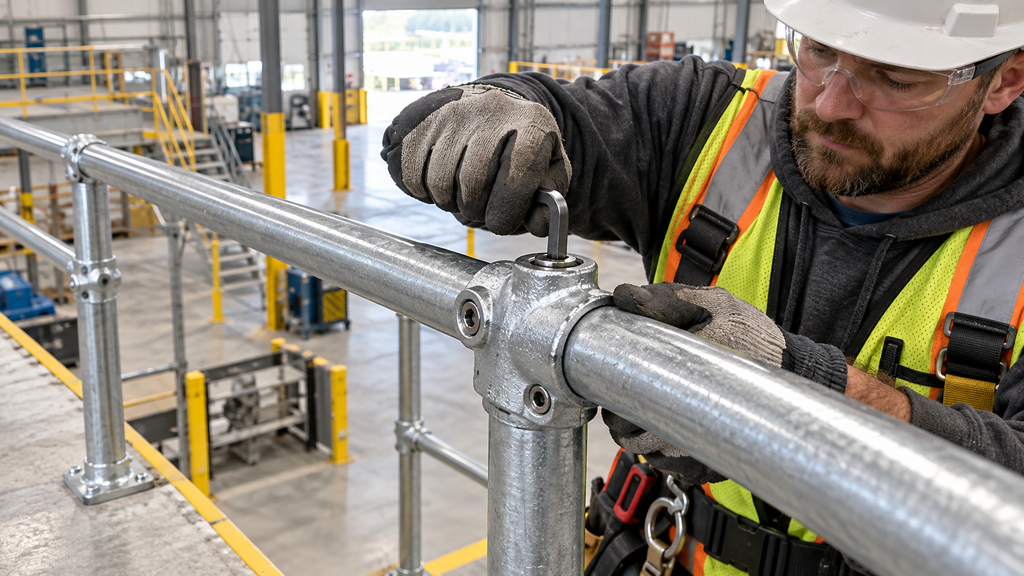
The fitting slides over the tube and is secured using a recessed set screw. Tightening the screw locks the fitting onto the tube and creates a mechanical connection.
Kee Klamp is the original branded version of this type of modular fitting system.
Kee Systems explains that Kee Klamp fittings were first developed in 1934 as a method for connecting steel tubing without welding. The concept has since expanded into a large range of fitting types designed for different junctions, angles, bases, corners, and structural configurations.
This modular design can be particularly valuable when a structure must be assembled directly at the job site.
How Key Clamps from Kee Systems Work
The basic operating principle is simple.
A section of tube is inserted into the fitting. The installer positions the tube at the required depth and orientation, then tightens the fitting’s set screw.
According to Kee Systems’ technical instructions, Kee Klamp fittings are manufactured from galvanized cast iron and supplied with coated, hardened steel set screws. They are intended for tubular structures made with suitable standard steel tubing.
This approach means many installations can avoid:
- Welding
- Threading
- Specialized fabrication
- Permanent welded joints
- Complex on-site machining
A modular connection can also make later alterations easier because portions of the structure may be disassembled and reconfigured rather than cut apart.
Why Contractors Use Modular Pipe Fittings
Traditional welded construction remains appropriate for many projects, but modular fittings offer several practical advantages.
Faster Assembly
Fittings can be positioned directly on standard tube and tightened into place.
This can reduce the fabrication work required before arriving at the installation site.
Kee Systems highlights quick installation as one of the primary benefits of its Kee Klamp product range.
No Welding Required
Eliminating welding can simplify certain projects.
There may be less need for welding equipment, specialist fabrication work, and hot-work procedures associated with welding activities.
Kee Systems specifically promotes the system as a method of constructing tubular structures without welding.
Adjustable Design
Welded joints are permanent unless the metal is cut.
Mechanical fittings provide greater flexibility.
If a barrier needs to be expanded, shortened, or redesigned, some components may be reused.
On-Site Flexibility
Construction sites do not always match drawings perfectly.
Modular components can provide additional flexibility when dimensions or layouts need minor adjustments during installation.
Common Applications for Kee Klamp Fittings
One of the main strengths of the Kee Klamp system is the wide variety of structures that can be created.
Kee Systems lists several major applications for its fittings.
Handrails
Key clamps are widely used to construct handrail systems around stairs, ramps, walkways, platforms, and access routes.
A typical handrail may use:
- Upright posts
- Horizontal rails
- Elbows
- Tees
- Base flanges
- Wall connections
- End caps
Kee Systems provides a dedicated installation guide showing how Kee Klamp fittings can be used to construct handrails without welding.
Guardrails
Industrial and commercial facilities frequently need guardrails around elevated areas or hazardous zones.
Modular fittings can be used to create guardrail layouts around:
- Mezzanines
- Platforms
- Walkways
- Machinery
- Loading areas
- Production zones
The design must still satisfy the applicable structural and safety requirements for the project.
Safety Barriers
Warehouses and factories often use tubular barriers to separate pedestrians from equipment or hazardous areas.
Kee Systems identifies warehouse, factory, and mezzanine barriers as common applications for Kee Klamp fittings.
Pedestrian Barriers
Railings can help guide pedestrian movement around industrial sites, transportation facilities, commercial buildings, and public spaces.
Access Platforms
Modular tubes and fittings can also form components of access systems and work platforms where the design and loading requirements permit their use.
Bespoke Tubular Structures
The system is not limited to safety railings.
Kee Systems notes that modular fittings have also been used for structures such as signs, furniture, tables, and custom frameworks.
What Are Kee Klamp Fittings Made From?
Material selection matters because tubular fittings may be exposed to impact, weather, moisture, and long-term service conditions.
Kee Systems states that its Kee Klamp fittings are produced from galvanized cast iron and supplied with hardened steel set screws.
Galvanizing helps protect iron and steel components against corrosion.
This makes modular galvanized systems useful for both indoor and outdoor installations, depending on the environment and project requirements.
The tubing used with the fittings must also be appropriate for the application.
Kee Klamp Fitting Sizes
Kee Klamp components are available in multiple sizes to work with different tube diameters.
Kee Systems’ technical product information lists seven common fitting sizes ranging from size 3 through size 9.
| Kee Klamp Size | Tube Outside Diameter |
|---|---|
| 3 | 17.5 mm |
| 4 | 21.3 mm |
| 5 | 26.9 mm |
| 6 | 33.7 mm |
| 7 | 42.4 mm |
| 8 | 48.3 mm |
| 9 | 60.3 mm |
For U.S. buyers accustomed to inch-based pipe terminology, it is important to verify the actual outside diameter rather than ordering solely by a familiar nominal pipe description.
Compatibility depends on the physical tube diameter intended for the fitting.
Understanding Kee Klamp Product Codes
Kee Systems uses a relatively simple coding system to identify fittings.
The number before the dash identifies the fitting type, while the digit after the dash identifies the tube size.
For example:
10-8
The “10” identifies the fitting type.
The “8” indicates the tube size accepted by the fitting.
Some fittings connect tubes of different diameters.
In that case, two size digits may appear after the dash.
Kee Systems provides the example 45-76, where different sockets accept size 7 and size 6 tubing.
Understanding this system makes it easier to prepare a project component list.
Building a Handrail With Kee Klamp Fittings
A basic modular handrail project usually starts with a sketch.
The installer determines:
- Overall rail length
- Rail height
- Post spacing
- Corners
- Changes in direction
- Steps or slopes
- Wall connections
- Base locations
The required fittings can then be matched to each junction.
Kee Systems notes that common handrail projects often use approximately 42 mm or 48.3 mm outside-diameter tubing, depending on the required loading and application.
After cutting the tubing to the required lengths, the installer can assemble the system by sliding the fittings into position and tightening their set screws.
Structural requirements should always be established before final installation.
Do Key Clamp Systems Need Welding?
One of the defining advantages of the system is that normal assembly does not require welding.
Kee Klamp fittings are specifically designed to connect tubes mechanically.
This can be useful in facilities where welding would create additional operational challenges.
For example, hot work may require:
- Permits
- Fire monitoring
- Specialized personnel
- Additional safety controls
- Isolation of nearby operations
Using modular mechanical connections can avoid some of these project complications, although all work should still follow site-specific safety requirements.
Strength and Load Considerations
A modular fitting should never be selected only because it physically fits the tube.
The final structure must be designed for the loads it is expected to experience.
Kee Systems publishes load tables for different tube sizes, tube specifications, and loading conditions. Its current technical resources provide separate criteria for Kee Klamp fittings used with various steel tube grades and wall thicknesses.
The company’s technical instructions also state that designers must determine whether the completed structure is fit for purpose and use appropriate design standards and load assumptions.
For safety-critical railings and barriers, engineering judgment and applicable local requirements remain essential.
Bracing and Structural Stability
Not every modular fitting creates a completely rigid structural frame.
Kee Systems notes that pin-joint assumptions should generally be used for its fittings except for specific types classified as fixed joints. It also warns that cross-bracing may be necessary for stability in structures such as racking.
This is an important design consideration.
A collection of strong fittings does not automatically mean every structure created from those fittings will be sufficiently stable.
Overall geometry, post spacing, loads, anchoring, bracing, tube properties, and connection configuration all matter.
Key Clamps vs. Welded Railings
Both systems can be appropriate depending on the project.
Modular Key Clamp System
Potential advantages include:
- Faster assembly
- No welding
- Easier on-site adjustment
- Replaceable components
- Expandable layouts
- Standardized fittings
Welded System
Potential advantages can include:
- Custom fabrication
- Permanent joints
- Very specific aesthetic designs
- Purpose-built structural configurations
The better choice depends on application, loading, appearance, budget, maintenance, and installation requirements.
Key Clamps for Warehouses and Manufacturing Facilities
Industrial facilities are particularly well suited to modular barrier systems because layouts can change.
A warehouse may need barriers around:
- Pedestrian routes
- Conveyor systems
- Machinery
- Mezzanine edges
- Loading areas
- Storage zones
If equipment is later relocated, a modular barrier may be easier to modify than a fully welded structure.
Kee Systems identifies industrial guardrails, warehouse barriers, and factory protection among the core applications for its product line.
Key Clamps for Outdoor Applications
Galvanized tubular systems can also be used outdoors.
Potential applications include:
- Walkways
- Outdoor stairs
- Pedestrian routes
- Access ramps
- Utility areas
- Public infrastructure
- Equipment compounds
Environmental exposure should still be considered.
Coastal environments, chemicals, impact exposure, and other aggressive conditions may require additional material or coating considerations.
Installation Tools
One reason modular fittings are attractive is the relatively simple installation process.
A typical installation may require equipment for:
- Measuring
- Cutting tube
- Positioning components
- Tightening set screws
- Drilling and installing anchors
Kee Systems states that specialist welding equipment is not required for standard Kee Klamp assembly.
However, proper torque, anchoring, alignment, and structural layout remain important.
Maintenance and Inspection
Even a durable modular railing system should be inspected periodically.
Maintenance can include checking:
- Set screws
- Base fixings
- Anchors
- Tube condition
- Corrosion
- Impact damage
- Alignment
- Missing components
- Structural movement
Industrial barriers may be particularly vulnerable to impacts from forklifts, carts, or machinery.
Kee Systems’ technical guidance specifically notes that structures may require protection against accidental impact, including impact from forklift trucks.
Damaged components should be evaluated and replaced when necessary.
Why Choose Genuine Kee Klamp Components?
The term “key clamp” is sometimes used generically for modular pipe fittings, but Kee Klamp is a specific branded system.
Kee Systems describes Kee Klamp as the original system developed in the 1930s and distinguishes genuine Kee Klamp components from generic alternatives.
For professional projects, consistency can matter because designers may rely on published technical information, fitting specifications, dimensional data, and load information.
Substituting an unverified fitting may change the characteristics of the completed system.
About Kee Systems
Kee Systems was established in 1946 and operates as part of the Kee Safety Group.
The company supplies Kee Klamp fittings as well as handrails, guardrails, barriers, fall-protection systems, and other safe-access products.
Kee Systems states that it holds ISO 9001 registration for quality management and provides services ranging from technical advice through supply and installation.
It is primarily a UK-based supplier, so U.S. buyers interested in the products should confirm current availability, shipping arrangements, applicable U.S. standards, and project-specific compliance before ordering or specifying components.
How to Choose the Right Key Clamps
Selecting the correct fitting starts with the structure rather than the fitting itself.
Define the Application
Determine whether the project involves a handrail, guardrail, barrier, frame, or another structure.
Identify Tube Diameter
Confirm the actual outside diameter of the tube.
Determine Each Connection
Identify whether each location requires a tee, elbow, flange, cross, swivel, or another fitting.
Consider Structural Loads
Review anticipated loads and appropriate engineering criteria.
Check Environment
Determine whether the installation is indoors, outdoors, exposed to chemicals, or subject to frequent impact.
Plan for Future Changes
If the layout is likely to change, modularity may provide additional long-term value.
Frequently Asked Questions About Key Clamps from Kee Systems
What are key clamps from Kee Systems?
They are modular pipe fittings, primarily sold under the Kee Klamp brand, designed to connect steel tubing mechanically without welding.
What is Kee Klamp?
Kee Klamp is the original modular pipe fitting system developed in 1934. It uses cast fittings and set screws to join standard tubing.
Do Kee Klamp fittings require welding?
No. Standard Kee Klamp fittings are designed to connect tubes without welding.
What are Kee Klamp fittings used for?
Common applications include handrails, guardrails, safety barriers, pedestrian railings, warehouse protection, access systems, and custom tubular structures.
Are Kee Klamp fittings galvanized?
Kee Systems states that Kee Klamp fittings are produced from galvanized cast iron and supplied with hardened steel set screws.
Can key clamp structures be modified later?
One advantage of modular mechanical fittings is that structures can often be disassembled, altered, or expanded more easily than welded structures.
What tube sizes are available?
Kee Klamp fittings are available across several sizes, with Kee Systems listing common outside tube diameters from 17.5 mm through 60.3 mm.
Are key clamps suitable for outdoor use?
Galvanized fittings are commonly used for outdoor railing and barrier applications, but the suitability of any installation depends on environmental exposure and project requirements.
Do Kee Klamp fittings have published load information?
Yes. Kee Systems publishes technical load tables covering different tube sizes, specifications, and design loads.
Can Kee Klamp fittings be used for warehouse safety barriers?
Yes. Kee Systems lists warehouses, factories, mezzanines, and industrial safety barriers among common applications.
Is Kee Systems a U.S. company?
Kee Systems is a UK-based company and part of the Kee Safety Group. U.S. customers should confirm current product availability, shipping, and applicable U.S. project requirements before specifying or purchasing components.
Conclusion
Key clamps from Kee Systems provide a practical modular approach to building handrails, guardrails, safety barriers, industrial railings, and other tubular structures.
Instead of permanently welding every connection, Kee Klamp fittings use mechanical set-screw connections to secure standard tubing. This can simplify installation, reduce fabrication requirements, and make future modifications easier.
The system’s versatility is one of its strongest characteristics.
Different fitting types can create corners, tees, bases, intersections, wall connections, changes in direction, and many other configurations. Combined with suitable tubing, this allows designers and installers to create systems for warehouses, factories, stairways, walkways, mezzanines, commercial buildings, and outdoor infrastructure.
Kee Klamp also has a long history. The original modular system dates to 1934, while Kee Systems itself was established in 1946 and today supplies Kee Klamp components and complete barrier and safe-access solutions.
However, ease of assembly does not eliminate the need for engineering.
Tube size, fitting selection, structural loads, anchoring, bracing, post spacing, environmental exposure, and applicable safety requirements all need to be considered. Kee Systems publishes technical load tables and installation guidance to help designers evaluate appropriate configurations.
For U.S. professionals, an additional consideration is geography. Kee Systems is primarily a UK supplier, so American buyers should verify availability, shipping arrangements, compatible tubing dimensions, and compliance with the codes and standards applicable to their specific project.
When properly specified and installed, modular tubular fittings can provide a flexible alternative to traditional welded fabrication.
Whether the project involves an industrial barrier, pedestrian railing, staircase handrail, mezzanine guardrail, or custom tubular framework, key clamps from Kee Systems offer a system designed around straightforward assembly, adaptability, and a broad range of compatible fitting configurations.