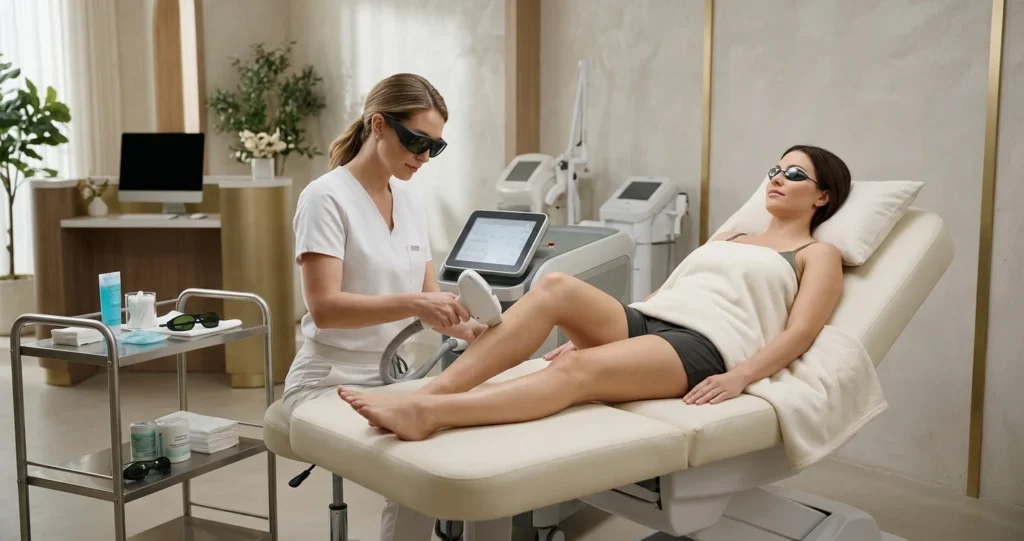
Unwanted body hair is a common concern for people who prefer smoother skin and a simpler grooming routine. Traditional methods such as shaving, waxing, threading, and depilatory creams can help temporarily, but they often require repeated maintenance. For people looking for a longer-lasting option, laser hair removal has become a popular cosmetic treatment across the United States.
This professional treatment uses concentrated light energy to target hair follicles and reduce future hair growth. It can be performed on several areas of the body, including the face, legs, arms, underarms, back, and bikini area.
Whether you are considering your first appointment or comparing different aesthetic clinics, understanding the treatment process is important. This guide explains how laser hair removal works, its potential benefits, treatment costs, preparation requirements, and aftercare recommendations.
What Is Laser Hair Removal?
Laser hair removal is a professional cosmetic procedure that uses concentrated beams of light to target the pigment, known as melanin, inside hair follicles.
The light energy converts into heat, damaging the follicle and reducing its ability to produce new hair.
Unlike shaving, which removes hair only at the skin’s surface, this treatment targets structures responsible for hair growth.
It is commonly used to reduce unwanted hair on:
- Face and upper lip.
- Chin and jawline.
- Underarms.
- Arms and legs.
- Chest and back.
- Bikini line.
- Other suitable body areas.
Laser hair removal is considered a long-term hair reduction method rather than a guaranteed permanent solution. Some hair may eventually return, although it is often finer, lighter, and less noticeable.
How Does Laser Hair Removal Work?
Understanding the treatment process can help you feel more confident before scheduling an appointment.
Hair grows in different stages, including active growth, transition, and resting phases.
Laser treatment works most effectively when hair follicles are in the active growth stage because they contain more pigment that can absorb the laser energy.
Since not every hair is in the same growth phase at once, multiple appointments are necessary.
During treatment, the professional uses a specialized laser device to deliver controlled light pulses to the selected area.
The laser energy targets the hair pigment while appropriate settings and cooling methods help protect surrounding skin.
The effectiveness of laser hair removal depends on several factors, including:
- Hair color and thickness.
- Skin tone.
- Treatment area.
- Laser technology.
- Individual hair growth cycles.
- Professional experience.
A qualified provider should evaluate these factors before recommending a treatment plan.
Main Benefits of Laser Hair Removal
Many people choose professional laser treatments because they want to reduce the time and effort involved in regular hair removal.
Here are some commonly discussed benefits.
1. Long-Term Hair Reduction
One of the biggest advantages is the potential for a significant reduction in unwanted hair.
After completing the recommended treatment sessions, many people experience less noticeable hair growth.
Some areas may remain hair-free for months or years, although maintenance sessions may be necessary.
2. Less Frequent Shaving
Regular shaving can become part of an exhausting grooming routine.
Laser treatments may reduce the need to shave frequently by targeting hair follicles rather than simply cutting hair at the surface.
3. May Help Reduce Ingrown Hairs
Ingrown hairs occur when hair grows back into the surrounding skin.
They can cause redness, irritation, and uncomfortable bumps.
By reducing hair growth, laser treatments may help people who frequently experience shaving-related ingrown hairs.
4. Suitable for Multiple Body Areas
Professional laser technology can treat several areas of the body.
Smaller areas, such as the upper lip, may take only a few minutes, while larger areas, such as the legs or back, require longer appointments.
5. Convenient Grooming Routine
People who regularly wax or shave may appreciate having fewer maintenance sessions.
Once the recommended treatment course is completed, occasional follow-up appointments may help maintain results.
6. Precision Treatment
Laser devices can target selected areas of unwanted hair while leaving surrounding areas untreated.
This makes the procedure useful for different cosmetic grooming preferences.
Different Types of Laser Hair Removal Technology
Not all laser systems operate in the same way. Different technologies are designed to work with different combinations of skin tones and hair characteristics.
1. Alexandrite Laser
Alexandrite lasers commonly operate at a wavelength of 755 nanometers.
They are often used for treating unwanted hair in people with lighter skin tones and suitable hair characteristics.
Professional assessment is important because treatment settings and individual skin conditions influence safety.
2. Diode Laser
Diode lasers commonly use wavelengths around 800–810 nanometers.
They are widely used in professional hair reduction treatments and may be suitable for a range of skin tones when appropriately selected and operated.
3. Nd:YAG Laser
Nd:YAG lasers commonly operate at a wavelength of 1064 nanometers.
They can be particularly useful for treating darker skin tones because this wavelength penetrates deeper and is less strongly absorbed by surface skin pigment.
However, the correct settings and professional experience remain essential.
4. Ruby Laser
Ruby lasers use a wavelength of approximately 694 nanometers.
They are an older laser technology and are generally more limited in their suitability for different skin types.
Your provider should explain which system is appropriate for your individual needs rather than recommending a device simply because it is advertised as advanced.
Is Laser Hair Removal Suitable for All Skin Types?
Modern laser technology has expanded treatment options for people with different skin tones.
However, the choice of laser, settings, and treatment technique must be individualized.
People with darker skin tones should choose a provider experienced in treating their specific skin type. Incorrect settings can increase the risk of burns and unwanted pigmentation changes.
Hair color also matters.
Dark brown and black hair generally respond better because they contain more pigment for the laser to target.
Blonde, white, gray, and some red hairs may respond poorly or not respond at all.
A professional consultation can help determine whether laser treatment is appropriate or whether another hair removal method would be more effective.
How Many Laser Hair Removal Sessions Are Needed?
Most people require several treatments because hair grows in different cycles.
The exact number depends on the treatment area, hair characteristics, skin type, and technology used.
The American Academy of Dermatology reports that many patients need approximately two to six treatments, although additional sessions may be recommended.
Appointments are commonly spaced several weeks apart.
During your consultation, ask the provider:
- How many sessions may be necessary?
- How much reduction is realistic?
- How frequently should appointments be scheduled?
- Will maintenance sessions be required?
- What results are typical for my hair and skin type?
Laser hair removal results are gradual, so patience and consistency are important.
How to Prepare for Your First Treatment
Preparing your skin properly can help reduce potential complications.
Your provider should give you specific instructions based on your treatment area and medical history.
1. Avoid Tanning
Avoid tanning beds, intentional tanning, and sunless tanning products before treatment as instructed.
Recently tanned skin may increase the risk of unwanted reactions.
2. Avoid Waxing and Plucking
Waxing and plucking remove the hair from the follicle, which eliminates the pigment target needed for laser treatment.
Your provider will usually recommend shaving instead.
3. Follow Shaving Instructions
Many clinics recommend shaving the treatment area shortly before the appointment.
Follow the timing provided by your practitioner.
4. Discuss Medications and Skin Conditions
Inform your provider about prescription medications, supplements, skincare products, previous skin reactions, and relevant medical conditions.
Mention any history of scarring, cold sores, or pigmentation problems.
5. Avoid Unapproved Skincare Treatments
Your provider may recommend temporarily avoiding certain exfoliating products or active skincare ingredients.
Do not introduce new treatments immediately before your appointment without professional guidance.
What Happens During a Treatment Appointment?
A typical professional appointment begins with an assessment of the treatment area.
The provider cleans the skin and prepares the laser equipment.
Protective eyewear must be worn by everyone in the treatment room to protect against laser exposure.
The practitioner then uses the laser device to deliver controlled pulses to the selected area.
Some people describe the sensation as a warm pinprick or a rubber band snapping against the skin.
Treatment duration varies depending on the size of the area.
For example, an upper-lip appointment may take only a few minutes, while treating both legs can take considerably longer.
Laser hair removal generally requires little downtime, although temporary redness, swelling, and sensitivity are common.
Aftercare Tips for Healthy-Looking Skin
Aftercare helps support skin comfort and reduce the risk of complications.
Your practitioner should provide instructions specific to the equipment and treatment settings used.
General recommendations include:
- Avoid direct sunlight on treated skin.
- Apply broad-spectrum SPF 30 or higher sunscreen to exposed areas.
- Avoid tanning beds and intentional tanning.
- Use gentle skincare products.
- Apply cool compresses if recommended.
- Avoid picking or scratching irritated skin.
- Follow instructions regarding exfoliation and hot showers.
- Contact your provider if you notice unusual reactions.
Following the aftercare instructions for laser hair removal is particularly important during the first few days after treatment.
How Much Does Laser Hair Removal Cost in the USA?
Treatment prices vary significantly depending on the clinic, location, treatment area, technology, and number of appointments.
Smaller areas generally cost less per session than larger areas such as the legs, chest, or back.
Some clinics offer individual appointments, while others provide treatment packages.
Before booking, request a complete price estimate.
Ask whether the quoted price includes:
- Initial consultation.
- Individual treatment sessions.
- Recommended maintenance appointments.
- Additional treatment areas.
- Follow-up consultations.
Also check whether the clinic offers payment plans.
Cosmetic laser treatments are generally not covered by standard health insurance when performed for aesthetic reasons.
How to Choose a Qualified Laser Hair Removal Provider
Selecting the right provider is one of the most important parts of the process.
Look for a qualified healthcare professional or appropriately licensed laser practitioner with relevant training and experience.
Consider these factors:
- Professional qualifications and licensing.
- Experience treating your skin tone.
- Appropriate laser technology.
- Clear safety procedures.
- Protective eyewear and equipment.
- Transparent pricing.
- Realistic treatment expectations.
- Proper aftercare and follow-up support.
Do not select a clinic based only on discounted prices or promotional photographs.
An experienced provider should explain potential risks, assess your suitability, and answer your questions before treatment.
Frequently Asked Questions (FAQs)
1. Is laser hair removal permanent?
It can provide long-term hair reduction, but it does not guarantee that every treated hair will disappear permanently. Maintenance treatments may be necessary.
2. Does laser hair removal hurt?
Some people experience mild discomfort, often described as a rubber band snapping against the skin. Sensations vary depending on the treatment area and equipment.
3. How long does a laser hair removal session take?
Small areas may take several minutes, while larger areas can require an hour or longer.
4. Can people with dark skin get laser treatments?
Yes, many people with darker skin tones can be treated safely using appropriately selected technology and settings. Choosing an experienced professional is essential.
5. Does laser treatment work on blonde or gray hair?
Laser treatment is generally less effective on blonde, white, and gray hair because these colors contain less pigment for the laser to target.
6. How soon will I see results?
Hair reduction develops gradually. Some treated hairs shed over the following weeks, while additional sessions are needed to address other growth cycles.
7. Can I shave between laser sessions?
Shaving is generally permitted between sessions, according to your provider’s instructions. Waxing and plucking should usually be avoided.
8. Are there side effects?
Temporary redness, swelling, and discomfort are common. Less common complications include burns, blistering, scarring, and changes in skin pigmentation.
Conclusion
Unwanted hair can make regular grooming time-consuming, especially when shaving or waxing becomes part of your weekly routine.
Laser hair removal offers a professional option for reducing hair growth across different body areas. With suitable technology, proper treatment planning, and an experienced provider, many people achieve noticeable long-term hair reduction.
Before starting treatment, understand your skin and hair characteristics, compare qualified clinics, discuss possible risks, and follow all preparation and aftercare instructions.
The best results come from realistic expectations, individualized treatment, and consistent professional care. Making an informed decision can help you approach your hair reduction journey with greater confidence.