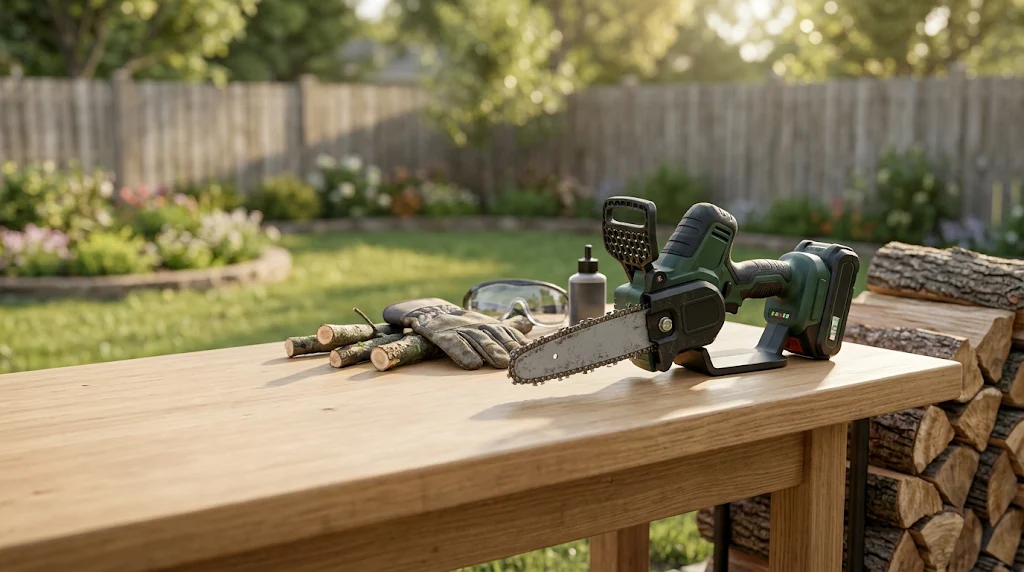
Maintaining a beautiful backyard requires the right tools. From trimming unwanted branches to clearing fallen limbs, homeowners often face outdoor tasks that are difficult to complete using ordinary hand tools.
Traditional chainsaws can handle demanding cutting jobs, but their size, weight, and maintenance requirements may make them impractical for smaller gardening projects.
A mini chainsaw offers a compact alternative for suitable light-duty cutting tasks. These portable tools are designed to cut smaller branches and manageable pieces of wood while providing greater convenience than many larger chainsaws.
Battery-powered models have become an appealing option for American homeowners who want cordless operation and relatively straightforward maintenance.
However, selecting the right tool involves more than considering its appearance or advertised cutting power. Battery capacity, chain design, safety features, and intended applications are equally important.
This guide explores how mini chainsaws work, their advantages, practical uses, maintenance requirements, and important safety considerations for 2026.
What Is a Mini Chainsaw?
A mini chainsaw is a compact cutting tool that uses a motor-driven chain moving around a guide bar.
It operates on the same general cutting principle as a conventional chainsaw but typically features a shorter guide bar and a smaller overall design.
Many modern models use rechargeable lithium-ion batteries, eliminating the need for gasoline or a continuous electrical connection.
Mini chainsaws are commonly used for garden maintenance, branch cutting, and preparing smaller pieces of wood.
How Does a Mini Chainsaw Work?
An electric motor drives a cutting chain around the guide bar.
When properly operated, the moving chain cuts through suitable wooden material.
Battery-powered models receive electricity from rechargeable battery packs.
Cutting performance depends on motor design, chain sharpness, wood characteristics, and battery condition.
Users must follow the manufacturer’s instructions because compact chainsaws still present serious cutting and kickback hazards.
Benefits of Using a Mini Chainsaw
Mini chainsaws provide several practical advantages for homeowners working on suitable projects.
Compact and Portable Design
One major benefit is portability.
Compared with full-sized chainsaws, compact models are generally easier to transport and store.
Their smaller dimensions may also make them convenient for working in accessible garden spaces.
However, a smaller tool is not automatically safer, and some designs require additional caution because of their limited gripping surfaces.
Cordless Convenience
Battery-powered mini chainsaws allow users to work without managing an electrical cord.
This is helpful when performing outdoor maintenance away from power outlets.
Operating time varies according to battery capacity, cutting load, and environmental conditions.
Reduced Routine Maintenance
Electric chainsaws do not require gasoline mixing, spark plug replacement, or combustion-engine servicing.
Nevertheless, they still need chain inspection, lubrication, sharpening, and regular cleaning.
Useful for Smaller Cutting Tasks
A compact chainsaw can be practical when traditional pruning tools require excessive effort.
For suitable branches, powered cutting may reduce the physical effort involved.
The tool should always match the material and the operator’s experience.
Common Uses of a Mini Chainsaw
A mini chainsaw can support different outdoor maintenance activities.
Garden Pruning
Homeowners may use compact electric chainsaws to cut manageable branches from shrubs and small trees.
Cuts should remain within the manufacturer’s specified limits.
Branches under tension or positioned overhead should be handled by qualified professionals.
Cutting Small Wood Pieces
Mini chainsaws can help cut appropriately sized wood on stable supports.
This may be useful for preparing small pieces of wood for outdoor projects.
Users should avoid materials that could shift, roll, or pinch the cutting chain.
Backyard Cleanup
After routine garden maintenance, homeowners often need to reduce branches into manageable sections.
A suitable compact saw can assist with this work when the material is stable and safely accessible.
Light Property Maintenance
Some homeowners use mini chainsaws for occasional maintenance around rural properties, gardens, and small outdoor workspaces.
These tools are not substitutes for professional tree-removal equipment.
Important Features to Consider Before Buying
Choosing a mini chainsaw requires evaluating several technical and practical features.
Guide Bar Length
Compact chainsaws commonly feature shorter guide bars, including six-inch and eight-inch options.
An eight-inch guide bar may accommodate somewhat larger material than a smaller model.
However, guide bar length alone does not establish safe cutting capacity.
Battery Capacity and Runtime
Battery specifications influence how long a cordless chainsaw can operate.
Consider battery voltage, amp-hour capacity, charging requirements, and replacement availability.
Actual runtime can vary significantly depending on workload.
Motor Performance
Brushless motors are used in some modern cordless tools.
They can offer efficiency and reduced mechanical wear compared with certain brushed motor designs.
Overall performance still depends on the complete tool design.
Safety Features
Look for appropriate safety controls, chain guards, reliable switches, and manufacturer-supported protective features.
Safety equipment reduces certain risks but never eliminates the need for proper technique.
Understanding the HYCHIKA 8-Inch Mini Chainsaw
The HYCHIKA Mini Chainsaw is an example of a cordless electric cutting tool designed for garden maintenance.
Its listed specifications include an eight-inch guide bar, a brushless motor, and a 20V lithium-ion battery.
The manufacturer also advertises a cutting speed of up to 7.5 meters per second.
Battery and Design Specifications
HYCHIKA lists a 4.0Ah battery and an advertised operating time of up to 55 minutes.
Actual performance will depend on cutting conditions and usage.
The manufacturer states that the saw and battery weigh approximately 4.5 pounds.
Protective Features
The product includes a safety lock intended to reduce accidental activation and a protective flap designed to limit flying debris.
These features do not make the tool injury-proof.
The linked product configuration is labeled for UK and EU markets, so American buyers should confirm availability, electrical compatibility, warranty coverage, and included accessories.
Mini Chainsaw vs. Traditional Chainsaw
Both tools have useful applications, but they serve different needs.
Size and Handling
Mini chainsaws are generally lighter and more compact.
Traditional chainsaws typically provide larger cutting capacities for demanding work.
Power and Performance
Full-sized chainsaws are better suited to many substantial cutting tasks.
Compact battery-powered models are generally intended for smaller, less demanding applications.
Maintenance Requirements
Electric mini chainsaws eliminate fuel-engine maintenance but still require proper chain care.
Gas-powered chainsaws require additional engine and fuel-system attention.
Choosing the Right Tool
For occasional small-branch cutting, a compact chainsaw may be appropriate.
Large trees, unstable limbs, storm-damaged branches, and professional forestry operations require specialized equipment and expertise.
Essential Mini Chainsaw Safety Tips
Safety must remain the highest priority when operating any chainsaw.
Wear Appropriate Protective Equipment
Use suitable eye protection, hearing protection, gloves, protective footwear, and chainsaw-rated leg protection.
Additional head protection may be necessary depending on the working environment.
The Occupational Safety and Health Administration emphasizes protective equipment, secure footing, and proper chainsaw handling.
Prevent Kickback Injuries
Kickback can occur when the moving chain contacts an object near the guide bar’s tip or becomes pinched.
Avoid contact with the kickback zone and use only techniques approved for your specific model.
Never cut above shoulder height or operate a chainsaw from a ladder.
Maintain a Safe Working Area
Keep children, pets, and bystanders away.
Inspect the material for metal objects and ensure that branches cannot unexpectedly move.
Use two-handed tools with both hands. For single-handle models, strictly follow the manufacturer’s instructions and never use your free hand to hold material near the cutting chain.
How to Maintain a Mini Chainsaw
Routine maintenance supports consistent cutting performance and reduces equipment problems.
Inspect the Chain
Check chain condition and tension according to the manufacturer’s instructions.
A loose, damaged, or excessively worn chain can create hazards.
Remove the battery before any adjustment.
Maintain Proper Lubrication
Use the recommended chain lubricant and follow the model’s lubrication procedure.
Adequate lubrication helps reduce friction and chain wear.
Clean After Use
Remove accumulated sawdust and debris after switching off the tool and disconnecting its battery.
Avoid exposing electrical components to unnecessary moisture.
Store Batteries Properly
Keep batteries in a suitable, dry location away from excessive heat.
Use compatible chargers and follow the manufacturer’s storage recommendations.
How Much Does a Mini Chainsaw Cost?
Mini chainsaw prices vary according to brand, motor design, battery capacity, included accessories, and warranty coverage.
Some packages include batteries and chargers, while others sell them separately.
Compare Complete Packages
Evaluate the total purchase cost rather than the advertised tool-only price.
Replacement chains, batteries, lubrication supplies, and protective equipment can add expenses.
Consider Long-Term Value
A lower initial price may not provide good value if replacement parts are difficult to obtain.
Choose a model with clear specifications, suitable safety information, and accessible customer support.
Frequently Asked Questions
What is a mini chainsaw used for?
A mini chainsaw is commonly used for suitable garden pruning, small-branch cutting, and manageable wood-cutting tasks.
Are mini chainsaws suitable for beginners?
Some models are marketed toward homeowners, but all chainsaws require training, protective equipment, and careful handling. Beginners should receive practical instruction before operating one.
How long does a mini chainsaw battery last?
Runtime varies according to battery capacity, cutting load, chain condition, and model specifications.
Can a mini chainsaw cut thick branches?
Cutting capacity depends on the specific saw and material. Never exceed the manufacturer’s limits or attempt unstable cuts.
Does a mini chainsaw need chain oil?
Most chainsaw chains require lubrication. Follow the manufacturer’s instructions for the specific model.
Are cordless mini chainsaws better than gas models?
Cordless models offer convenient operation and avoid gasoline-engine maintenance. Larger gas-powered chainsaws may be more appropriate for demanding applications.
Conclusion
A mini chainsaw can be a useful addition to a homeowner’s outdoor tool collection.
Its compact dimensions, cordless convenience, and suitability for certain light-duty cutting tasks make it appealing for garden maintenance and routine backyard work.
However, choosing the right model requires careful attention to battery performance, chain design, safety features, and maintenance requirements.
Always use appropriate protective equipment, follow manufacturer instructions, and avoid cutting situations beyond your experience.
With proper selection, training, and maintenance, a mini chainsaw can help homeowners complete suitable outdoor projects more efficiently while keeping safety at the center of every task.