Creating an attractive home involves more than choosing beautiful furniture, attractive colors, and expensive decorative accessories. The way different objects relate to one another also plays an important role in determining how a room looks and feels.
One important aspect of interior decorating is understanding how to incorporate several different shapes into a space without making the overall design feel crowded or disorganized.
From rectangular sofas and square cabinets to circular mirrors and curved decorative accessories, shapes influence the appearance, atmosphere, and visual balance of a room.
When used thoughtfully, different shapes can add personality, create contrast, and make even a simple interior feel more interesting.
Whether you are decorating a new home, updating your living room, or planning a complete renovation, understanding the relationship between shapes and forms can help you make better design decisions.
This guide explores the importance of shapes in interior design, popular geometric and organic forms, and practical ways to combine them for a comfortable and visually appealing American home.
Why Shapes Matter in Interior Design
Shapes are among the fundamental elements of interior design. They influence how furniture, decorative objects, architectural features, and other elements relate to one another.
Every room contains a combination of shapes, even when homeowners do not consciously think about them.
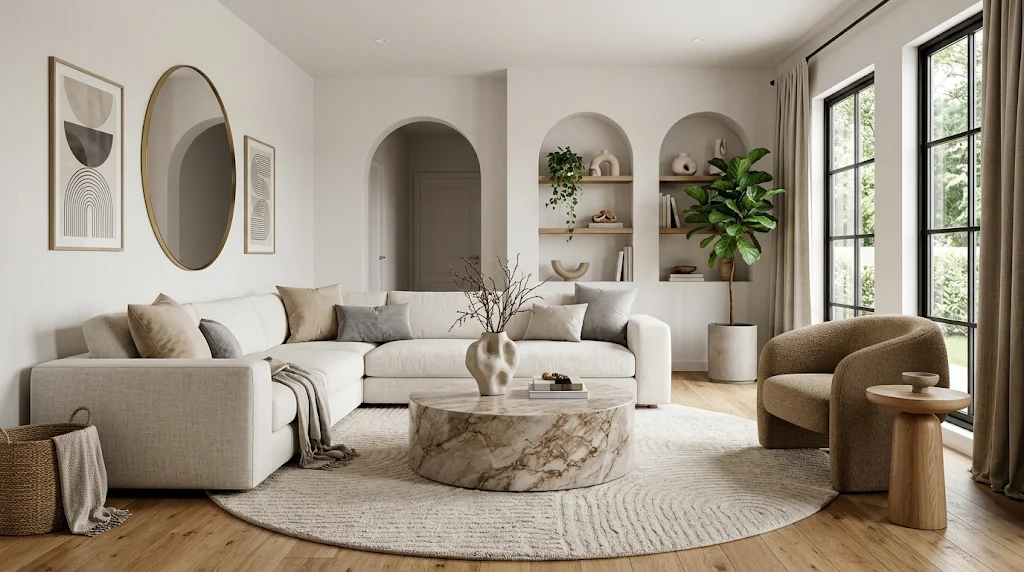
For example, a typical living room might include a rectangular sofa, square cushions, a circular coffee table, and an oval mirror.
Together, these elements create visual variety while helping establish the room’s overall personality.
Creating Visual Interest
Using only one type of shape can make an interior feel repetitive.
Introducing contrasting forms creates visual interest and encourages the eye to move naturally around the room.
A rectangular dining table, for example, can look more inviting when paired with rounded chairs or a circular centerpiece.
Establishing Balance
Shapes also help create balance between furniture and decorative elements.
Large geometric pieces can provide structure, while smaller curved accessories soften their appearance.
The objective is not to use every possible shape but to select forms that complement one another.
Understanding Different Types of Shapes in Interior Design
Before combining several different shapes, it helps to understand the main categories used in home decorating.
Geometric Shapes
Geometric shapes have recognizable outlines and generally follow regular mathematical structures.
Common examples include:
- Squares
- Rectangles
- Circles
- Triangles
- Ovals
- Hexagons
These shapes are frequently found in modern furniture, flooring, lighting, and decorative accessories.
Geometric designs can create a structured and organized appearance, making them particularly useful in contemporary interiors.
Organic Shapes
Organic shapes are inspired by nature and usually feature irregular outlines, flowing curves, and softer appearances.
Examples include cloud-shaped mirrors, natural stone surfaces, sculptural furniture, and decorative objects inspired by leaves or flowers.
These forms can make an interior feel more relaxed and less formal.
Abstract Shapes
Abstract shapes do not necessarily represent familiar objects or follow traditional geometric patterns.
They may appear in modern artwork, sculptural lighting, decorative accessories, and contemporary furniture.
Used selectively, abstract forms can introduce personality and create distinctive focal points.
How to Combine Several Different Shapes in One Room
Mixing shapes successfully requires attention to proportion, placement, and visual weight.
Start With a Dominant Shape
Begin by identifying the shapes already present in your room.
Most living spaces contain several rectangular elements, including sofas, cabinets, windows, doors, and television units.
These features often establish the dominant visual structure.
Once you understand the existing arrangement, introduce contrasting shapes through furniture and accessories.
Introduce Rounded Furniture
Curved furniture can soften interiors dominated by straight lines.
Consider adding a circular coffee table, rounded armchair, or oval ottoman to a living room with rectangular furniture.
These pieces create contrast without requiring major changes to the room.
Use Decorative Accessories
Smaller objects provide an easy way to experiment with different forms.
Round vases, triangular sculptures, curved candleholders, and geometric trays can add variety to shelves and tabletops.
Start with a few carefully selected pieces rather than filling every available surface.
Popular Ways to Use Shapes in Different Rooms
Different rooms offer different opportunities for introducing geometric and organic forms.
Living Room
The living room is an excellent place to experiment with contrasting furniture shapes.
A rectangular sofa can provide the main structure, while a round coffee table introduces a softer visual element.
Circular mirrors, curved accent chairs, and abstract wall artwork can complete the arrangement.
The key is to maintain enough open space for comfortable movement.
Bedroom
Bedrooms benefit from shapes that create a calm and welcoming atmosphere.
A rectangular bed provides a natural focal point, while rounded bedside lamps, oval mirrors, and circular rugs can soften the overall appearance.
Avoid introducing too many bold geometric patterns if you want the room to feel restful.
Kitchen and Dining Area
Kitchens commonly contain rectangular cabinets, countertops, islands, and dining tables.
You can introduce variety through rounded pendant lights, circular stools, curved decorative bowls, and patterned backsplashes.
A round dining table can also be a practical choice for smaller spaces where circulation is important.
Bathroom
Bathrooms often feature straight-edged tiles, rectangular vanities, and square storage units.
Rounded mirrors, circular basins, and curved lighting fixtures can create an attractive contrast.
These smaller design changes can make a bathroom feel more contemporary without requiring a complete renovation.
Using Furniture Shapes to Improve Interior Design
Furniture has a major influence on the overall appearance of a room.
Its dimensions, outlines, and proportions help determine whether an interior feels balanced or overcrowded.
Rectangular Furniture for Structure
Rectangular furniture is popular because it works well with many architectural layouts.
Sofas, dining tables, bookshelves, and storage cabinets frequently use this shape.
These pieces create clear visual lines and can help organize larger spaces.
Circular Furniture for Softness
Circular furniture introduces movement and reduces the visual dominance of sharp corners.
Round coffee tables and ottomans are especially useful in living rooms.
They can also make movement around seating arrangements more comfortable when appropriately sized.
Curved Furniture for a Contemporary Look
Curved sofas, sculptural chairs, and rounded headboards are popular ways to introduce organic forms.
These designs can create a distinctive focal point while making an interior feel less rigid.
However, always consider comfort and available floor space before choosing statement furniture.
How Color and Texture Complement Different Shapes
Shapes do not work independently from other interior design elements.
Color and texture can influence how strongly a particular form stands out.
Using Color to Highlight Shapes
Contrasting colors can make geometric elements more noticeable.
For example, a dark circular mirror against a light-colored wall creates a clear visual focal point.
Alternatively, using similar colors across different furniture shapes can produce a softer, more harmonious appearance.
Adding Texture for Depth
Texture introduces another layer of visual interest.
A smooth marble coffee table, soft upholstered chair, natural wooden cabinet, and woven rug can create an appealing combination.
These materials help distinguish individual shapes without requiring excessive decorative patterns.
Common Mistakes When Mixing Shapes in Home Decor
Combining several different shapes can improve an interior, but poor planning may produce an unbalanced result.
Using Too Many Competing Shapes
Introducing too many bold forms can make a room feel visually confusing.
Instead, establish a dominant shape and use contrasting forms as supporting elements.
Ignoring Furniture Proportions
A large circular coffee table may overwhelm a small living room.
Similarly, tiny decorative accessories may look insignificant beside oversized furniture.
Consider dimensions and visual weight before purchasing new pieces.
Forgetting Practical Function
A decorative chair or unusual table should still serve a practical purpose.
Interior design should improve everyday living rather than focus exclusively on appearance.
Mixing Shapes Without a Consistent Style
Different forms can work together, but they should have some relationship through color, material, scale, or overall design language.
A consistent visual theme helps prevent the room from feeling disconnected.
Simple Tips for Creating a Balanced Interior
You do not need expensive renovations to introduce more variety into your home.
Start by reviewing your existing furniture and identifying opportunities to introduce contrasting forms.
Consider replacing a rectangular coffee table with a circular design or adding an oval mirror to a wall dominated by straight architectural lines.
You can also experiment with geometric cushions, curved lamps, and organic decorative objects.
For more foundational decorating guidance, explore the elements of interior design to understand how space, form, line, color, light, pattern, and texture work together.
Make changes gradually and evaluate the overall appearance before introducing additional pieces.
Frequently Asked Questions
Why are shapes important in interior design?
Shapes influence visual balance, furniture arrangements, and the overall atmosphere of a room. Combining complementary forms can make an interior feel more interesting and harmonious.
What are the most common shapes used in home decor?
Rectangles, squares, circles, ovals, triangles, and organic curves are among the most common shapes used in furniture, accessories, lighting, and architectural details.
Can I mix geometric and organic shapes?
Yes. Geometric and organic shapes often complement one another. For example, a rectangular sofa can work beautifully with a curved armchair and a round coffee table.
How can I make a small room look more balanced using different shapes?
Choose appropriately sized furniture and introduce rounded accessories to soften strong rectangular lines. Avoid oversized statement pieces that restrict movement.
Do all furniture pieces need to match in shape?
No. Furniture does not need to share identical shapes. A combination of different forms can create a more interesting interior when proportions, colors, and materials work together.
Are curved furniture designs suitable for modern homes?
Yes. Curved sofas, rounded chairs, and sculptural tables can complement contemporary, minimalist, and transitional interiors.
Conclusion
Using several different shapes is an effective way to create depth, personality, and visual balance in interior design.
From rectangular furniture and geometric accessories to curved seating and organic decorative objects, each shape contributes something unique to a room.
The secret is to combine these forms thoughtfully while considering proportion, color, texture, and functionality.
Start with the existing structure of your space, introduce contrasting elements gradually, and choose furniture that supports your everyday needs.
With careful planning, even simple changes can transform an ordinary room into a comfortable, attractive, and thoughtfully designed home.