
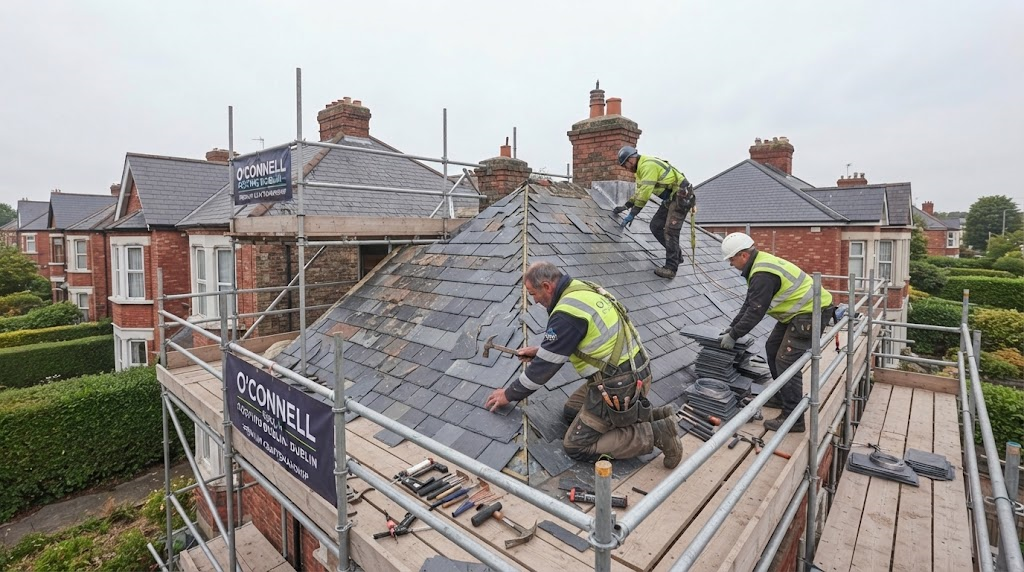
Your roof is one of the hardest-working parts of your property. Day after day, it protects the building from rain, wind, cold weather, moisture, falling debris, and changing temperatures.
Unfortunately, many homeowners do not think about their roof until water starts appearing on a ceiling or a storm sends tiles to the ground.
By then, a relatively small roofing problem may already have affected insulation, timber, plaster, or other parts of the building.
Choosing experienced Roofers Dublin property owners can rely on is therefore about more than fixing a visible leak. A good roofing contractor should be able to inspect the complete roof system, identify the source of the problem, recommend an appropriate solution, and help prevent further damage.
AMR Roofing currently provides roofing services across Dublin for both residential and commercial properties, including roof repairs, complete roof replacement, new installations, skylight work, fascia and soffit services, guttering, roof carpentry, structural repairs, inspections, tiled roofing, and flat roofing.
Whether you have a minor leak or an aging roof that may need replacement, understanding the basics can help you make a more informed decision.
Why Roofing Maintenance Matters in Dublin
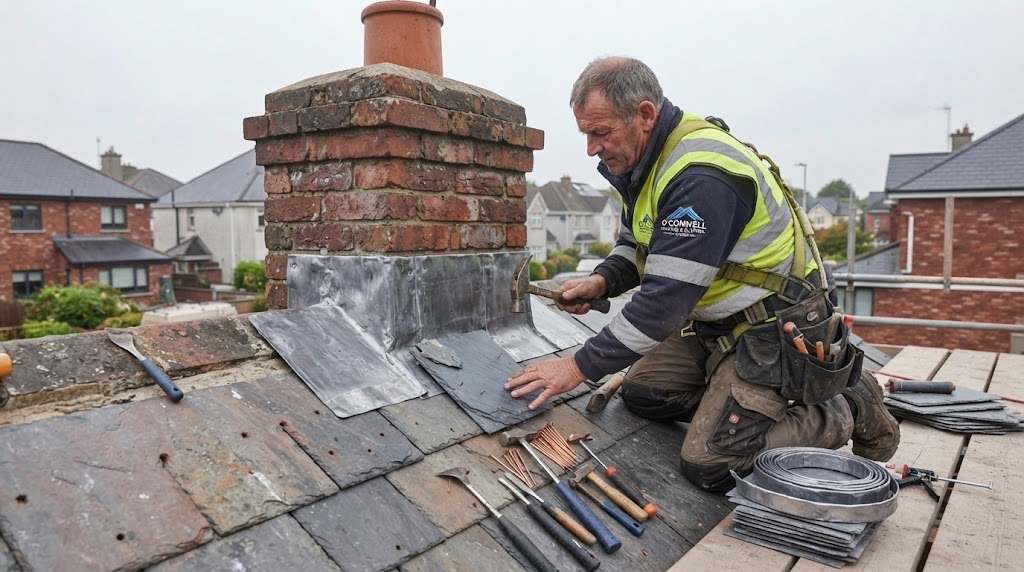
Dublin’s climate makes good roof maintenance especially important.
Rain does not need to be extreme to cause problems. Repeated exposure can eventually reveal weaknesses in cracked tiles, damaged flashing, blocked gutters, or poorly sealed roof penetrations.
Met Éireann’s 1991–2020 climate averages for Dublin Airport show measurable rainfall on a large number of days each year. The same climate data also records regular periods of stronger winds, particularly during the cooler months.
Met Éireann notes more broadly that Ireland’s prevailing winds are generally between south and west, although local terrain and buildings can influence conditions around Dublin.
For a roof, that means repeated weather exposure throughout the year.
A loose tile that survives one storm may shift during the next. Small cracks in flashing may gradually widen. Gutters that are partially blocked can overflow during heavy rain and send water onto walls or roof edges.
Regular roof maintenance helps identify these problems before they become more expensive.
Common Roofing Problems Dublin Property Owners Face
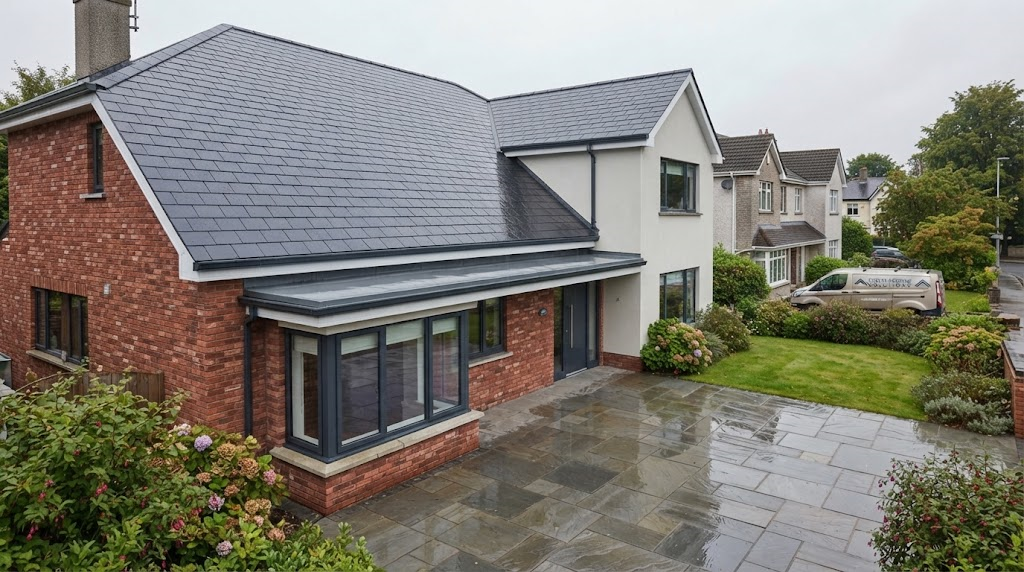
Some roof problems develop suddenly, while others become worse over several years.
Recognizing the early signs can save time and money.
Roof Leaks
A leak is one of the clearest signs that a roofing system needs attention.
However, the place where water appears indoors is not always directly below the actual defect. Water can move along roofing felt, rafters, joists, and other surfaces before reaching a ceiling.
Possible causes include:
- Broken or missing tiles
- Damaged slate
- Failed flashing
- Chimney defects
- Cracked roofing materials
- Flat roof membrane damage
- Blocked drainage
- Poorly sealed roof penetrations
AMR Roofing lists leak repairs as one of its regular services and works on both tiled and flat roofs across Dublin.
Missing or Damaged Tiles
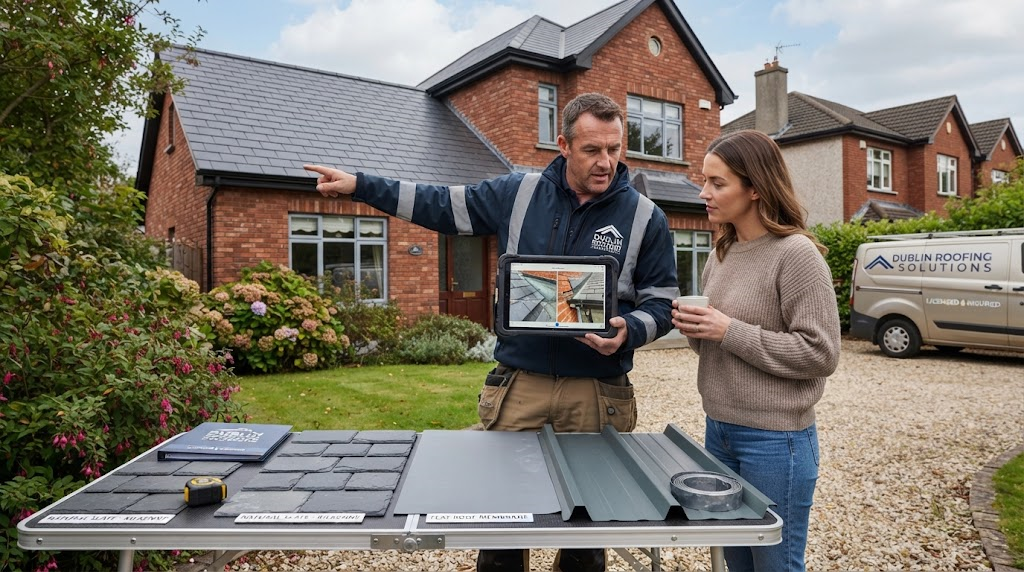
High winds and age can loosen tiles or slate.
Even a small exposed section of roof can allow water to reach the layers underneath.
Individual tile replacement may be straightforward when the surrounding roof remains in good condition, but repeated tile failure can sometimes indicate a larger issue.
Damaged Flashing
Flashing protects some of the most vulnerable points on a roof.
You will often find it around chimneys, valleys, skylights, and places where a roof meets another wall.
When flashing becomes loose, cracked, corroded, or poorly sealed, water may enter the building even when the main roof covering is still sound.
Flat Roof Problems
Flat roofing requires careful waterproofing and drainage.
Water that remains on the surface for long periods can contribute to deterioration, especially when the membrane is already damaged.
AMR Roofing currently works with felt, EPDM rubber, and fiberglass flat roofing systems and performs both installation and repair work.
When Should You Call Professional Roofers in Dublin?
Some roofing problems are obvious.
Others require professional inspection.
You should consider arranging an inspection if you notice water stains, damp patches, missing tiles, visible roof damage, gutter problems, sagging sections, daylight entering an attic, or unexplained moisture around a chimney.
It is also sensible to inspect a roof after significant weather.
Met Éireann’s recent records show that Dublin experiences individual days with heavier rainfall and periods when wind speeds reach thresholds relevant to construction and property exposure.
You do not necessarily need to wait for an indoor leak before calling a roofer.
Preventive inspection is often less disruptive than emergency repair.
What Happens During a Professional Roof Inspection?
A proper roof inspection should examine more than one damaged tile.
The roofer should look at the overall condition of the roof and the areas most likely to allow water intrusion.
AMR Roofing says its roof inspections typically assess tiles or slate, flashing, gutters, structural areas, water damage, broken or missing materials, and other potential weak points.
Exterior Inspection
The contractor may inspect:
- Tiles or slate
- Ridge areas
- Valleys
- Chimneys
- Flashing
- Skylights
- Flat roof membranes
- Gutters
- Fascia and soffits
- Roof edges
Photos can make it easier for the property owner to understand what the roofer has found.
Interior Inspection
When accessible, checking the attic or roof space may reveal moisture that is not visible from outside.
Common signs include damp timber, staining, mold, water marks, damaged insulation, or visible daylight.
The roof should be treated as a complete system rather than simply a decorative exterior covering.
Roof Repair vs. Roof Replacement
One of the biggest decisions a property owner faces is whether to repair the existing roof or replace it.
There is no single answer that works for every building.
When Roof Repair Makes Sense
Repairs may be appropriate when the problem is localized and most of the roof is still performing well.
Examples include:
- A few damaged tiles
- Minor flashing failure
- A localized leak
- Small gutter damage
- Limited flat roof membrane damage
- Isolated chimney-related issues
In these situations, replacing the entire roof may be unnecessary.
When Roof Replacement May Be Better
Replacement becomes more practical when damage is widespread or when the roof has reached a condition where frequent repairs no longer provide lasting value.
Warning signs can include repeated leaks, extensive tile or slate deterioration, damaged roof structure, widespread membrane failure, or multiple sections requiring repair.
AMR Roofing provides full roof replacement services as well as smaller repairs, allowing the appropriate scope to depend on the condition of the property.
A trustworthy contractor should be able to explain why replacement is being recommended.
Different Types of Roofing in Dublin
Dublin contains a wide variety of architecture, from older homes with traditional slate roofs to newer developments and commercial properties with modern roofing systems.
That means professional Roofers Dublin should be familiar with several materials and installation methods.
Slate Roofing
Slate is widely associated with traditional Irish architecture.
A properly installed slate roof can provide a classic appearance and strong weather resistance.
However, damaged or slipped slate should be repaired carefully because surrounding pieces can also be disturbed if the work is not handled correctly.
Matching replacement slate can also help maintain the property’s appearance.
Tiled Roofing
Clay and concrete tiles are common on many residential properties.
Typical repairs include replacing broken tiles, correcting ridge problems, dealing with damaged valleys, and fixing water entry around roof details.
AMR Roofing states that it repairs slate, concrete, and clay tile systems and can match existing materials where appropriate.
Flat Roofing
Flat roofs are commonly found on extensions, garages, commercial buildings, and some modern homes.
Systems can include felt, EPDM, fiberglass, and other membranes.
Because flat roofs depend heavily on waterproofing and drainage, installation quality is especially important.
Water should be able to move toward suitable drainage points rather than remaining on the roof.
Why Roof Ventilation Matters
Roofing is not only about keeping rain outside.
A roof also has to manage moisture generated inside the building.
Cooking, showering, heating, breathing, and everyday activities release moisture into indoor air.
Ireland’s Department of Housing explains that ventilation is important for removing moisture and pollutants from buildings, while the Building Regulations include requirements dealing with ventilation and resistance to moisture.
Poor ventilation can contribute to condensation.
Over time, excessive moisture in a roof space may encourage mold growth or affect timber and insulation.
If a roofer identifies a ventilation problem, simply replacing damaged roof materials without addressing the moisture source may not provide a lasting solution.
Do Not Forget Gutters, Fascia, and Soffits
A roofing system does not stop at the tiles.
Gutters, fascia boards, soffits, and downpipes all contribute to protecting the property.
Gutters collect rainwater and direct it away from walls and foundations.
When they become blocked by leaves, moss, or debris, water can overflow.
Damaged gutters may also leak directly onto walls.
Fascia and soffits can deteriorate when exposed to persistent moisture, especially when roof-edge or gutter problems remain unresolved.
AMR Roofing includes fascia, soffit, and guttering work among its Dublin roofing services.
Emergency Roof Repairs After Storm Damage
Storm-related damage can happen quickly.
Strong winds may loosen slate or tiles, damage flashing, lift roofing materials, or cause branches and debris to strike the building.
If storm damage occurs, safety comes first.
Do not climb onto a wet or unstable roof yourself.
Instead, look for visible damage from a safe location and contact a roofing professional.
If water is entering the property, moving valuable items away from the affected area and containing indoor water may reduce additional damage until professional repairs can be made.
AMR Roofing markets emergency roofing and repair services throughout Dublin for urgent problems.
How to Choose Roofers Dublin Homeowners Can Trust
Price matters, but it should not be the only factor.
Roofing affects the structure and weather protection of your property, so poor workmanship can create significant long-term costs.
Ask About Roofing Experience
A contractor should have experience with the specific roof system on your property.
Someone who mainly works on tiled pitched roofs may not automatically have the same level of expertise with complex flat roofing systems.
Request a Clear Written Quote
A quote should explain what work is included.
Depending on the project, it may cover:
- Removal of damaged roofing
- Replacement materials
- Flashing
- Gutters
- Timber repairs
- Flat roof membrane
- Labor
- Waste removal
- Scaffolding
- Warranty or guarantee details
Avoid making decisions based entirely on a verbal estimate.
Ask About Guarantees
Written guarantees can provide additional confidence, but always understand exactly what is covered and for how long.
AMR Roofing states that its projects are supplied with written guarantees, while AMR Construction says new roofs receive a 10-year guarantee.
Look for Proper Insurance and Professional Practices
Roofing involves working at height and around valuable property.
Contractors should follow appropriate safety practices and carry relevant insurance.
It is also reasonable to ask how the company protects gardens, driveways, windows, vehicles, and neighboring properties during work.
Preventive Roof Maintenance Can Save Money
One of the best ways to avoid emergency roofing expenses is to find problems early.
A simple maintenance plan can include periodic visual checks, cleaning gutters, watching for cracked or missing materials, monitoring ceilings for stains, checking the attic after heavy rain, and arranging professional inspections when something looks unusual.
Do not ignore a small leak because it only appears during severe rain.
Intermittent leaks still indicate that water is getting somewhere it should not.
Likewise, one missing tile should not be dismissed simply because the ceiling is currently dry.
Roofing problems are usually easier to manage before water reaches the interior structure.
Frequently Asked Questions About Roofers Dublin
What services do Dublin roofers provide?
Services can include roof repairs, complete replacement, new roof installation, flat roofing, tiled and slate roof repairs, skylight work, chimney flashing, gutters, fascia, soffits, inspections, structural roofing repairs, and emergency services.
How do I know if my roof needs repair or replacement?
Localized problems can often be repaired. Replacement may be more suitable when deterioration is widespread, the roof repeatedly leaks, or structural damage is present. A professional inspection should guide the decision.
Can Dublin roofers repair flat roofs?
Yes. Contractors experienced with flat roofing can repair or install systems such as felt, EPDM, and fiberglass. AMR Roofing lists all three among the flat roofing systems it works with.
What causes roof leaks?
Common causes include damaged tiles, missing slate, worn flashing, chimney defects, failed flat roof membranes, blocked drainage, and damaged roof penetrations.
Should I arrange a roof inspection after a storm?
It can be sensible after significant wind or rainfall, especially if you notice missing materials, debris around the property, indoor moisture, or visible roof damage.
How often should gutters be checked?
Gutters should be inspected regularly and cleaned when leaves, moss, or debris begin restricting water flow. Properties surrounded by trees may need more frequent attention.
Is ventilation part of roofing?
Yes. Depending on roof construction, ventilation can play an important role in controlling condensation and moisture in the roof space. Ireland’s building guidance specifically addresses ventilation and moisture management.
Should I choose the cheapest roofing quote?
Not automatically. Compare the scope of work, materials, experience, insurance, guarantees, and what is included in the quoted price. A lower quote can cost more later if essential work has been excluded.
Conclusion
Your roof protects far more than the top of your property. It protects the building structure, insulation, ceilings, electrical systems, belongings, and people underneath it.
Dublin’s regular rainfall and periodic strong winds make proper installation and ongoing maintenance especially important.
Small problems such as a damaged tile, weak flashing, blocked gutter, or minor membrane defect should not automatically cause panic. In many cases, targeted repair can restore the roof effectively.
However, repeated leaks, widespread deterioration, or structural problems deserve a more complete assessment.
The most important step is choosing experienced Roofers Dublin property owners can rely on to inspect the entire roof, explain the problem clearly, and recommend work based on actual conditions.
AMR Roofing currently serves residential and commercial properties throughout Dublin, offering roof repairs, full replacements, flat and tiled roofing, inspections, guttering, fascia and soffit work, structural roofing repairs, skylight services, and emergency roofing assistance.
Whether you are dealing with an urgent leak or simply want to understand the condition of an aging roof, taking action early can help protect your property, reduce avoidable repair costs, and keep your roof performing properly through Dublin’s changing weather.

