
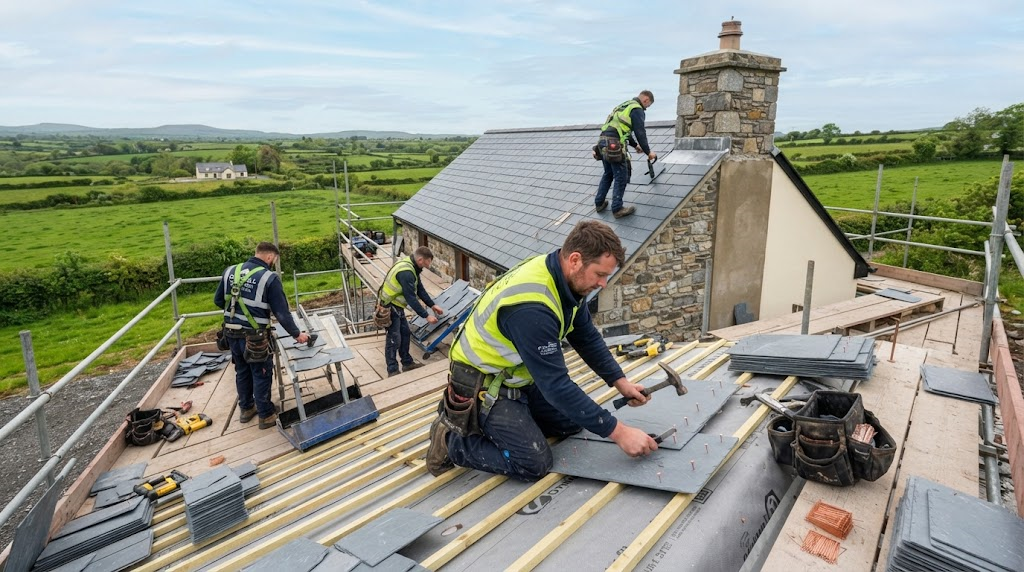
A roof is one of the most important protective systems on any home or commercial building. It shields the structure from rain, wind, changing temperatures, moisture, and the everyday weather conditions that can gradually damage a property.
For homeowners planning roof installation in Limerick, choosing the right materials and contractor is only part of the decision. A successful roof also depends on the condition of the underlying structure, correct drainage, appropriate ventilation, weatherproof detailing, quality materials, and careful installation.
Those factors are especially important in Ireland. Met Éireann reports that rainfall in western Ireland generally averages between 1,000 and 1,400 millimeters annually, with autumn and winter typically bringing some of the wetter months. Ireland also experiences predominantly southerly and westerly winds at open locations.
A properly installed roof therefore needs to do more than look attractive. It must function as a complete weather-resistant system.
Whether you are building a new property, replacing an aging roof, renovating a home, or addressing extensive storm damage, understanding the roof installation process can help you make better decisions.
Why Professional Roof Installation Matters
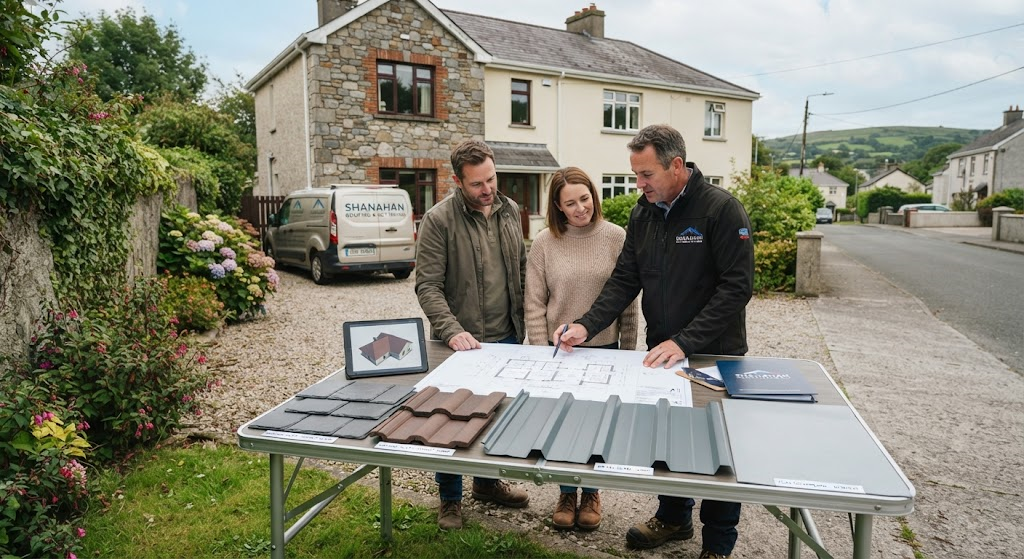
Roofing can look simple from the ground. In reality, multiple layers and details must work together.
The visible slate, tile, metal, or membrane is only one part of the finished system. Underneath it may be decking, underlay, insulation, ventilation spaces, battens, structural timbers, and moisture-control components. Around chimneys, valleys, roof edges, skylights, and adjoining walls, carefully installed flashing helps direct water away from vulnerable areas.
If one part is installed poorly, water may eventually find a path into the building.
This is why professional roof installation in Limerick should begin with an inspection rather than immediately covering the existing structure.
Ark Roofing states that its installation process starts by examining the existing roof and structure underneath, checking the roof deck for water damage and identifying structural problems that may need attention before new materials are installed.
This initial evaluation can prevent a new roof covering from hiding older problems underneath.
Signs You May Need a New Roof
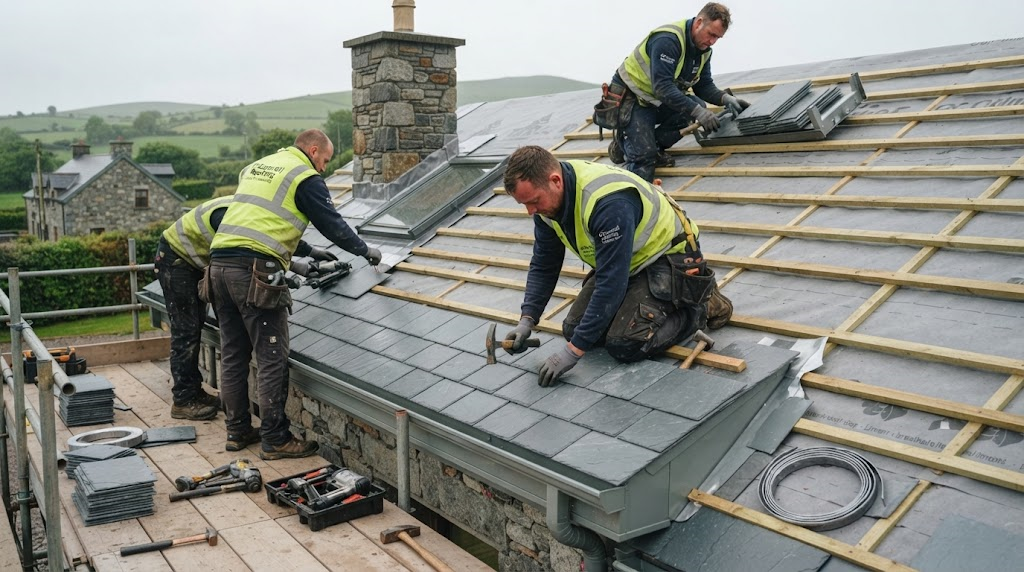
Not every leak means you need a complete replacement. Localized problems can often be repaired.
However, a new roof may become the more practical option when deterioration is widespread.
An older roof may show repeated leaks, cracked or missing slates and tiles, deteriorated flashing, damaged underlay, sagging sections, persistent moisture, rotting timber, or frequent repair needs.
Another important warning sign is repeated repair work that no longer provides a lasting solution.
If one section is repaired and another starts leaking soon afterward, the entire roofing system may need closer inspection.
A qualified roofer should explain whether repair or replacement is appropriate based on actual roof conditions rather than recommending a full installation automatically.
What Happens During Roof Installation in Limerick?
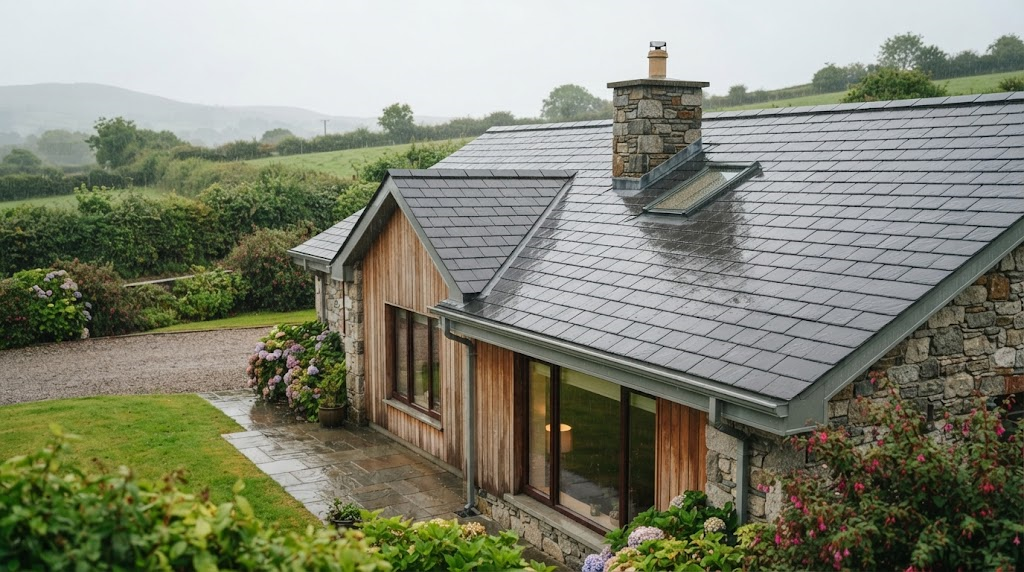
A quality installation follows an organized process. Exact steps vary according to the building and roofing material, but the overall sequence is generally similar.
Initial Roof Inspection
Before installation begins, the contractor should inspect the property.
This is the opportunity to assess the existing roof, measure the building, identify potential structural problems, review drainage, and discuss the homeowner’s priorities.
Ark Roofing says its pre-installation assessment includes reviewing the roof deck, checking for water damage, measuring the project, and discussing whether the installation is residential or commercial.
A detailed inspection can also help reduce unexpected changes after work begins.
Removing the Existing Roof
For a replacement project, old roofing materials may need to be stripped away.
Removing the existing covering exposes the structure beneath it so damaged decking, timber, or other components can be identified.
This stage matters because installing premium new material over a deteriorating substrate does not solve the underlying problem.
Ark Roofing describes removing the old roof, protecting surrounding areas such as driveways and gardens, and inspecting the exposed roof deck before proceeding with the new system.
Repairing the Roof Structure
Any significant deterioration discovered after removal should be corrected before the new roof covering is installed.
Depending on the property, repairs might involve decking, timber, roof edges, chimney areas, or other structural elements.
The goal is to create a stable base for the new roofing system.
Installing Underlay and Weather Protection
The next stage involves the protective layers beneath the visible roof covering.
Underlay provides an additional defense against water that reaches beneath tiles, slate, or other external materials.
Flashing and edge details are also important around chimneys, valleys, walls, skylights, and other locations where water commonly finds entry points.
Ark Roofing states that its installation sequence includes underlay followed by drip edges and flashing before the selected exterior roofing material is installed.
Installing the Roofing Material
Once the roof structure and protective layers are ready, the primary covering can be installed.
The correct installation method varies considerably between slate, tile, metal, shingles, and flat roofing membranes.
Following manufacturer requirements is especially important where product warranties depend on approved installation methods.
Choosing the Right Roofing Material
Selecting roof material should involve more than appearance.
Budget, roof pitch, structural capacity, maintenance needs, expected service life, architecture, and exposure to wind and rain all matter.
Ark Roofing currently lists asphalt shingles, metal roofing, slate tiles, and rubber membrane systems among the materials it offers for roof projects in Limerick.
Slate Roofing
Slate is associated with many traditional Irish buildings and can provide a distinctive, premium appearance.
Quality slate can offer a long service life when correctly installed and maintained. Its weight, however, means the roof structure must be suitable for the selected system.
Slate installation also requires careful detailing around ridges, valleys, chimneys, and roof penetrations.
Tile Roofing
Roof tiles are another practical option for many pitched properties.
Different tile products offer variations in appearance, weight, weather performance, and cost. The roof pitch and underlying structure should be considered before making a final decision.
Metal Roofing
Metal roofing can offer durability and a modern appearance for suitable residential, agricultural, or commercial buildings.
Correct fastening, flashing, ventilation, and expansion detailing are important to long-term performance.
Flat Roofing Membranes
Flat and low-slope roofs require a different approach.
Ark Roofing says its flat-roof services include felt, EPDM rubber, and other membrane solutions for areas such as extensions, garages, and commercial spaces. The company also emphasizes the importance of drainage because standing water can contribute to roof problems.
A flat roof should be designed as a complete drainage and waterproofing system rather than treated like a low version of a pitched roof.
Why Limerick Weather Matters When Choosing a Roof
Ireland’s climate places consistent demands on roofing systems.
Met Éireann reports annual rainfall averages of approximately 1,000 to 1,400 millimeters across much of western Ireland, while mountainous districts can receive considerably more. December is the wettest month nationally in the 1991–2020 climate period, followed closely by October, November, and January.
That makes water management particularly important.
Roof coverings need to shed rain effectively, but gutters, valleys, flashings, membranes, roof edges, and drainage outlets are equally important.
Wind exposure matters as well.
Met Éireann notes that winds at open Irish locations most frequently come from the south and west.
This is one reason roofing materials should be securely installed using methods appropriate for the building and local exposure.
Roof Ventilation Should Not Be Overlooked
A roof must manage moisture from inside the building as well as rain from outside.
Ireland’s Building Regulations include specific requirements relating to roof condensation. Part F requires adequate provision to prevent excessive condensation within a roof or roof void above an insulated ceiling.
For certain cold-roof arrangements, proper ventilation helps remove moisture before it contributes to mold, condensation, or timber deterioration.
The National Building Control Office specifically notes that adequate ventilation is required when installing insulation below the roof deck in relevant cold-roof constructions and warns that condensation can contribute to mold and rot.
This means insulation should not simply be packed into a roof without considering how the overall assembly handles moisture.
Ventilation, insulation, underlay, vapor control, and roof design need to work together.
Energy Efficiency and a New Roof
A roofing project may also provide an opportunity to examine insulation.
Older properties can lose heat through poorly insulated roof spaces, while incorrect insulation installation can create moisture problems.
The Sustainable Energy Authority of Ireland emphasizes that roof insulation should not interfere with necessary cross-flow ventilation in ventilated cold pitched roofs. Its technical guidance also states that suitable materials should be used and installed by appropriately qualified people.
The goal is therefore not simply “more insulation.”
The goal is an efficient roof assembly that controls heat loss while managing moisture safely.
How Long Does Roof Installation Take?
Project duration varies.
Roof size, design complexity, pitch, material choice, accessibility, structural repairs, and weather can all affect scheduling.
Ark Roofing states that many residential installations may take roughly one to three days, although hidden damage or weather conditions can extend the project.
Larger, more complex, or commercial projects may naturally require additional time.
Homeowners should be cautious about treating a short estimated schedule as a guarantee. Proper installation is more important than rushing work to meet an unrealistic deadline.
How to Prepare Your Property for Roofing Work
Roof replacement creates noise, vibration, debris, and frequent movement around the property.
Before work starts, consider moving vehicles away from the building and securing valuable items in the attic. Fragile wall decorations may also need to be temporarily removed if vibration could affect them.
Neighbors may appreciate advance notice, especially where houses are close together.
Children and pets should stay clear of active work zones, scaffolding, tools, and material-storage areas.
A professional roofing crew should also explain how it will protect driveways, gardens, windows, and other areas surrounding the property.
Choosing a Roofing Contractor in Limerick
The quality of the contractor matters just as much as the material.
Ask how long the company has worked locally, whether it is insured, what roofing systems its crews regularly install, and what documentation you will receive.
A written quote should clearly explain the scope of work rather than presenting only one total price.
Look for information about removal, structural repairs, roofing material, underlay, flashing, ventilation, gutters, waste disposal, labor, warranties, and possible additional costs.
Ark Roofing says its estimates address labor, materials, and structural or roof-deck repairs identified as part of the work. The company also states that it removes old roofing waste and conducts a final check of areas such as flashing, roofing security, and ventilation.
Those are useful points to discuss with any contractor you are considering.
New Roof Installation vs. Roof Repair
One common mistake is assuming that every damaged roof needs complete replacement.
Repair may be appropriate when damage is localized and most of the roof remains in good condition.
For example, isolated broken slate, damaged flashing, or a small leak may have a targeted solution.
Replacement becomes more reasonable when deterioration is widespread, structural components are damaged, leaks repeatedly return, or a large percentage of the roof is reaching the end of its useful life.
The decision should follow an inspection.
A reputable roofer should be able to explain why replacement is necessary and show the conditions supporting that recommendation.
Frequently Asked Questions About Roof Installation in Limerick
How do I know whether I need roof installation or just repairs?
A professional inspection is the best way to determine this. Isolated defects may be repairable, while widespread deterioration, recurring leaks, structural damage, or an aging roofing system may justify full replacement.
What roofing materials can be used in Limerick?
Options can include slate, tile, metal, asphalt shingles, felt, EPDM, and other roof systems depending on the property. Roof pitch, structure, appearance, weather exposure, and budget should guide the decision.
How long does a new roof take to install?
Ark Roofing estimates that many typical home projects can take around one to three days, but larger roofs, difficult access, weather, and unexpected structural damage can increase that timeframe.
Is ventilation important when installing a roof?
Yes. Irish Building Regulations require adequate measures to prevent excessive roof condensation, and ventilation can be an important part of moisture control depending on the roof construction.
Should the old roof be removed first?
For many full replacement projects, removing the existing materials allows the contractor to inspect the underlying deck and structure. The exact approach depends on the roof design and condition.
Can a flat roof be completely replaced?
Yes. Flat roofs can be repaired or fully replaced using appropriate membrane systems. Correct drainage, waterproof detailing, and installation are particularly important.
Should gutters be checked during roof installation?
Yes. Roofing and gutters work together to move water away from a building. Damaged or blocked gutters can undermine an otherwise good roofing system by allowing water to overflow onto walls and other areas.
Do I need to think about insulation during a new roof project?
It is a sensible time to review insulation, but ventilation and condensation control must also be considered. Insulation should be installed as part of a properly designed roof assembly rather than added without regard to moisture movement.
Conclusion
A new roof is a major property investment, and good results depend on much more than selecting an attractive exterior material.
Successful roof installation in Limerick starts with a careful inspection. The roof structure must be sound, damaged components should be repaired, underlay and flashing need correct installation, drainage must work efficiently, and ventilation and insulation need to be considered as parts of the same system.
Local weather reinforces the importance of those details. Ireland receives substantial rainfall, particularly across western areas, and exposure to wind and moisture means a roof needs reliable weatherproofing from ridge to gutter.
Property owners should compare roofing materials based on their building rather than selecting only by appearance or initial price. Slate, tile, metal, shingles, and flat-roof membranes each have different strengths and installation requirements.
Equally important is choosing an experienced contractor who will explain the condition of the existing roof, provide a clear written scope, use suitable materials, address ventilation and drainage, and complete final checks before leaving the property.
Ark Roofing provides roof installation in Limerick for residential and commercial properties and says its process covers inspection, material selection, removal of existing roofing where required, deck repairs, underlay, flashing, installation, cleanup, and final inspection.
Taking the time to plan each of these stages can help ensure that a new roof does what it is supposed to do: protect the property reliably through years of rain, wind, seasonal temperature changes, and everyday exposure to the Irish climate.

