Redesigning a room can be exciting, but it can also become expensive very quickly. A paint color that looked perfect on a small sample may feel completely different across four walls. A sofa that seemed ideal online may overwhelm the room. Even a beautiful Pinterest inspiration photo may not translate well to your actual windows, floor plan, lighting, or ceiling height.
That is where ai room design can be useful.
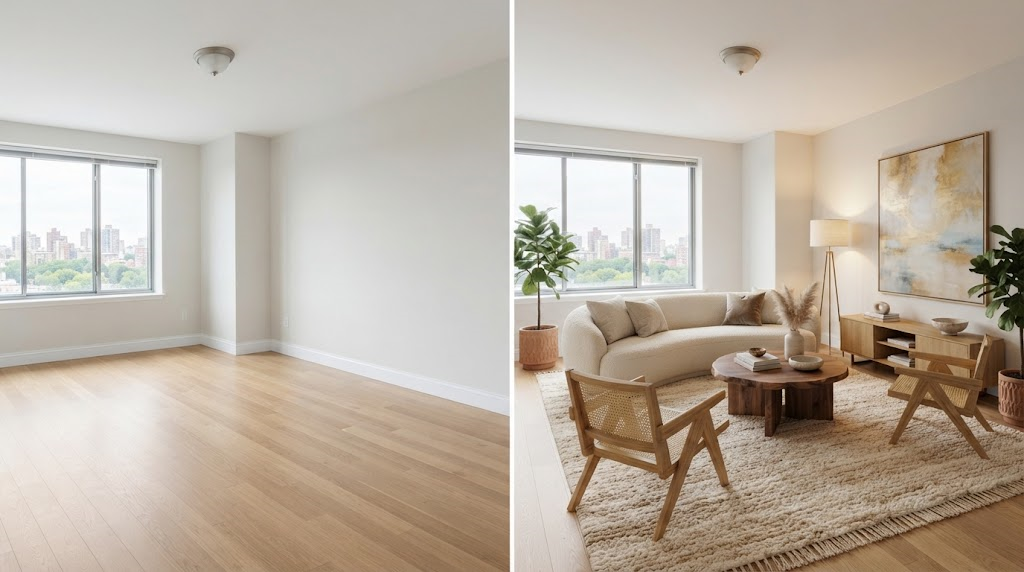
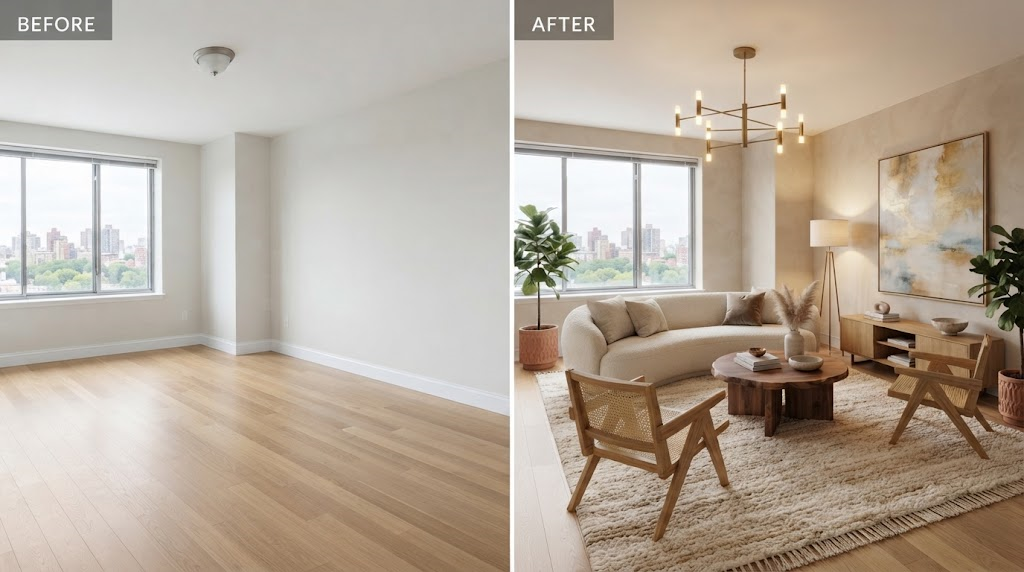
Instead of imagining how a space might look, AI-powered interior design tools can generate visual concepts from a photograph of your real room. You upload an image, choose a style or describe what you want, and the software creates a redesigned version that can help you explore furniture, colors, materials, and overall atmosphere before making major purchases.
RoomDesignGPT, for example, currently allows users to upload a room photo and generate a photorealistic redesign while aiming to preserve the existing walls, windows, doors, and proportions. The platform offers more than 60 curated design styles and supports spaces including living rooms, bedrooms, kitchens, bathrooms, offices, kids’ rooms, patios, and other indoor or outdoor areas.
For U.S. homeowners, renters, real estate professionals, and renovation companies, this type of technology can make early design decisions much easier.
What Is AI Room Design?

AI room design uses artificial intelligence to generate interior design concepts based on an existing room image, floor plan, or written description.
Traditional interior visualization often requires professional 3D software. A designer may need to measure the space, model the room, add materials, place furniture, adjust lighting, and render several versions.
AI dramatically shortens that early concept stage.
With modern tools, the process can be as simple as taking a photo on your phone and selecting a preferred interior style.
RoomDesignGPT describes its workflow in three main steps: upload a room photo, choose from available styles, and generate a photorealistic redesign. The system is designed to keep the basic structure of the existing space while modifying furniture, colors, finishes, and styling.
AI Design Is a Visualization Tool

An important distinction is that an AI-generated room is generally a design concept, not a construction document.
AI can show you what a kitchen might look like with warm wood cabinetry or how a living room could feel with a curved sofa and softer colors.
It does not automatically confirm structural feasibility, building codes, exact measurements, electrical requirements, plumbing locations, load-bearing conditions, or whether a specific piece of furniture will physically fit.
For major renovations, AI visualization should complement—not replace—qualified contractors, architects, engineers, or interior designers.
Why AI Room Design Is Becoming Popular
The main attraction is simple: people want to see ideas before spending money.
Furniture, flooring, cabinets, lighting, paint, and remodeling labor can represent a significant investment. Testing concepts digitally can help homeowners narrow down a direction before making irreversible decisions.
Faster Design Exploration
Imagine that you want to redesign your living room.
Without AI, you might collect dozens of inspiration photos and try to mentally combine them.
With an AI room planner, you can use the same room photo to test:
- Scandinavian
- Japandi
- Contemporary
- Mid-century modern
- Industrial
- Coastal
- Traditional
- Maximalist
RoomDesignGPT currently offers more than 60 designer-tuned styles and allows users to generate several versions of the same room for comparison.
That can make it easier to discover styles you would not have considered otherwise.
How AI Helps With Real Interior Design Decisions
The strongest use of ai room design is not creating a fantasy home. It is helping you make practical decisions about a real one.
Test Color Palettes Before Painting
Paint is relatively affordable compared with a full renovation, but repainting an entire room because you chose the wrong color still costs time and money.
AI can help you compare a warm beige room with a deep green one or see whether dark blue walls make your bedroom feel cozy or visually smaller.
This is especially useful because current U.S. design preferences are moving toward warmer and earthier color palettes.
Houzz’s 2026 U.S. Emerging Summer Trends Report found strong increases in searches for colors such as rust, chocolate brown, mushroom, sage, taupe, and cream.
AI lets you experiment with those trends without immediately committing to them.
Explore Furniture Layouts
Furniture can dramatically change how a room feels.
A large sectional may make sense in a spacious family room but overwhelm a narrow apartment living room.
AI tools can help you visualize different furniture styles and approximate placements.
RoomDesignGPT says its system is designed to preserve the room’s overall layout and proportions while changing furniture and styling, which makes the concept more relevant to the user’s actual space than a completely invented room.
However, always verify dimensions manually before ordering furniture.
Use AI for Living Room Design
The living room is one of the best places to start.
It often contains several expensive pieces—sofa, coffee table, rug, lighting, storage, artwork—and those elements need to work together.
An AI living room design can help answer questions such as:
Will a cream sofa work with dark floors?
Should the room use warm wood or black furniture?
Would a larger rug make the seating area feel more cohesive?
Could curved furniture soften a boxy room?
This last question is particularly timely. Houzz reported significant 2026 growth in searches related to curves and softer architectural geometry, including rounded kitchen islands, arched pantries, and wave-like design elements.
AI makes these trends easy to test without purchasing anything first.
AI Bedroom Design
Bedrooms are more emotional spaces than many homeowners realize.
Lighting, wall color, fabric texture, bed placement, and visual clutter can strongly affect how restful the room feels.
With bedroom design AI, you can test:
- Dark and moody bedrooms
- Light Scandinavian spaces
- Hotel-inspired luxury
- Warm minimalist interiors
- Organic modern design
- Traditional rooms
- Japandi bedrooms
A useful approach is to generate several versions and ask yourself which one you would actually want to wake up in every morning—not simply which image looks most dramatic.
Think Beyond Appearance
A successful bedroom still needs enough storage, walking space, bedside access, and practical lighting.
The AI image should inspire your decisions rather than dictate them.
Kitchen Design With AI
Kitchen remodeling involves much higher stakes.
Cabinets, countertops, flooring, backsplashes, appliances, and installation costs can add up quickly.
Using AI before finalizing materials can help homeowners explore broad design directions.
For example, you could compare:
A warm traditional kitchen with wood cabinetry.
A bright coastal kitchen with pale stone.
A dark modern kitchen with dramatic lighting.
A mid-century kitchen with walnut cabinets.
RoomDesignGPT currently includes dedicated kitchen and bathroom style concepts such as Tuscan, mid-century, traditional, Japandi, Art Deco, and coastal designs.
Again, an AI render should not replace accurate cabinet measurements or professional planning, but it can help you communicate the atmosphere you want to a contractor or designer.
Bathroom Design and Renovation Visualization
Bathrooms are another area where visual planning matters.
Tile, vanity styles, mirrors, hardware, shower glass, lighting, and wall colors must work within a relatively small space.
AI can help you compare an airy spa-inspired bathroom with a darker luxury concept without physically changing anything.
Current design interest also favors tactile materials and surface texture. Houzz’s 2026 trend data showed increased searches for sandstone, linen wallpaper, seagrass wallpaper, Venetian plaster, terracotta flooring, and limewash finishes.
Those textures can be difficult to imagine from individual samples. AI visualization can help show how they might work together.
AI Room Design for Renters
You do not need to own a home to benefit.
Renters often face more restrictions because they cannot replace cabinets, move walls, or make permanent changes.
AI can focus instead on:
- Rugs
- Curtains
- Lamps
- Artwork
- Furniture
- Bedding
- Temporary décor
- Plants
- Removable wallpaper
Ask the AI to preserve flooring, walls, doors, windows, and fixed cabinetry while changing only movable items.
That creates a much more realistic makeover plan.
AI Virtual Staging for Real Estate
Real estate professionals are another major audience for AI interior tools.
An empty home can make it difficult for buyers to understand scale or imagine how rooms might function.
Virtual staging adds furniture and décor digitally.
RoomDesignGPT specifically positions its platform for real estate agents who want to stage empty listings and for developers, rental hosts, and brands that need interior visuals without physically furnishing every space.
Keep Virtual Staging Transparent
Real estate professionals should avoid using AI in ways that misrepresent a property’s permanent features.
Adding furniture is very different from digitally removing structural problems or showing renovations that do not exist without clearly identifying the image as conceptual.
Accurate disclosure helps buyers understand what they are viewing.
AI Design for Interior Designers and Contractors
AI does not have to compete with professional designers.
It can become another tool in their workflow.
Instead of spending substantial time developing several early concepts, a designer can produce rough visual directions, discuss them with the client, and then develop the strongest idea in detail.
RoomDesignGPT says its platform is aimed in part at designers, renovation companies, and contractors who want to show clients multiple realistic concepts more quickly.
Contractors can also use an AI concept to better understand a homeowner’s preferences before preparing more detailed proposals.
How to Get Better AI Room Design Results
Good input usually produces better output.
Start with a clear photo showing as much of the room as possible.
Try to avoid extreme angles, heavy clutter, or very dark lighting.
Then describe what you want with specific language.
Instead of:
“Make my living room nicer.”
Try:
“Warm contemporary living room with cream walls, medium-tone oak furniture, a curved beige sofa, large textured rug, linen curtains, brass floor lamp, and soft earthy accents. Keep the windows, doors, ceiling, and room proportions unchanged.”
The more clearly you separate what should change from what should stay the same, the easier it becomes to evaluate the result.
Mood Boards and Material Planning
A photorealistic image tells you how the room might feel, but you still need to translate it into real products and finishes.
RoomDesignGPT currently provides color, material, and furniture cues with its renders and also supports mood-board-style planning.
Use those details to create a shopping list.
Instead of trying to buy the exact fictional chair shown by the AI, identify the characteristics:
Warm walnut.
Rounded arms.
Low profile.
Cream upholstery.
Then look for real products matching those features.
Floor Plans and Space Planning
AI interior tools are expanding beyond photographs.
RoomDesignGPT says users can upload a floor-plan sketch and create a labeled 2D plan with realistic proportions.
This can be useful during early planning, but precise renovation work still requires verified measurements.
Measure twice before purchasing built-in furniture, cabinets, flooring, or anything made to fit.
Privacy and AI Room Photos
Uploading pictures of your home creates understandable privacy concerns.
Before using any AI interior tool, read its privacy terms and understand how uploaded images are handled.
RoomDesignGPT states that room uploads are stored privately, are not shared publicly by default, and are not used to train its model.
Regardless of the platform, it is still sensible to remove visible personal documents, family photographs, addresses, security-system information, or other sensitive material before uploading room images.
Can You Try AI Room Design for Free?
Some platforms allow limited free testing.
RoomDesignGPT currently says users can try their first AI room design without creating an account, entering a credit card, or accepting a watermark on the trial output. Paid options add additional generations, history, high-resolution downloads, and commercial usage rights.
Pricing and feature limits can change, so users should review the current plan information before purchasing.
Frequently Asked Questions About AI Room Design
What is AI room design?
AI room design uses artificial intelligence to transform a photo or plan of an existing room into a new interior concept. It can change style, colors, furniture, materials, and décor while attempting to preserve the original room structure.
Can AI redesign my actual room?
Yes. Tools such as RoomDesignGPT allow you to upload a photograph of your real space and generate redesigned versions based on that room.
Can I use AI for a bedroom or kitchen?
Yes. AI room tools can work with living rooms, bedrooms, kitchens, bathrooms, offices, kids’ rooms, and other spaces.
Does AI room design replace an interior designer?
Not necessarily. AI is excellent for fast visualization and idea generation, while professional designers provide deeper expertise in space planning, materials, sourcing, construction details, budgets, and project execution.
Can AI help before a renovation?
Yes. It can help you visualize broad design directions before selecting paint, flooring, cabinets, furniture, and other finishes. Major structural or technical decisions should still be reviewed by qualified professionals.
Can real estate agents use AI room design?
Yes. AI virtual staging can add furniture and décor to empty spaces. Real estate professionals should use it transparently and avoid digitally misrepresenting permanent property conditions.
Can I choose my own design style?
Yes. RoomDesignGPT currently provides more than 60 curated styles and also allows users to describe a custom design brief in their own words.
Where can I try AI room design?
RoomDesignGPT provides an ai room design tool that lets users upload a room photo, explore multiple interior styles, and generate photorealistic redesign concepts while preserving the main structure of the original space.
Conclusion
AI room design is changing the way people approach decorating, renovation, real estate staging, and interior planning.
Instead of relying entirely on imagination, homeowners can now upload a photograph of a real room and see multiple visual directions before making expensive decisions.
You can experiment with paint colors, furniture, textures, lighting, and different interior styles. A renter can explore temporary décor. A homeowner can compare kitchen concepts. A real estate agent can visualize furniture in an empty listing. A contractor can show a client how a proposed makeover might feel.
The technology is especially useful during the earliest stage of a project, when you know a room needs improvement but are not yet sure what direction to take.
Tools such as RoomDesignGPT make that process more accessible by generating photorealistic concepts from existing room photos, offering more than 60 styles, supporting multiple room types, and providing additional features such as material cues, project sharing, and floor-plan understanding.
The smartest way to use AI, however, is as a decision-support tool rather than unquestioned reality.
A beautiful generated image does not confirm that a wall can be removed, that a sofa will fit, or that a kitchen layout meets local requirements. Measurements, budgets, product availability, construction feasibility, and professional expertise still matter.
What AI provides is something valuable before all of that: the ability to see possibilities.
And when you can see several versions of your room before spending thousands of dollars, it becomes much easier to decide which direction actually feels like home.