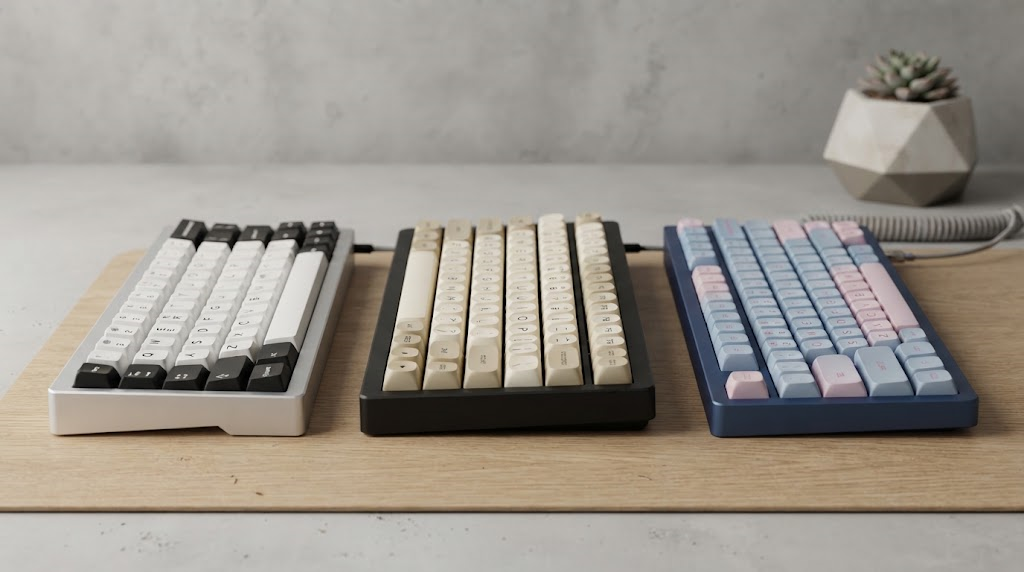
A keyboard may be one of the most frequently used items on your desk, yet many people never change the keycaps that came with it.
That is beginning to change.
Mechanical keyboard enthusiasts, gamers, programmers, writers, designers, and home-office users are increasingly using custom keycaps to turn ordinary keyboards into something more personal. A new keycap set can change the colors, typography, surface texture, profile, artwork, and overall personality of a keyboard without replacing the entire board.
Some people want a minimalist black-and-cream setup. Others want pastel gradients, anime-inspired artwork, retro computer colors, custom symbols, or a keyboard that matches their gaming room.
Modern customization services make these ideas much easier to create. Gimsun Custom, for example, currently offers personalized PBT keycap sets with user-selected colors and uploaded artwork, using dye-sublimation printing across products for several ANSI keyboard sizes and profiles. Its customization process includes a digital mockup before production and finished-product photos before shipping.
Before ordering a set, however, it helps to understand keycap materials, profiles, layouts, compatibility, and printing methods.
What Are Custom Keycaps?
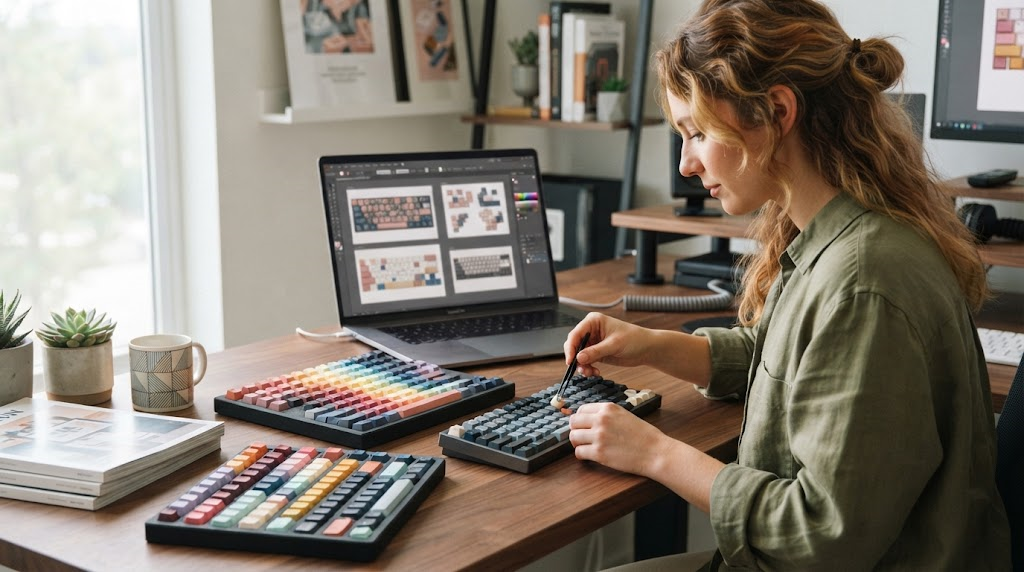
Keycaps are the removable plastic covers sitting on top of mechanical keyboard switches.
They are the parts your fingers actually touch.
Custom keycaps replace the standard caps supplied with a keyboard and allow you to change the appearance or feel of the board.
Customization can include:
- Different colors
- Personal artwork
- Custom legends
- Icons
- Gradients
- Alternate fonts
- Different keycap profiles
- Accent keys
- Gaming-specific keys
- Full custom themes
You can replace an entire keyboard or customize only a few individual keys.
Gimsun Custom currently offers both complete sets and individual PBT keys, including common sizes such as standard 1u keys, modifiers, spacebars, and numpad keys. Its single-key product supports Cherry MX-style switches and multiple keycap profiles.
Why People Customize Mechanical Keyboards
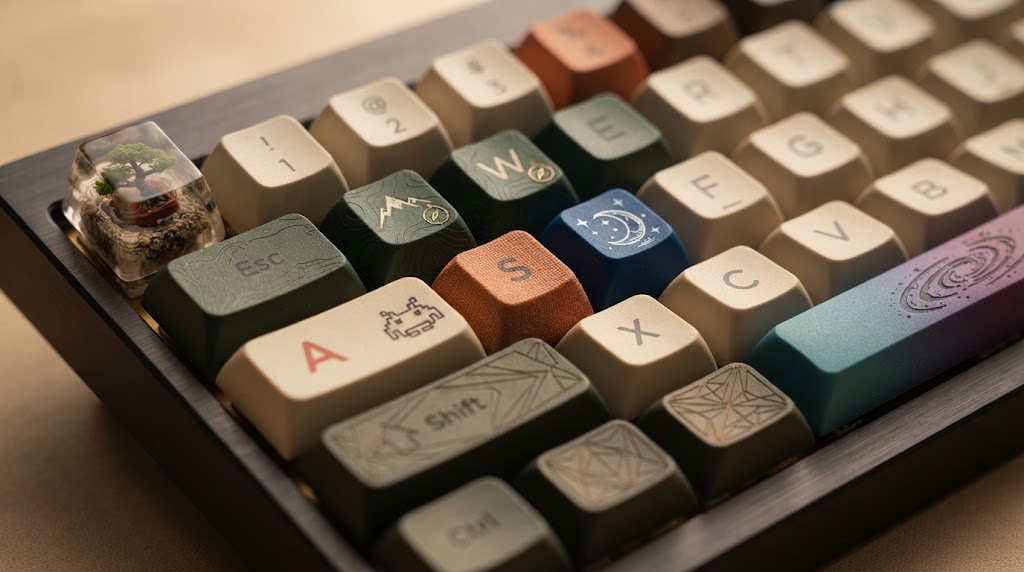
For some users, keycap customization is mostly aesthetic.
For others, it can also change the typing experience.
Create a Desk Setup That Matches Your Style
Desks are becoming increasingly personalized spaces.
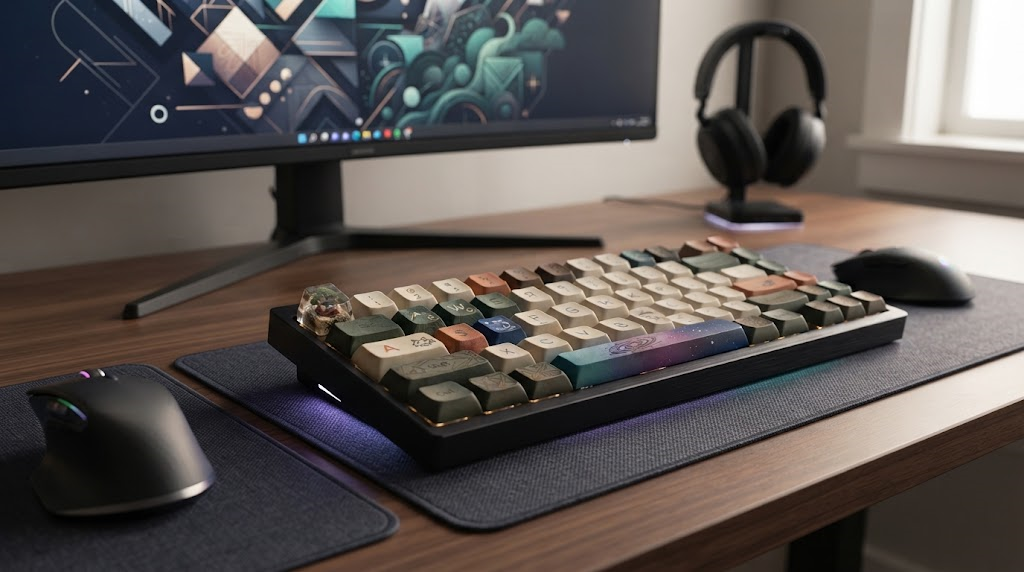
A computer setup may include a particular monitor, desk mat, mouse, lighting system, speakers, and color theme.
Stock keyboard caps can sometimes look out of place.
A custom set lets the keyboard become part of the wider design.
You might create:
- A monochrome office keyboard
- A retro gaming setup
- A pastel workstation
- A cyberpunk theme
- A nature-inspired board
- A branded company keyboard
- A personalized gift
The keyboard becomes less like generic computer hardware and more like a designed object.
Add Artwork and Personal Details
One of the most interesting developments in keycap customization is the ability to print personal artwork.
Gimsun Custom currently allows users to upload images and customize keycap colors and legends. The company says it prepares a mockup for approval, produces the caps after confirmation, and sends finished-product photos before shipping.
This means a set could include original illustrations, symbols, icons, names, or other graphics rather than being limited to factory colorways.
Why PBT Is Popular for Custom Keycaps
Keycaps are commonly made from plastics such as ABS or PBT.
For custom mechanical keyboards, PBT keycaps have become particularly popular.
PBT stands for polybutylene terephthalate.
It is generally valued for durability, texture, and resistance to the smooth shiny appearance that can develop on heavily used keys.
Gimsun Custom currently uses PBT across its custom sets and describes the material as thicker, matte-textured, and resistant to wear and shine compared with many common ABS options.
How PBT Feels
PBT keycaps often have a slightly textured surface.
Some typists prefer this because it feels less slippery than highly polished plastic.
The difference may seem small when you first install the caps, but keyboard enthusiasts often pay close attention to these tactile details because they interact with the keyboard for many hours every week.
Sound Can Change Too
Keycaps can affect the sound of a mechanical keyboard.
Material, thickness, profile, switches, keyboard case, plate, foam, and mounting style all influence the final sound.
Changing keycaps alone will not completely transform a board, but thicker PBT caps may contribute to a different tone compared with thinner stock caps.
What Is Dye-Sublimation Printing?
A custom design needs a way to become part of the keycap.
One popular method is dye sublimation.
Instead of applying a simple sticker or surface coating, dye-sublimation printing uses heat to transfer dye into compatible keycap material.
This can create legends and designs that are more resistant to ordinary surface wear.
Gimsun Custom uses dye-sublimation printing for its custom PBT products, including 5-sided printing on several products.
Why Printing Method Matters
Imagine using the same keyboard every day for several years.
The W, A, S, and D keys may receive heavy use from a gamer. A writer may press E, T, A, and the spacebar thousands of times each week.
If artwork exists only as a weak surface print, it may wear faster.
That is why buyers should pay attention not only to the design but also to how it is produced.
Understanding Keycap Profiles
A keycap profile describes the height and shape of the caps.
This is one of the most important details when selecting custom keycaps, because profile affects both appearance and typing feel.
Gimsun Custom currently offers custom options across Cherry, MOA, and XDA profiles, depending on the product.
Cherry Profile Keycaps
Cherry profile is a sculpted design.
Different keyboard rows have slightly different heights and angles, creating a curved typing surface.
This is a familiar choice for many mechanical keyboard enthusiasts.
Who Might Prefer Cherry Profile?
Cherry can work well for:
- Typing
- Gaming
- Traditional mechanical keyboard builds
- Users who like sculpted rows
- People moving from typical enthusiast keycap sets
Because each row is shaped differently, you need to make sure keycaps are placed in their intended rows.
MOA Profile Keycaps
MOA uses a more rounded, spherical design and generally maintains a uniform shape across rows.
This gives the keyboard a distinctive soft, rounded appearance.
Gimsun describes its MOA profile as uniform-height with a spherical top, allowing greater flexibility when moving custom keys between rows.
Why Choose MOA?
MOA may appeal to users who want:
- A playful visual style
- Rounded key shapes
- Flexible key placement
- A uniform keyboard profile
- A distinctive custom aesthetic
It can look especially good with pastel colors, illustrated themes, or heavily customized legends.
XDA Profile Keycaps
XDA is another uniform-height profile.
Its keycaps generally have a lower, broad shape with a gently curved top.
Gimsun added fully customizable XDA sets in September 2026 and currently lists XDA options for layouts such as 65%, 80%, 96%, and full-size keyboards.
Uniform profiles are particularly convenient when users want unusual layouts because key positions are less dependent on row-specific sculpting.
Keyboard Layout Compatibility Matters
A beautiful set is useless if it does not fit your keyboard.
Before ordering, identify your keyboard layout.
Common sizes include:
- 60%
- 65%
- 75%
- 80% or TKL
- 96%
- 100% full-size
The percentage refers broadly to how much of a traditional full-size keyboard is retained.
65% Keyboards
A 65% keyboard is compact but usually keeps arrow keys.
It works well for gaming and small desks.
75% Keyboards
A 75% keyboard adds a function row while maintaining a compact format.
This makes it popular with users who want more keys without moving to a full TKL board.
TKL Keyboards
TKL means tenkeyless.
These keyboards generally retain the function row and navigation cluster but remove the number pad.
Full-Size Keyboards
A full-size keyboard keeps the number pad, function row, arrows, and navigation keys.
Gimsun’s current full-size custom ANSI sets contain 108 keycaps, while other products are designed for smaller layouts.
What Does ANSI Mean?
ANSI is the layout standard most familiar to U.S. keyboard users.
One of its most recognizable features is the wide horizontal Enter key.
If you are buying keycaps for a typical American mechanical keyboard, there is a good chance it uses ANSI.
However, never assume.
Check your keyboard’s product page or compare its bottom row, Enter key, Shift keys, and spacebar measurements with the keycap set before ordering.
MX-Style Switch Compatibility
The underside of a keycap contains a stem that connects to the mechanical switch.
Many aftermarket custom keycaps are designed for Cherry MX-style cross stems.
Gimsun’s custom products specify Cherry MX or MX-style compatibility.
This covers a wide range of popular mechanical switches, but unusual proprietary switch systems may require different caps.
Always check compatibility before purchasing.
Designing Your Own Custom Keycaps
The design process is where customization becomes fun.
Start with a clear theme.
Choose a Color Palette
A good keyboard usually uses a limited color system rather than dozens of unrelated colors.
Consider:
- Base color
- Modifier color
- Accent color
- Legend color
For example, you might use cream alphanumeric keys, dark green modifiers, and one gold Escape key.
Decide Where Artwork Belongs
Not every key needs a complex image.
Artwork often works best on larger or less frequently used keys such as:
- Escape
- Enter
- Spacebar
- Shift
- Arrow keys
- Function row
- Numpad accents
Gimsun’s ordering guide also allows customization across zones such as WASD, function keys, number keys, arrow pads, modifiers, and number pads.
Use High-Quality Artwork
The quality of the source file matters.
Low-resolution graphics can lose detail when printed.
Simple shapes, clean lines, high contrast, and clear typography often reproduce better than overly complicated images.
Also remember that screen colors and printed colors may not look exactly identical.
Gimsun warns customers that heat printing can create some color variation compared with what appears on a monitor.
That is one reason reviewing a mockup before production is useful.
Custom Keycaps for Gaming
Gamers often customize specific controls rather than replacing every key for functional reasons.
WASD keys can use a contrasting color.
The Escape key can become an accent.
Ability keys in certain games can use recognizable icons.
Even if the customization is mostly visual, highlighted zones can make important controls easier to locate at a glance.
The main priority should still be comfort and compatibility.
Custom Keycaps for Work and Productivity
Personalized keyboards are not just for gaming setups.
Writers, developers, editors, and designers may spend thousands of hours each year typing.
A professional-looking custom keyboard can make a workspace feel more intentional without becoming visually distracting.
Consider muted colors such as:
- Gray
- Navy
- Forest green
- Cream
- Brown
- Black
- Soft blue
Custom legends could also represent shortcuts for creative software or other workflows, provided the layout remains easy to understand.
Custom Keycaps as Gifts
A personalized keycap set can make an unusual gift for someone who already owns a mechanical keyboard.
Instead of choosing generic accessories, you can design the set around:
- Their favorite colors
- Gaming interests
- Personal artwork
- A shared joke
- Their workspace
- A favorite theme
Just confirm the recipient’s keyboard layout and switch type first.
Guessing incorrectly could leave them with a set they cannot install.
How the Custom Ordering Process Works
Gimsun Custom currently describes a five-stage customization process.
First, the customer uploads artwork or selects colors. The company then prepares a mockup for approval. Production begins after confirmation, followed by finished-product photos. Once the customer approves the finished result, the order is shipped.
Its site states that keycap printing is typically completed within two to three business days after mockup confirmation, although total delivery time also depends on shipping method and destination.
For U.S. customers, the company’s FAQ says customized products ship from China, with standard and expedited delivery methods available.
Frequently Asked Questions About Custom Keycaps
What are custom keycaps?
Custom keycaps are replacement keyboard caps with personalized colors, artwork, legends, profiles, or themes. They are commonly used on mechanical keyboards.
Are PBT keycaps better than ABS?
Neither material is perfect for every user, but PBT is popular because it generally resists surface shine and maintains a textured finish well during regular use.
Will custom keycaps fit every mechanical keyboard?
No. Compatibility depends on switch stem, keyboard layout, spacebar size, modifier sizes, and other physical details. Always check your keyboard before ordering.
What is the difference between Cherry and XDA profile?
Cherry is sculpted, meaning different rows have different shapes and angles. XDA is a uniform-height profile with a broad spherical top.
What is MOA profile?
MOA is a rounded, uniform-style keycap profile with a spherical surface. It is popular for visually distinctive custom keyboards.
Can I customize only one key?
Yes. Some manufacturers offer individual key customization. Gimsun Custom currently sells personalized single PBT keys in multiple sizes, with a stated minimum quantity requirement for its single-key product.
Can I upload my own artwork?
Yes. Custom keycaps from Gimsun Custom can be ordered with user-provided artwork, color schemes, and legends across compatible PBT keycap sets.
Conclusion
Custom keycaps are one of the easiest ways to transform a mechanical keyboard without rebuilding the entire setup.
They can change how your keyboard looks, how the surface feels under your fingers, and how well it fits into the overall style of your desk.
The most important decisions happen before you order.
First, identify your keyboard layout. Determine whether you have a 65%, 75%, TKL, 96%, or full-size board. Then check switch compatibility and pay close attention to unusual modifier and spacebar sizes.
Next, choose the material and profile.
PBT remains a popular choice for enthusiasts who want a textured, durable surface, while dye-sublimation makes detailed personalization possible. Cherry profile offers a familiar sculpted typing shape, while MOA and XDA provide uniform alternatives with distinctive rounded surfaces.
Finally, think carefully about your design.
A successful custom keyboard does not need artwork on every key. A coordinated color palette, a few accent keys, thoughtful legends, and one or two personalized details can often create a cleaner result than an overly complicated theme.
Services such as Gimsun Custom now make the process accessible by allowing users to upload artwork, select colors and profiles, review a mockup before production, and approve photographs of the finished set before shipping.
Whether you are upgrading a gaming board, creating a professional workspace, building your first mechanical keyboard, or designing a personalized gift, a custom set gives you the opportunity to turn one of the most ordinary objects on your desk into something that actually reflects your style.