A commercial roof does far more than cover a building. It protects employees, customers, equipment, inventory, interior finishes, and daily business operations. When leaks, membrane damage, drainage problems, or storm-related issues develop, the cost can extend far beyond the roofing system itself.
That is why choosing the right solution for commercial roofing in Meridian ID is an important property-management decision. Business owners and facility managers need a roof that fits the building, performs through Idaho weather, supports long-term maintenance goals, and can be repaired efficiently when problems appear.
Commercial roofing also differs significantly from residential roofing. Many business properties use flat or low-slope systems rather than steep-slope shingles, requiring different materials, installation methods, drainage planning, inspections, and repair strategies.
NXT LVL Roofing & Exteriors lists TPO, EPDM, metal roofing, and built-up roofing among the commercial systems it installs and services. The company also provides commercial roof assessments and insurance-claim documentation.
This guide explains major commercial roofing options, common warning signs, repair versus replacement decisions, inspections, storm damage, and preventive maintenance for Meridian-area properties.
Why Commercial Roofing Matters in Meridian, Idaho
Meridian sits in the Treasure Valley, where roofs experience summer heat, winter cold, wind, precipitation, and occasional strong storms. The National Weather Service notes that the Treasure Valley can experience gusty winds from frontal passages, thunderstorms, and pressure-gradient events.
Meridian’s published design criteria also include minimum roof snow-load requirements and wind-speed criteria for building design.
These conditions make installation quality and routine maintenance especially important. A small opening in flashing, a loose membrane edge, a blocked drain, or a puncture may not look serious at first. However, water can travel beneath a roofing system and enter the building far from the original problem area.
A good commercial roofing plan should therefore focus on prevention as well as repair.
Common Commercial Roofing Systems in Meridian ID
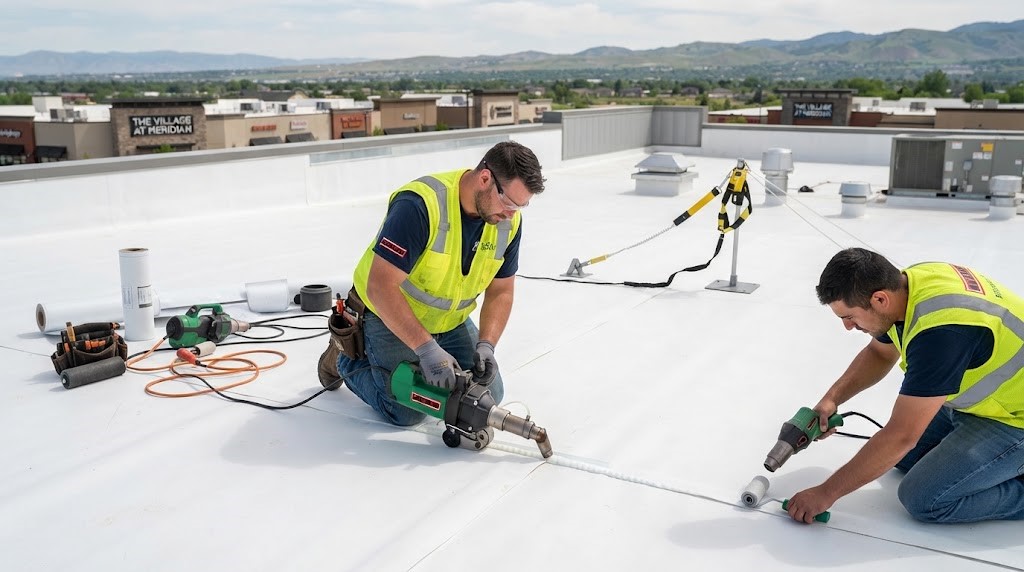
The best roofing system depends on roof slope, building use, budget, energy goals, foot traffic, existing materials, and long-term ownership plans.
TPO Roofing
TPO, or thermoplastic polyolefin, is a popular single-ply membrane for flat and low-slope commercial roofs. It is commonly available in reflective colors that can help reduce solar heat absorption, while heat-welded seams create a continuous surface when properly installed.
TPO can work well for offices, retail buildings, warehouses, and other commercial properties. Regular inspections should focus on seams, drains, flashing, penetrations, and areas around rooftop equipment.
EPDM Roofing
EPDM is a synthetic rubber membrane with a long history in commercial roofing. Its flexibility can make it useful for buildings exposed to seasonal temperature changes.
Depending on the roof design, EPDM may be mechanically attached or fully adhered. It can be a practical choice when durability, flexibility, and straightforward maintenance are priorities.
Commercial Metal Roofing
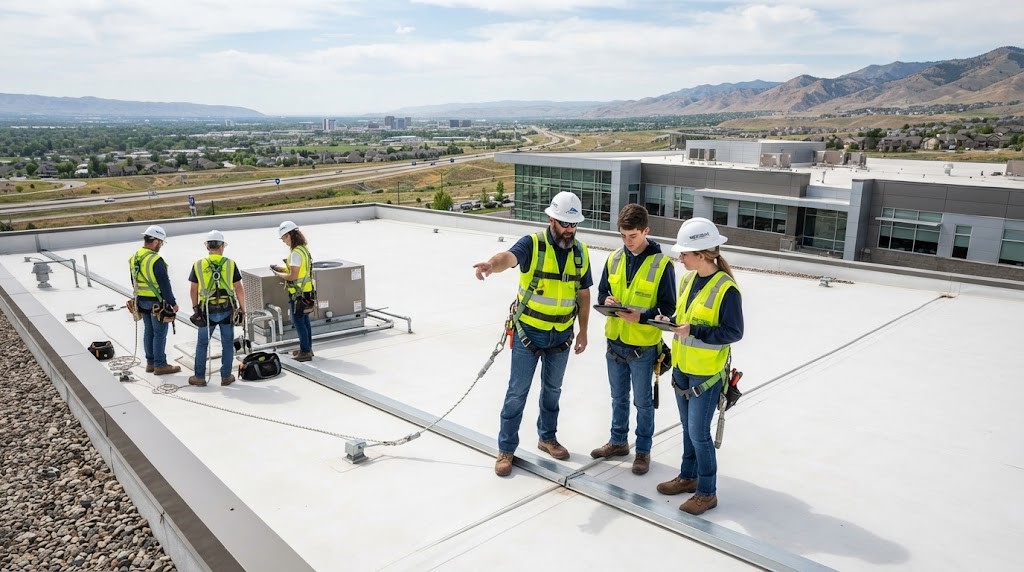
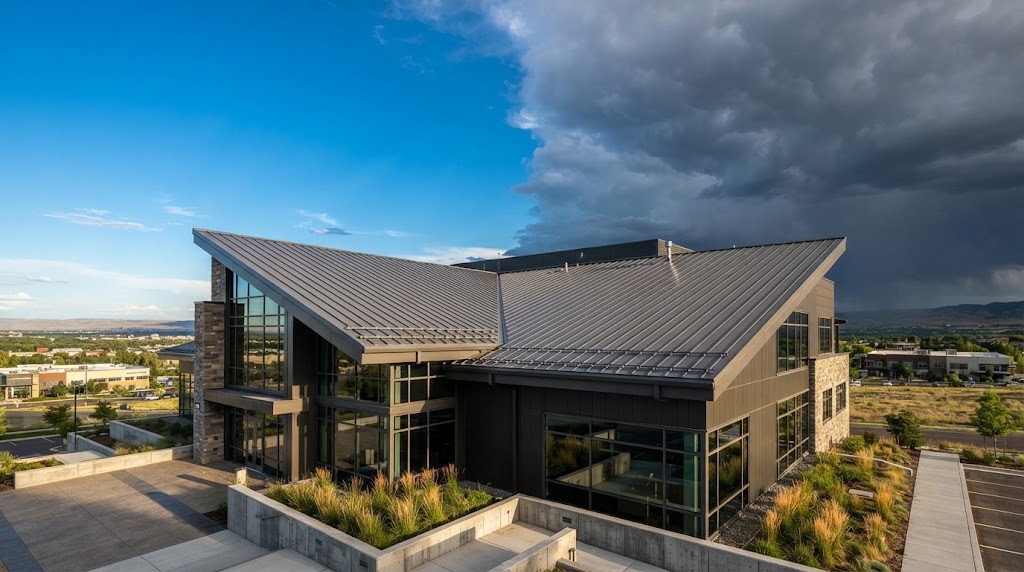
Metal roofing is often used on warehouses, industrial buildings, agricultural properties, offices, and other commercial structures.
Standing-seam and structural metal systems can offer excellent longevity when properly designed, installed, and maintained. Periodic inspections should check seams, fasteners, sealants, flashing, penetrations, and areas around rooftop equipment.
Built-Up Roofing
Built-up roofing, often called BUR, is a traditional multi-layer commercial system used on many low-slope and flat roofs.
Its layered construction can provide strong resistance to punctures and wear. The condition of an existing BUR system should be evaluated before choosing repair, restoration, recovery, or replacement.
Signs Your Commercial Roof Needs Attention
Roof problems are usually easier and less disruptive to address when they are found early.
Visible warning signs include ceiling stains, active leaks, damaged insulation, membrane bubbles or blisters, open seams, cracked sealant, damaged flashing, loose metal panels, ponding water, clogged drains, punctures, and deterioration around rooftop equipment.
Not every roof problem causes an immediate interior leak. Moisture can move below the roofing surface before it becomes visible inside the building.
After a significant wind, hail, or severe-weather event, an inspection may be worthwhile even when no obvious interior damage is visible.
Commercial Roof Repair vs. Replacement
One of the biggest questions property owners face is whether a roof can be repaired or needs replacement. The answer should depend on the actual roof condition rather than a one-size-fits-all rule.
When Commercial Roof Repair May Be Appropriate
Repair may be practical when damage is isolated, most of the roof remains serviceable, moisture has not spread through large sections of the assembly, and the system still has useful life.
Examples include repairing a localized membrane puncture, resealing flashing, replacing damaged edge metal, correcting a small seam failure, or fixing an isolated leak around a penetration.
Targeted repairs can reduce unnecessary expense when the rest of the roof is performing properly.
When Roof Replacement May Make More Sense
Replacement may become more practical when there is widespread deterioration, repeated leakage, saturated insulation, extensive storm damage, major adhesion problems, or many failing details.
Age matters, but it should not be the only factor. Roofs of the same age can be in very different condition depending on installation quality, drainage, maintenance, weather exposure, and building use.
A professional assessment should document actual conditions and explain the reasoning behind repair, restoration, or replacement recommendations.
The Importance of Commercial Roof Inspections
Regular inspections are one of the simplest ways to reduce the risk of unexpected roofing problems.
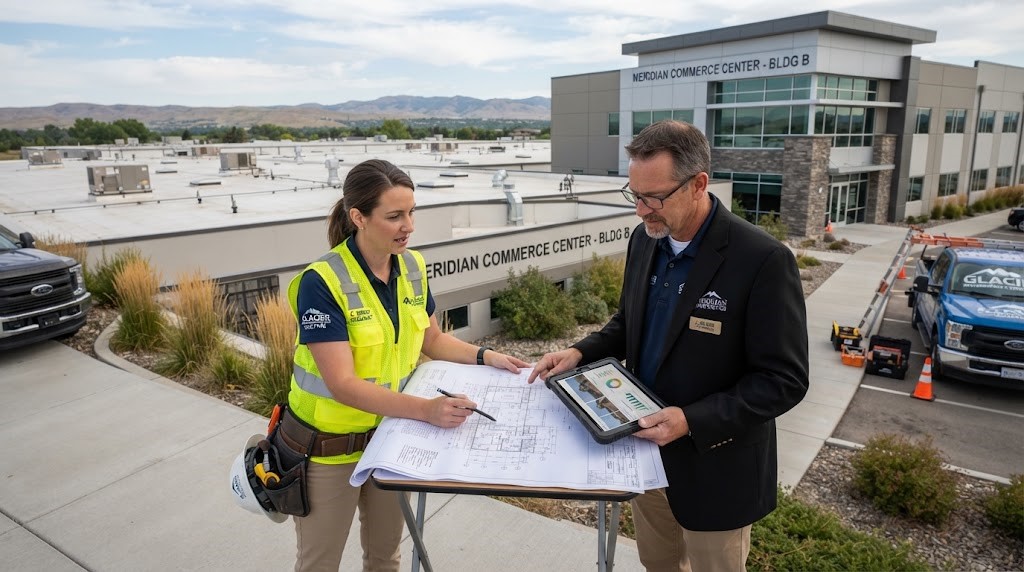
A commercial roof should be evaluated as a complete system. An inspection may include membrane condition, seams, flashing, penetrations, drains, scuppers, edge details, rooftop equipment areas, visible moisture signs, and previous repairs.
Inspection frequency depends on roof type, age, warranty requirements, and building conditions, but many property managers schedule periodic checks and additional inspections after major weather events.
Documentation also matters. Photos, repair history, warranty information, and inspection reports make it easier to track roof condition over time.
Storm Damage and Commercial Roofing Insurance Claims
Storm damage can be complicated on commercial properties because roof areas are larger, business operations may be affected, and damage is not always visible from the ground.
Wind can affect membrane edges, metal panels, flashing, and rooftop components. Hail can affect certain roofing surfaces and equipment depending on impact conditions and material type.
If storm damage is suspected, detailed documentation can help establish what was observed and where.
NXT LVL states that its commercial claim process may include interior and roof-surface water-intrusion documentation, membrane or substrate analysis, hail-impact mapping, wind-event documentation, estimate review, adjuster coordination, and post-install records.
Property owners should also review their own insurance policy and discuss coverage, deductibles, deadlines, exclusions, and procedures with their insurer or qualified insurance professional.
How Preventive Maintenance Can Support Roof Performance
Commercial roofs are easier to manage when maintenance is planned instead of delayed until water reaches the interior.
Keep drains and drainage paths clear, remove debris, inspect penetrations, monitor previous repair areas, and correct loose or damaged materials promptly. Standing water and blocked drainage can place extra stress on some roof systems.
Rooftop access should also be controlled. HVAC technicians, electricians, and other trades may need roof access, and tools or repeated foot traffic can damage some membranes. Keeping access and service records can make future troubleshooting easier.
Choosing a Commercial Roofing Contractor in Meridian ID
The contractor you choose can affect installation quality, communication, documentation, scheduling, and long-term roof performance.
Look for a contractor with specific commercial roofing experience. Residential roofing experience alone does not necessarily cover the technical requirements of low-slope membranes, large roof areas, commercial drainage, or complex rooftop equipment.
Ask which systems the contractor installs and repairs regularly. A qualified commercial roofer should explain why a particular system is appropriate for your property instead of recommending the same material for every building.
Property owners should also ask about licensing, insurance, warranties, safety procedures, inspection methods, cleanup, project scheduling, and communication.
For occupied businesses, scheduling matters. Work should be planned to reduce disruption to customers, employees, deliveries, tenants, and normal operations whenever possible.
Why Local Roofing Knowledge Is Valuable
Working with a contractor familiar with Meridian and the Treasure Valley can be helpful because roofing decisions are influenced by regional weather, building practices, and local requirements.
Meridian’s building and planning departments publish standards and review requirements for commercial development, and applicable work may need to follow current local and state requirements.
Local experience can also help a contractor recognize common regional roofing issues and communicate practical options for repair, maintenance, or replacement.
Frequently Asked Questions About Commercial Roofing in Meridian ID
What is the best commercial roofing system for a flat roof?
There is no single best system for every flat roof. TPO, EPDM, built-up roofing, coatings, and other systems may be appropriate depending on the building, drainage, budget, insulation needs, existing roof, and maintenance plan. A roof assessment is the best starting point.
How often should a commercial roof be inspected?
Many property owners schedule periodic inspections and additional checks after significant storms or when leaks appear. The ideal schedule depends on the roof system, age, warranty requirements, and previous repair history.
Can a leaking commercial roof be repaired without replacing it?
Yes, in many cases. If the problem is localized and the rest of the roofing system remains in good condition, a properly designed repair may solve the issue. Widespread moisture or deterioration may require a larger solution.
How long does a commercial roof last?
Service life varies widely. Material type, installation quality, weather exposure, drainage, foot traffic, maintenance, repairs, and rooftop equipment can all affect performance.
What should I do after hail or strong wind?
Check the building interior for visible leaks and arrange a professional roof inspection if you suspect damage. Keep photos, inspection reports, repair records, and relevant storm information for your records.
Can roofing work be completed while my business remains open?
Often, yes. Commercial roofing projects can frequently be phased or scheduled around business operations. Discuss access, noise, odors, deliveries, safety zones, and work hours before the project begins.
What information should I request from a commercial roofer?
Request a clear assessment of existing conditions, photos or documentation, recommended scope of work, material information, warranty details, project schedule, payment terms, and an explanation of why the proposed solution fits your property.
Protect Your Commercial Property Before Small Problems Grow
A commercial roof is a long-term business asset. Waiting until a small defect becomes an active interior leak can lead to more disruption, more complicated repairs, and potentially greater damage.
The best approach to commercial roofing in Meridian ID is to understand the condition of your roof, choose the right system for the property, maintain drainage and flashing, document changes, and address problems early.
Whether your building needs an inspection, targeted repair, storm-damage evaluation, restoration, or replacement, the decision should be based on the actual condition of the roofing system.
Conclusion
Reliable commercial roofing in Meridian ID starts with good information and a roof plan built around the property. TPO, EPDM, metal roofing, and built-up systems can all deliver strong performance when they are selected appropriately, installed correctly, and maintained over time.
For business owners and property managers, regular inspections and timely repairs can help reduce unexpected interruptions and protect the building beneath the roof.
NXT LVL Roofing & Exteriors offers commercial roof assessments and services for businesses in Meridian and other Treasure Valley communities. Its commercial service page emphasizes condition-based recommendations, detailed documentation, and scheduling work around business operations.
If you are concerned about leaks, storm damage, aging materials, or the general condition of your commercial roof, a professional assessment can help you understand the next practical step before a small issue becomes a larger one.