
Heating and cooling account for a major part of the energy used in many American homes. For decades, homeowners have commonly relied on a furnace for winter and a separate central air conditioner for summer.
Heat Pumps offer another approach.
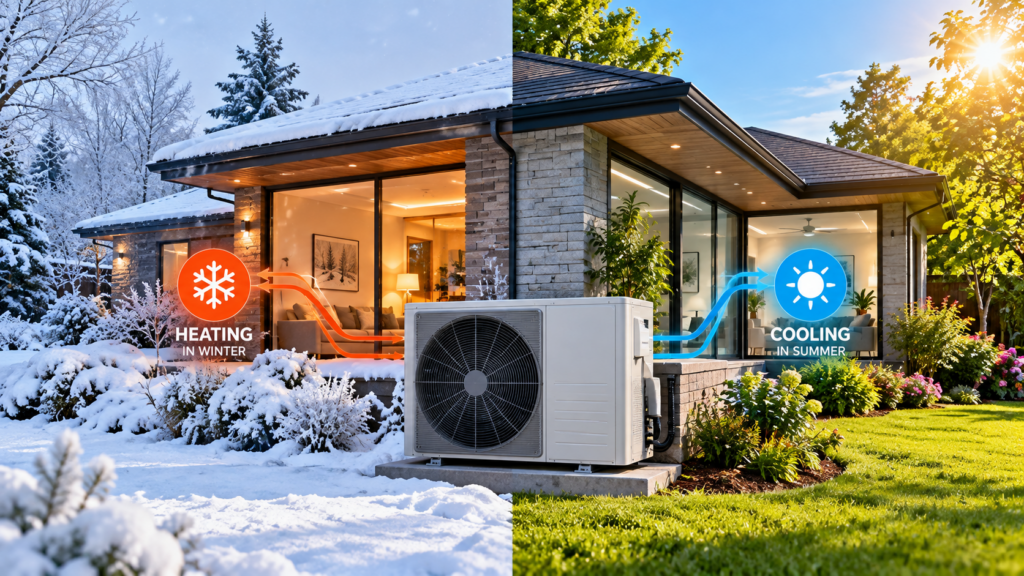
Instead of using one system for heating and another for cooling, a heat pump can do both. During winter, it transfers heat into the home. During summer, it reverses direction and moves heat out, working much like a conventional air conditioner.
The U.S. Department of Energy describes heat pumps as an energy-efficient alternative to furnaces and air conditioners and identifies air-source, geothermal, and ductless mini-split systems among the major options available to homeowners.
Advances in compressor technology have also made modern systems increasingly practical in colder parts of the United States.
Whether you are replacing an aging HVAC system, building a new home, or looking for a more efficient way to control indoor temperatures, understanding how heat pumps work can help you make a better decision.
What Are Heat Pumps?
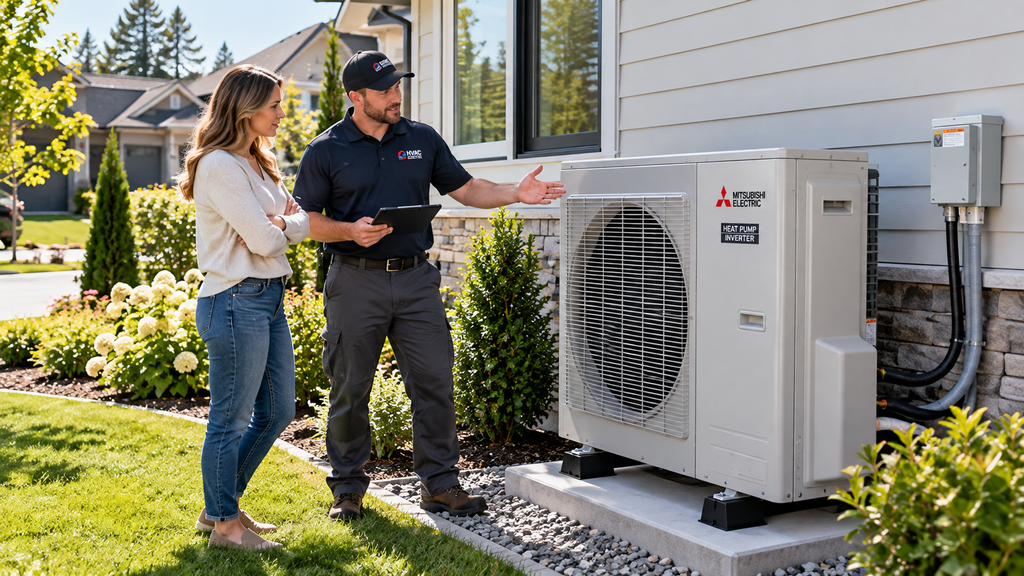
A heat pump is an electrically powered HVAC system that transfers heat instead of creating most of its heat directly.
That distinction is important.
A traditional electric resistance heater converts electricity into heat. A gas furnace burns fuel to create heat.
A heat pump moves existing heat from one place to another.
During cold weather, the system absorbs heat from outside and transfers it into the home. Even cold outdoor air still contains heat energy that modern equipment can capture.
During warm weather, the process reverses. The system absorbs heat from inside the house and releases it outdoors.
Because heat pumps transfer heat rather than generating all of it from scratch, the Department of Energy notes that they can operate more efficiently than many conventional heating systems.
How Does a Heat Pump Work?
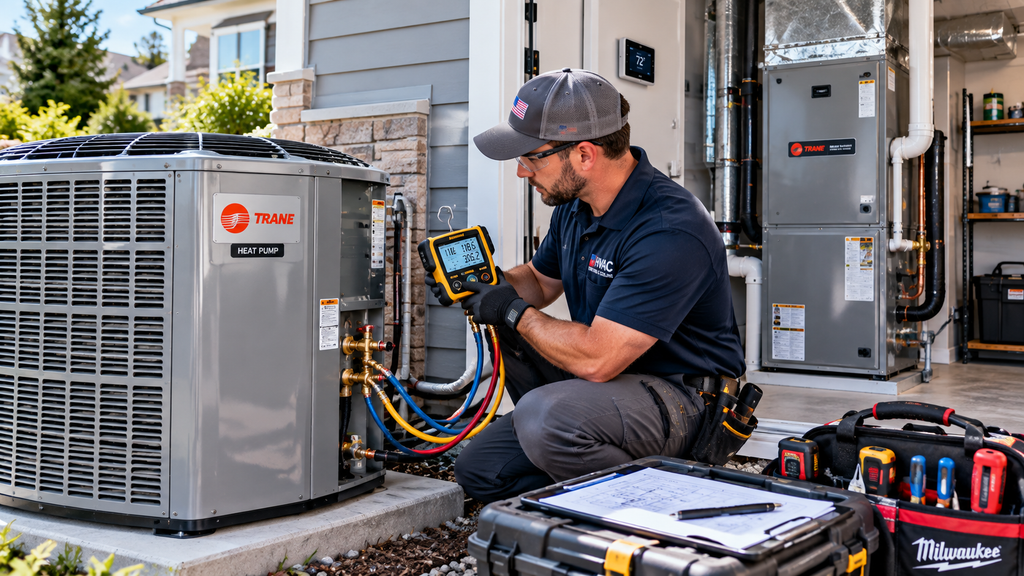
The basic operation is similar to a refrigerator or air conditioner.
A refrigerant moves through a closed system consisting of components such as:
- Compressor
- Indoor coil
- Outdoor coil
- Expansion device
- Refrigerant lines
- Fans and controls
The refrigerant absorbs and releases heat as its pressure and temperature change.
Heating Mode

In heating mode, the outdoor unit gathers heat from the outside air.
The refrigerant carries that heat indoors, where the indoor coil transfers it into the air circulating through the house.
Cooling Mode
During summer, a reversing valve changes the direction of the refrigerant cycle.
The system removes heat from indoor air and releases it outside.
That means one heat pump can often replace both a conventional furnace-and-air-conditioner combination, depending on the home, climate, and equipment design.
Main Types of Heat Pumps
Not every heat pump operates in exactly the same way.
Understanding the main categories can help homeowners narrow down their options.
Air-Source Heat Pumps
Air-source heat pumps are the most common residential type.
They exchange heat between your home and outdoor air.
A central air-source system may connect to existing ductwork in much the same way as a traditional central air conditioner.
The Department of Energy identifies air-source equipment as the most common heat pump type and notes that modern systems can also be used in colder regions because of improvements in low-temperature technology.
For a homeowner replacing an older central HVAC system, this may be the first option worth discussing with a qualified contractor.
Ductless Mini-Split Heat Pumps
Ductless heat pumps are often called mini-splits.
Instead of pushing conditioned air through a network of ducts, they use one or more indoor units connected to an outdoor unit.
These systems can be useful for:
- Older homes without ductwork
- Home additions
- Converted garages
- Finished basements
- Individual rooms
- Zoned heating and cooling
ENERGY STAR specifically identifies ductless heat pumps as an option for homes without existing ducts or for additions where installing new ductwork would be difficult.
Mini-splits also make it possible to control temperatures separately in different areas.
Geothermal Heat Pumps
Geothermal systems exchange heat with the ground rather than primarily with outdoor air.
Ground temperatures are more stable than air temperatures, which can make geothermal systems highly efficient.
However, installation generally requires significant ground work, making upfront costs higher.
The Department of Energy notes that geothermal systems can involve higher installation expenses but can provide long-term heating and cooling savings.
They may be particularly attractive during new construction or major property projects where ground installation can be incorporated into the design.
Why Heat Pumps Are Becoming Popular
One reason heat pump adoption is growing is that homeowners increasingly want one efficient electric system capable of handling both heating and cooling.
The Department of Energy reported that more than 17 million U.S. housing units already had heat pumps installed as of 2020 and described the technology as increasingly common across the residential market.
Several benefits help explain the interest.
Heating and Cooling in One System
A traditional HVAC setup may use a furnace for heating and an air conditioner for cooling.
A heat pump combines both functions.
This can simplify equipment selection and reduce the need for two separate primary systems.
Energy Efficiency
Heat pumps move heat rather than producing all heating energy directly.
This can result in lower electricity consumption compared with electric resistance heating.
The Department of Energy states that modern air-source heat pumps can substantially reduce electricity use compared with electric furnaces and baseboard heating.
Actual savings depend on climate, energy prices, the system being replaced, insulation, equipment efficiency, and installation quality.
No On-Site Fuel Combustion
An electric heat pump does not need to burn natural gas, propane, or heating oil inside the home to provide normal compressor-based heating.
For homeowners planning to reduce dependence on combustion-based heating equipment, this can be an important advantage.
Do Heat Pumps Work in Cold Climates?
One of the most common questions is whether a heat pump can keep a home comfortable during a cold American winter.
Modern cold-climate equipment has improved considerably.
ENERGY STAR’s current cold-climate criteria require qualifying systems to demonstrate low-temperature operation at 5°F, including minimum efficiency and heating-capacity performance.
ENERGY STAR also explains that properly selected cold-climate air-source systems can continue operating when temperatures drop below freezing, although backup heating may still be appropriate for some homes and extremely cold conditions.
Choosing the Right Cold-Climate System
Homeowners in regions such as the Northeast, Upper Midwest, or mountain states should not simply purchase any heat pump.
A contractor should evaluate:
- Design outdoor temperature
- Home heat loss
- Equipment capacity at low temperatures
- Insulation
- Windows and air leakage
- Existing ductwork
- Backup heating strategy
An oversized or undersized unit can reduce comfort and efficiency.
Heat Pump Efficiency Ratings Explained
When comparing U.S. heat pumps, you will often see efficiency ratings such as SEER2 and HSPF2.
SEER2
SEER2 stands for Seasonal Energy Efficiency Ratio 2.
It measures seasonal cooling efficiency.
In general, a higher SEER2 rating indicates more efficient cooling performance under standardized testing.
HSPF2
HSPF2 stands for Heating Seasonal Performance Factor 2.
It represents seasonal heating efficiency.
Higher numbers generally indicate greater heating efficiency.
The Department of Energy adopted the updated SEER2 and HSPF2 testing terminology beginning in 2023.
Current ENERGY STAR criteria provide minimum efficiency thresholds for certified residential heat pumps, with separate performance requirements for cold-climate equipment.
Efficiency ratings are useful for comparing products, but they should not replace proper equipment sizing and installation.
Heat Pump vs. Furnace
Many homeowners deciding whether to upgrade ask whether they should choose a heat pump or keep a furnace.
There is no universal answer.
Heat Pump Advantages
A heat pump can:
- Heat and cool
- Operate without normal on-site fuel combustion
- Provide high efficiency
- Work with central ducts or ductless zones
- Reduce reliance on electric resistance heating
Furnace Advantages
A furnace can provide strong heating output during extremely cold weather and may be practical in homes already designed around natural gas or another fuel.
In some climates, homeowners use a dual-fuel system that combines a heat pump with a furnace.
The heat pump handles most heating conditions while the furnace provides backup during particularly cold weather.
The most economical choice depends heavily on local electricity rates, fuel prices, climate, existing equipment, and the home itself.
Proper Sizing Is Essential
Buying a larger heat pump does not automatically produce better heating.
In fact, oversized HVAC equipment can create problems.
A system that is too large may cycle on and off frequently instead of operating steadily.
A system that is too small may struggle to maintain indoor temperature during extreme conditions.
Professional contractors should perform an appropriate heating and cooling load calculation before selecting equipment.
The heat pump service approach described by Brookman Heating offers a useful example of this principle: the company begins projects with building heat-loss calculations and system design rather than simply replacing equipment based on the old unit’s size. It also describes coordinating system components, controls, emitters, and commissioning as part of the installation process.
For U.S. homeowners, look for a contractor who follows the same basic engineering mindset and uses recognized residential load-calculation procedures.
Your Home Matters as Much as the Equipment
Even an excellent heat pump will perform poorly in an inefficient building.
Before or during an HVAC replacement, consider the condition of the entire home.
Insulation
Good attic, wall, and floor insulation helps reduce heating and cooling loads.
Air Sealing
Drafts around doors, windows, penetrations, and attic openings can allow conditioned air to escape.
Ductwork
Leaky, undersized, or poorly insulated ducts can reduce system performance.
A new heat pump connected to bad ductwork will not automatically solve distribution problems.
Windows and Doors
Very inefficient windows can increase heat loss in winter and heat gain in summer.
Improving the building envelope may sometimes allow a smaller heat pump to meet the home’s needs.
What to Expect During Heat Pump Installation
A professional installation should begin well before equipment arrives.
Step 1: Home Assessment
The contractor evaluates the building, climate, insulation, ductwork, electrical service, and existing HVAC equipment.
Step 2: Load Calculation
Heating and cooling requirements should be calculated for the home rather than estimated only from square footage.
Step 3: Equipment Selection
The contractor chooses a system capable of meeting expected loads efficiently.
Step 4: Installation
This can involve installing the outdoor unit, air handler or indoor heads, refrigerant lines, condensate drainage, electrical components, thermostat, and duct modifications.
Step 5: Commissioning
The installer should verify refrigerant charge, airflow, controls, temperatures, and overall operation.
Brookman Heating similarly describes commissioning and customer education as part of its completed heat pump installation process, including explaining controls, water temperatures, and system settings.
A U.S. HVAC contractor should likewise show homeowners how to operate the system efficiently after installation.
Heat Pump Maintenance
Heat pumps require regular maintenance like other HVAC equipment.
Homeowners can help by:
- Replacing or cleaning filters
- Keeping outdoor units clear of leaves and debris
- Maintaining airflow around indoor and outdoor equipment
- Checking for unusual sounds
- Keeping vents and registers open
- Scheduling professional service as recommended
Because the same equipment may operate during both summer and winter, maintaining it throughout the year is important.
A technician may inspect coils, electrical components, refrigerant performance, airflow, controls, condensate systems, and other components.
Frequently Asked Questions About Heat Pumps
What is a heat pump?
A heat pump is an HVAC system that transfers heat between indoor and outdoor environments to provide both heating and cooling.
Can a heat pump replace an air conditioner?
Yes. Air-source heat pumps provide cooling using a refrigeration cycle similar to central air conditioning while also providing heating when the cycle reverses.
Can a heat pump replace a furnace?
In many homes, yes. Whether a heat pump can serve as the only heating source depends on climate, home efficiency, equipment selection, and system design.
Do heat pumps work below freezing?
Modern heat pumps can. ENERGY STAR cold-climate systems are specifically evaluated for low-temperature heating performance, including testing at 5°F.
What is a mini-split heat pump?
A mini-split is a ductless heat pump consisting of an outdoor unit connected to one or more indoor units. It can provide zoned heating and cooling without central ductwork.
Are heat pumps energy efficient?
They can be highly efficient because they move heat instead of producing all heating energy directly. Actual operating cost depends on the equipment, climate, electricity rates, home efficiency, and existing system.
What do SEER2 and HSPF2 mean?
SEER2 measures seasonal cooling efficiency, while HSPF2 measures seasonal heating efficiency under standardized testing procedures.
How long does a residential heat pump last?
Service life varies with climate, equipment quality, installation, maintenance, operating hours, and other conditions. DOE life-cycle examples for residential air-source equipment commonly use approximately 15 years for analysis, although individual systems may last more or less.
Do heat pumps require ductwork?
Not always. Central systems can use ducts, while ductless mini-split heat pumps are specifically designed to operate without a conventional central duct network.
Is a heat pump right for every house?
Not necessarily. The best system depends on the home’s heating and cooling loads, local climate, electrical capacity, existing ducts, energy prices, installation options, and budget.
Conclusion
Heat Pumps have become an increasingly important option for homeowners who want efficient heating and cooling from one electric HVAC system.
Instead of creating heat primarily through fuel combustion or electric resistance, a heat pump moves heat between indoors and outdoors. The same equipment can warm a house during winter and cool it during summer.
Modern options include central air-source systems, ductless mini-splits, cold-climate heat pumps, and geothermal systems. Advances in low-temperature performance mean heat pumps are now practical in many U.S. regions where homeowners once assumed they would not work.
Choosing the right equipment is only part of the process. Proper sizing, heat-loss calculations, insulation, duct condition, installation quality, controls, and commissioning can have just as much influence on comfort and efficiency.
The full-project approach described by Brookman Heating—starting with heat-loss calculations and design, coordinating system components, and completing installation with commissioning and homeowner instruction—illustrates why heat pump installation should be treated as an engineered home-comfort project rather than simply an equipment swap.
For U.S. homeowners replacing an aging furnace or air conditioner, planning a renovation, or building a new home, a professionally designed heat pump system is worth considering. With the right equipment matched to the right house, it can provide comfortable year-round heating and cooling while improving overall energy efficiency.

