
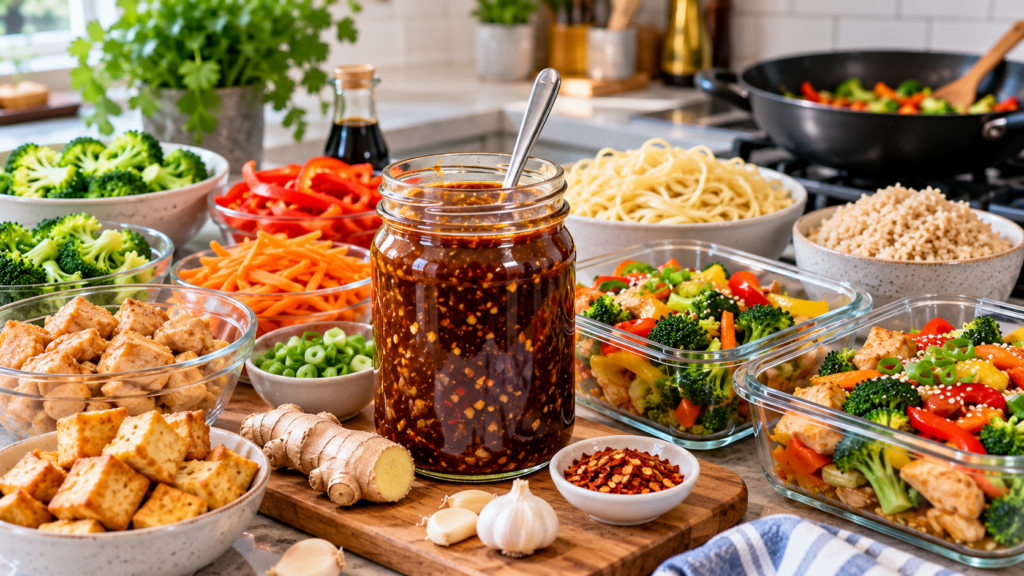
A good stir fry sauce can turn a refrigerator full of ordinary ingredients into dinner in minutes.
Chicken, beef, shrimp, tofu, broccoli, bell peppers, onions, noodles, and rice can all taste completely different once they are coated in the right combination of savory, sweet, tangy, aromatic, and slightly spicy flavors.
That is one reason homemade stir fry has become such a practical meal for busy households. You can change the protein, use whatever vegetables are available, and make a complete dinner without needing a long list of complicated ingredients.
The stir fry sauce from Cook at Home Mom uses familiar ingredients including low-sodium soy sauce or coconut aminos, honey, hot sauce, rice vinegar, sesame oil, fresh garlic, and ginger. The recipe takes about five minutes to prepare and can be used immediately or refrigerated for later meals.
Once you understand the basic formula, it is easy to adjust the sauce to suit chicken, beef, tofu, shrimp, vegetables, noodles, or rice bowls.
What Makes a Good Stir Fry Sauce?
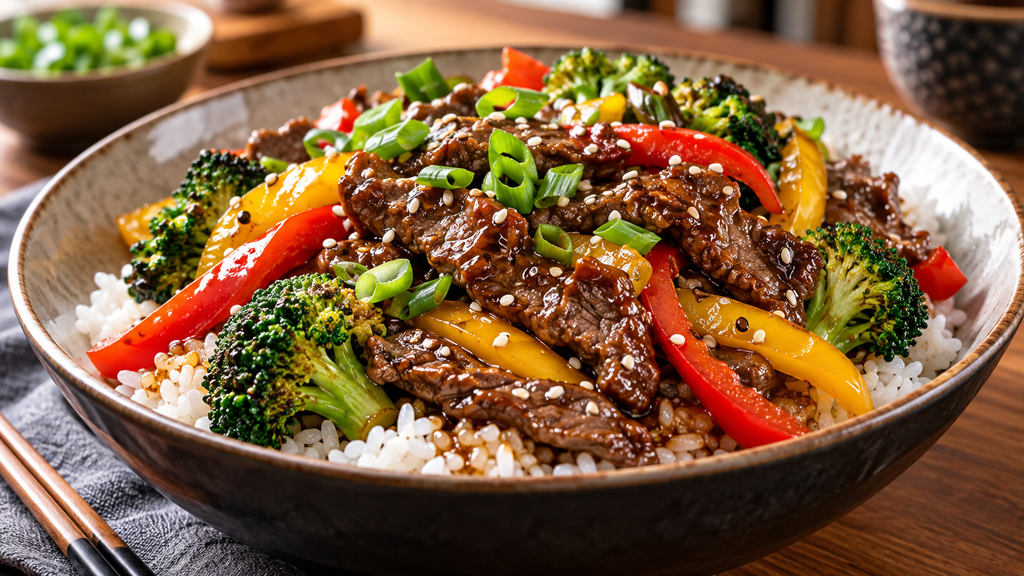
The best stir fry sauces usually balance several types of flavor instead of allowing one ingredient to dominate.
A sauce that is only salty can taste harsh. Too much sweetness can overpower vegetables and meat. Too much vinegar can make the entire dish taste sharp.
A balanced sauce combines several elements.
Savory Flavor
Soy sauce is one of the easiest ways to build a deep savory base.
Low-sodium soy sauce gives cooks more control over saltiness, especially if the sauce will reduce slightly in a hot skillet.
Coconut aminos or tamari can also be used in certain recipes depending on dietary needs and preferred flavor.
Sweetness
A small amount of sweetness balances salty and acidic ingredients.
The Cook at Home Mom version uses honey, while its recipe notes suggest alternatives such as maple syrup or brown sugar.
Sweetness does not need to make the dish taste like dessert. It simply rounds out the other flavors.
Acidity
Rice vinegar provides brightness and helps prevent the sauce from feeling too heavy.
If rice vinegar is not available, the original recipe suggests white wine vinegar or distilled white vinegar as possible substitutes.
Aromatics
Fresh garlic and ginger are two of the most important ingredients in an easy stir fry sauce.
Garlic provides a strong savory aroma, while ginger adds warmth and freshness.
Finely mincing or grating them helps distribute their flavor evenly throughout the sauce.
Toasted Flavor
Sesame oil adds a distinctive nutty aroma.
Because its flavor is strong, you usually need only a small amount.
Heat
Hot sauce adds spice without requiring the entire dish to become intensely hot.
You can increase it, reduce it, or leave it out completely.
Cook at Home Mom also suggests red pepper flakes as an alternative when hot sauce is unavailable.
Easy Homemade Stir Fry Sauce Ingredients
One reason homemade sauce works so well for weeknight meals is that most of the ingredients are easy to keep in a typical U.S. pantry or refrigerator.
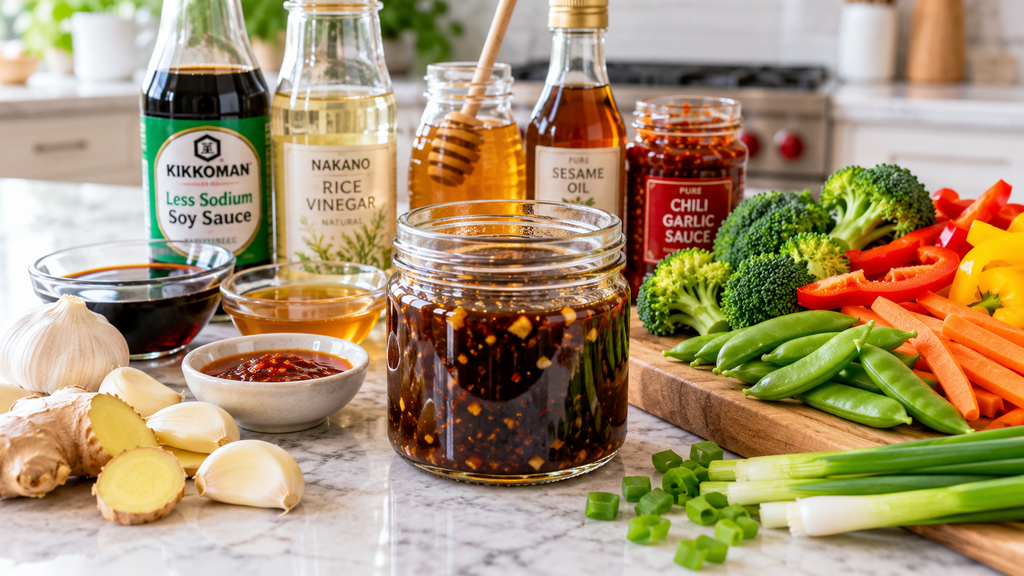
The Cook at Home Mom recipe uses:
- Low-sodium soy sauce or coconut aminos
- Honey
- Hot sauce
- Rice vinegar
- Sesame oil
- Fresh garlic
- Fresh ginger or ginger paste
Its recipe uses ¼ cup of low-sodium soy sauce or coconut aminos, 2 tablespoons of honey, 2 teaspoons of hot sauce, 1 tablespoon of rice vinegar, 2 teaspoons of sesame oil, 4 garlic cloves, and 2 teaspoons of minced ginger or ginger paste.
This creates a sauce with savory, sweet, tangy, spicy, and aromatic notes without requiring specialty cooking skills.
How to Make Stir Fry Sauce
Homemade sauce does not require complicated equipment.
Step 1: Prepare the Garlic and Ginger
Mince the garlic and ginger finely.
Small pieces blend more evenly into the liquid and distribute better when the sauce coats your food.
You can also use ginger paste for convenience.
Step 2: Combine the Ingredients
Add your soy sauce or coconut aminos, honey, hot sauce, rice vinegar, sesame oil, garlic, and ginger to a bowl or jar.
Whisk until everything is evenly combined.
Cook at Home Mom recommends tasting and adjusting the sweetness, vinegar, or spice depending on the dish you are preparing.
Step 3: Use or Refrigerate
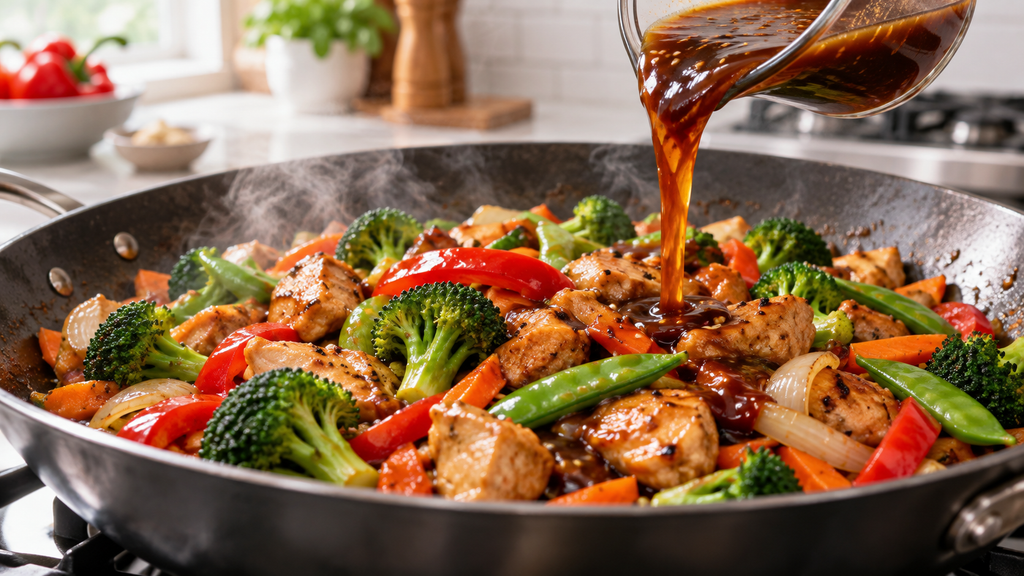
You can pour the sauce directly into your stir fry near the end of cooking.
The recipe source also recommends refrigerating the prepared sauce in an airtight container for up to one week and stirring or shaking it again before use because ingredients may settle.
How to Thicken Stir Fry Sauce
Some people prefer a thin sauce that lightly coats meat and vegetables.
Others want the glossy, thick texture commonly associated with restaurant-style stir fry.
Cornstarch can help create that texture.
Cook at Home Mom recommends adding approximately 1 to 2 teaspoons of cornstarch if you want a thicker sauce when heated.
Cornstarch thickens as the sauce heats.
For best results, make sure it is completely mixed into cool liquid before adding it to a hot skillet. This reduces the chance of lumps.
Once the sauce reaches the hot pan, stir continuously as it thickens and coats the ingredients.
Do not continue cooking much longer than necessary. Vegetables can become soft and meat can overcook while you wait for an already-thickened sauce.
When Should You Add Sauce to a Stir Fry?
Timing matters.
A common mistake is pouring the sauce into the pan too early.
The sauce can reduce too much while the meat and vegetables are still cooking. Ingredients containing sugar can also become overly concentrated.
Instead, cook your main ingredients first.
A simple order is:
- Cook the protein.
- Remove it if necessary.
- Stir fry the vegetables.
- Return the protein to the skillet.
- Add the sauce.
- Toss everything together until evenly coated and heated.
Cook at Home Mom’s beef stir fry recipe similarly recommends adding the sauce near the end so that it coats the ingredients and thickens appropriately.
Best Proteins for Stir Fry Sauce
One good sauce can support many different meals.
Chicken Stir Fry
Chicken breast or boneless chicken thighs work well with sweet and savory sauce.
Slice the chicken into relatively even pieces so it cooks quickly.
Pair it with:
- Broccoli
- Bell peppers
- Carrots
- Snow peas
- Mushrooms
- Onions
Serve over rice or noodles.
Beef Stir Fry
Thinly sliced beef pairs especially well with garlic, ginger, soy sauce, and sesame flavors.
Cook at Home Mom’s beef stir fry uses a related sauce with soy sauce, garlic, ginger, honey, sesame oil, and cornstarch. The recipe also recommends cutting steak thinly against the grain for tenderness and avoiding overcrowding the skillet.
Flank steak and sirloin are popular choices for quick-cooking beef stir fry.
Shrimp Stir Fry
Shrimp cooks quickly, making it ideal when you need dinner fast.
Try it with:
- Snow peas
- Green beans
- Bell peppers
- Broccoli
- Green onions
Because shrimp cooks in only a short time, have your vegetables and sauce ready before the shrimp goes into the pan.
Tofu Stir Fry
Firm or extra-firm tofu gives vegetarians another easy option.
Press excess moisture from the tofu, cut it into cubes, and brown it before adding sauce.
Broccoli, cabbage, mushrooms, peppers, and snap peas work especially well with tofu.
Best Vegetables for Stir Fry
Almost any quick-cooking vegetable can work.
Some of the most popular choices include:
- Broccoli
- Bell peppers
- Carrots
- Snap peas
- Snow peas
- Mushrooms
- Cabbage
- Zucchini
- Green beans
- Baby corn
- Bok choy
- Onions
The key is understanding cooking time.
Carrots and broccoli generally need more time than thin cabbage or tender greens.
Adding every vegetable at once can result in some being undercooked while others become soft.
Start firmer vegetables first, then add delicate vegetables later.
The Cook at Home Mom sauce is specifically suggested for vegetables such as broccoli, bell peppers, and snap peas, as well as chicken, tofu, shrimp, and beef dishes.
How to Make Stir Fry Taste Better at Home
The sauce matters, but cooking technique matters too.
Use High Enough Heat
Stir frying works best when ingredients cook quickly.
If the skillet is barely warm, vegetables release moisture and steam rather than developing lightly browned edges.
Do Not Overcrowd the Pan
A crowded pan traps steam.
Cook meat in batches if necessary.
This is especially important for beef and chicken.
Prepare Everything Before Cooking
Stir frying moves quickly.
Slice the meat, chop the vegetables, prepare the sauce, and measure any garnishes before heating the skillet.
Once cooking begins, you may not have time to stop and mince garlic.
Keep Vegetables Tender-Crisp
One of the best parts of stir fry is the contrast between juicy protein, crisp vegetables, and glossy sauce.
Cooking vegetables until they become completely soft removes much of that texture.
Easy Flavor Variations
The basic sauce can be changed depending on the meal.
Spicy Stir Fry Sauce
Increase the hot sauce or add red pepper flakes.
Sriracha, chili garlic sauce, or another favorite hot sauce can work depending on the flavor you want.
Sweeter Sauce
Add slightly more honey or use brown sugar.
This can pair well with chicken, pork, or dishes containing pineapple.
Garlic-Forward Sauce
Increase the fresh garlic.
This works particularly well with beef, mushrooms, green beans, and broccoli.
Ginger Stir Fry Sauce
Add more freshly grated ginger for a brighter, warmer flavor.
Pineapple Stir Fry Sauce
Pineapple juice can add sweetness and acidity.
Cook at Home Mom uses pineapple juice, soy sauce, ginger, rice vinegar, sesame oil, and other seasonings in its pork stir fry sauce variation.
This works especially well with pork, chicken, peppers, and onions.
Gluten-Free Stir Fry Sauce Options
Traditional soy sauce often contains wheat, so anyone preparing a gluten-free meal should check labels carefully.
Cook at Home Mom recommends gluten-free soy sauce, tamari, coconut aminos, or liquid aminos as alternatives depending on the recipe and dietary requirements.
If you use cornstarch to thicken your sauce, verify that all packaged ingredients meet your particular dietary needs.
Remember that substitutions can also change flavor.
Coconut aminos, for example, generally taste sweeter and less traditionally soy-like than standard soy sauce, so you may want to adjust the amount of added sweetener.
What to Serve With Stir Fry
A flavorful stir fry can become a complete dinner with one simple base.
White Rice
Steamed white rice is a classic choice because it absorbs extra sauce.
Brown Rice
Brown rice adds a nuttier flavor and firmer texture.
Noodles
Try:
- Rice noodles
- Udon
- Lo mein-style noodles
- Ramen noodles
Cook noodles separately and toss them with the finished stir fry.
Cauliflower Rice
Cauliflower rice can be used when you prefer a vegetable-based alternative to traditional rice.
Lettuce Cups
For a lighter presentation, spoon finely chopped stir fry into crisp lettuce leaves.
Why Homemade Stir Fry Sauce Is Great for Meal Prep
A prepared sauce can remove one of the biggest barriers to cooking on a busy night: deciding how to flavor everything.
If you already have sauce in the refrigerator, dinner can be as simple as cooking protein and vegetables and adding the prepared mixture.
Cook at Home Mom recommends doubling its batch when useful and states that the sauce can be refrigerated in an airtight container for up to one week.
You can also prepare vegetables and proteins in advance so the actual cooking process takes only a few minutes.
Frequently Asked Questions About Stir Fry Sauce
What is stir fry sauce made of?
A basic sauce commonly combines a savory ingredient such as soy sauce with sweetness, acidity, aromatics, and sesame flavor. The Cook at Home Mom recipe uses soy sauce or coconut aminos, honey, hot sauce, rice vinegar, sesame oil, garlic, and ginger.
How do I make stir fry sauce thicker?
Add a small amount of cornstarch before heating the sauce. Cook at Home Mom recommends approximately 1 to 2 teaspoons when a thicker consistency is desired.
Can I make stir fry sauce ahead of time?
Yes. The referenced recipe recommends storing it in an airtight container in the refrigerator for up to one week and stirring or shaking it before use.
What can I use instead of soy sauce?
Depending on your needs, tamari, gluten-free soy sauce, coconut aminos, or liquid aminos may work. Flavor and sodium levels can vary, so taste and adjust the finished sauce.
Can I use stir fry sauce with chicken?
Yes. Chicken pairs well with savory garlic-ginger sauces and vegetables such as broccoli, carrots, peppers, onions, and snap peas.
Can stir fry sauce be used with beef?
Yes. Beef and broccoli is a classic combination for a sweet and savory sauce containing soy sauce, ginger, garlic, and sesame flavors.
Is stir fry sauce spicy?
It does not have to be. You can reduce or omit the hot sauce for a mild version or add more hot sauce or chili flakes for extra heat.
When should I put sauce into the pan?
Usually near the end, after the protein and vegetables are almost cooked. This allows the sauce to coat everything without reducing excessively.
Can I use stir fry sauce on noodles?
Absolutely. Toss cooked noodles with vegetables, protein, and sauce for a fast noodle bowl.
Can I use the sauce without meat?
Yes. Tofu, mushrooms, broccoli, cabbage, snap peas, peppers, carrots, and other vegetables can make a satisfying meat-free stir fry.
Conclusion
A homemade stir fry sauce is one of the easiest ways to turn simple ingredients into a flavorful weeknight dinner.
With a basic combination of soy sauce or coconut aminos, honey, rice vinegar, sesame oil, garlic, ginger, and optional heat, you can create a sauce that works with chicken, beef, shrimp, tofu, noodles, rice, and a wide variety of vegetables.
Cook at Home Mom’s version takes about five minutes to prepare and is designed around ingredients that are easy to mix, adjust, and keep on hand. The recipe can also be made ahead and refrigerated for convenient meal prep.
The biggest advantage is flexibility.
Want it sweeter? Add a little more honey. Prefer spicy food? Increase the hot sauce. Need it thicker? Add cornstarch. Cooking for a meat-free meal? Toss it with tofu and vegetables.
Once you have a reliable sauce formula in your kitchen, you do not need a completely different recipe every time you make stir fry.
Keep a few vegetables, a protein, rice or noodles, and the basic sauce ingredients available, and you have the foundation for dozens of quick meals.
For busy weeknights, that combination of speed, flexibility, and bold flavor is exactly what makes homemade stir fry sauce worth keeping in your regular dinner rotation.

