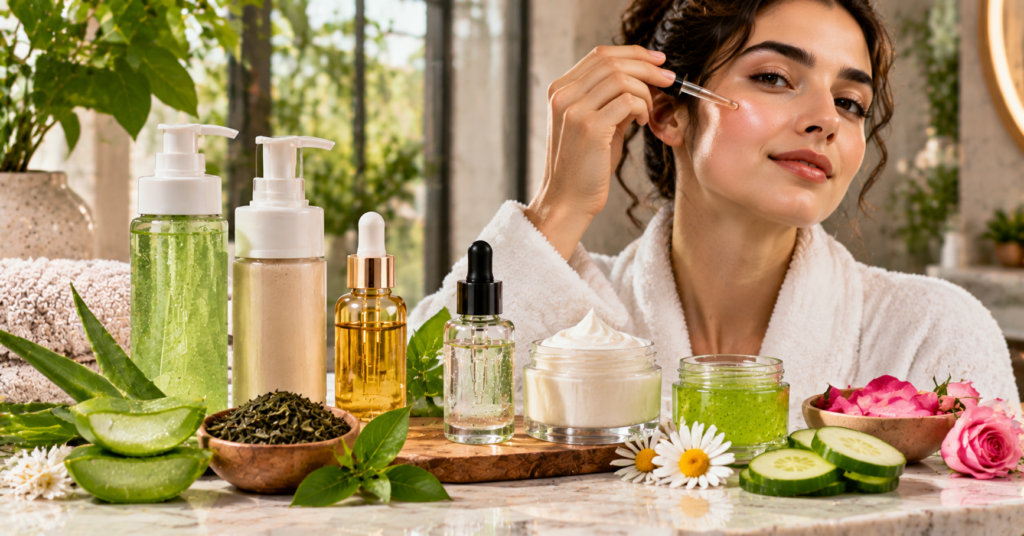
Healthy-looking skin starts with consistent care, suitable products, and an understanding of what your skin actually needs. As consumers become more interested in ingredient transparency and environmentally conscious shopping, natural beauty products have gained significant attention.
Many people are now exploring organic skincare essentials to simplify their beauty routines while incorporating plant-derived ingredients and thoughtfully formulated products.
From gentle facial cleansers and botanical serums to moisturizers and natural oils, organic-inspired skincare offers numerous options for different skin types and preferences.
However, choosing skincare products requires more than looking at attractive packaging or labels that say natural and organic. Understanding ingredients, product quality, skin compatibility, and proper application is equally important.
This comprehensive guide explores essential skincare products, natural ingredients, daily routines, and practical buying tips for American consumers.
What Are Organic Skincare Essentials?
Organic skincare essentials are personal care products formulated using ingredients that are certified organic or derived from natural sources, depending on the product and its labeling.
These products are designed to support everyday skincare needs, including cleansing, moisturizing, and protecting the skin.
Common examples include:
- Organic facial cleansers
- Botanical moisturizers
- Natural facial oils
- Organic face serums
- Gentle exfoliating products
- Mineral-based sunscreens
- Hydrating face masks
- Lip balms made with plant oils
It is important to understand that natural and organic are not interchangeable terms.
In the United States, the USDA regulates organic agricultural claims under its organic certification framework. Cosmetics containing agricultural ingredients may qualify for certain organic labeling categories, depending on their formulation and certification. FDA+1
Why Are Organic Skincare Essentials Becoming Popular?
Consumers increasingly want to understand what they apply to their skin.
Interest in ingredient transparency, sustainable packaging, and botanical formulations has contributed to the popularity of organic skincare essentials.
1. Interest in Plant-Derived Ingredients
Many skincare formulations include ingredients obtained from plants, flowers, fruits, and seeds.
Examples include aloe vera, jojoba oil, green tea, chamomile, and rosehip oil.
These ingredients are commonly used in products designed for cleansing, moisturizing, and conditioning the skin.
2. Simple Skincare Routines
A complicated skincare routine is not necessary for everyone.
Many consumers prefer a smaller collection of products that address their basic needs.
A gentle cleanser, suitable moisturizer, and daily sunscreen can provide a practical foundation.
3. Ingredient Transparency
Consumers increasingly examine product labels before purchasing beauty products.
Clear ingredient information makes it easier to identify potential allergens, fragrances, and other ingredients that may not suit individual skin preferences.
4. Environmentally Conscious Shopping
Some skincare brands prioritize recyclable packaging, responsible sourcing, and manufacturing practices intended to reduce environmental impact.
However, these benefits depend on the specific company’s practices rather than simply whether a product contains botanical ingredients.
5. Growing Interest in Personalized Beauty
Different people have different skin types and concerns.
Organic skincare essentials are available in formulations designed for dry, oily, combination, and sensitive skin.
Choosing products according to individual needs can make skincare routines more comfortable and consistent.
10 Organic Skincare Essentials to Include in Your Routine
Building an effective skincare collection does not require dozens of products.
The following categories provide a useful starting point.
1. Gentle Facial Cleanser
A facial cleanser removes accumulated dirt, excess oil, sweat, and makeup.
Choose a gentle formulation appropriate for your skin type.
People with dry skin may prefer creamy cleansers, while those with oily skin may prefer lightweight gel formulations.
Avoid cleansers that leave your skin feeling excessively tight or uncomfortable.
2. Natural Face Toner
Toners can help refresh the skin after cleansing.
Some formulations include botanical extracts, glycerin, and hydrating ingredients.
However, toners are optional rather than essential for everyone.
Choose alcohol-free products if you find traditional toners too drying.
3. Hydrating Face Serum
Serums contain concentrated skincare ingredients designed to address particular concerns.
Popular ingredients include:
- Hyaluronic acid for hydration
- Niacinamide for skin barrier support
- Vitamin C for antioxidant skincare
- Aloe vera for soothing formulations
- Botanical extracts for conditioning
When selecting organic skincare essentials, examine the complete formulation instead of assuming that plant-based ingredients are automatically suitable for every skin type.
4. Organic Face Moisturizer
A moisturizer helps reduce water loss and supports the skin’s protective barrier.
Common ingredients include shea butter, jojoba oil, glycerin, and plant-derived emollients.
Choose lightweight formulations for oily skin and richer creams for dry skin.
5. Facial Oil
Facial oils can help soften the skin and reduce moisture loss.
Popular options include:
- Jojoba oil
- Rosehip oil
- Argan oil
- Sweet almond oil
- Sunflower seed oil
Introduce one product at a time to evaluate how your skin responds.
6. Gentle Exfoliator
Exfoliation helps remove accumulated dead skin cells from the surface.
Products may contain chemical exfoliants such as lactic acid or physical exfoliating ingredients.
Avoid aggressive scrubbing, particularly if your skin is sensitive.
For many people, exfoliating once or twice weekly may be sufficient, depending on the product and skin tolerance.
7. Mineral Sunscreen
Sunscreen is one of the most important products in a daytime skincare routine.
Broad-spectrum sunscreen helps protect against UVA and UVB radiation.
Mineral sunscreens commonly use zinc oxide, titanium dioxide, or both as active ingredients.
Choose an SPF 30 or higher sunscreen and apply it according to the product instructions.
8. Hydrating Face Mask
Face masks can provide additional hydration or other targeted skincare benefits.
Look for formulations containing ingredients such as glycerin, aloe vera, or suitable botanical extracts.
Masks are optional and should complement rather than replace everyday skincare.
9. Lip Balm
Lips can become dry because of weather conditions, environmental exposure, and dehydration.
A suitable lip balm containing beeswax, shea butter, or plant oils can help maintain softness.
For daytime outdoor use, consider a lip product with SPF protection.
10. Gentle Makeup Remover
Removing makeup properly helps prevent product buildup and allows your skin to be cleansed effectively.
Choose a gentle cleansing oil, balm, or micellar product that suits your skin type.
Avoid excessive rubbing around the eyes and lips.
How to Build a Daily Organic Skincare Routine
A consistent routine is generally more useful than frequently switching between products.
Here is a simple approach using organic skincare essentials.
Morning Skincare Routine
Step 1: Cleanse
Use a gentle cleanser to remove overnight oil and impurities.
Step 2: Apply Serum
Choose a hydrating or antioxidant serum appropriate for your skincare goals.
Step 3: Moisturize
Apply a moisturizer that supports your skin’s hydration needs.
Step 4: Apply Sunscreen
Finish with broad-spectrum SPF 30 or higher sunscreen.
Reapply according to the label, particularly during extended outdoor exposure.
Evening Skincare Routine
Step 1: Remove Makeup and Sunscreen
Use an appropriate makeup remover or cleansing balm.
Step 2: Cleanse Your Face
Wash away remaining dirt, oil, and product residue.
Step 3: Apply Treatment Products
Use suitable serums or targeted skincare treatments.
Step 4: Moisturize
Finish with a moisturizer to help maintain skin hydration overnight.
Consistency and appropriate product selection are key to maintaining a practical routine.
Best Organic Skincare Ingredients for Different Skin Types
Not every ingredient works equally well for every person.
Understanding your skin type can help you select suitable formulations.
| Skin Type | Ingredients to Consider | Product Suggestions |
|---|---|---|
| Dry skin | Shea butter, glycerin, jojoba oil | Rich moisturizer |
| Oily skin | Niacinamide, lightweight humectants | Lightweight gel moisturizer |
| Sensitive skin | Glycerin, simple fragrance-free formulations | Gentle cleanser |
| Combination skin | Hyaluronic acid, lightweight emollients | Balanced moisturizer |
| Mature skin | Vitamin C, niacinamide, moisturizing ingredients | Hydrating serum |
These are general suggestions, not guaranteed treatments. Individual tolerance and the complete formulation matter.
How to Choose High-Quality Organic Skincare Essentials
With so many beauty products available in the United States, comparing formulations can feel overwhelming.
Use these practical tips before purchasing.
1. Read the Ingredient List
Look beyond front-label claims.
Review the full ingredient declaration and identify substances that may trigger your allergies or irritation.
2. Check Organic Certifications
Look for credible certification information when a product makes organic claims.
USDA organic labeling categories have specific requirements, so do not assume that every product marketed as natural is certified organic.
3. Understand Your Skin Type
Select products based on your skin’s actual needs.
A rich facial oil may suit dry skin but feel uncomfortable for someone with naturally oily skin.
4. Avoid Unnecessary Fragrances
Fragrances, including some natural essential oils, can cause irritation or allergic reactions in certain individuals.
Fragrance-free options may be preferable for sensitive skin.
5. Compare Packaging and Storage
Check whether products are packaged appropriately and include clear storage instructions.
Some formulations are more sensitive to light, heat, and air exposure.
6. Introduce Products Gradually
Do not introduce several unfamiliar products simultaneously.
Using one new product at a time makes it easier to identify potential reactions.
Are Organic Skincare Products Better Than Conventional Products?
Organic and conventional skincare products can both be formulated effectively.
Organic certification primarily addresses how certain agricultural ingredients are produced and handled. It does not automatically guarantee that a product is safer, more effective, or less irritating.
The quality of a skincare product depends on its complete formulation, manufacturing standards, ingredient concentrations, packaging, and suitability for the individual.
When comparing organic skincare essentials with conventional alternatives, prioritize ingredient transparency, product quality, and your personal skin needs.
Common Skincare Mistakes to Avoid
Even carefully selected products may not deliver the expected experience if they are used incorrectly.
Avoid these common mistakes:
- Using too many active skincare products at once.
- Skipping sunscreen during daytime outdoor activities.
- Exfoliating excessively.
- Assuming natural ingredients cannot cause allergies.
- Ignoring product expiration and storage instructions.
- Applying unfamiliar products without checking their ingredients.
- Expecting immediate results from every skincare product.
A simple, consistent routine is often easier to maintain.
Frequently Asked Questions
What are organic skincare essentials?
They are skincare products made with certified organic or naturally derived ingredients, depending on the formulation and labeling. Common examples include cleansers, moisturizers, serums, and facial oils.
Are organic skincare products safe for sensitive skin?
Some formulations may be suitable, but natural and organic ingredients can still cause irritation or allergic reactions. Choose products carefully and introduce them gradually.
Can organic skincare products help with dry skin?
Yes. Products containing suitable moisturizing ingredients such as glycerin, shea butter, and jojoba oil can help improve skin hydration.
How often should I use organic skincare essentials?
Most basic products, such as cleansers and moisturizers, can be used daily according to their instructions. Exfoliants and treatment products may require less frequent application.
Are organic skincare products better than regular skincare?
Not necessarily. Effectiveness and safety depend on the complete formulation, product quality, and individual skin compatibility rather than organic labeling alone.
What is the most important product in a skincare routine?
A suitable cleanser, moisturizer, and broad-spectrum sunscreen form a practical foundation. Sunscreen is especially important for protecting skin from ultraviolet radiation.
Can I use natural skincare products every day?
Many are designed for daily use, but follow the manufacturer’s instructions and discontinue products that cause irritation.
Conclusion
Building a healthy skincare routine does not require an extensive collection of expensive beauty products.
The right organic skincare essentials can provide a practical starting point for cleansing, moisturizing, and protecting your skin while allowing you to explore botanical ingredients and environmentally conscious product options.
Focus on your skin type, examine ingredient labels, choose reliable products, and introduce new formulations gradually.
Remember that natural does not automatically mean safe or effective for everyone. Product quality, formulation, and personal compatibility should always guide your decisions.
With consistent care and informed product selection, you can develop a simple skincare routine that supports comfortable, healthy-looking skin throughout the year.