
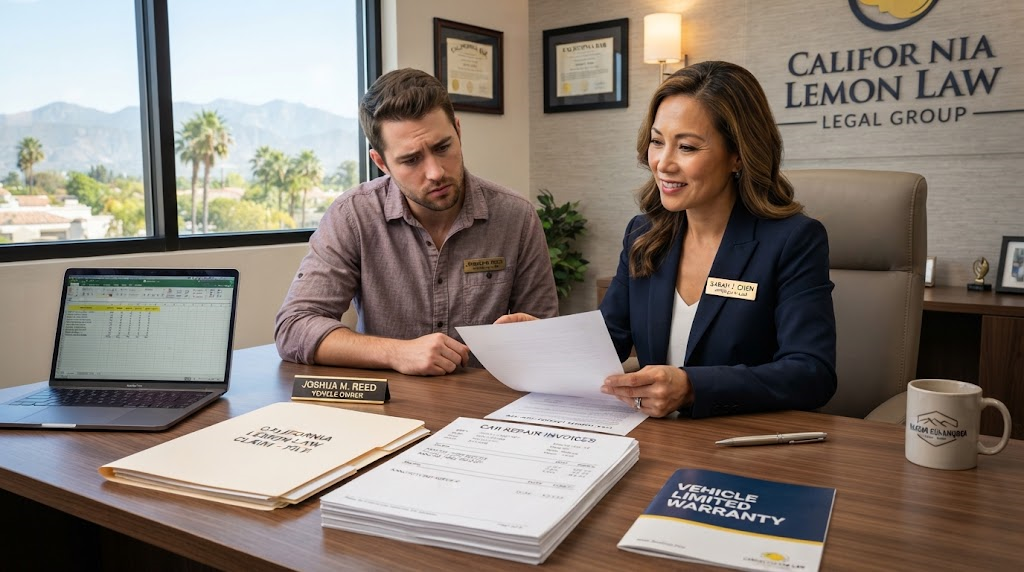
Buying or leasing a vehicle should give you dependable transportation, not repeated trips to the repair shop. When the same serious defect keeps returning, a vehicle stays out of service for weeks, or warranty repairs fail to solve the problem, California law may provide important consumer protections.
For drivers in Rancho Cucamonga and throughout the Inland Empire, speaking with a Rancho Cucamonga lemon law attorney can help clarify whether a defective vehicle may qualify for a repurchase, replacement, or another available remedy.
California’s lemon law is primarily based on the Song-Beverly Consumer Warranty Act. In general, when a manufacturer cannot repair a covered vehicle so that it conforms to an applicable express warranty after a reasonable number of attempts, the manufacturer may have obligations that can include replacement or restitution.
The details matter, however. The type of vehicle, warranty status, nature of the defect, repair history, timing, manufacturer, and notice requirements can all affect a claim.
This guide explains the major issues Rancho Cucamonga drivers should understand before deciding what to do next.
What Is California Lemon Law?
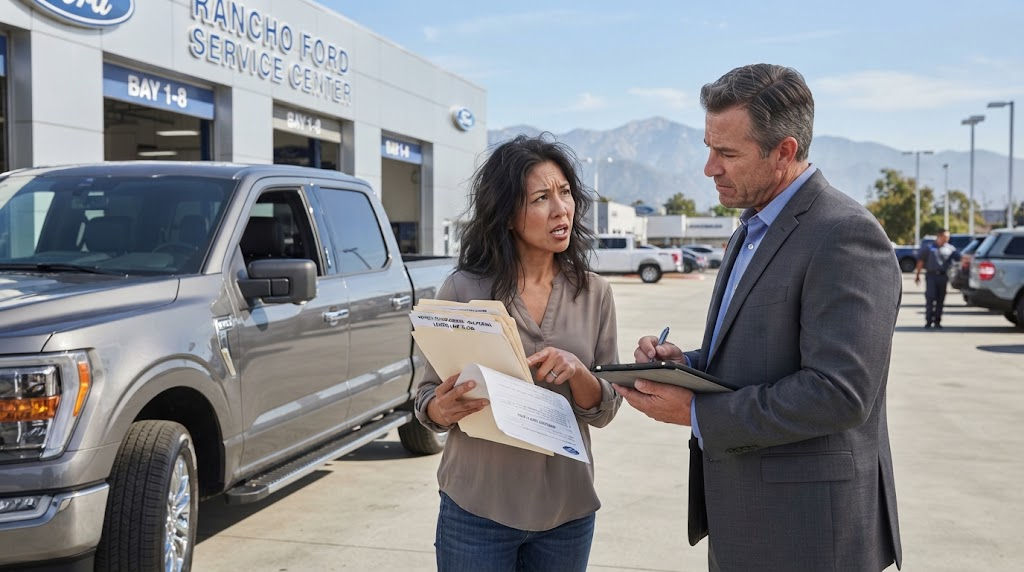
California lemon law protects qualifying consumers when warranted products, including certain motor vehicles, repeatedly fail to meet warranty requirements.
For motor vehicles, the law generally focuses on significant defects that the manufacturer or its authorized repair facilities cannot correct after a reasonable opportunity to repair them.
The California Attorney General explains that the Lemon Law generally applies to most new vehicles purchased or leased in California while covered by the manufacturer’s new-vehicle warranty. Certain used vehicles may also be covered when they are sold with the manufacturer’s new-car warranty still in effect.
The issue must generally be more than a minor inconvenience. California law defines a qualifying “nonconformity” for purposes of the Tanner Consumer Protection Act as one that substantially impairs the vehicle’s use, value, or safety.
Examples may include serious problems involving:
- Engines
- Transmissions
- Braking systems
- Steering
- Electrical systems
- Battery or charging systems
- Safety technology
- Repeated stalling
- Loss of power
- Significant water intrusion
- Persistent warning lights tied to a genuine malfunction
Every case depends on its specific facts. A repair history that looks minor in isolation can become more significant when the same problem repeatedly returns.
When Should You Contact a Rancho Cucamonga Lemon Law Attorney?
You do not necessarily need to wait until your vehicle has completely stopped working.
It may be worth having your situation reviewed when your vehicle has returned to an authorized repair facility multiple times for the same issue, has experienced a serious safety problem, or has spent substantial time unavailable because of warranty repairs.
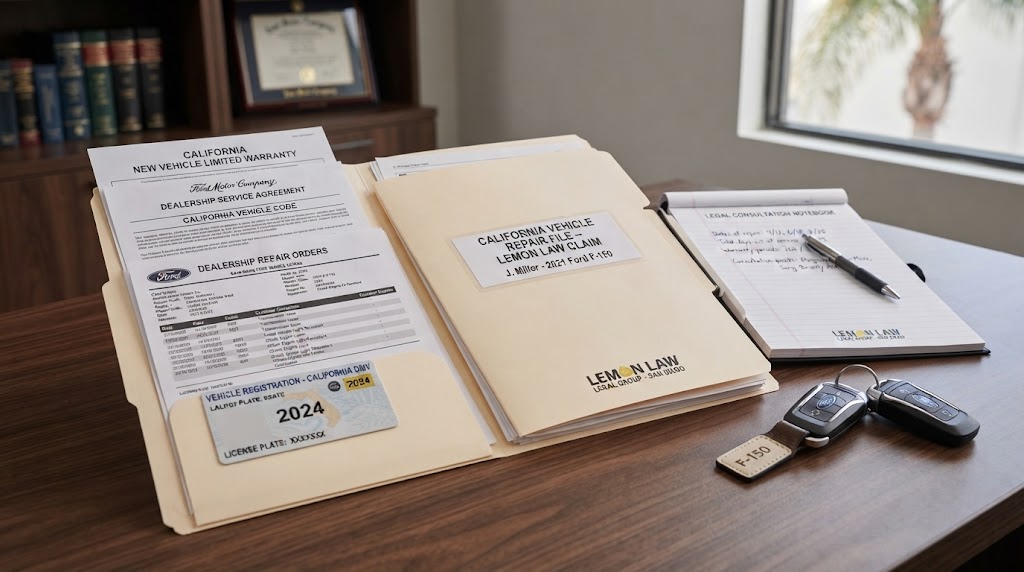
A Rancho Cucamonga lemon law attorney can examine your repair records, warranty documents, purchase or lease agreement, and communications with the manufacturer to determine which legal rules may apply.
The Same Defect Keeps Returning
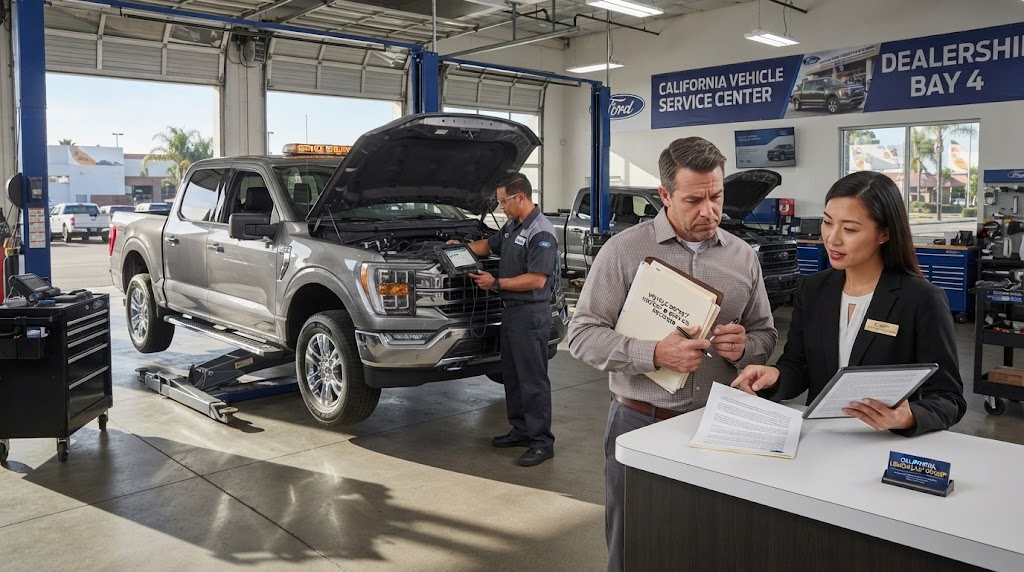
Suppose your vehicle has been repaired several times for transmission hesitation, repeated engine shutdowns, electrical failures, or another significant defect.
If the dealer repeatedly says the problem is fixed but it returns soon afterward, those documented repair attempts can become important evidence.
Your Vehicle Has Been Out of Service for a Long Time
California’s lemon-law presumption includes a situation where a vehicle has been out of service because of covered nonconformity repairs for a cumulative total of more than 30 days during the statutory period, subject to exceptions for circumstances beyond the manufacturer’s control.
Those days do not necessarily need to occur during one continuous repair visit.
The Problem Creates a Serious Safety Concern
Brakes, steering, sudden power loss, unexpected acceleration, and certain electrical or battery defects may raise important safety concerns.
Under California’s rebuttable lemon-law presumption, a defect likely to cause death or serious bodily injury may satisfy the repair-attempt portion of the presumption after two or more attempts, subject to the statute’s other requirements.
How Many Repair Attempts Are Required Under California Lemon Law?
There is no universal rule saying every California lemon-law claim requires exactly the same number of repair attempts.
Instead, the law asks whether the manufacturer had a reasonable number of opportunities to bring the vehicle into conformity with its warranty.
California does provide a statutory rebuttable presumption that can make this issue easier to evaluate in certain cases.
California’s 18-Month or 18,000-Mile Presumption
Under the Tanner Consumer Protection Act, a reasonable number of attempts is presumed in certain circumstances when qualifying events occur within the first 18 months after delivery or 18,000 miles, whichever happens first.
The statutory benchmarks include:
- Two or more repair attempts for the same defect when that defect is likely to cause death or serious bodily injury if the vehicle is driven
- Four or more attempts to repair the same nonconformity
- More than 30 cumulative days out of service for repair of qualifying nonconformities
These are rules for a rebuttable presumption, not a requirement that every possible claim fit perfectly inside those numbers. A vehicle that falls outside the presumption may still raise lemon-law issues depending on the circumstances.
That distinction is one reason an individualized case review can be valuable.
What Vehicles May Be Protected?
California lemon-law protection can apply to several types of qualifying vehicles.
The California Attorney General specifically identifies most new vehicles purchased or leased in California while covered by a manufacturer’s new-vehicle warranty. Certain used vehicles may also qualify when a manufacturer’s new-car warranty accompanies the sale.
California’s statutory definition of a “new motor vehicle” for the Tanner Act also includes certain vehicles used primarily for personal, family, or household purposes and, under specified conditions, some vehicles used primarily for business purposes.
Potential claims can therefore involve:
New Vehicles
A recently purchased car, SUV, pickup, or other qualifying vehicle with repeated warranty defects may fall within California’s protections.
Leased Vehicles
Leasing rather than buying does not automatically eliminate lemon-law protection. The statutory framework expressly refers to both buyers and lessees in key provisions.
Certain Used Vehicles
Used-car claims are more fact-specific.
Warranty status is especially important. A used vehicle may receive stronger protection when it is still covered by the manufacturer’s original warranty or otherwise sold with qualifying warranty coverage.
A lemon law lawyer in Rancho Cucamonga can review the warranty documents to determine whether the vehicle and defect may fall within the applicable statutes.
What Compensation or Remedies May Be Available?
When a qualifying vehicle cannot be brought into conformity after a reasonable number of repair attempts, California law provides important remedies.
Under Civil Code section 1793.2, a manufacturer that cannot repair a qualifying new motor vehicle after a reasonable number of attempts must generally either replace the vehicle or provide restitution. The buyer retains the right to elect restitution rather than being forced to accept a replacement.
Vehicle Repurchase
A repurchase, commonly called a lemon-law buyback, may include the price paid or payable for the vehicle together with specified collateral charges such as sales or use tax, registration fees, and certain incidental damages.
California law also permits a mileage-based deduction reflecting the consumer’s use of the vehicle before it was first presented for repair of the problem that led to the nonconformity.
Vehicle Replacement
In qualifying circumstances, replacement with a substantially identical new motor vehicle may be another remedy.
Associated taxes, license fees, registration fees, and certain qualifying incidental expenses may also be addressed by the statute.
Other Monetary Resolution
Some disputes resolve through negotiated monetary compensation rather than a complete buyback or replacement.
The appropriate result depends on the legal claim, evidence, manufacturer response, and consumer’s objectives.
Why Documentation Is So Important
A lemon-law claim is often built on paperwork.
When you visit the dealership, ask for a repair order every time, even if the technician reports that no fault was found.
The documents can show:
- Date the vehicle entered the shop
- Date it was returned
- Mileage
- Consumer complaint
- Technician findings
- Diagnostic codes
- Parts replaced
- Repairs attempted
Try to describe recurring problems consistently and accurately when speaking to the service department.
For example, if your vehicle loses power while driving, make sure the repair order says that rather than simply describing the issue as a vague “engine concern.”
Lemon Law Pro asks potential clients to provide their sales contract, repair orders, and DMV registration when submitting a matter for case review.
What Changed Under AB 1755 and SB 26?
California’s lemon-law procedures have changed in recent years, making current legal guidance particularly important.
AB 1755 was signed in September 2024, and SB 26 followed in April 2025 to address implementation. The California Department of Consumer Affairs explains that manufacturers can now operate under different procedural tracks depending on whether they elect the newer AB 1755/SB 26 system, remain subject to existing lemon-law statutes, or participate in a certified arbitration program.
For manufacturers that have opted into the newer procedures, written pre-lawsuit demands and specific response timelines can become significant.
The DCA states that, under the opt-in process, a consumer who wants a repurchase or replacement can make a written demand at least 30 days before filing suit. Manufacturers operating under that system have defined timelines for responding and completing an agreed repurchase or replacement.
Because these procedural rules can depend on the manufacturer and circumstances, consumers should avoid assuming that one deadline or notice requirement automatically applies identically to every claim.
A qualified California lemon-law lawyer can determine which process governs a specific vehicle.
How a Rancho Cucamonga Lemon Law Attorney Can Help
Manufacturers handle warranty disputes regularly. Most consumers do not.
An attorney familiar with California lemon law can review whether the vehicle, defect, repair history, and warranty meet the applicable legal requirements.
Reviewing Your Repair History
The attorney can compare dealership records to your description of the problem and identify patterns such as repeated repair attempts, excessive downtime, or unresolved safety defects.
Communicating With the Manufacturer
Legal counsel can handle communications and demands so consumers do not have to negotiate every issue directly with a manufacturer’s claim department.
Calculating a Potential Buyback
Repurchase calculations can involve the vehicle price, taxes, official fees, incidental expenses, financing considerations, and the statutory mileage offset.
Handling Litigation When Necessary
Some claims settle without a lawsuit, while others may require litigation.
Lemon Law Pro states that it represents clients throughout California and can file litigation in a client’s local county when a lawsuit becomes necessary.
What Does Hiring a Lemon Law Attorney Cost?
Consumers are often concerned that legal fees will make a claim financially impractical.
California Civil Code section 1794 provides that a prevailing buyer may recover reasonably incurred costs and expenses, including attorney’s fees based on actual time expended, as part of the judgment.
Individual law firms may structure representation differently, so consumers should always review the written fee agreement.
Lemon Law Pro states that it charges clients no upfront attorney fees or case costs and seeks recovery of its fees and costs from the manufacturer when the case succeeds.
Steps to Take if You Think Your Vehicle Is a Lemon
If your vehicle continues to experience serious warranty problems, several practical steps can help protect your records.
Keep Every Repair Order
Never assume the dealership will maintain everything you need.
Keep your own copies.
Save Purchase and Warranty Documents
Preserve your sales or lease agreement, financing documents, warranty booklet, registration, and manufacturer correspondence.
Record Vehicle Downtime
Track the exact dates the vehicle enters and leaves the repair facility.
Document the Defect
Photos, videos, warning-light images, and written descriptions may help document intermittent problems.
Avoid Unnecessary Modifications
California law excludes defects caused by unauthorized or unreasonable use after the sale.
Modifications that affect the disputed system can complicate the analysis.
Seek Legal Guidance Before Important Deadlines Pass
Because procedural requirements now vary in some circumstances under AB 1755 and SB 26, timely review is important.
Frequently Asked Questions About Rancho Cucamonga Lemon Law
Does my car need four repair attempts to qualify as a lemon?
Not necessarily. Four attempts for the same nonconformity is one benchmark in California’s rebuttable presumption, but serious safety defects may involve a two-attempt benchmark, and extended repair downtime can also matter. The specific facts determine whether the manufacturer received a reasonable opportunity to repair the vehicle.
Does 30 days in the repair shop have to be consecutive?
No. California’s statutory presumption refers to a cumulative total of more than 30 calendar days out of service because of qualifying repairs.
Can a leased car qualify under California lemon law?
Yes. California lemon-law provisions include protections applicable to qualifying leased vehicles as well as purchased vehicles.
Can a used vehicle qualify?
Potentially. Certain used vehicles sold with a manufacturer’s new-car warranty may receive lemon-law protection. Used-vehicle cases are highly dependent on warranty status and the facts of the sale.
What problems can qualify?
The defect generally needs to substantially impair the vehicle’s use, value, or safety. Serious engine, transmission, braking, steering, electrical, charging, or other recurring defects may potentially qualify depending on the circumstances.
Can I choose a refund instead of a replacement?
For qualifying new-motor-vehicle claims under Civil Code section 1793.2, the buyer may elect restitution rather than being required to accept replacement.
Do I have to deal directly with the manufacturer?
Consumers can pursue claims themselves, but they may also choose legal representation. A lemon-law attorney can review the claim, communicate with the manufacturer, negotiate, and litigate when needed.
What should I bring to a lemon-law consultation?
Useful documents include your sales or lease contract, all dealership repair orders, registration, warranty information, manufacturer correspondence, photographs or videos of the defect, and records showing how long the vehicle was unavailable.
Conclusion
Repeated vehicle problems can create more than inconvenience. They can affect your commute, family transportation, finances, safety, and confidence in a vehicle you may still be making payments on.
California’s lemon law gives qualifying consumers important rights when manufacturers cannot repair substantial warranty defects after a reasonable number of opportunities. Depending on the case, remedies may include a vehicle repurchase, replacement, reimbursement of certain expenses, or another negotiated resolution.
The legal process has also become more procedural following AB 1755 and SB 26, with different rules potentially applying depending on a manufacturer’s chosen dispute-resolution framework.
If your vehicle has experienced repeated warranty repairs, significant safety problems, or extended downtime, having the records reviewed by a Rancho Cucamonga lemon law attorney can help you understand which rules apply and what options may be available.
Lemon Law Pro focuses its practice on California lemon-law matters and offers case reviews for consumers dealing with recurring vehicle defects. The firm’s Rancho Cucamonga page specifically serves drivers in the area who are seeking guidance regarding defective vehicles and California warranty rights.
This article provides general information and is not a substitute for legal advice about a specific claim.

