Technology continues to change the way people interact with brands, products, and digital content. One of the most exciting developments in recent years is WebAR, a technology that brings augmented reality experiences directly through a web browser without requiring users to download a dedicated mobile application.
Traditional augmented reality often required users to install specific apps before accessing interactive digital experiences. WebAR removes this barrier by allowing people to open a link, scan a QR code, or visit a website and immediately experience augmented reality through their smartphone or tablet.
For businesses in the United States and around the world, WebAR has created new opportunities in marketing, e-commerce, education, entertainment, real estate, healthcare, and many other industries.
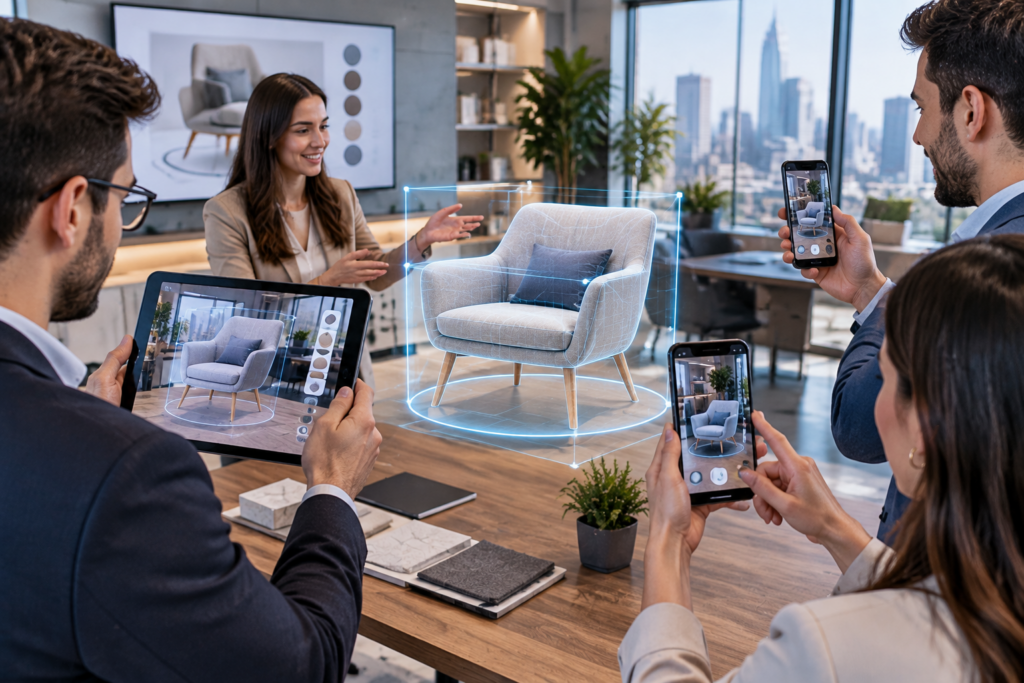
By combining the physical world with digital information, WebAR allows companies to create engaging experiences that help customers visualize products, understand concepts, and interact with brands in completely new ways.
This guide explains what WebAR is, how it works, its benefits, practical applications, and why it is becoming an important tool for modern digital experiences.
What Is WebAR?
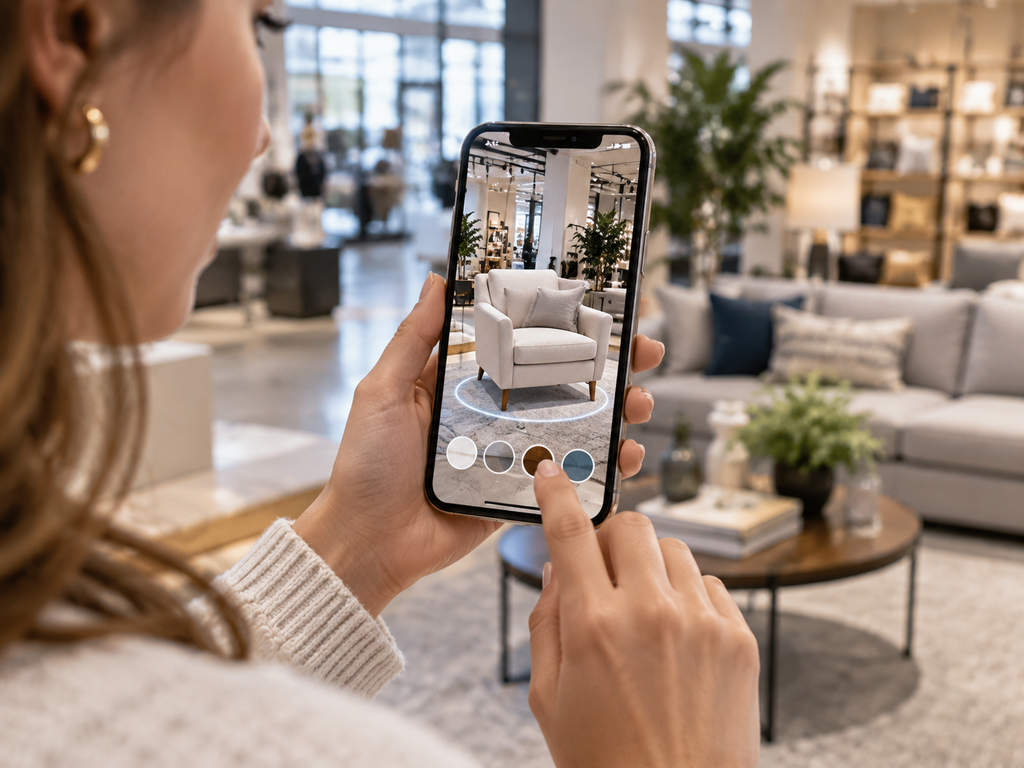
WebAR, short for Web-based Augmented Reality, is a technology that allows augmented reality experiences to run directly inside a web browser.
Instead of downloading an application, users can access AR content through common browsers on smartphones, tablets, or other compatible devices.
A typical WebAR experience may involve:
- Scanning a QR code
- Clicking a website link
- Opening a mobile browser
- Allowing camera access
- Viewing digital objects placed into the real environment
The technology combines computer vision, 3D models, camera tracking, and web technologies to create interactive experiences.
For example, a furniture company can allow customers to view a virtual sofa inside their living room before purchasing. A cosmetics brand can let users test virtual makeup through their phone camera.
How Does WebAR Work?
Camera Access and Environmental Detection
WebAR uses a device camera to understand the user’s surroundings.
The technology analyzes:
- Surfaces
- Lighting conditions
- Device movement
- Space dimensions
This allows digital objects to appear naturally within the physical environment.
Browser-Based Technology
Unlike traditional AR applications, WebAR operates through web browsers.
Modern smartphones support many AR features through technologies such as:
- WebGL
- WebXR
- JavaScript frameworks
- Computer vision systems
This makes AR experiences easier to access because users do not need to install additional software.
3D Content Integration
WebAR experiences rely on digital assets such as:
- 3D product models
- Animations
- Interactive graphics
- Virtual environments
These elements are placed into the user’s real-world view through augmented reality.
WebAR vs Traditional Mobile AR Apps
No App Installation Required
One of the biggest advantages of WebAR is accessibility.
Traditional AR apps require users to:
- Search for the application
- Download it
- Install it
- Create accounts or complete setup
WebAR removes these steps.
Users can access experiences almost instantly through a browser.
Easier Customer Engagement
Every additional step creates potential barriers for customers.
A simple WebAR link or QR code makes it easier for people to interact with digital content.
This is especially valuable for:
- Marketing campaigns
- Product demonstrations
- Retail experiences
- Events
Lower Development Barriers
Developing a complete AR application can require significant resources.
WebAR solutions often allow businesses to create AR experiences with fewer technical requirements and easier deployment.
Benefits of WebAR for Businesses
Improved Customer Experience
Modern customers increasingly expect interactive digital experiences.
WebAR allows brands to provide:
- Product visualization
- Interactive demonstrations
- Virtual previews
- Personalized experiences
These experiences can help customers make more confident purchasing decisions.
Increased Product Understanding
Some products are difficult to understand through traditional images or videos.
WebAR allows customers to see:
- Product size
- Design details
- Placement in real environments
For example, a customer buying furniture can see how an item fits inside their home.
Better Marketing Engagement
Traditional advertisements often provide passive experiences.
WebAR creates active participation.
Customers can:
- Explore products
- Interact with digital content
- Share experiences
- Spend more time with brands
This can create stronger brand connections.
Simple Access Through QR Codes
QR codes have become widely used across industries.
Businesses can place QR codes on:
- Product packaging
- Posters
- Business cards
- Store displays
- Print advertisements
Customers simply scan and access the AR experience.
WebAR Applications Across Industries
E-Commerce and Retail
Retail is one of the biggest areas where WebAR provides value.
Online shopping often creates uncertainty because customers cannot physically examine products.
WebAR helps solve this problem through virtual visualization.
Examples include:
- Furniture placement
- Clothing previews
- Jewelry visualization
- Beauty product testing
- Electronics demonstrations
By allowing customers to interact with products digitally, businesses can improve online shopping experiences.
Real Estate
Real estate professionals can use WebAR to improve property marketing.
Applications include:
- Virtual property previews
- Interactive building models
- Location visualization
- Architectural demonstrations
Potential buyers can better understand spaces before visiting properties.
Education and Training
WebAR creates new opportunities for interactive learning.
Students can explore:
- 3D models
- Scientific concepts
- Historical environments
- Technical demonstrations
Learning becomes more engaging when users can interact with digital objects.
Healthcare
Healthcare organizations can use AR technology for:
- Medical education
- Patient explanations
- Training simulations
Complex information can become easier to understand through visual demonstrations.
Tourism and Hospitality
Travel companies can use WebAR to create immersive experiences.
Examples include:
- Interactive travel guides
- Historical location information
- Hotel previews
- Destination marketing
WebAR in Digital Marketing
Creating Interactive Campaigns
Marketing is becoming more experience-focused.
WebAR campaigns allow brands to create memorable interactions.
Examples include:
- Product launches
- Virtual experiences
- Interactive advertisements
- Brand storytelling
Increasing Social Sharing
Unique AR experiences are often shared online.
Customers may share:
- Virtual product previews
- Creative filters
- Interactive experiences
This can increase brand visibility.
Connecting Physical and Digital Marketing
WebAR bridges traditional marketing and digital technology.
A printed advertisement can become interactive through a simple scan.
Examples:
- Magazine advertisements
- Product labels
- Packaging
- Posters
How Businesses Can Create a WebAR Experience
Define the Goal
Before developing a WebAR project, businesses should determine the purpose.
Possible goals include:
- Increasing sales
- Educating customers
- Improving engagement
- Demonstrating products
A clear objective helps create a more effective experience.
Create Digital Assets
WebAR requires digital content such as:
- 3D models
- Animations
- Interactive elements
High-quality assets improve the overall experience.
Choose the Right Platform
Businesses can use different WebAR platforms depending on their requirements.
Important features may include:
- Ease of use
- Browser compatibility
- Analytics
- Customization options
- 3D support
Test User Experience
Before launch, businesses should test:
- Loading speed
- Device compatibility
- Navigation
- Visual quality
A smooth experience improves customer satisfaction.
Challenges of WebAR
Device Compatibility
Although smartphone technology has improved significantly, not every device supports every AR feature.
Businesses should test experiences across multiple devices.
Internet Requirements
Because WebAR operates through browsers, users need reliable internet connections for the best experience.
Quality of 3D Content
Poorly optimized models can create:
- Slow loading times
- Poor performance
- Reduced engagement
Professional optimization is important.
User Awareness
Some customers may not understand how to access WebAR experiences.
Clear instructions and simple onboarding improve adoption.
Future of WebAR Technology
WebAR continues to develop as smartphones become more powerful and web technologies improve.
Future advancements may include:
- More realistic 3D experiences
- Improved tracking accuracy
- Faster loading speeds
- Better AI integration
- More personalized interactions
Businesses are increasingly exploring immersive technology because customers value interactive and personalized experiences.
As AR becomes easier to access, WebAR may become a standard part of digital marketing and online shopping.
WebAR Best Practices for Businesses
Keep Experiences Simple
The best AR experiences are easy to understand.
Avoid unnecessary complexity that may confuse users.
Optimize Performance
Fast loading is essential.
Businesses should:
- Compress files
- Optimize 3D models
- Reduce unnecessary elements
Provide Clear Instructions
Users should know:
- How to start the experience
- How to interact
- What they can explore
Focus on Customer Value
Successful WebAR experiences solve real problems.
The goal should not simply be using new technology but improving customer interaction.
Frequently Asked Questions (FAQ)
What does WebAR mean?
WebAR means Web-based Augmented Reality. It allows users to experience augmented reality through a web browser without downloading a separate application.
Do users need an app for WebAR?
No. One of the main benefits of WebAR is that users can access experiences directly through compatible browsers.
Does WebAR work on smartphones?
Yes. Many modern smartphones support WebAR experiences through mobile browsers.
How is WebAR different from AR apps?
Traditional AR apps require installation, while WebAR works through web browsers, making access faster and easier.
What industries use WebAR?
WebAR is used in retail, e-commerce, education, healthcare, real estate, tourism, marketing, and entertainment.
Can WebAR improve online shopping?
Yes. WebAR helps customers visualize products in real environments, making online purchasing decisions easier.
Is WebAR expensive to create?
The cost depends on complexity, design requirements, and features. Simple WebAR experiences are generally more accessible than full AR applications.
Conclusion
WebAR is changing the way businesses connect with customers by making augmented reality more accessible, practical, and engaging. By removing the need for app downloads, WebAR allows users to experience interactive digital content directly through their browsers.
From online shopping and marketing campaigns to education and real estate, WebAR provides opportunities to create memorable experiences that combine the digital and physical worlds.
As technology continues to advance, businesses that adopt WebAR can offer customers more interactive ways to explore products, understand information, and engage with brands. For companies looking to improve customer experiences in a digital-first world, WebAR represents an exciting and powerful tool